
News
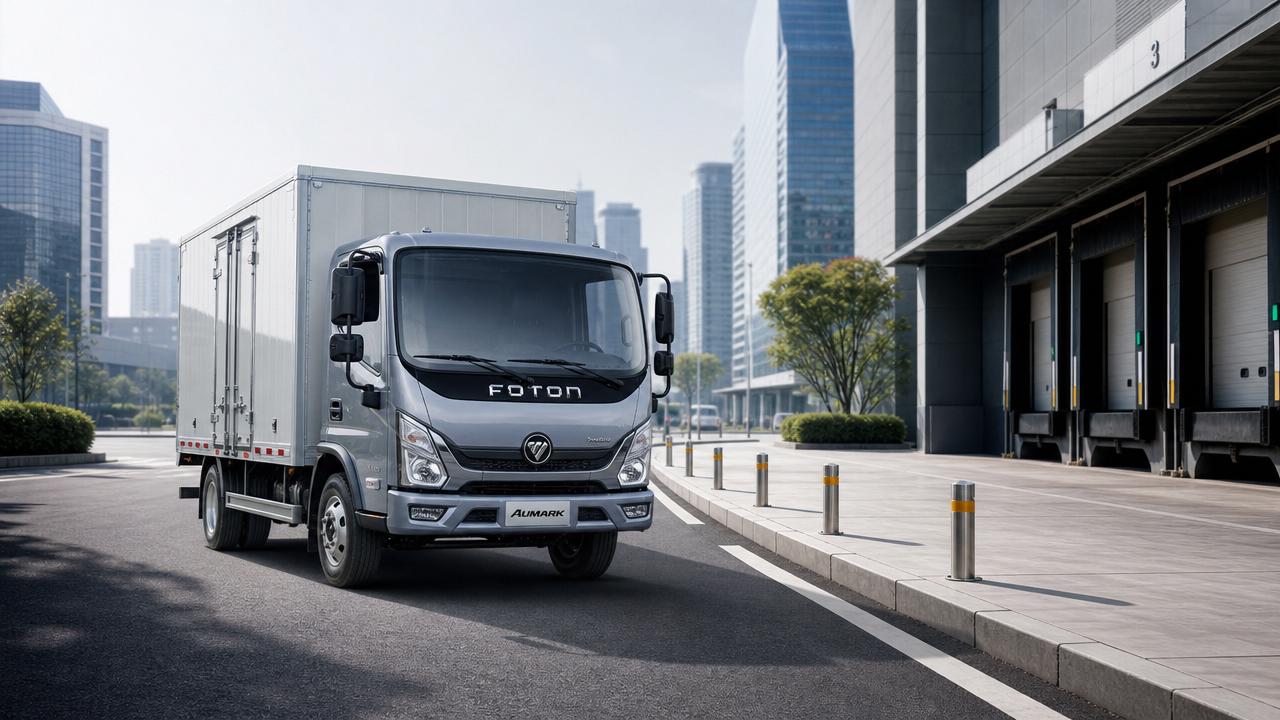
For urban logistics, choosing a 4_2 Cargo Truck means balancing payload capacity with maneuverability in dense streets, narrow access roads, and frequent stop-and-go operations.
That balance affects delivery speed, route flexibility, fuel use, loading efficiency, maintenance frequency, and the total cost of urban distribution.
A well-matched 4_2 Cargo Truck supports stable daily output, while a poor match can create delays, overload risks, and avoidable operating expense.
In the engineering vehicle and commercial transport sector, selection should focus on real delivery patterns rather than headline payload numbers alone.
Core Definition of a 4_2 Cargo Truck in Urban Delivery
A 4_2 Cargo Truck usually has two axles, with one driven axle and one steering axle, making it a common format for city and regional distribution.
Its design aims to combine useful payload, compact external dimensions, and lower operating complexity compared with heavier multi-axle configurations.
For urban delivery, this truck category often carries packaged goods, retail supplies, food products, industrial parts, e-commerce cargo, and municipal support materials.
Typical body options include box cargo bodies, stake beds, refrigerated bodies, wing vans, and customized distribution compartments.
The best 4_2 Cargo Truck configuration depends on gross vehicle weight, wheelbase, body length, turning radius, loading height, and route restrictions.
Why the payload and maneuverability trade-off matters
Higher payload can reduce trip frequency, but added size or weight may limit access to tight loading docks and older urban streets.
Better maneuverability improves route freedom, parking ease, and delivery accuracy, yet smaller dimensions may reduce cargo volume and revenue per trip.
That is why city fleet planning should compare payload demand with route geometry, stop density, and handling requirements.
Current Urban Logistics Conditions Shaping 4_2 Cargo Truck Selection
Urban freight networks are becoming more complex because delivery windows are shorter, road congestion is heavier, and customer expectations are higher.
These conditions make 4_2 Cargo Truck specification a strategic decision rather than a simple purchase based on engine power or body size.
- Low-emission and low-noise operating pressure in many city centers
- Tighter access at mixed-use commercial and residential delivery points
- Frequent unloading cycles requiring ergonomic body and tail-lift choices
- Rising demand for route efficiency and predictable on-time performance
- Need for reliable supply, fast delivery, and after-sales support from exporters
Business Value of the Right 4_2 Cargo Truck Configuration
Selecting the right 4_2 Cargo Truck improves daily delivery rhythm and helps avoid underused capacity or operational bottlenecks.
When payload matches route demand, each trip carries enough cargo without creating access issues at final delivery points.
This balance can support lower cost per delivery, better vehicle utilization, and more predictable fleet scheduling.
Operational gains commonly seen
- Reduced empty space through better body sizing
- Fewer route disruptions in congested streets
- Lower tire, brake, and clutch wear from correct load planning
- Improved loading speed with suitable body structure
- Safer handling during turns, reversing, and curbside stops
Vehicle supply reliability also matters. Stable inventory and authorized support help shorten procurement cycles and reduce downtime after deployment.
Shandong Livol Truck International Trade Co., Ltd. provides integrated export support for commercial vehicles from FOTON, SHACMAN, and SINOTRUK.
With authorized 4S resources, vehicle inventory, customization capability, and export experience, it supports efficient global sourcing for urban transport needs.
Typical 4_2 Cargo Truck Urban Delivery Scenarios
Different distribution tasks require different payload and maneuverability priorities, even within the same 4_2 Cargo Truck category.
How route type changes vehicle preference
Short, dense city loops usually reward maneuverability more than maximum legal payload.
Longer peri-urban routes with fewer stops may justify a larger body and higher carrying capacity.
A 4_2 Cargo Truck should therefore be selected against actual route maps, not broad assumptions about city transport.
Practical Evaluation Points Before Choosing a 4_2 Cargo Truck
A practical selection process should compare technical specifications with operating reality across loading, travel, unloading, and service support.
- Measure average payload, peak payload, and cargo cube separately.
- Check width limits, turning points, ramps, and delivery dock dimensions.
- Confirm axle load compliance under real loading patterns.
- Review body type, door layout, and loading equipment needs.
- Assess fuel economy, maintenance access, and parts availability.
- Match engine and transmission to stop-start urban driving conditions.
- Consider local regulation, emissions requirements, and operating permits.
Many operators focus too heavily on rated capacity and overlook turning performance, body practicality, or loading cycle time.
Those overlooked factors often determine whether a 4_2 Cargo Truck performs efficiently in city service.
Common selection mistakes
- Choosing the longest body without checking access constraints
- Ignoring suspension tuning for fragile or unevenly distributed cargo
- Underestimating the value of after-sales service and spare parts support
- Using a single specification for very different urban routes
Implementation Direction for Smarter Urban Fleet Planning
The most effective urban fleet strategy usually starts with route segmentation and cargo profiling.
From there, it becomes easier to define whether the ideal 4_2 Cargo Truck should prioritize higher payload, tighter maneuverability, or a balanced specification.
For projects involving export procurement, vehicle customization and documentation quality are also important for smooth deployment.
Shandong Livol Truck International Trade Co., Ltd. supports this process with vehicle selection, customization, documentation, customs clearance, logistics, and after-sales coordination.
Its experience in Chinese commercial vehicle export helps connect product availability with practical transport requirements in overseas markets.
When urban delivery performance matters, a carefully matched 4_2 Cargo Truck can improve route productivity, vehicle uptime, and long-term operating control.
The next step is to compare route conditions, body requirements, and service expectations against available models from reliable authorized sources.
Search Starts Here