
News
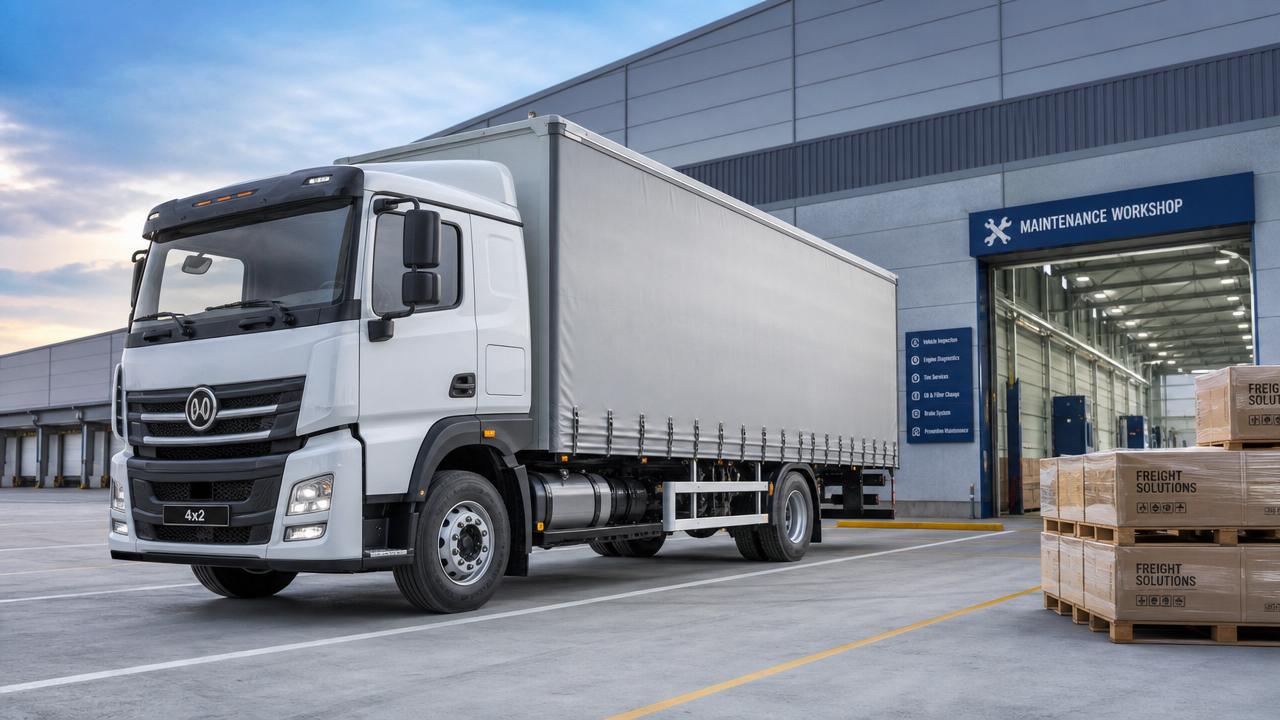
For finance decision-makers evaluating a 4x2 Cargo Truck, understanding total operating costs is essential before approval. Beyond the purchase price, fuel consumption, tire wear, and maintenance expenses directly affect cash flow, fleet efficiency, and long-term ROI. This breakdown will help you assess where costs occur, how they vary in real operations, and what to consider when choosing a cost-effective commercial vehicle solution.
The core search intent behind this topic is practical cost evaluation, not basic vehicle education. Readers want a realistic operating cost framework they can use to compare truck options, estimate budget exposure, and reduce ownership risk before procurement approval.
For financial approvers, the main concern is whether a 4x2 Cargo Truck will deliver predictable cost per kilometer, stable uptime, and acceptable lifecycle return. The most useful content is clear cost logic, operating variables, risk points, and methods for comparing suppliers and truck specifications.
This article therefore focuses on fuel, tires, maintenance, hidden cost drivers, and procurement evaluation criteria. General product descriptions are kept light, while decision-relevant factors such as utilization, route conditions, parts support, and after-sales capability receive more attention.
Why operating cost matters more than purchase price
A lower acquisition price can look attractive during initial budgeting, but it does not guarantee a lower total cost of ownership. In most fleet operations, recurring expenses quickly exceed the initial price difference between competing truck models.
For a 4x2 Cargo Truck, the biggest day-to-day cost drivers usually include fuel, tires, scheduled maintenance, unscheduled repairs, and downtime. If these elements are not modeled correctly, the approval decision may underestimate future cash requirements.
Finance teams should treat operating cost as a long-term profitability issue rather than a simple procurement line item. A truck with better fuel efficiency, stronger parts availability, and more reliable service support often produces better margins over several years.
This is especially important in distribution, regional logistics, construction material transport, and mixed road operations. In these use cases, vehicle utilization is high, route conditions vary, and every hour of downtime can reduce revenue and disrupt delivery commitments.
What financial decision-makers should calculate first
Before comparing brands or specifications, define the truck’s intended operating profile. Cost performance for the same 4x2 Cargo Truck can change significantly depending on payload, average trip distance, road quality, climate, and annual mileage.
Start with five planning inputs: annual kilometers, average payload, expected fuel price, tire replacement cycle, and maintenance interval. These figures create a useful base for estimating cost per kilometer and annual operating budget.
Then add a sixth factor that is often overlooked: expected downtime exposure. Even a truck with acceptable parts and labor costs can become expensive if service delays keep the vehicle off the road during peak operating periods.
For approval purposes, it is best to compare trucks using both annual operating cost and cost per ton-kilometer. This gives a more accurate picture of efficiency than looking at fuel consumption or maintenance expense alone.
Fuel cost is usually the largest operating expense
In many fleets, fuel represents the largest share of total running cost for a 4x2 Cargo Truck. Even a small improvement in fuel efficiency can produce meaningful annual savings when mileage is high and fuel prices remain volatile.
Actual consumption depends on more than engine specification. Payload consistency, route congestion, stop-and-go frequency, driver behavior, tire pressure, vehicle maintenance quality, and local terrain all influence real-world fuel use.
A finance review should therefore avoid relying only on brochure numbers. Request real operating data from similar markets, similar payload conditions, and comparable route structures. This helps prevent underestimating annual fuel expense during budget planning.
For example, a truck operating mainly on urban or peri-urban delivery routes will usually consume more fuel than one running stable intercity routes. Frequent acceleration, braking, idling, and low-speed traffic reduce overall fuel economy.
Likewise, overloaded operation can sharply increase fuel use while also accelerating tire wear and component stress. A truck that appears profitable under rated load assumptions may generate weaker returns if actual field loading practices exceed specification.
To evaluate fuel cost properly, decision-makers should ask three questions. What is the expected liters-per-100-kilometer figure in actual operating conditions, how sensitive is profitability to fuel price changes, and can driver management improve performance consistently?
If the supplier can provide fuel-saving configurations, such as matched driveline ratios, efficient engines, aerodynamic optimization, or telematics support, these features may justify a higher purchase price through lower recurring operating cost.
How tire cost affects lifecycle economics
Tires are often treated as a routine consumable, yet they have a significant effect on operating economics. For a 4x2 Cargo Truck, tire cost includes not just replacement expense but also fuel efficiency, safety performance, and downtime risk.
Tire wear rate is heavily influenced by axle load, road conditions, alignment accuracy, inflation discipline, driving habits, and turning frequency. Trucks working on rough roads, mixed construction routes, or overloaded conditions will face faster replacement cycles.
From a financial perspective, the key issue is predictability. If tire life varies widely between vehicles or operating regions, budgeting becomes difficult and cost per kilometer becomes less stable than expected during procurement approval.
Choosing lower-cost tires may reduce immediate spending, but poor durability can raise overall expense through more frequent changes, higher puncture risk, and lower fuel efficiency. In some cases, premium tire quality produces better lifecycle value than a cheaper alternative.
Finance approvers should ask suppliers about standard tire specifications, optional upgrades, expected service life under defined load conditions, and local availability of replacements. Tire sourcing problems can create unnecessary idle time even when the truck itself is mechanically sound.
It is also useful to examine whether the fleet has a tire management process. Regular pressure checks, alignment inspection, rotation planning where applicable, and driver training can reduce avoidable tire cost significantly over a truck’s service life.
Maintenance cost is not only about workshop invoices
Maintenance is often evaluated too narrowly. The real cost includes routine service, wear parts, breakdown repairs, labor time, vehicle downtime, and the indirect financial impact of missed deliveries or reduced fleet utilization.
For a 4x2 Cargo Truck, scheduled maintenance is usually manageable if intervals are clear and parts are available. The bigger concern for finance teams is unscheduled maintenance, because it creates cost volatility and can disrupt operational planning.
Reliability therefore matters as much as workshop pricing. A truck with slightly higher scheduled service cost but fewer breakdowns may be financially superior to a cheaper model that generates frequent unplanned repairs and longer idle periods.
Ask for a realistic maintenance schedule covering engine, transmission, braking system, suspension, filters, lubricants, and electrical components. This helps estimate annual service spend and reveals whether maintenance demands fit your operating capacity.
Spare parts accessibility is equally important. If imported components take too long to arrive, the truck may remain parked while revenue opportunities are lost. For many buyers, service network strength is a stronger financial factor than initial discount level.
This is where supplier capability matters. An exporter with strong brand authorization, stable inventory, and organized after-sales coordination can help reduce maintenance uncertainty across multiple markets, especially where local service depth varies.
Hidden costs that often change the approval decision
Many truck evaluations focus on visible items and overlook secondary costs that materially affect return on investment. These hidden costs can change the economics of a 4x2 Cargo Truck even when the headline purchase price looks competitive.
One common hidden cost is downtime. If a vehicle is unavailable due to service delays, parts shortages, or repeated repairs, the business loses transport capacity. The financial impact may exceed the direct repair bill, especially in time-sensitive logistics operations.
Another hidden cost is driver-related inefficiency. Poor driving habits increase fuel use, accelerate brake and tire wear, and raise accident risk. Trucks that support easier operation, better ergonomics, or telematics monitoring can indirectly reduce fleet expense.
Residual value should also be considered. A truck from a recognized brand with stronger global parts support may retain better resale value, improving total lifecycle economics even if the acquisition cost is higher at the beginning.
Documentation, customs coordination, and logistics execution can also affect total landed cost in export procurement. Delays or errors in these areas may not appear in the vehicle quotation but still influence project timing and working capital exposure.
How to compare one 4x2 Cargo Truck against another
For finance approval, comparisons should be structured, measurable, and tied to real operations. Looking only at engine power, vehicle appearance, or quotation price does not provide enough information for a sound investment decision.
A practical comparison model should include fuel cost per kilometer, expected tire cost per kilometer, scheduled maintenance cost per kilometer, estimated downtime days per year, and residual value after the planned ownership period.
It is also smart to compare support conditions. This includes warranty scope, service response, spare parts availability, training support, delivery lead time, and customization capability for your cargo body, route type, and compliance requirements.
If the business operates internationally or across several markets, supplier export experience becomes an economic factor rather than an administrative detail. Smooth documentation, customs handling, and logistics coordination reduce delay risk and help control procurement overhead.
When possible, request references or operating feedback from users with similar applications. Data from fleets running distribution, industrial haulage, or construction-linked transport can reveal cost patterns more accurately than standard product claims.
What a cost-effective supplier should offer beyond the truck itself
A cost-effective procurement decision depends on both product quality and delivery capability. Even a technically suitable 4x2 Cargo Truck can become expensive if supply is unstable, specifications are mismatched, or after-sales support is weak.
For many commercial buyers, value comes from full-process support. This includes vehicle selection, configuration guidance, documentation preparation, customs coordination, shipping planning, and post-delivery service communication.
Shandong Livol Truck International Trade Co., Ltd. operates with clear strengths in this area. As an authorized domestic and overseas dealer for FOTON, SHACMAN, and SINOTRUK, the company provides access to established Chinese commercial vehicle platforms with broad market recognition.
Its network of authorized 4S stores across China and sufficient inventory capacity can help buyers reduce delivery uncertainty. For finance teams, stable supply and faster dispatch are important because they support project scheduling and reduce idle capital risk.
The company’s export team also supports customization, documentation, customs clearance, and logistics execution. This integrated model can lower procurement friction for overseas buyers who need a reliable supplier rather than only a vehicle trader.
From a cost-control perspective, strict quality control and professional after-sales coordination matter because they improve consistency over the ownership cycle. That is particularly relevant when fleet buyers are comparing lifecycle value instead of only upfront price.
A simple approval framework for finance teams
To make faster and better decisions, finance teams can use a straightforward approval framework. First, confirm the operating scenario and annual utilization assumptions. Without this step, all later cost estimates are likely to be misleading.
Second, calculate direct running costs for fuel, tires, and scheduled maintenance. Third, estimate risk-adjusted costs for downtime, unscheduled repairs, and parts delay exposure. Fourth, compare residual value and supplier support strength.
Finally, test the business case under different conditions. Model at least three scenarios: normal fuel price, higher fuel price, and heavier utilization. Sensitivity analysis helps reveal which truck remains financially acceptable when real conditions change.
This approach gives approvers a clearer basis for decision-making. Instead of asking which truck is cheaper today, it asks which truck is more controllable, more reliable, and more profitable over the intended operating period.
Conclusion: the best 4x2 Cargo Truck is the one with controllable lifecycle cost
For finance decision-makers, the right choice is rarely the lowest quoted truck. The better investment is the 4x2 Cargo Truck that combines efficient fuel use, predictable tire life, manageable maintenance demand, dependable parts support, and low downtime risk.
Fuel usually dominates daily operating expense, tires shape cost stability, and maintenance determines whether uptime remains strong enough to protect revenue. Together, these factors define the real financial performance of the vehicle far more than purchase price alone.
When evaluating suppliers, prioritize realistic operating data, service capability, parts access, and export execution strength. A truck supported by an experienced and reliable commercial vehicle partner is generally easier to budget, manage, and scale.
If your goal is sound capital approval and stronger lifecycle ROI, build the decision around total operating cost, not just initial acquisition cost. That is the clearest path to choosing a commercial vehicle solution that supports both operational needs and financial discipline.
Search Starts Here