News
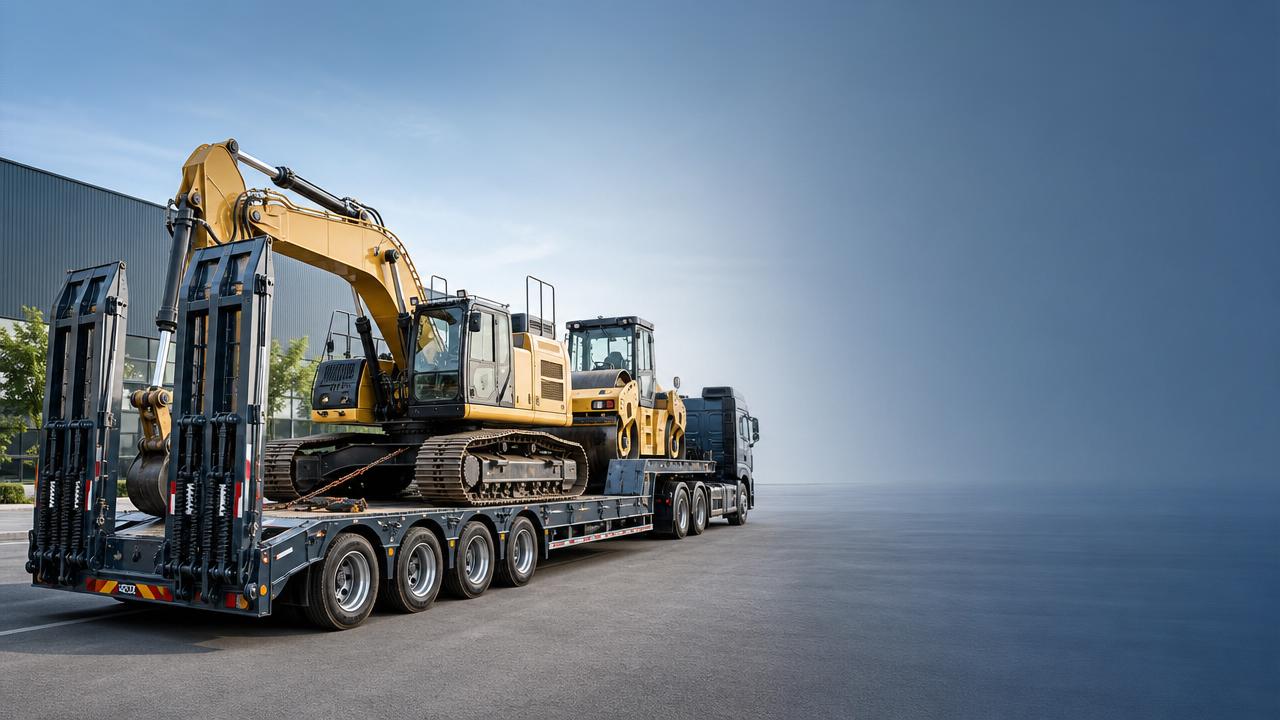
Buying a Low Plate trailer without careful checks can lead to costly downtime, legal issues, and poor load performance. For procurement professionals, understanding axle quality, deck height suitability, and compliance standards is essential before placing an order. This guide highlights the key risks to evaluate so you can make safer, more cost-effective purchasing decisions and avoid hidden problems in engineering vehicle transport operations.
What Procurement Buyers Are Really Searching for Before Buying a Low Plate Trailer
When buyers search for Low Plate trailer risks, they usually want practical answers, not general product descriptions. Their core concern is simple: how to avoid buying a trailer that becomes expensive, unsafe, or difficult to operate after delivery.
For procurement teams, the biggest questions are whether the trailer can legally operate, carry the intended equipment safely, and maintain low operating costs over time. Axle durability, deck height, and compliance documents directly affect all three areas.
This means the evaluation should not focus only on purchase price or appearance. A Low Plate trailer that looks competitive on paper can still create hidden losses through premature axle wear, loading instability, route restrictions, or failed inspections.
The most useful buying approach is risk-based. Check whether the axle specification matches real loads, whether deck height suits the transported machinery, and whether the trailer meets the regulations of the destination market before signing the contract.
Why Axle Quality Is One of the Highest-Risk Buying Factors
Among all major components, axles create some of the most serious post-purchase problems. If the axle configuration is underspecified, poor in quality, or mismatched to operating conditions, the trailer may suffer tire wear, bearing failure, brake issues, and structural stress.
Many buyers compare axle tonnage only at a basic level, but that is not enough. The real issue is whether the axle system supports the actual loading pattern, road conditions, and frequency of operation in heavy engineering transport.
A Low Plate trailer used for excavators, rollers, or crawler equipment often carries concentrated loads rather than evenly distributed cargo. This puts higher stress on axle beams, suspensions, hubs, and brake assemblies than standard freight applications.
Procurement teams should ask detailed questions about axle brand, rated capacity, material grade, brake type, suspension design, and service network. If the supplier cannot provide clear technical data or traceable component information, that is a warning sign.
Another common mistake is selecting axles based only on maximum listed payload. Buyers should also consider overload tolerance, fatigue resistance, spare parts availability, and maintenance convenience. Cheap axles may reduce upfront cost but increase total ownership cost significantly.
How to Check Whether the Axle Specification Matches Your Real Working Conditions
The correct axle choice starts with the actual transport task. Buyers should define what machines will be carried, their operating weight, dimensions, center of gravity, and whether loading is usually forward-biased, rear-biased, or uneven across the deck.
Route conditions matter just as much. A Low Plate trailer moving mainly on highways faces different demands from one operating on mine roads, construction detours, or mixed rural routes. Rough surfaces multiply stress on axles, suspension systems, and frame connections.
Ask the manufacturer for load distribution calculations rather than accepting general assurance. A professional supplier should explain how the trailer design transfers weight across the kingpin, axles, and deck structure under realistic loading scenarios.
Buyers should also review braking performance under full load, especially for markets with mountain roads, congested traffic, or long-distance hauling. Axle quality is not only about carrying weight; it is also about maintaining safe control during repeated braking cycles.
If your operation includes frequent loading and unloading, turning in tight spaces, or reversing on uneven ground, axle and suspension geometry become even more important. These conditions accelerate wear if the design is not suitable.
Deck Height: A Small Specification That Can Create Major Operating Problems
Deck height is often treated as a simple dimensional detail, but in practice it affects route legality, loading safety, equipment compatibility, and transport efficiency. Choosing the wrong deck height can cause repeated operational limitations after delivery.
A lower deck can help reduce total transport height, which is critical when moving tall machinery under bridges, overhead lines, or local clearance restrictions. For many engineering vehicle applications, this is one of the main reasons buyers choose a Low Plate trailer.
However, lower is not always better. If the deck is too low for the route conditions, the trailer may suffer bottom scraping, approach angle limitations, or poor cross-terrain mobility when entering construction sites, ramps, or uneven loading areas.
Procurement professionals should evaluate deck height together with tire size, suspension travel, gooseneck design, ramp angle, and ground clearance. Looking at one number in isolation can lead to a trailer that works in theory but struggles in field use.
The best choice depends on the machinery being transported and the infrastructure where the trailer will operate. A practical deck height should balance legal transport height, loading convenience, and the trailer’s ability to move safely on real roads and sites.
How to Judge Whether the Deck Height Fits Your Equipment Portfolio
Start by listing the tallest machines in your planned transport range, not just the most common ones. Procurement decisions should reflect the full equipment portfolio, because route and height issues usually appear with oversized or less frequent loads.
Then calculate total loaded height by combining machine height, deck height, tire compression, and any accessories that remain mounted during transport. This total should be checked against local transport limits in your target operating markets.
Loading angle is another key factor. If the deck is low but ramp geometry is poor, low-clearance equipment may still scrape during loading. This problem is common with road rollers, pavers, and some tracked machines with vulnerable underbody sections.
Also consider weight distribution after loading. A deck height that appears ideal may still create stability issues if it forces machines into awkward positions to meet height or length limits. That affects both safety and tire or axle loading patterns.
Procurement teams should request drawings, loaded-height simulations, and if possible reference cases for similar machines. Good suppliers can show how specific excavator, loader, or crane models fit on the proposed Low Plate trailer configuration.
Compliance Checks Are Not Administrative Formalities
Compliance is one of the most underestimated risks in cross-border trailer procurement. Buyers sometimes assume that if a trailer is manufactured well, it will automatically pass registration or operational checks in the destination country. That assumption is dangerous.
Different markets may require different standards for dimensions, axle loads, braking systems, lighting, reflective markings, identification plates, and documentation. A trailer that is usable in one region may need modification or may even be rejected in another.
For procurement professionals, compliance problems create more than legal inconvenience. They delay delivery, increase modification cost, disrupt project schedules, and may expose the operator to penalties or insurance complications if the unit is used improperly.
This is especially important when buying from overseas suppliers. Before placing an order, buyers should confirm what standards apply in the destination market and whether the supplier can provide compliant specifications and export documentation accordingly.
Do not leave compliance verification until shipment is ready. It should be part of technical review, commercial negotiation, and pre-production confirmation. Once a non-compliant trailer is built, correction becomes slower and more expensive.
What Compliance Documents and Technical Proof Buyers Should Request
Procurement teams should request a complete document checklist early in the buying process. This may include technical drawings, VIN or chassis identification details, axle certificates, braking data, dimension sheets, material specifications, and factory inspection records.
Ask whether the Low Plate trailer can be supplied with documents suitable for customs clearance, local registration, and commercial operation in the destination country. Missing or inconsistent paperwork can create delays even when the trailer itself is acceptable.
It is also wise to confirm whether the supplier has export experience in your region. A manufacturer familiar with your market is more likely to understand lighting layouts, safety marking rules, weight requirements, and other details that affect acceptance.
If your organization has internal engineering or compliance staff, involve them before contract signing. Their review can identify problems that sales-level communication may overlook, especially in technical definitions related to dimensions and permissible loads.
When possible, make the approved specification and compliance obligations part of the purchase contract. This reduces ambiguity and gives the buyer stronger protection if delivered units differ from the confirmed requirements.
Other Hidden Buying Risks Beyond Axles, Deck Height, and Compliance
Although axle quality, deck height, and compliance are the main issues, they should be reviewed alongside several connected factors. One is frame strength. A strong axle system cannot compensate for a weak main beam or poor welding quality.
Ramp design is another overlooked point. If ramps are too weak, too steep, or inconvenient to operate, loading efficiency drops and accident risk rises. For engineering equipment transport, ramp usability directly affects daily productivity.
Suspension choice also matters. Mechanical suspension may be suitable for some markets and budgets, while air suspension may offer advantages in cargo protection or road behavior. The right decision depends on operating conditions and maintenance capability.
After-sales support is equally important for procurement planning. Even a well-built Low Plate trailer will require consumables, parts replacement, and technical support over time. A supplier without stable support channels can become a long-term liability.
Finally, check lead time realism. Some exporters promise fast delivery without matching inventory, parts readiness, or production scheduling. Procurement professionals should verify whether the supplier has actual operational capacity, not just attractive quotations.
A Practical Procurement Checklist for Safer Low Plate Trailer Purchasing
To reduce buying risk, procurement teams should use a structured evaluation process. First, define the actual equipment to be transported, target payload range, route conditions, and local legal requirements. This creates a factual base for specification review.
Second, verify axle brand, capacity, brake system, suspension configuration, and expected maintenance support. Request technical documents and ask how the specification was selected for your use case rather than accepting standard recommendations.
Third, confirm deck height with loaded-height calculations, ramp angle review, and site access considerations. Make sure the trailer will work not only on public roads but also at loading yards, job sites, and temporary construction surfaces.
Fourth, review compliance documentation before production. Confirm dimensions, identification details, and destination-market requirements in writing. If needed, involve a local agent, certification body, or experienced importer to validate key points.
Fifth, assess supplier capability. Strong exporters with real inventory, technical support, and global delivery experience can reduce procurement uncertainty. This is especially important for buyers who need stable supply and predictable project timelines.
Why Supplier Selection Influences Trailer Risk More Than Many Buyers Expect
A capable supplier does more than manufacture or source a trailer. They help align specification, export documentation, delivery planning, and after-sales service with the buyer’s commercial goals. That reduces the risk of technical and operational mismatches.
For international procurement, this coordination is critical. Buyers need confidence that the Low Plate trailer ordered is the same as the Low Plate trailer shipped, documented, and supported after arrival. Weak supplier control often causes costly inconsistencies.
Experienced commercial vehicle exporters can also help buyers compare options across brands, customize configurations, and anticipate market-specific requirements before problems occur. This is valuable when procurement teams manage multiple equipment categories or countries.
Companies with established domestic networks, sufficient stock, and export process experience are generally better positioned to support urgent orders, spare parts needs, and technical clarification. Those strengths matter as much as the base product specification.
When evaluating offers, buyers should look beyond price and ask which supplier can reliably support the trailer throughout its service life. That question often leads to a better long-term decision than a narrow comparison of initial purchase cost.
Conclusion: Buy a Low Plate Trailer Based on Risk Control, Not Price Alone
The safest way to buy a Low Plate trailer is to treat the decision as a risk-control exercise. Axle quality affects durability and safety, deck height affects real-world usability, and compliance affects whether the trailer can legally deliver business value.
For procurement professionals, the goal is not simply to secure a lower quotation. It is to purchase a trailer that performs reliably, fits the transported machinery, passes local requirements, and keeps total operating cost under control.
If you evaluate specification details carefully, request supporting documents early, and work with a supplier that understands export execution, you can avoid many of the hidden problems that turn an attractive offer into an expensive operational burden.
In engineering vehicle transport, a good buying decision is measured after deployment, not at contract signing. The right Low Plate trailer should support safety, uptime, and compliance from day one through years of service.
Search Starts Here