
News
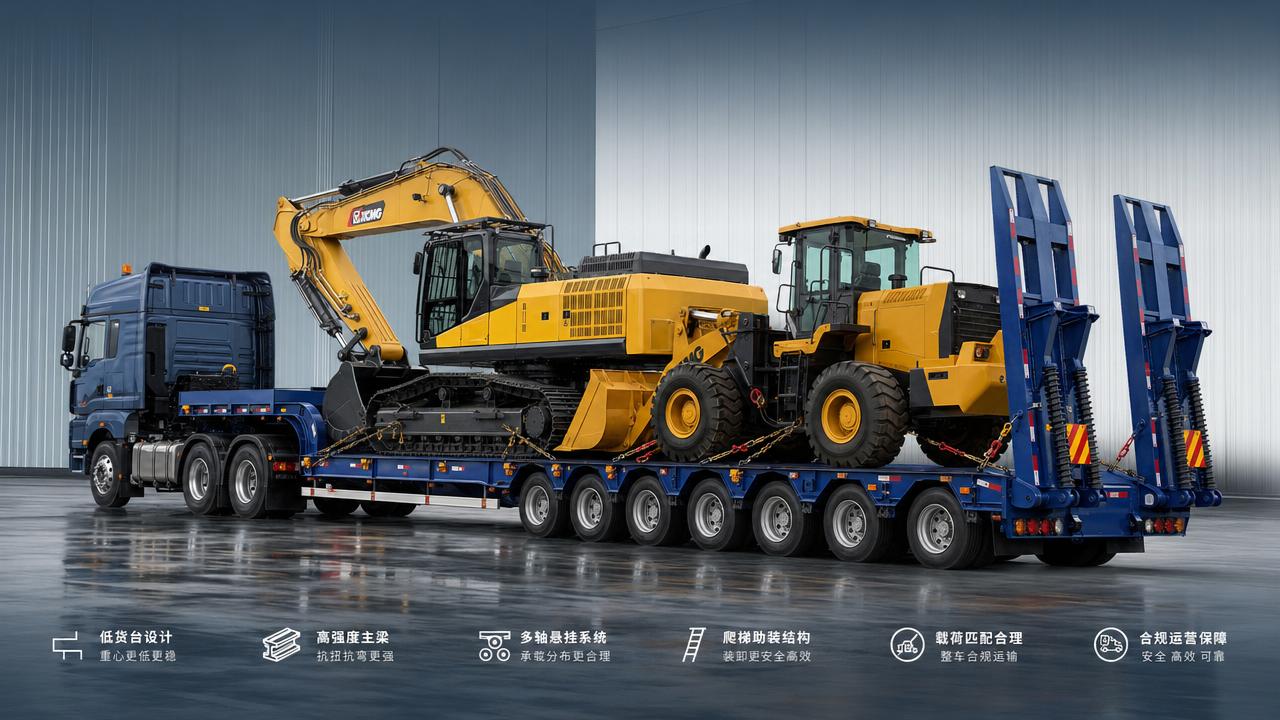
Choosing the right Low Plate trailer is not just a procurement decision—it directly affects total transport cost, fleet efficiency, and long-term ROI. Many buyers focus only on upfront price, while overlooking payload matching, compliance, durability, and after-sales support. For financial decision-makers, understanding these common buying mistakes is essential to avoid hidden expenses and make smarter, more cost-effective transport investments.
In the engineering vehicle sector, a Low Plate trailer is often used for excavators, wheel loaders, rollers, cranes, and other heavy equipment that cannot be transported economically on standard flatbeds. For finance approvers, the real issue is not whether the purchase price looks attractive on paper, but whether the trailer can reduce cost per trip over 3 to 5 years, stay compliant across routes, and keep asset utilization high.
A poor buying decision can increase operating cost in several ways: lower payload efficiency, more tire and suspension wear, repeated repairs, permit delays, loading inefficiency, and resale value erosion. These costs may not appear in the first quotation, but they often surface within the first 6 to 12 months of operation. That is why procurement and finance teams should evaluate Low Plate trailers using total lifecycle cost rather than unit price alone.
Why Low Plate Trailer Buying Mistakes Become a Financial Problem
In heavy transport, even a small specification mismatch can create a large budget impact. A Low Plate trailer that is 10% cheaper upfront may generate 15% to 25% higher operating expense if it causes underloading, excessive maintenance, or route restrictions. This is especially relevant for companies moving engineering equipment between construction sites, mines, logistics hubs, and infrastructure projects.
The hidden cost categories finance teams should track
Many buyers compare only chassis price, axle count, and visible structure. However, the actual financial picture includes at least 6 cost layers: acquisition, registration and compliance, fuel impact, maintenance, downtime, and residual value. If one of these areas is overlooked, the expected ROI can quickly weaken.
- Under-capacity design leading to more trips per month
- Incorrect deck height increasing permit or route restrictions
- Weak steel structure causing crack repairs after 12 to 18 months
- Poor axle and suspension matching increasing tire wear frequency
- Slow spare parts support extending downtime from 3 days to 2 weeks
- Low resale confidence due to non-standard configuration
Typical financial impact of common mistakes
The table below shows how common Low Plate buying errors can affect transport cost. These are practical planning ranges used in commercial vehicle evaluation, not exaggerated claims. They help financial decision-makers compare a low-price purchase with a lower-cost operation.
The key takeaway is simple: the least expensive Low Plate on the quotation sheet may become the most expensive option in field use. For finance teams, the evaluation should be based on annual cost per operating trip, expected maintenance interval, and asset uptime, not just purchase price.
A better financial lens: cost per productive ton-kilometer
A practical way to compare trailers is to divide yearly total operating cost by productive ton-kilometers. If one trailer carries a 35-ton excavator legally and efficiently in 1 trip while another requires route limits or partial loading, the higher-priced unit may still deliver a better return within 18 to 24 months.
The Most Common Low Plate Trailer Buying Mistakes
Low Plate trailer procurement mistakes are often predictable. They usually happen when technical review, transport planning, and financial analysis are handled separately. A more disciplined evaluation process can prevent overspending before the trailer is even delivered.
Mistake 1: Buying only by low quotation
An unusually low price often reflects reduced steel thickness, simplified reinforcement design, lower-grade axles, or limited documentation support. In engineering transport, where trailers may run under heavy stress 15 to 25 days per month, these compromises can create repair costs that exceed the initial saving.
Mistake 2: Mismatching payload to actual equipment fleet
A Low Plate trailer should match the heaviest and most frequently moved machines in your fleet. If your equipment range includes 20-ton, 30-ton, and 45-ton units, the trailer must be selected based on actual dispatch patterns, not occasional loads. Under-specification creates compliance risk, while over-specification may increase tare weight and fuel use unnecessarily.
What finance approvers should ask
- What are the top 3 machine types moved each month?
- What is the heaviest operating weight, including attachments?
- How many trips per week are short-haul versus long-haul?
- What axle load and height limits apply on key routes?
Mistake 3: Ignoring deck dimensions and loading geometry
Length, neck design, ramp angle, and deck height directly affect loading speed and safety. A mismatch can add 20 to 40 minutes per loading cycle, increase risk of equipment bottoming out, or require extra support equipment. Over a year, these delays reduce fleet productivity and labor efficiency.
Mistake 4: Overlooking local road compliance
Different markets apply different rules on gross vehicle weight, axle grouping, overall length, reflective markings, braking, and documentation. A Low Plate trailer that works in one region may require changes in another. If compliance review happens after purchase, modification costs and delivery delays can significantly impact project timelines.
Mistake 5: Underestimating service access and spare parts support
Even a strong trailer requires periodic maintenance. Wear items such as tires, brake components, bushings, electrical connectors, and suspension parts need replacement at predictable intervals. A supplier without structured export support may leave overseas buyers waiting 10 to 20 days for documentation or parts coordination, increasing idle time.
How to Evaluate a Low Plate Trailer Beyond Purchase Price
A disciplined approval process should combine engineering suitability with financial control. For most buyers, 4 decision layers matter most: technical fit, operating efficiency, compliance readiness, and supplier capability. Reviewing these layers before issuing a purchase order can reduce later cost surprises.
Core specifications that affect transport cost
The following table highlights practical evaluation points finance and procurement teams should review together when selecting a Low Plate trailer for engineering vehicle transport.
For finance approvers, these technical details matter because they translate directly into measurable cost outcomes. Better loading geometry may reduce labor time per trip. Better axle distribution may extend tire life. Better structural design may reduce major repairs during the first 24 months of operation.
Use a lifecycle cost checklist before final approval
Instead of approving a Low Plate trailer based on quotation alone, build a 12-point review checklist. It should include purchase price, expected annual mileage, average payload, road conditions, maintenance interval, documentation scope, spare parts lead time, and estimated resale position after 3 to 5 years.
- Check whether payload margin covers attachments and accessories
- Verify if brake, lighting, and marking standards match destination market
- Estimate tire replacement frequency under actual site-road conditions
- Review parts availability for axles, suspension, and braking systems
- Compare delivery lead time with project schedule requirements
- Assess whether the supplier can support export documents and customs processes
A simple ROI approach
A practical model is to compare 3-year ownership cost between two options. Add purchase cost, logistics, permit adaptation, estimated maintenance, expected downtime cost, and resale estimate. If Trailer A costs 7% more but reduces repair and delay exposure by 12% to 18%, it may provide the stronger financial case.
Supplier Selection Mistakes That Also Raise Transport Costs
In international engineering vehicle procurement, the supplier is part of the asset decision. A well-built Low Plate trailer can still become a problem if export coordination, pre-delivery inspection, or after-sales communication is weak. Finance teams should therefore assess supplier reliability as seriously as product specification.
Why exporter capability matters
For overseas buyers, full-process support can save both direct and indirect costs. Vehicle selection, configuration confirmation, documentation accuracy, customs handling, and logistics coordination all influence whether the trailer reaches the customer on time and in a usable condition. A delay of 2 weeks may affect project mobilization and cash flow planning.
What strong supplier support should include
A capable exporter should provide at least 5 service elements: technical consultation, configuration customization, export documentation support, shipping coordination, and after-sales response. This is particularly important when the trailer must work together with tractors and engineering vehicles from brands such as FOTON, SHACMAN, and SINOTRUK in mixed fleet operations.
Shandong Livol Truck International Trade Co., Ltd., based in Shandong, China, supports customers with integrated commercial vehicle export services. As an authorized domestic and overseas dealer for FOTON, SHACMAN, and SINOTRUK, the company combines vehicle supply resources, professional export coordination, inventory support, and after-sales communication to help buyers reduce procurement risk and delivery uncertainty.
Questions finance approvers should ask suppliers
- Can you confirm configuration details before production or dispatch?
- What is the typical documentation preparation cycle, such as 7–15 days or 2–4 weeks?
- How do you support spare parts supply for wear items?
- Can you coordinate shipping and customs support for the destination market?
- What inspection steps are completed before delivery?
A Practical Buying Framework for Financial Decision-Makers
The most effective way to prevent Low Plate buying mistakes is to standardize the approval process. This does not require complex software or long internal reporting. In many cases, a clear 4-step review framework is enough to improve decision quality and control total transport cost.
Step 1: Define actual transport demand
List the machines to be transported, their working weights, dimensions, route types, and trip frequency. Separate daily-use equipment from occasional oversized loads. This prevents overbuying or underbuying and gives procurement a realistic specification basis.
Step 2: Compare at least 3 cost scenarios
Review a low-cost option, a balanced option, and a high-spec option. Compare acquisition cost, expected maintenance, fuel effect, compliance adaptation, and downtime exposure. This gives finance teams a stronger approval rationale than a single quote comparison.
Step 3: Validate supplier execution ability
Confirm inventory readiness, production coordination, export documentation process, shipping support, and response speed. In practice, a trailer delivered 10 days earlier and placed into operation immediately may create more value than a slightly cheaper unit with uncertain delivery timing.
Step 4: Build a post-purchase maintenance budget
Allocate operating budget for inspections, brake maintenance, tire replacement, lubrication, and structural checks. Preventive maintenance at planned intervals usually costs less than emergency downtime. For heavy-use engineering fleets, inspection every 30 to 45 days can help detect wear before it becomes a serious operating loss.
Quick reference checklist
Before approving a Low Plate trailer purchase, use this checklist to reduce hidden cost exposure and improve transport efficiency.
This checklist helps move the discussion from “Which trailer is cheapest?” to “Which Low Plate is financially smarter for our operating environment?” That shift is where better procurement performance begins.
Final Decision Advice for Cost-Conscious Buyers
For engineering vehicle transport, a Low Plate trailer should be treated as a productivity asset, not just a transport accessory. The best purchase is usually the one that balances payload fit, structural durability, legal compliance, maintenance practicality, and supplier support. When finance teams review the full cost picture, they are far more likely to avoid the mistakes that drive up transport expense later.
If your business is evaluating Low Plate trailer options for excavators, loaders, rollers, or other heavy engineering equipment, Shandong Livol Truck International Trade Co., Ltd. can support the process with vehicle selection, customization, export documentation, customs coordination, logistics planning, and after-sales assistance. Contact us today to discuss your transport requirements, get a tailored solution, and learn more about cost-effective commercial vehicle export options.
Search Starts Here