
News
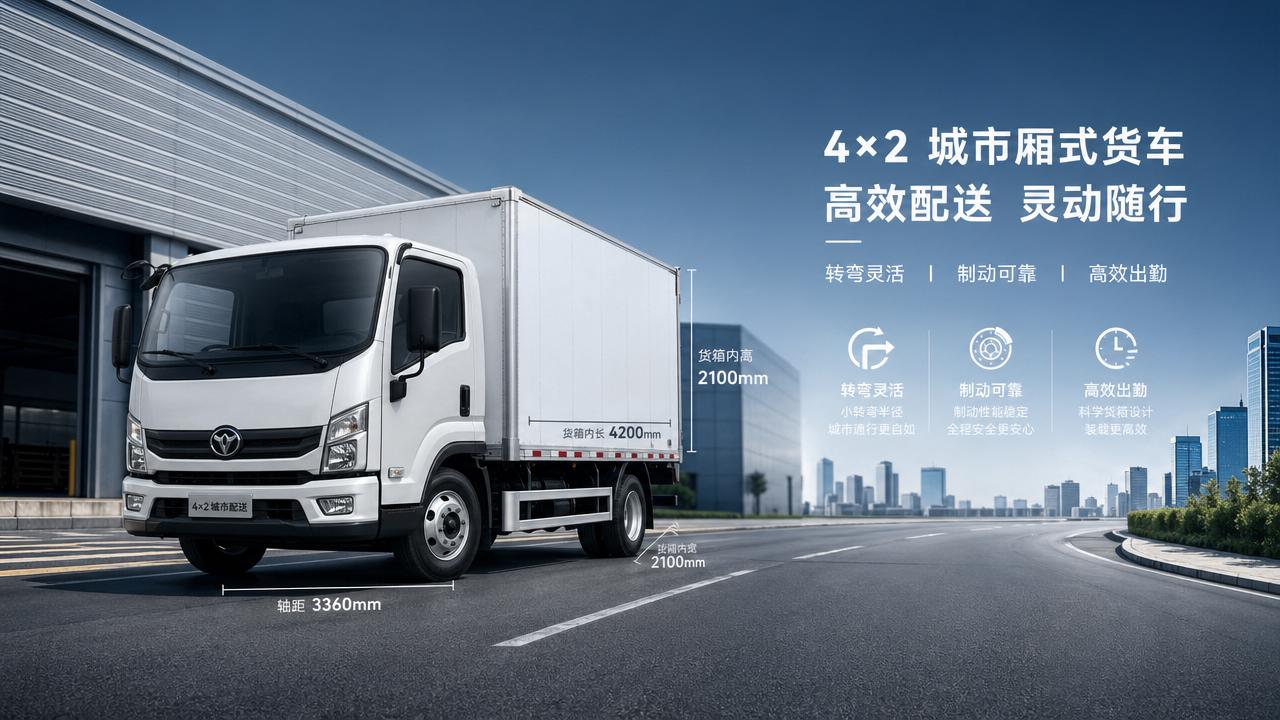
Before putting a 4_2 Cargo Truck into daily urban delivery service, operators should check payload capacity, body dimensions, turning radius, fuel efficiency, braking performance and local road compliance. A careful inspection helps reduce downtime, improve safety and keep deliveries on schedule. For businesses that rely on efficient city transport, choosing the right truck setup is the first step toward reliable and cost-effective operations.
Why is a pre-check so important before using a 4_2 Cargo Truck in city delivery work?
A 4_2 Cargo Truck is often chosen for urban logistics because it balances payload, maneuverability and operating cost better than many larger transport vehicles. However, city delivery creates a demanding operating environment. Drivers face frequent stops, narrow streets, loading restrictions, low bridges, traffic congestion, curbside unloading and time-sensitive routes. A truck that looks suitable on paper may become inefficient or even non-compliant once it enters daily service.
That is why a practical pre-check matters. It helps operators confirm whether the truck matches the actual delivery task, not just the purchase specification. The goal is to avoid overload, difficult turning in tight lanes, excessive fuel use, poor braking under repeated stop-start cycles or conflicts with city access rules. For fleet managers and drivers, these checks directly affect safety, uptime, maintenance cost and customer satisfaction.
In the engineering vehicle and commercial transport field, the best-performing truck is not always the biggest or most powerful one. It is the one configured correctly for route density, cargo type, legal limits and daily working rhythm. A disciplined inspection process before service starts can prevent expensive adjustments later.
What payload and body size should operators verify first?
The first thing to check on a 4_2 Cargo Truck is whether its rated payload truly fits the cargo profile of your urban operation. Many users focus only on maximum load, but daily delivery usually involves variable weight, packaging volume and loading frequency. A truck may carry the weight legally but still lack cargo space, or it may have enough body volume but exceed axle limits when dense goods are loaded.
Operators should confirm gross vehicle weight, curb weight, legal payload and axle load distribution. This is especially important when transporting beverages, hardware, construction supplies, packaged food, spare parts or mixed palletized goods. Uneven loading can affect steering stability and braking response, even if the total weight appears acceptable.
Body dimensions are equally critical. Check cargo box length, internal height, tail overhang and overall vehicle height. Urban routes may include covered loading bays, underground access points, old neighborhoods or shopping streets with strict size limits. A truck body that is too long can make reversing and turning difficult. A body that is too tall may limit route options and slow unloading in confined spaces.
It is also wise to compare cargo type with body configuration. Dry van, stake body, wing van and refrigerated body options serve very different use cases. Choosing the wrong body style can reduce loading efficiency, increase product damage risk or add unnecessary weight. For daily city work, loading speed often matters almost as much as carrying capacity.
Quick check table for load and size decisions
Before assigning a 4_2 Cargo Truck to a route, use the following checklist to match the truck with real operating needs.
How do turning radius, braking and visibility affect daily urban operation?
A 4_2 Cargo Truck used in cities must do more than carry goods. It must move safely and efficiently through intersections, narrow access roads, temporary parking areas and crowded commercial districts. Turning radius is therefore one of the most practical checks. Even a small difference in wheelbase or steering geometry can determine whether the truck can enter a loading dock in one move or requires repeated corrections that waste time and increase accident risk.
Braking performance is another high-priority item. Urban delivery means frequent braking, often with changing load conditions. Operators should inspect brake response, pedal feel, stopping distance under partial and full load, parking brake reliability and the condition of brake pads, drums or discs. If the truck will run on congested routes or in rainy conditions, braking consistency becomes even more important than raw engine output.
Visibility should never be underestimated. City delivery drivers need clear front, side and rear views to protect pedestrians, cyclists, scooters and parked vehicles. Check mirror coverage, blind-spot size, windshield condition, camera systems and reverse alarms if fitted. A well-configured 4_2 Cargo Truck helps reduce minor collisions during frequent docking and curbside unloading, which can otherwise create avoidable repair costs and route delays.
If possible, carry out a route simulation with an experienced driver before putting the vehicle into daily use. A short real-world test often reveals issues that spec sheets cannot, such as mirror interference, wide rear swing, difficult lane changes or poor brake confidence in repeated stops.
What should users check about fuel efficiency, engine matching and maintenance needs?
For many operators, the true cost of a 4_2 Cargo Truck is determined not by purchase price alone but by daily operating expense. Fuel use in urban delivery can vary greatly depending on engine displacement, transmission ratio, route congestion, idle time and average payload. A truck optimized for highway transport may not perform efficiently in stop-and-go city work.
Users should look at real fuel consumption under urban conditions, not only manufacturer benchmark figures. Ask whether the engine torque curve supports low-speed starts with cargo, whether the gearbox suits repeated acceleration and whether the vehicle idles efficiently during short waiting periods. A poorly matched powertrain can raise fuel cost while also increasing clutch and brake wear.
Maintenance access is another practical issue. Daily urban fleets lose money whenever a truck sits idle. Check service intervals, parts availability, filter access, tire replacement convenience and diagnostic support. Since urban trucks typically accumulate many start-stop cycles, components such as brakes, suspension bushings, batteries and clutches may wear faster than expected if maintenance planning is weak.
This is where supply capability and after-sales support matter. A reliable exporter and dealer network can make a major difference when users need spare parts, technical documents, configuration guidance or quick replacement availability. Companies with authorized channels for brands such as FOTON, SHACMAN and SINOTRUK can often help customers match the right commercial vehicle setup to market conditions and support long-term fleet continuity.
Which compliance and route restrictions must be confirmed before daily deployment?
A 4_2 Cargo Truck may be mechanically capable of city delivery but still unsuitable if it does not meet local operating rules. Urban areas often regulate vehicle dimensions, emissions level, axle weight, delivery time windows, noise standards and road access by district. Some cities restrict diesel trucks at certain hours, while others limit entry based on gross weight or body type.
Operators should verify registration class, emission compliance, required permits and loading-unloading zone rules before assigning routes. It is also smart to check whether the truck requires additional safety markings, reflective tape, side guards, reversing alarms or camera systems under local regulation. Missing one compliance item can result in fines, detention or route disruption.
Route restrictions deserve equal attention. Confirm bridge height, road width, curb weight limits, market access timing and warehouse receiving conditions. In many delivery environments, the route itself decides whether a certain 4_2 Cargo Truck configuration will work. A vehicle that fits suburban distribution may struggle in older city centers with narrow turns and limited unloading space.
The safest approach is to create a route compliance file for each truck. Include permit status, dimensional data, height limits, loading rules and restricted zones. This makes dispatching faster and reduces errors when routes change or substitute drivers are assigned.
What common mistakes do operators make when selecting a 4_2 Cargo Truck for urban deliveries?
One common mistake is choosing by maximum payload alone. In city logistics, oversized capacity can increase fuel use, make parking harder and reduce route flexibility. Another mistake is ignoring cargo volume. Operators sometimes focus on tonnage but overlook how carton dimensions, pallet layout or returnable packaging reduce usable space.
A second frequent error is underestimating stop-start wear. Urban delivery vehicles need durable brakes, suitable gearing, stable cooling performance and easy service access. If a truck is specified for long-distance road use without considering city duty cycles, maintenance costs can rise quickly.
A third mistake is failing to test the truck in real operating conditions. Paper specifications cannot fully show blind spots, steering feel, docking difficulty or loading convenience. Even small details such as step height, door opening angle or tail-lift compatibility can affect delivery speed over hundreds of stops each week.
Finally, some buyers overlook the importance of export experience and after-sales organization when sourcing trucks internationally. For commercial vehicle users, stable supply, proper documents, customs support and technical communication are not secondary issues. They are part of the truck’s practical usability. A professional exporter with inventory strength and full-process service can reduce procurement risk and help operators receive vehicles configured for local tasks from the beginning.
How can users decide whether a specific 4_2 Cargo Truck is the right fit for their delivery fleet?
The best way is to evaluate the truck against the actual delivery pattern, not a generic transport requirement. Start with average daily cargo weight, cargo dimensions, number of stops, route radius, unloading method and road condition. Then compare those needs with payload, body length, turning circle, fuel economy, braking configuration, cab visibility and maintenance plan.
If your operation includes supermarket supply, courier linehaul to urban hubs, building material distribution or spare parts delivery, define which factor is the priority: volume, durability, access flexibility, temperature control or cost per trip. A suitable 4_2 Cargo Truck is the one that supports that priority without creating hidden compliance or service problems.
It also helps to ask practical sourcing questions early. Can the body be customized for your cargo? Is the axle ratio suitable for city routes? Are spare parts available in your market? What documentation is included for registration and customs clearance? Can the supplier support pre-delivery inspection and post-sale technical guidance? These questions turn a vehicle purchase into a workable fleet solution.
FAQ summary for fast decision-making
What should be discussed before requesting a final truck recommendation or quotation?
Before moving forward with procurement, users should prepare a short list of operating facts: cargo type, average and peak load, body preference, route environment, emission requirement, unloading method and expected daily mileage. This allows the supplier to recommend a 4_2 Cargo Truck that is not only available, but properly configured for urban use.
It is also useful to confirm lead time, inventory status, customization options, spare parts support, export documents and logistics arrangement. For buyers working across borders, a supplier with authorized brand resources, stable stock and full-process export service can simplify vehicle selection, documentation, customs clearance and delivery planning.
If you need to confirm a specific solution, the best next step is to discuss route conditions, legal limits, body dimensions, payload target, engine preference, after-sales expectations and delivery schedule in advance. With those points clarified, it becomes much easier to identify the right 4_2 Cargo Truck for safe, efficient and dependable daily urban deliveries.
Search Starts Here