
News
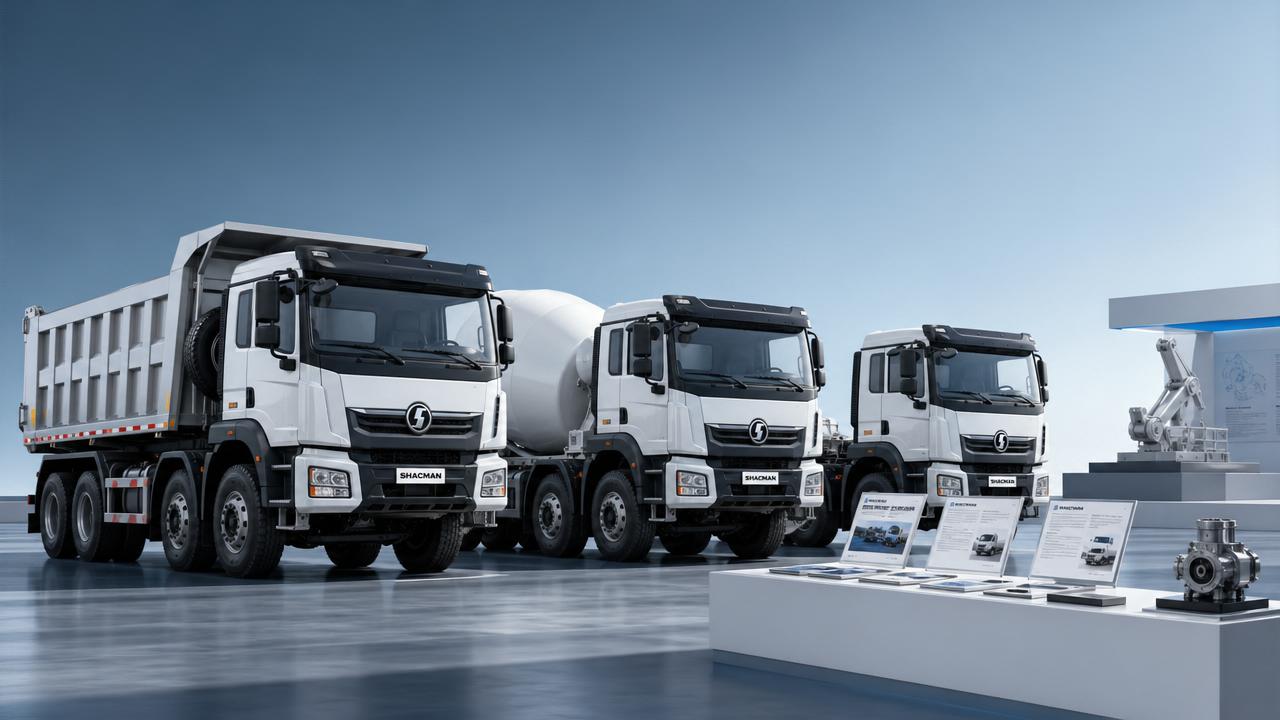
For enterprise decision-makers managing commercial vehicle procurement, the Cangshan Vehicle Configuration List offers a practical framework for comparing specifications, controlling costs, and improving fleet consistency. In the engineering vehicle sector, a standardized selection process helps reduce operational risks and speeds up purchasing decisions. This article explains how the list supports smarter fleet planning, clearer model evaluation, and more reliable long-term investment choices.
What is the Cangshan Vehicle Configuration List, and why does it matter in engineering vehicle procurement?
The Cangshan Vehicle Configuration List can be understood as a structured reference used to compare key vehicle specifications in a clear, repeatable way. For companies buying engineering vehicles, this matters because procurement decisions are rarely based on price alone. Engine output, axle ratio, chassis strength, loading capacity, cab layout, hydraulic options, tire configuration, emission standard, and maintenance compatibility all affect long-term operating value.
Without a unified checklist, fleet selection often becomes inconsistent. One branch may choose a model based on initial cost, another may prioritize availability, while a third may focus on payload or driver preference. Over time, this creates a mixed fleet with uneven parts demand, complicated servicing, and higher training requirements. The Cangshan Vehicle Configuration List helps prevent that fragmentation by turning vehicle comparison into a standardized process.
In the engineering vehicle sector, where trucks may operate in construction sites, mining zones, municipal projects, and infrastructure logistics, standardization is more than administrative convenience. It influences uptime, fuel economy, parts planning, dispatch efficiency, and resale value. For decision-makers, a configuration list is valuable because it connects technical details with business outcomes.
Which business problems can the Cangshan Vehicle Configuration List help solve?
Many enterprises first look at the Cangshan Vehicle Configuration List when they realize that procurement is producing avoidable operational complexity. In practice, the list helps solve several common problems.
- Inconsistent model selection across regions or projects
- Difficulty comparing brands and specifications on the same basis
- Unexpected maintenance costs caused by excessive model diversity
- Poor alignment between vehicle capacity and actual jobsite conditions
- Slow internal approval because technical options are not clearly documented
For example, a construction contractor may purchase dump trucks for multiple projects. If each site manager requests different configurations without a central standard, the company may end up managing different engines, transmission types, suspension setups, and body specifications. That raises spare parts inventory, complicates driver assignment, and reduces bargaining power with suppliers. A well-used Cangshan Vehicle Configuration List narrows options to fit actual use cases, making procurement more disciplined.
This is particularly useful when evaluating offerings from major Chinese commercial vehicle brands such as FOTON, SHACMAN, and SINOTRUK. A standardized configuration review makes it easier to compare equivalent engineering vehicle solutions rather than relying on marketing descriptions alone.
What should enterprise decision-makers focus on when using the Cangshan Vehicle Configuration List?
The Cangshan Vehicle Configuration List is most effective when it is tied to purchasing criteria that reflect real operating conditions. Decision-makers should not simply review the list as a technical document. They should use it to answer whether a vehicle will perform reliably, profitably, and consistently in the field.
The most important review areas usually include application fit, lifecycle cost, service support, and standardization potential. Application fit means checking whether the selected vehicle matches road quality, terrain, payload pattern, daily distance, climate, and local regulatory requirements. Lifecycle cost goes beyond procurement price and includes fuel use, tire wear, maintenance intervals, parts supply, and resale expectations.
Service support is equally important. Even a technically strong truck can become a weak investment if spare parts lead times are long or after-sales support is unreliable in the destination market. Standardization potential refers to how easily the model can be integrated into the existing fleet. If the same engine family, driveline architecture, and service procedures can be used across multiple units, operational efficiency usually improves.
A practical comparison table for fleet selection
When companies use the Cangshan Vehicle Configuration List in this way, decisions become less subjective and easier to justify internally.
How does the Cangshan Vehicle Configuration List improve standardization across a growing fleet?
Fleet standardization is often discussed, but many companies struggle to achieve it because procurement decisions happen at different times and under different project pressures. The Cangshan Vehicle Configuration List creates a common language for future purchases. Instead of restarting the evaluation process from zero each time, the company can define approved configurations for major engineering tasks.
For instance, a business may define one standard dump truck configuration for urban infrastructure work, another for heavy off-road hauling, and a third for medium regional transport tied to construction materials. Once these profiles are built around the Cangshan Vehicle Configuration List, future sourcing becomes faster. Teams can compare available stock and lead times against pre-approved standards rather than debating every specification again.
The benefit is not only in purchasing speed. Standardization can lower driver training time, simplify workshop procedures, and improve parts forecasting. It also gives management better visibility over fleet composition. If too many exceptions appear outside the approved configuration range, decision-makers can quickly identify why and correct the process.
In export-oriented procurement, standardization also supports documentation accuracy and compliance consistency. This is valuable when vehicles are shipped to multiple overseas markets with different customs, technical, or registration requirements.
What mistakes do companies make when reading the Cangshan Vehicle Configuration List?
One common mistake is treating the Cangshan Vehicle Configuration List as a simple equipment catalog instead of a decision tool. If the list is reviewed only to confirm visible features, important operating implications may be missed. A larger engine, for example, is not automatically a better choice if the project environment does not require that level of output and the result is higher fuel cost.
Another mistake is ignoring local application conditions. Engineering vehicles may face steep grades, rough haul roads, overloaded cycles, or frequent stop-start operations. A configuration that performs well in one country or work pattern may not be suitable in another. Decision-makers should translate each item in the Cangshan Vehicle Configuration List into a real use scenario before approval.
Some buyers also focus too heavily on purchase price and overlook support capability. If a lower-cost model lacks stable spare parts supply or technical service, total downtime cost can quickly outweigh the initial savings. In addition, companies sometimes allow too many custom exceptions. Customization is valuable, but uncontrolled customization can undermine the very standardization the list is meant to support.
A disciplined review process should therefore ask not only “What is included?” but also “Why is it included, where will it be used, and how will it affect operating performance over time?”
How can procurement teams compare different suppliers more effectively with the Cangshan Vehicle Configuration List?
A major strength of the Cangshan Vehicle Configuration List is that it gives procurement teams a neutral structure for supplier comparison. This is especially useful when evaluating exporters, dealers, or manufacturers offering similar engineering vehicle categories but different configuration philosophies.
Instead of comparing quotations line by line in isolation, teams can place each supplier response against the same specification framework. That allows them to identify where one offer includes stronger driveline components, where another provides better working equipment, or where a lower price may reflect omitted features. This reduces ambiguity during negotiation.
For enterprise buyers working with a professional exporter, the conversation should also include inventory depth, authorized brand status, customization capability, documentation handling, shipping coordination, and after-sales responsiveness. These are not separate from the configuration list; they influence whether the selected configuration can be delivered correctly and supported after arrival.
Shandong Livol Truck International Trade Co., Ltd. operates as an authorized domestic and overseas dealer for FOTON, SHACMAN, and SINOTRUK, with broad 4S store coverage, available stock, and export process experience. For buyers, this kind of supplier capability can make the Cangshan Vehicle Configuration List more actionable, because the list is not just theoretical. It can be matched with real vehicle availability, customization options, and coordinated international delivery.
What should be confirmed before turning the Cangshan Vehicle Configuration List into a purchase decision?
Before final approval, decision-makers should confirm a short set of commercial and technical points to avoid downstream surprises. The Cangshan Vehicle Configuration List helps organize these checks, but the final decision still needs business validation.
If these questions are answered clearly, the Cangshan Vehicle Configuration List becomes more than a reference sheet. It becomes a bridge between engineering requirements, procurement control, and financial accountability.
Why is the Cangshan Vehicle Configuration List especially useful for long-term fleet planning?
Long-term fleet planning requires consistency in data, decision rules, and supplier coordination. The Cangshan Vehicle Configuration List supports all three. It gives the business a repeatable framework for replacing older vehicles, expanding into new projects, and aligning different business units under one procurement logic.
In the engineering vehicle market, conditions can change quickly due to project timing, infrastructure demand, fuel trends, or regulatory updates. A standardized list helps enterprises respond without losing control. Instead of making rushed one-off purchases, they can adjust within a known configuration range, preserving operational consistency while adapting to new requirements.
This approach also improves budget forecasting. When the company understands which configurations are preferred and why, it can estimate acquisition cost, maintenance load, and replacement cycles more accurately. That is a strong advantage for enterprise decision-makers responsible for capital allocation and operational efficiency.
What should you discuss first if you want to apply the Cangshan Vehicle Configuration List to a real procurement project?
If you want to turn the Cangshan Vehicle Configuration List into a practical sourcing tool, the first discussion should focus on application details rather than price alone. Clarify the vehicle type needed, expected payload, road and terrain conditions, annual mileage, preferred brands, emission requirements, delivery deadline, and target destination market. Then confirm whether standard configurations are enough or whether customization is necessary for the job.
It is also wise to ask about available inventory, authorized brand channels, spare parts planning, export documentation support, and after-sales arrangements. For enterprise buyers, these questions shorten evaluation time and reduce execution risk. When supplier capability and the Cangshan Vehicle Configuration List are aligned, fleet selection becomes more transparent, more standardized, and more commercially sound.
If your team needs to confirm specific engineering vehicle models, technical parameters, lead times, customization scope, quotation structure, or cooperation process, those are the best starting points for a focused procurement conversation.
Search Starts Here