
News
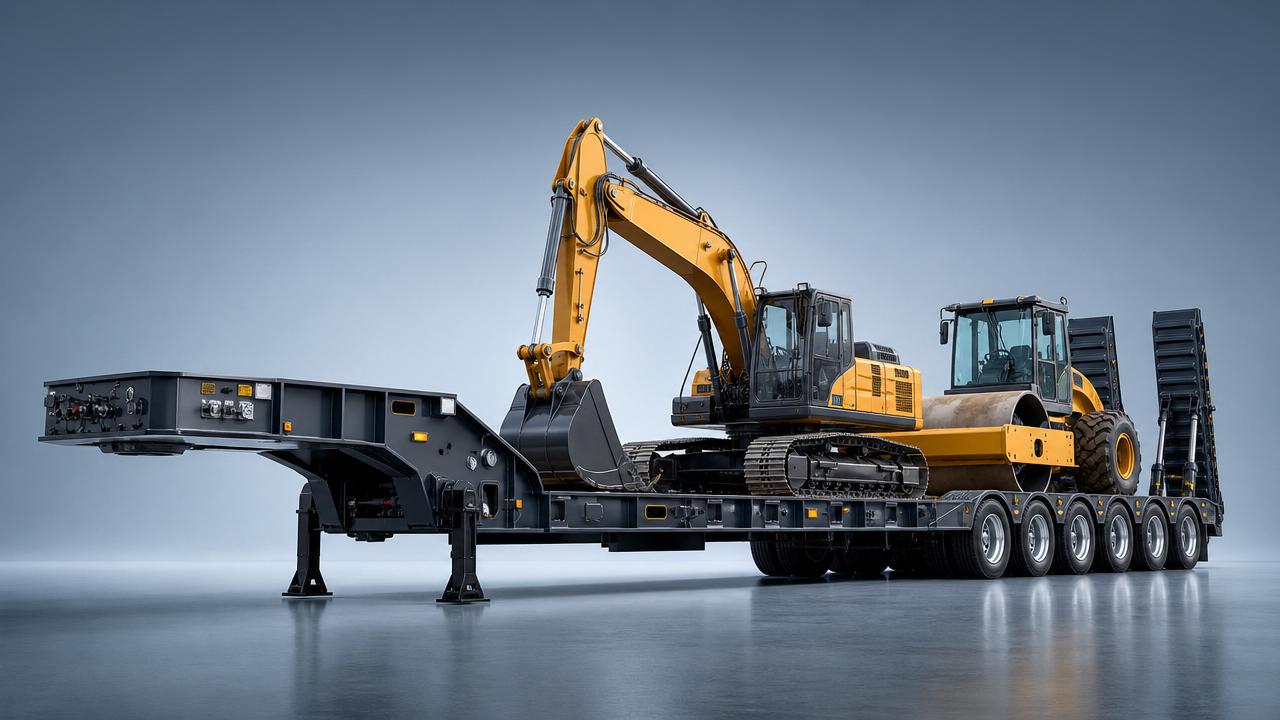
Choosing the right Low Plate trailer is a critical decision for business buyers balancing transport safety, payload efficiency, and total operating cost. From load capacity and deck height to axle configuration and compliance requirements, every specification can directly affect project timelines and long-term profitability. This guide highlights the key factors decision-makers should evaluate before purchasing a Low Plate trailer for demanding engineering and heavy equipment transport.
For most business buyers, the best Low Plate trailer is not simply the one with the highest rated capacity or the lowest purchase price. The right choice is the trailer that safely matches your actual cargo profile, road conditions, loading method, and regulatory environment while keeping lifecycle cost under control. A mismatch in specifications can lead to downtime, permit issues, faster tire wear, unsafe load distribution, or underutilized assets.
That is why procurement decisions should start with application requirements rather than product brochures. If your business moves excavators, bulldozers, road rollers, transformers, cranes, or other heavy engineering equipment, the key buying question is straightforward: which trailer specifications will reduce risk and improve operating efficiency over years of service? The answer lies in a small set of technical factors that have an outsized impact on transport safety and cost.
What Business Buyers Need to Evaluate First
Before comparing brands or requesting quotations, decision-makers should clarify four practical points: what equipment will be transported most often, what the true operating weight range is, what roads and terrain the trailer will travel on, and whether loading happens at depots, jobsites, or mixed environments. These factors determine the right Low Plate configuration far more accurately than generic “capacity class” labels.
Many procurement mistakes happen because the trailer is selected only for occasional maximum loads. In reality, a fleet trailer often spends more time carrying medium-weight equipment than extreme payloads. Over-specifying every unit may increase purchase cost, fuel consumption, and maintenance burden. Under-specifying, however, creates much bigger risks: reduced stability, legal non-compliance, structural stress, and costly delays.
For enterprise buyers, the ideal approach is to define a transport profile. This includes typical machine dimensions, center of gravity, loading frequency, route quality, annual mileage, and required delivery turnaround. With that profile in hand, you can assess the trailer as a business tool, not just a piece of hardware.
Load Capacity Is Important, but Real Payload Matching Matters More
Load capacity is usually the first specification buyers check, and for good reason. A Low Plate trailer must safely support the gross weight of the cargo while maintaining structural integrity and axle load balance. However, rated capacity on paper is only one part of the decision. Buyers should focus on usable payload under real operating conditions.
For example, transporting a 60-ton excavator is not only about whether the trailer is “rated” for 60 tons. You must also consider the machine’s track width, overall length, contact points, boom positioning, and how the weight is distributed across the deck. Concentrated loads can stress specific sections of the platform even when total weight remains within specification.
Ask suppliers detailed questions about main beam design, steel grade, reinforcement layout, and whether the trailer is designed for repeated heavy-duty loading rather than occasional overload tolerance. A trailer with a stronger frame and better weight distribution design may deliver lower long-term repair cost than a cheaper model with the same nominal capacity.
It is also wise to leave a practical safety margin. If your most frequent cargo is close to the trailer’s maximum rating, the unit may spend its life operating under high stress. That affects tire life, suspension wear, braking consistency, and fatigue resistance. For long-term fleet performance, matching actual payload patterns is more valuable than chasing the highest number on the spec sheet.
Deck Height Directly Affects Safety, Stability, and Route Flexibility
One of the biggest advantages of a Low Plate trailer is its lower deck height, which helps transport tall equipment while controlling total vehicle height. For engineering and construction logistics, this is not a minor feature. Deck height influences route access, bridge and tunnel clearance, loading angle, and the center of gravity during travel.
A lower platform usually improves transport stability because it reduces the load’s vertical center of gravity. That matters when carrying excavators, loaders, or machines with uneven mass distribution. Better stability can reduce rollover risk on curves, uneven road shoulders, and emergency maneuvers. It can also make the trailer more forgiving in mixed road conditions.
At the same time, ultra-low designs are not always the best fit for every operation. Lower deck structures may reduce ground clearance, which can become a limitation on rough sites, temporary access roads, or steep breakover points. Decision-makers should evaluate whether the trailer will primarily operate on highways, paved industrial roads, quarry routes, or undeveloped project areas.
In practical terms, buyers should compare loaded height, unloaded ground clearance, ramp approach geometry, and expected route restrictions. A well-chosen deck height helps avoid detours, permit complications, and loading difficulties. In many operations, this translates directly into time savings and better equipment utilization.
Axle Configuration Has a Major Impact on Compliance and Operating Cost
Axle configuration is one of the most commercially important Low Plate specifications because it affects legal load distribution, tire wear, turning behavior, road adaptability, and maintenance complexity. Yet it is often underestimated during procurement.
The number of axles, axle spacing, suspension design, and load-sharing behavior all influence whether a trailer performs efficiently under your target operating conditions. More axles can improve load distribution and support heavier cargo, but they also increase initial cost, tire count, maintenance points, and sometimes maneuvering difficulty in tighter project sites.
For cross-border or multi-region operations, axle setup must also align with local road regulations and permit frameworks. A configuration that works well in one market may create compliance challenges in another, especially where axle load limits are strictly enforced. Business buyers should evaluate not just engineering suitability but also legal practicality.
Suspension choice is equally important. Mechanical suspension may be attractive for its simplicity and lower cost, while air suspension can offer advantages in ride quality, cargo protection, and load equalization depending on the use case. For heavy engineering transport, the right answer depends on cargo sensitivity, route conditions, and service support availability in your operating region.
When comparing options, do not stop at axle count. Ask how the configuration affects total ownership cost across tires, bushings, braking components, and routine inspections. A smarter axle design often creates savings that are not visible in the purchase quotation.
Frame Strength and Structural Design Determine Service Life
In heavy-duty transport, the trailer frame is the foundation of safety and long-term value. A Low Plate trailer may look similar across suppliers, but differences in beam structure, welding quality, plate thickness, reinforcement zones, and manufacturing consistency can have a major effect on fatigue resistance and durability.
Business buyers should pay close attention to the main beam, cross members, gooseneck area, and high-stress transition points. These are the zones where repeated dynamic loads, uneven site conditions, and harsh braking forces can accelerate wear or cracking if the structure is not properly engineered.
Material selection also matters. High-strength steel can reduce dead weight while maintaining structural performance, improving payload efficiency. But material quality only delivers value when paired with sound design and process control. Poor fabrication can undermine even strong materials.
Ask suppliers about quality inspection methods, welding procedures, anti-corrosion treatment, and whether the design has been validated through real export market usage. Decision-makers should think in terms of lifecycle strength, not showroom appearance. A stronger trailer frame can reduce downtime, preserve resale value, and support safer operations over a longer period.
Ramp Design and Loading Method Affect Daily Efficiency
For many fleets, loading and unloading efficiency is where trailer choice starts affecting profitability on day one. Ramp design determines how quickly and safely equipment can be moved onto the deck, especially when operations involve different machine types, uneven surfaces, or frequent jobsite redeployment.
Key factors include ramp length, ramp angle, width, surface grip, folding or hydraulic operation, and compatibility with tracked or wheeled machinery. If the ramp angle is too steep, loading becomes slower and riskier, especially for machines with low ground clearance or heavy front-end bias.
Hydraulic ramps can improve convenience and reduce manual labor, but they introduce additional system complexity and maintenance requirements. Mechanical ramps may be simpler and more cost-effective for certain markets. The right decision depends on loading frequency, operator skill level, and service infrastructure.
Procurement teams should also assess whether the deck layout supports common cargo securing methods and whether there is enough usable space for safe equipment positioning. A trailer that saves ten to fifteen minutes per load cycle can produce meaningful annual productivity gains in busy project environments.
Braking, Tires, and Safety Systems Should Never Be Treated as Secondary
When buyers focus too heavily on visible specifications such as capacity and dimensions, they sometimes overlook the systems that most directly affect transport safety in daily use. Braking performance, tire quality, and cargo securing arrangements are not optional details. They are central to accident prevention, compliance, and operating reliability.
The braking system should match trailer weight class, route conditions, and the tractor unit it will work with. Poorly matched braking can increase stopping distance, reduce stability, and create dangerous wear patterns. Buyers should confirm component brand, service network, and spare parts availability, especially in export markets where maintenance response time matters.
Tires deserve the same level of attention. Cheap tires may reduce upfront cost but often create higher failure risk, shorter service life, and more downtime. For heavy engineering transport, tire durability under concentrated loads and mixed road conditions is especially important. Tire specification should align with real axle loads, speed profile, and climate conditions.
Safety also includes lashing points, side protection, lighting, reflective markings, anti-slip surfaces, and visibility features. These elements may not dominate a quotation sheet, but they reduce incident exposure and support safer jobsite handling. For decision-makers, that means lower operational risk and fewer avoidable disruptions.
Compliance Requirements Can Change the Best Buying Option
A technically strong Low Plate trailer can still become a poor investment if it does not fit the legal and documentation requirements of the destination market. Compliance affects registration, road access, inspection approval, and insurance acceptability. For international buyers, this area deserves early attention.
Relevant requirements may include dimensions, axle loads, lighting standards, braking standards, reflective tape, VIN documentation, homologation, and customs-related paperwork. In some countries, trailer type approval processes are strict, and non-compliant specifications can cause long delays or expensive modifications after arrival.
This is where an experienced exporter becomes valuable. Buyers should work with suppliers who understand destination market rules, can support documentation accuracy, and can help align the product configuration with local operating realities. This reduces uncertainty during import, registration, and fleet deployment.
For enterprise procurement, compliance is not just a legal issue. It is a cost-control issue. Delayed commissioning, retrofitting, and restricted operation can erase any savings gained from a lower purchase price.
Total Cost of Ownership Matters More Than Purchase Price
For business decision-makers, trailer procurement should be judged by total cost of ownership rather than invoice price alone. A lower-cost Low Plate trailer may seem attractive initially, but if it causes higher fuel use, faster tire wear, more repairs, lower uptime, or reduced route flexibility, it can become the more expensive asset over its service life.
The main cost categories to assess include acquisition cost, shipping and import cost, maintenance frequency, spare parts accessibility, tire replacement rate, fuel impact from dead weight, downtime exposure, and expected resale value. Operational fit should also be part of the calculation. A trailer that handles your core cargo mix more efficiently can improve fleet productivity in ways that are not obvious in simple price comparisons.
Decision-makers should ask suppliers for a structured comparison, not just a quote. Compare tare weight, key component brands, steel specification, warranty terms, maintenance recommendations, and service support scope. This helps reveal whether a product is engineered for low lifecycle cost or merely priced to win attention.
In many cases, the best-value trailer is the one that balances robustness, compliance, and application fit without excessive over-specification. Smart procurement is not about buying the cheapest trailer or the heaviest trailer. It is about buying the trailer that supports profitable, reliable transport.
Questions to Ask Before You Place an Order
To reduce procurement risk, business buyers should ask a focused set of technical and commercial questions before finalizing a Low Plate trailer purchase. These questions help separate suitable solutions from generic offers.
Start with application fit: What cargo has this trailer been designed to carry repeatedly? How is concentrated load handled? What deck height and ramp angle can be achieved under real conditions? What axle configuration is recommended for my region and payload profile?
Then move to durability and serviceability: What steel grade is used? Where are the frame reinforcement points? Which axle, brake, and suspension brands are fitted? What spare parts support is available? What anti-corrosion process is used for long-term export operation?
Finally, confirm trade and compliance capability: Can the supplier support required export documents, technical records, and market-specific configuration adjustments? Can they provide customization based on operating conditions? Can they maintain stable supply if your fleet expands?
These questions shift the discussion from brochure selling to operational suitability. That is exactly where enterprise buyers should focus.
How an Experienced Export Partner Adds Value
For overseas buyers, product quality is only one part of a successful purchase. The supplier’s export capability, responsiveness, and ability to coordinate customization, documentation, inspection, and logistics can significantly affect project outcomes. A good trailer with weak export execution can still create delays and hidden costs.
Shandong Livol Truck International Trade Co., Ltd. supports global commercial vehicle buyers with integrated export services covering product selection, customization, documentation, customs clearance, and logistics coordination. With experience in international trade and strong supply access through authorized networks, the company helps buyers reduce sourcing uncertainty and improve delivery reliability.
For companies purchasing Low Plate trailers as part of broader engineering transport or fleet expansion plans, this type of end-to-end support is especially useful. It can simplify decision-making, improve communication during production and shipment, and reduce the risk of specification mismatch or documentation errors.
When evaluating suppliers, enterprise buyers should consider not only manufacturing strength but also whether the exporter can support long-term cooperation, after-sales responsiveness, and stable supply as business grows.
Conclusion: Buy for Operating Reality, Not Just Specifications on Paper
The right Low Plate trailer improves transport safety, protects cargo, supports compliance, and lowers operating cost over time. The wrong one may still move equipment, but with more restrictions, more wear, and more commercial risk. For business buyers, the most important decision is not choosing the most impressive specification list. It is choosing the trailer that fits your real transport profile.
Focus on the factors that truly affect performance: payload matching, deck height, axle configuration, frame strength, ramp usability, braking and tire quality, and destination-market compliance. Then evaluate each option through the lens of total cost of ownership, not purchase price alone.
When procurement is handled this way, a Low Plate trailer becomes more than a transport asset. It becomes a tool for safer operations, better equipment utilization, and stronger long-term profitability.
Search Starts Here