News
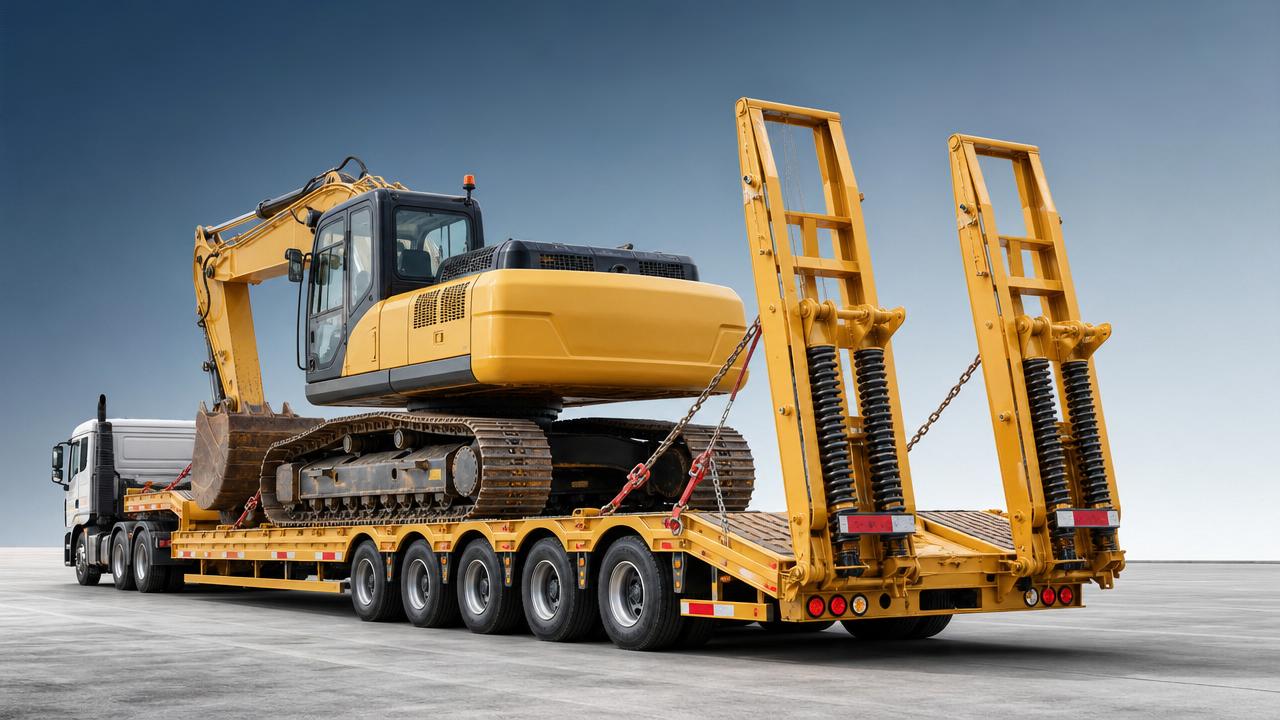
Choosing the right Low Plate trailer is critical for quality control and safety management teams responsible for load security, road compliance, and operational risk. From axle capacity and deck height to braking systems and structural strength, the right specifications directly affect transport safety and regulatory performance. This guide outlines the key factors buyers should evaluate to reduce hidden risks, improve compliance, and support reliable heavy equipment transportation.
For engineering vehicle operations, a Low Plate trailer is not just a transport platform. It is a safety system that must match equipment dimensions, axle load distribution, route conditions, and local road rules. Buyers who focus only on price often overlook technical details that later lead to overload penalties, unstable handling, premature tire wear, or loading incidents.
For quality control personnel and safety managers, the purchasing process should therefore be specification-driven. A practical review should cover at least 6 core areas: rated capacity, deck geometry, axle and suspension setup, braking performance, structural integrity, and documentation readiness for export and in-country registration. These points directly influence whether a Low Plate trailer can perform safely under repeated heavy-duty cycles.
Why Low Plate Specifications Matter in Engineering Vehicle Transport
In engineering vehicle logistics, transported assets may include excavators, wheel loaders, bulldozers, road rollers, and other machines with operating weights from 10 tons to more than 80 tons. A Low Plate trailer must keep the center of gravity as low as possible while maintaining sufficient ground clearance for ramps, speed bumps, and uneven site roads.
A difference of even 100 mm to 200 mm in deck height can affect loading angle, overhead clearance, and rollover risk during cornering. For safety management teams, this means the trailer specification is directly tied to route planning, escort requirements, and driver operating limits.
Main Risk Areas Buyers Should Review
- Overloading risk caused by mismatch between machine operating weight and legal payload rating
- Load shift risk due to insufficient lashing points or poor deck friction conditions
- Brake imbalance risk on long descents or emergency stops
- Frame fatigue risk under repetitive concentrated loads from tracked equipment
- Compliance risk when axle spacing, dimensions, or lighting do not match destination-market rules
Typical Operating Scenarios
A Low Plate trailer used for city road construction may face short-haul trips, frequent loading cycles, and narrow turning conditions. By contrast, a unit assigned to cross-border mining support may require longer wheelbase stability, stronger side protection, and more robust suspension tuning for 500 km to 1,500 km transport intervals.
This is why one configuration does not fit every task. A trailer selected for a 25-ton excavator fleet may be unsuitable for 45-ton crawler equipment, even if the nominal payload appears close on paper.
Key Technical Specs That Directly Affect Safety and Compliance
When evaluating a Low Plate trailer, buyers should move beyond basic sales descriptions and request measurable technical data. The most important parameters should be checked against actual machine profiles, not only against brochure claims.
1. Rated Payload and Axle Capacity
Rated payload should include a realistic safety margin. For example, if the transported equipment weighs 38 tons and adds 1 ton to 2 tons for attachments, chains, and accessories, selecting a trailer with only a 40-ton nominal rating leaves too little buffer. Many fleets prefer at least 10% to 15% reserve capacity in regular operation.
Axle capacity must be reviewed individually and as a system. A 3-axle Low Plate trailer may be sufficient for some medium-duty applications, while 4-axle or multi-axle layouts are often more suitable for heavier engineering equipment or for jurisdictions with strict per-axle limits.
What QC and Safety Teams Should Verify
- Gross trailer rating versus actual machine weight
- Per-axle legal load threshold on destination roads
- Kingpin load compatibility with tractor unit
- Weight distribution between front gooseneck area and rear deck
2. Deck Height, Deck Length, and Loading Angle
Low deck height is one of the main advantages of a Low Plate trailer, especially when carrying tall machinery. Typical deck heights vary by design, often within a range that balances low center of gravity and road clearance. Buyers should not simply choose the lowest possible deck, because too little clearance may cause underbody contact on ramps or rough roads.
Loading angle is equally important. A smaller angle reduces track slip and undercarriage contact during loading. For crawler equipment, this can reduce loading stress and improve operator control. Ramp design, ramp strength, and anti-slip treatment should therefore be reviewed together rather than as separate items.
The table below shows how common specification factors influence transport risk and compliance decisions for a Low Plate trailer.
For most buyers, the key takeaway is that payload alone is not enough. A compliant Low Plate trailer must combine legal axle distribution, appropriate deck geometry, and a loading setup suited to the actual equipment fleet.
3. Suspension, Tires, and Brake System
Suspension affects both road stability and structural life. Mechanical suspension may be suitable for some heavy-duty environments due to simplicity, while air suspension can help improve ride stability on paved routes and reduce shock transfer to sensitive machinery. The right choice depends on terrain, maintenance capability, and route profile.
Braking performance is non-negotiable for safety teams. A Low Plate trailer should be checked for brake chamber configuration, response consistency, parking brake function, and compatibility with the tractor head. On long downhill routes, weak brake balance can increase stopping distance and raise tire temperature significantly.
Tire specification must also match axle load and operational speed. Under-rated or mismatched tires can create heat buildup, irregular wear, or blowout risk, especially when the trailer frequently runs near maximum legal load.
4. Structural Strength and Welding Quality
Engineering vehicle transport places concentrated load pressure on limited deck areas, especially when carrying tracked machines. Buyers should inspect the main beam design, cross-member density, reinforcement at stress points, and welding consistency around ramps, suspension mounts, and gooseneck joints.
From a quality control perspective, the most common hidden issue is not immediate failure but progressive fatigue. Cracks often begin at weld toes, corners, and repeated load concentration zones after months of heavy service. A stronger frame design can reduce downtime and lower long-term repair frequency.
How to Evaluate Compliance Before Purchase
Compliance review should begin before production or shipment, not after arrival. A Low Plate trailer that is technically strong but dimensionally non-compliant may face registration delays, route restrictions, or costly modification work. Safety managers should define destination requirements early and align supplier confirmation documents accordingly.
Dimensions, Lighting, and Marking
Overall length, width, height, side guards, rear underrun protection, reflective markings, and lighting layout should all be reviewed against the target market. Some regions apply strict limits to trailer width and require specific lamp positions or conspicuity marking formats. Even a small mismatch can interrupt delivery schedules by 2 to 4 weeks.
Documents and Inspection Readiness
A reliable export supplier should be able to support buyers with specification confirmation, factory inspection coordination, packing and shipping documentation, and customs-related paperwork. For B2B buyers, this reduces handover risk between procurement, QC, logistics, and local compliance teams.
The checklist below can help purchasing and safety teams organize pre-delivery verification for a Low Plate trailer.
A structured inspection process makes procurement more predictable. It also helps safety departments identify gaps before shipment, when corrective action is faster and less expensive.
Common Buying Mistakes That Increase Risk
- Buying based on nominal tonnage without checking machine dimensions and axle distribution
- Ignoring route-specific factors such as steep grades, poor road surfaces, or bridge limits
- Overlooking the tractor-trailer compatibility of kingpin load and air brake connections
- Assuming export documentation can be corrected later without schedule impact
- Failing to inspect welds, ramps, and securement points before dispatch
A Practical Selection Process for QC and Safety Management Teams
A disciplined buying process helps turn trailer procurement from a sales-driven decision into a risk-controlled engineering task. For most fleets, a 5-step review model is effective and easy to apply across departments.
Step 1: Define the Real Load Profile
List the top 3 to 5 machines the Low Plate trailer will transport most often. Record operating weight, transport length, width, track or tire type, attachment weight, and loading frequency per month. This creates a realistic baseline for payload, deck size, and securement design.
Step 2: Confirm Route and Regulatory Conditions
Review the main transport corridors. Include road surface quality, legal axle limits, overall dimension restrictions, bridge controls, and climate conditions. A trailer used in hot, mountainous regions may require different brake and tire priorities than one used in flat urban projects.
Step 3: Match Trailer and Tractor as One System
A Low Plate trailer cannot be evaluated alone. Tractor horsepower, fifth wheel height, kingpin load, braking interface, and turning radius all affect road safety. A mismatch can create coupling instability even if the trailer itself is well built.
Step 4: Conduct Factory-Level Quality Review
Inspect materials, welding areas, paint finish, brake routing, axle installation, electrical connections, and ramp operation. If the supplier supports pre-shipment inspection, buyers can close many quality risks before logistics booking. This is especially useful for overseas customers managing procurement remotely.
Step 5: Plan Service, Parts, and Delivery Timing
For export buyers, delivery is more than ex-factory completion. It includes inventory confirmation, documentation preparation, customs handling, and transport scheduling. Lead times can vary depending on configuration complexity, but a stable supplier with available stock and coordinated export support can shorten downtime between order and operation.
Working with an Export Supplier That Understands Heavy Transport Requirements
For overseas buyers sourcing engineering vehicle transport equipment from China, supplier capability has a direct effect on project risk. Beyond product configuration, buyers need responsive communication, documentation control, and practical support through selection, customization, shipping, and after-sales coordination.
Shandong Livol Truck International Trade Co., Ltd., based in Shandong, China, focuses on commercial vehicle export with strong industry resources and global trade experience. As an official authorized domestic and overseas dealer for FOTON, SHACMAN, and SINOTRUK, the company operates authorized 4S stores across China and maintains sufficient inventory to support stable supply and fast delivery.
For buyers of a Low Plate trailer or related engineering transport solutions, this kind of operating foundation can be valuable in 4 areas: product selection, customization discussion, export document handling, and logistics coordination. For quality control and safety management teams, reliable support across these stages helps reduce uncertainty and improve handover efficiency.
A professional export team can also help align the trailer specification with the destination market, making it easier to review technical details before shipment rather than correcting issues after arrival. That is particularly important when project schedules are tight and transport equipment must enter service quickly.
Questions to Ask Before You Place an Order
- What is the actual machine weight range this Low Plate trailer will handle weekly?
- What reserve capacity is built into the selected axle and frame design?
- How will the trailer dimensions fit destination road regulations?
- Can the supplier support inspection records, export documents, and shipping coordination?
- What service response process is available for parts and technical follow-up?
A well-chosen Low Plate trailer improves much more than transport capacity. It strengthens loading safety, reduces compliance exposure, supports predictable fleet utilization, and helps engineering projects move equipment with fewer avoidable interruptions. For QC personnel and safety managers, the best purchasing decision is one based on verifiable specifications, route realities, and supplier execution capability.
If you are evaluating Low Plate trailer options for heavy equipment transport, Shandong Livol Truck International Trade Co., Ltd. can support your team with vehicle selection, customization, documentation, customs clearance, and logistics coordination. Contact us today to discuss your operating requirements, get a tailored solution, and learn more about dependable commercial vehicle export support.
Search Starts Here