
News
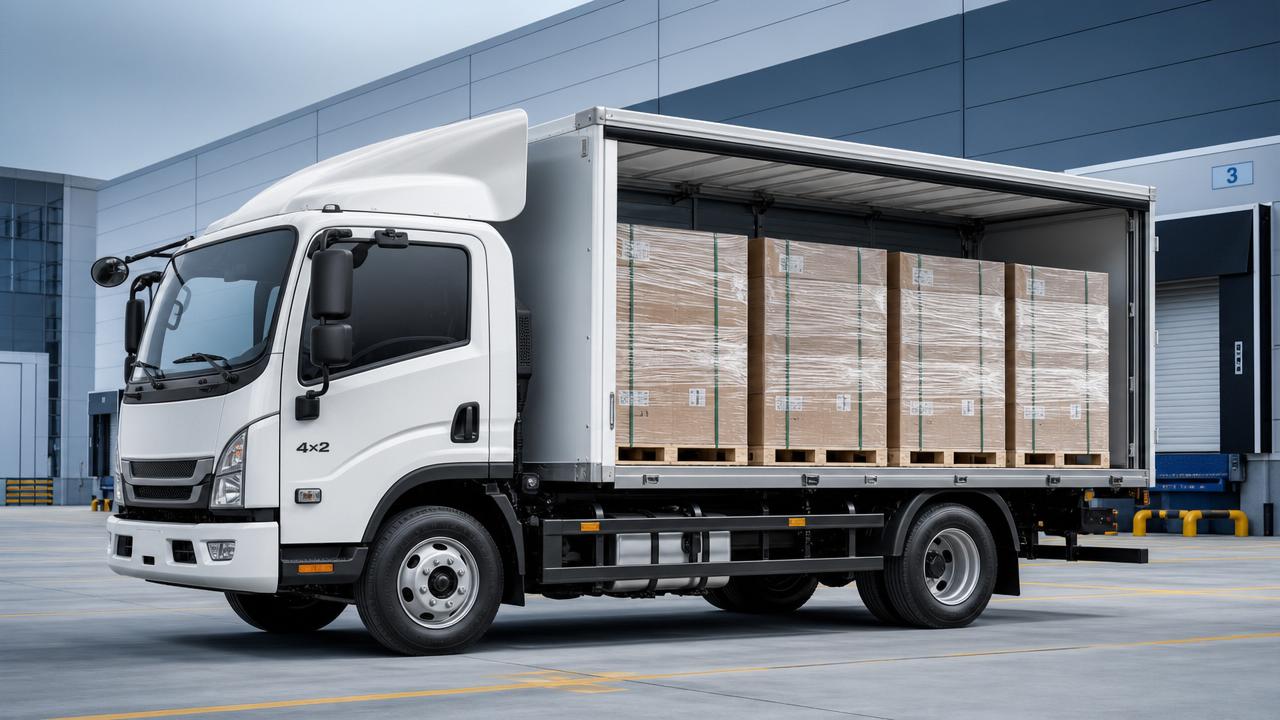
In daily delivery, a 4_2 Cargo Truck is only as efficient as its fuel use and payload balance. Many buyers focus on engine power or price, but real operating value comes from how well the truck handles load distribution, fuel economy and route demands. Understanding these practical factors helps end users choose a truck that lowers costs, improves reliability and supports smoother transport operations every day.
Why is fuel and payload balance such a big issue for a 4_2 Cargo Truck?
For most end users, the daily value of a 4_2 Cargo Truck does not come from one single specification. It comes from the relationship between how much the truck carries, how much fuel it burns, how often it stops, and how reliably it completes urban and regional delivery tasks. A truck that looks powerful on paper can still be inefficient if the payload is mismatched to the route, body size, or axle capacity.
This matters because fuel is a recurring operating cost, while payload affects revenue per trip. If the truck carries too little, each route may require more trips, more labor time, and more fuel per delivered unit. If it carries too much or loads unevenly, tire wear, brake stress, suspension fatigue, and safety risks increase. In real delivery work, the best 4_2 Cargo Truck is not simply the one with the biggest engine or lowest purchase price. It is the one that keeps fuel consumption under control while moving the right load safely and consistently.
For industries such as retail distribution, construction material transport, agricultural supply, and general cargo movement, fuel and payload balance directly influence profit. Even small improvements in route efficiency or load matching can create meaningful savings over months of operation.
What exactly should buyers look at beyond engine power?
Engine power is important, but it should be viewed as only one part of the operating equation. A practical evaluation of a 4_2 Cargo Truck should include drivetrain matching, gross vehicle weight rating, cargo body dimensions, axle ratio, transmission setup, tire specification, and the expected driving pattern. These elements together decide whether the truck works efficiently in stop-and-go city roads, mixed suburban routes, or longer regional deliveries.
Buyers should also compare curb weight against legal payload. A lower curb weight can improve available carrying capacity, but it must not come at the expense of structural durability. Body material, chassis strength, and suspension quality are critical if the truck will carry dense goods regularly. On the other hand, for lighter but bulkier cargo, a larger cargo box may matter more than the highest payload figure.
Another key factor is how the truck performs under partial load. Many daily delivery trucks do not run at full capacity every trip. A 4_2 Cargo Truck that remains fuel-efficient across mixed load conditions often delivers better long-term value than one optimized only for maximum load performance.
Quick buyer checklist
- Typical cargo weight per trip, not just maximum possible weight
- Cargo type: dense, bulky, fragile, palletized, or irregular
- Route profile: city congestion, hills, highway sections, frequent stops
- Fuel economy under real operating load
- Axle load distribution and legal compliance
- Maintenance access and parts support
How does payload balance affect fuel consumption in real daily delivery?
Payload balance affects fuel consumption in two ways: total weight and weight distribution. Total weight is simple to understand. More load generally means more fuel use. However, weight distribution is often ignored, even though it can significantly affect rolling resistance, traction, braking stability, and component wear.
If cargo is loaded too far forward or too far rearward, the 4_2 Cargo Truck may not operate in its ideal balance range. An overloaded rear axle can increase tire and suspension strain and reduce steering precision. Excessive front loading can affect braking feel and cabin comfort. Poor balance may also force the engine and transmission to work harder during starts, climbs, and repeated urban acceleration.
In city logistics, where stopping and starting happen constantly, these effects become more visible. A balanced truck uses energy more efficiently because the chassis stays more stable, the tires wear more evenly, and the driver can maintain smoother control. Smoother control usually means less harsh acceleration and braking, which also helps fuel economy.
For end users, the takeaway is practical: the same 4_2 Cargo Truck can produce very different daily fuel costs depending on how it is loaded, how often it runs near capacity, and whether its body and axle layout match the real cargo pattern.
Which operating scenarios are best suited to a 4_2 Cargo Truck?
A 4_2 Cargo Truck is widely used because it offers a useful compromise between maneuverability, payload capability, and operating cost. It is especially suitable for urban distribution, medium-distance regional transport, warehouse-to-store delivery, e-commerce linehaul, agricultural product movement, and light construction supply logistics.
For narrow roads or dense city traffic, a 4_2 layout is often easier to manage than larger multi-axle trucks. It can access loading points faster, reduce turnaround time, and support more flexible route planning. For mixed road conditions, it also provides enough capacity for many daily commercial tasks without pushing fuel cost to the level of a heavier truck class.
That said, suitability depends on the actual use case. If cargo is consistently very heavy, or if the route includes long mountain sections with full loads, some operators may need to compare the 4_2 Cargo Truck with a higher-capacity configuration. But for many end users focused on frequent delivery cycles, moderate load ranges, and cost efficiency, the 4_2 platform remains a highly practical solution.
What common mistakes lead to poor fuel economy or low delivery efficiency?
One common mistake is buying by price alone. A lower purchase price can look attractive, but if the truck has poor fuel performance, weak route matching, or limited after-sales support, total operating cost may become much higher over time. Another mistake is choosing a cargo body that is too large or too small for the actual goods. A body that is too large may add unnecessary weight and drag, while one that is too small can reduce trip efficiency.
Buyers also often underestimate the effect of route conditions. A 4_2 Cargo Truck used mainly for short urban delivery needs different gearing and driving characteristics than one used for intercity routes. Choosing the wrong configuration can raise fuel use and driver fatigue.
Another major issue is ignoring maintenance discipline. Dirty filters, incorrect tire pressure, wheel alignment problems, and delayed servicing all reduce fuel efficiency. Even a well-matched truck will lose its cost advantage if routine maintenance is not handled properly. Finally, some operators fail to train drivers in economical driving habits. Excess idling, aggressive throttle use, and rough braking quickly increase daily fuel burn.
Common mistakes and their impact
How can end users compare different 4_2 Cargo Truck options more intelligently?
A smart comparison starts with real operating data, not marketing claims alone. Buyers should define average payload, maximum payload, route distance, delivery frequency, road condition, and loading method before asking for quotations. Without this information, it is difficult to judge whether one 4_2 Cargo Truck is truly better than another.
Next, compare trucks on a total-use basis. Ask about fuel consumption under realistic cargo conditions, not only empty-road numbers. Review engine and transmission matching, chassis durability, turning radius, service interval, parts availability, and lead time. For business users, downtime can cost more than a small difference in purchase price.
It is also wise to consider supplier reliability. A professional exporter with stable inventory, authorized brand resources, and experience in documentation, customs clearance, and logistics can reduce risk significantly. For international buyers, this support matters almost as much as the truck specification itself. Reliable sourcing helps ensure that the selected 4_2 Cargo Truck arrives correctly configured, with proper paperwork and practical after-sales coordination.
Shandong Livol Truck International Trade Co., Ltd. offers this type of value through official authorization for FOTON, SHACMAN, and SINOTRUK, strong domestic 4S network resources, stable inventory, and integrated export services. For end users, that means easier access to selection advice, customization options, and dependable supply when purchasing commercial vehicles for daily delivery operations.
What should buyers confirm before placing an order?
Before ordering a 4_2 Cargo Truck, buyers should confirm more than engine brand and cargo box length. They should verify legal loading requirements in the destination market, expected axle loads, emission standards, cabin needs, suspension type, tire specification, and any body customization required for the target goods. This is especially important for export procurement, where local compliance and road reality may differ from standard factory configurations.
It is also helpful to ask whether the truck will be used for pallet cargo, bagged goods, beverages, appliances, farm products, or construction materials. Each of these creates different priorities for body design, floor strength, access method, and tie-down needs. If routes include frequent loading and unloading, buyers may also want to evaluate door configuration, platform options, or ergonomic loading support.
Finally, buyers should ask for a clear service scope: vehicle selection support, customization process, production timing if needed, documentation, shipping arrangement, customs assistance, and after-sales communication. The more clearly these points are confirmed before order placement, the lower the risk of mismatch later.
Pre-order confirmation table
So, what really matters most in daily delivery?
What really matters is fit. The right 4_2 Cargo Truck should fit the cargo, the route, the loading frequency, the legal limits, and the cost target of the user. Fuel economy and payload should not be viewed separately. They work together, and both are shaped by vehicle specification, load balance, driver behavior, and maintenance quality.
For end users, the best decision usually comes from asking practical questions rather than chasing the highest spec sheet number. How much does the truck really carry each day? How often does it stop? Is the route mostly urban or regional? Does the truck remain efficient under normal load? Can the supplier support customization, export paperwork, and reliable delivery? These are the questions that lead to better results.
If you need to further confirm a suitable 4_2 Cargo Truck solution, it is best to first communicate your average payload, cargo type, route conditions, compliance requirements, preferred brands, customization needs, delivery schedule, and budget range. With those details clarified early, it becomes much easier to identify the right truck configuration, estimate operating efficiency, and move toward a more reliable purchase decision.
Search Starts Here