
News
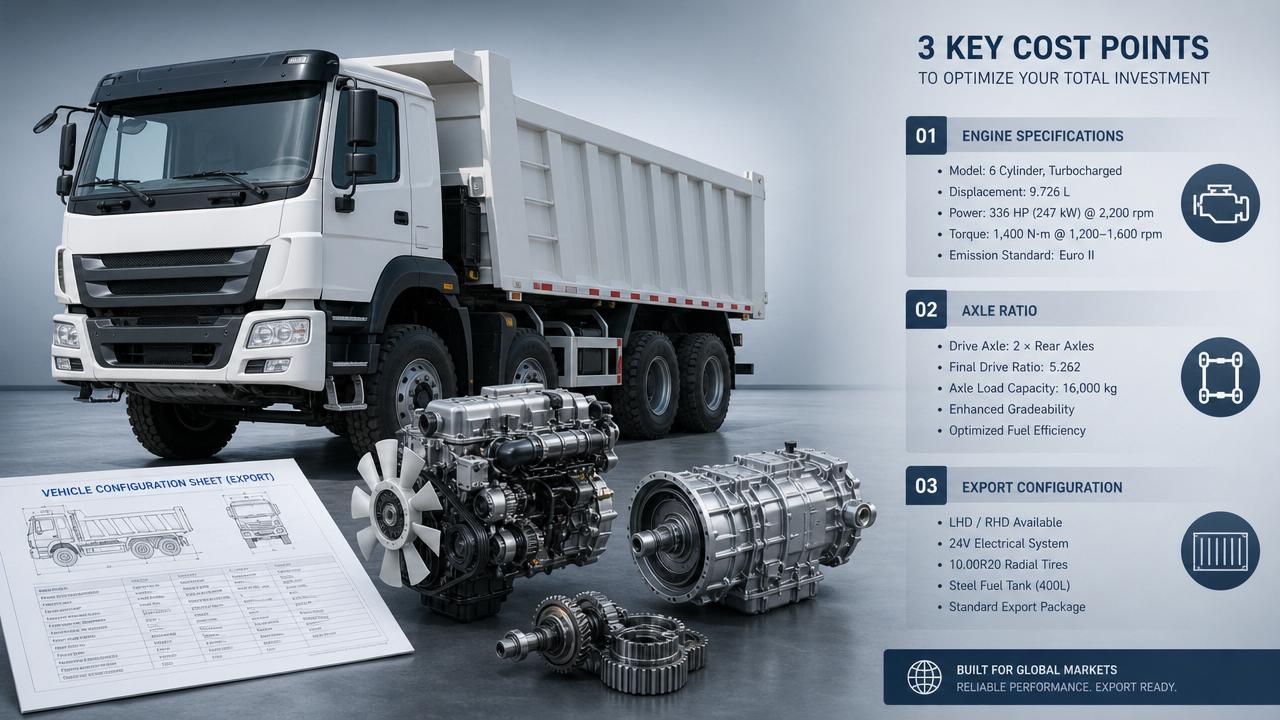
For finance approvers, a Cangshan Vehicle Configuration List is more than a technical document—it is a cost-control checkpoint. Missing details on axle ratio, engine options, cabin features or export specifications can lead to unexpected expenses and approval risks. This guide helps you read the Cangshan Vehicle Configuration List with a sharper financial lens, so you can identify hidden cost drivers, compare configurations accurately and support smarter commercial vehicle purchasing decisions.
Why a checklist approach matters before you approve any unit
A commercial vehicle quotation often looks acceptable at first glance, but the real budget impact usually sits inside the details of the Cangshan Vehicle Configuration List. Finance teams are not expected to judge every engineering parameter on pure technical merit. What they must do is identify which specifications directly affect acquisition cost, operating cost, delivery time, tax treatment, spare parts planning and residual value.
A checklist method is useful because it reduces approval mistakes caused by fragmented review. Instead of reading the list line by line without priority, you first isolate cost-critical items, then verify whether the configuration matches the intended route, payload, compliance market and service conditions. This turns the Cangshan Vehicle Configuration List into a practical decision tool rather than a dense technical appendix.
Start with these five approval questions
Before reviewing line details, ask five questions. If any answer is unclear, financial approval should be conditional rather than final.
- Is this vehicle configuration aligned with the real operating scenario, not just the requested specification?
- Which items in the Cangshan Vehicle Configuration List increase upfront price but reduce lifetime cost?
- Which options are nice to have, but do not improve utilization, uptime or compliance?
- Are there export, homologation or destination-market requirements hidden in the configuration?
- Will this exact specification affect parts availability, maintenance training or delivery lead time?
These questions help finance approvers focus on total commercial impact. In many engineering vehicle purchases, approval risk comes not from one expensive component, but from several small option choices that together move the budget far beyond the original expectation.
Core checklist: what to verify first in the Cangshan Vehicle Configuration List
1. Vehicle identity and scope of supply
Confirm the exact model code, drive type, body application and included equipment. A common approval mistake is assuming that bodywork, hydraulic components, tool kits, spare tire carriers, warning systems or export packaging are included when they are listed separately or omitted entirely. The Cangshan Vehicle Configuration List should clearly show what is standard, optional and excluded. If the scope is unclear, the budget is unclear.
2. Engine specification and emission level
Engine power, torque, displacement and emission standard strongly influence price. However, the cheapest engine on the list may create higher fuel use, overload stress or poor performance on gradients. Finance approvers should check whether the selected engine is sized for duty cycle. Also verify whether the emission level matches destination regulations. An incorrect export emission configuration can trigger rework, customs delay or market rejection.
3. Transmission and axle ratio
These are among the most overlooked items in a Cangshan Vehicle Configuration List. Gearbox type and axle ratio affect fuel economy, climbing ability, cruising speed and drivetrain wear. A mismatch may not be visible in the purchase price, but it appears later as fuel overspend, premature maintenance or driver complaints. For finance review, ask whether the ratio supports the actual payload, terrain and average trip length.
4. Chassis, suspension and axle load capacity
Engineering vehicles often work in rough and overloaded conditions. If the frame, leaf spring pack or axle capacity is under-specified, the fleet may face downtime and warranty disputes. If over-specified, the buyer may pay for capacity never used. The financial goal is not to buy the strongest possible truck, but the right truck with enough margin for safe operation and durable service life.
5. Tires, wheels and braking system
Tire brand, size, tubeless or tube type, tread pattern and spare arrangement all affect operating cost. The braking system may include ABS, air dryer, retarder or other safety features that change both price and risk profile. If the operating environment includes mining roads, long descents or heavy urban stop-and-go use, these items deserve closer review. They are not minor accessories; they are cost and safety levers.
6. Cabin features and driver environment
Cabin options are easy to dismiss as comfort upgrades, but some directly affect productivity and retention. Air conditioning, sleeper berth, seat type, camera systems, reverse alarm, visibility package and electrical features can influence utilization in hot climates, long-haul operation or high-risk sites. Finance approvers should separate operationally justified features from cosmetic add-ons.
7. Fuel tank, battery and electrical configuration
A larger fuel tank may raise upfront cost but reduce refueling downtime on remote projects. Battery capacity, alternator output and electrical harness design matter if the vehicle supports additional work lights, hydraulic controls or telematics. Incomplete review here can lead to later retrofits, which are usually more expensive than factory installation.
A quick comparison table for finance review
Scenario-based checks: the same list does not fit every project
A Cangshan Vehicle Configuration List should always be read against the vehicle’s working environment. The same engine and axle package may be efficient for one customer and wasteful for another.
- Construction site use: prioritize chassis durability, approach angle, tire pattern, reinforced suspension and protection items. Cosmetic cabin upgrades are usually secondary.
- Long-distance transport: focus on fuel economy, gearbox matching, cabin comfort, tank size and service interval implications.
- Export to regulated markets: verify emission standard, safety devices, labels, documentation, left-hand or right-hand drive and homologation details.
- Harsh climate operation: inspect cooling system, heating, battery specification, insulation and fluid suitability.
This scenario filter protects against “copy-and-approve” behavior. A reused specification from a prior order can become financially inefficient when route conditions, regulation or payload pattern changes.
Hidden cost drivers that finance teams often miss
Several items on the Cangshan Vehicle Configuration List look small, but they can materially alter total ownership cost.
- Optional components with separate pricing: PTO, hydraulic system, retarder, aluminum tank, cameras and extra lighting may be priced outside the base vehicle.
- Different brand combinations: mixed-brand engines, gearboxes or axles may affect spare parts stocking and technician familiarity.
- Lead-time extensions: uncommon configurations can delay delivery, increasing project idle cost or causing contract penalties.
- Warranty boundaries: some body or auxiliary systems may have separate warranty terms from the chassis.
- Localization needs: destination-specific changes after arrival are more expensive than factory-prepared export configuration.
How to turn the Cangshan Vehicle Configuration List into an approval workflow
An effective process is often more valuable than one-time technical reading. Finance approvers can use a simple workflow:
- Ask the user department to state route, payload, climate, annual mileage and compliance market.
- Mark every item in the Cangshan Vehicle Configuration List as standard, required option, optional upgrade or unclear item.
- Request a side-by-side comparison between at least two viable configurations.
- Calculate not only purchase price, but expected fuel, tire, maintenance and downtime impact.
- Confirm supply scope, warranty coverage, spare parts plan and export documents before final approval.
This workflow helps separate justified investment from specification inflation. It also creates a clear audit trail when procurement teams need to explain why a higher-priced configuration was actually the lower-risk choice.
Common approval mistakes to avoid
The most frequent mistakes are predictable. Finance teams often compare only total quotation values without aligning specification content. They approve a lower price that excludes essential items, or reject a higher price that includes fuel-saving or compliance-critical features. Another mistake is treating all cabin or safety options as nonessential, even when they support driver efficiency or project rules. A third mistake is reviewing the Cangshan Vehicle Configuration List without checking whether after-sales support and parts availability match the selected combination.
Why supplier capability also matters in configuration review
A configuration list is only as reliable as the supplier behind it. For engineering vehicles, buyers benefit from working with an exporter that understands both factory specifications and overseas delivery realities. Shandong Livol Truck International Trade Co., Ltd., based in Shandong, China, serves global customers as an official authorized domestic and overseas dealer for FOTON, SHACMAN and SINOTRUK. With authorized 4S store resources, stable inventory, export experience and full-process support covering vehicle selection, customization, documentation, customs clearance and logistics, the company helps reduce the gap between written configuration and actual delivered value.
For finance approvers, that matters because a well-supported Cangshan Vehicle Configuration List is easier to validate. Clear option boundaries, realistic delivery commitments, consistent quality control and professional after-sales coordination reduce the probability of hidden cost surprises after approval.
FAQ for finance approvers reviewing a Cangshan Vehicle Configuration List
Should finance approve the lowest-priced configuration?
Not automatically. The lowest initial price may create higher fuel use, more downtime, compliance issues or retrofit costs. Approval should be based on total cost relevance to the operating scenario.
Which three items are most likely to hide major cost consequences?
Engine specification, transmission and axle ratio, and export compliance details. These frequently affect both direct and indirect cost.
What if the user department asks for options without a business case?
Ask for justification tied to utilization, safety, compliance, driver retention or maintenance reduction. If the link cannot be shown, treat the option as nonessential.
Final checklist before moving to purchase
Before approval, make sure the Cangshan Vehicle Configuration List has been checked against usage scenario, full scope of supply, export requirements, warranty terms, lead time, spare parts support and lifecycle cost assumptions. That final review is often the difference between a controlled investment and a budget overrun.
If you need to move the project forward, the most useful next step is to confirm the exact operating condition, target budget, preferred brands, destination market requirements, expected delivery timing and any must-have options. With those inputs, it becomes much easier to compare configurations accurately, question weak assumptions and approve the right commercial vehicle with confidence.
Search Starts Here