
News
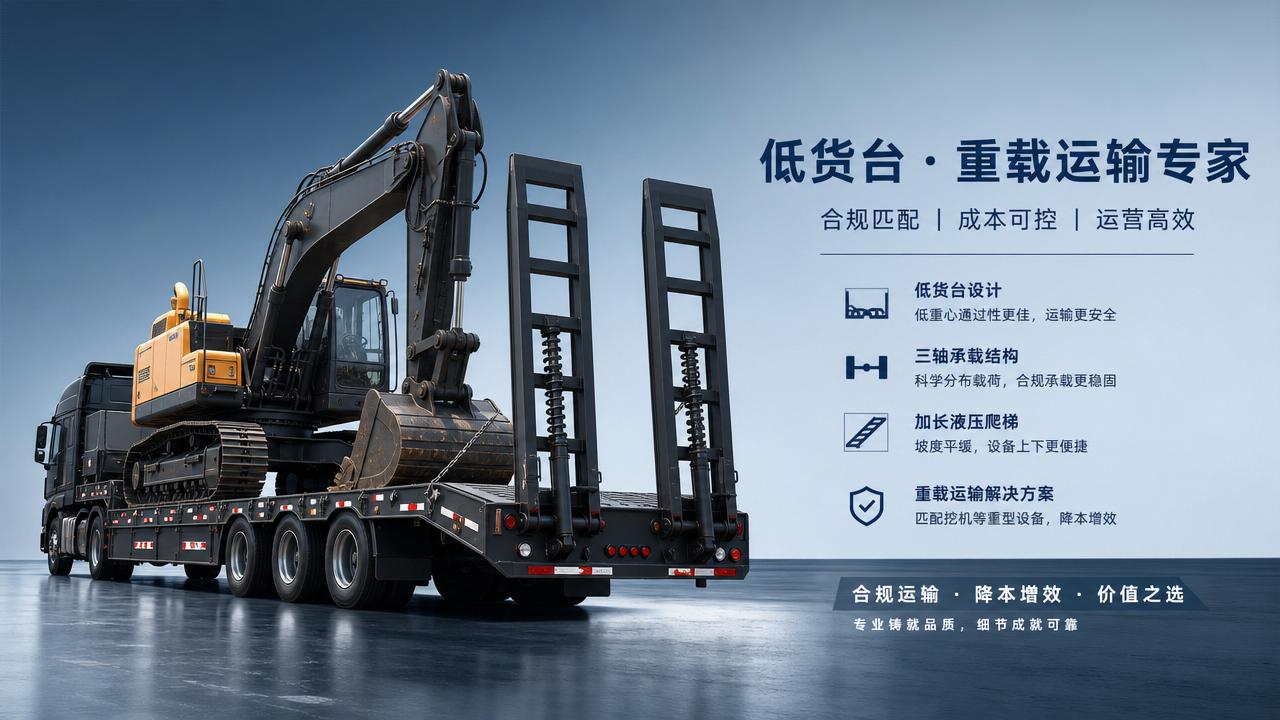
In 2026, transport economics are changing fast across engineering vehicle operations.
A wrong Low Plate choice no longer affects only purchase cost.
It can increase fuel use, extend loading time, raise tire wear, and create compliance exposure.
For heavy equipment movement, these hidden losses often exceed the trailer’s initial price difference.
That is why Low Plate selection has become a budget control issue, not just a specification decision.
This article explains the most common Low Plate mistakes that raise transport costs in 2026.
It also shows how better matching, stronger compliance planning, and export-ready support improve long-term fleet value.
Why Low Plate selection is under closer review in 2026
Engineering vehicle transport is facing tighter delivery windows, heavier equipment mixes, and more route restrictions.
At the same time, total operating cost is under pressure from fuel prices, maintenance inflation, and stricter road enforcement.
These shifts make every Low Plate detail more important than before.
A Low Plate that worked in earlier years may now perform poorly under modern height, weight, and loading demands.
The market is also moving toward more specialized transport tasks.
Excavators, rollers, loaders, and road machinery often require different deck heights, axle layouts, and ramp configurations.
Using one generic Low Plate for all applications usually creates avoidable inefficiency.
The biggest trend signals behind rising Low Plate transport costs
Several signals are pushing transport operators to rethink Low Plate decisions in 2026.
- Higher average machine weight within the same project fleet
- Greater demand for cross-border and long-distance heavy haul transport
- Stricter checks on axle load, overall height, and braking performance
- More frequent loading cycles that expose structural weakness faster
- Growing pressure to reduce downtime and improve equipment utilization
These changes mean a Low Plate must now support economics, safety, and route flexibility at the same time.
Common Low Plate mistakes that quietly increase total cost
Choosing by purchase price instead of lifecycle cost
The cheapest Low Plate often becomes the most expensive over three to five years.
Lower-grade steel, weak weld quality, and basic suspension setups can raise repair frequency.
Downtime, emergency parts replacement, and extra tire consumption quickly erase any initial savings.
Selecting the wrong deck height for the equipment mix
Deck height directly affects loading safety, center of gravity, and legal transport height.
A poorly matched Low Plate may force detours, permits, or partial disassembly of machinery.
That adds labor hours and slows project turnover.
Ignoring axle configuration and load distribution
Many transport problems begin with poor axle planning.
If the Low Plate axle layout does not match cargo weight concentration, overloading risk rises.
The result can be fines, unstable handling, faster suspension wear, and longer braking distance.
Overlooking ramp design and loading angle
Ramp design matters more than many buyers expect.
If the loading angle is too steep, tracked machinery loads slowly and unsafely.
Repeated harsh loading damages ramp components and wastes operator time on every trip.
Using a general Low Plate for specialized engineering vehicles
Different machines create different transport stresses.
A wheel loader, crawler excavator, and paver do not interact with the deck in the same way.
A generic Low Plate may reduce compatibility and increase loading adjustments on every mission.
Failing to match the Low Plate with the tractor head
Trailer selection cannot be separated from the prime mover.
Power output, fifth wheel height, braking coordination, and route profile must work together.
A mismatch reduces efficiency and may accelerate drivetrain strain.
What is driving these Low Plate selection errors
How the wrong Low Plate affects key transport operations
The impact of poor Low Plate selection spreads across the full transport chain.
It affects dispatch planning, fuel efficiency, road legality, maintenance scheduling, and on-site unloading speed.
- Loading operations become slower when ramp angle and deck space are poorly matched
- Route options shrink when overall transport height exceeds practical limits
- Tire and suspension wear rise under uneven load distribution
- Driver fatigue increases when trailer stability is poor at highway speed
- Project schedules suffer when one transport unit cannot handle multiple machine types efficiently
In engineering vehicle logistics, these losses often appear gradually.
That is why many fleets underestimate the financial effect of a badly chosen Low Plate.
The selection priorities that deserve more attention now
A stronger Low Plate decision framework should focus on practical transport economics.
- Confirm real cargo dimensions, operating weight, and frequency of loading cycles
- Check legal height and axle requirements on core transport routes
- Evaluate frame strength, deck height, suspension type, and ramp structure together
- Match the Low Plate with tractor head power, coupling height, and braking system
- Review service support, spare parts access, and delivery reliability before ordering
The best Low Plate is not the most complex one.
It is the one that keeps transport legal, stable, efficient, and easy to maintain.
A practical way to compare Low Plate options before commitment
Why supplier capability matters as much as the Low Plate itself
In 2026, equipment choice and supply capability are closely linked.
A reliable exporter helps reduce Low Plate selection mistakes before they become operating losses.
Shandong Livol Truck International Trade Co., Ltd. supports global commercial vehicle needs from Shandong, China.
The company is an official authorized domestic and overseas dealer for FOTON, SHACMAN, and SINOTRUK.
With authorized 4S stores across China and sufficient inventory, supply remains stable and delivery stays fast.
Its export team provides vehicle selection, customization, documentation, customs clearance, and logistics coordination.
This full-process support is valuable when Low Plate transport must be matched with tractors and project conditions.
Strong quality control and after-sales support also help reduce long-term operating uncertainty.
A smarter next step for controlling Low Plate transport cost
The biggest Low Plate mistake in 2026 is treating trailer selection as a simple price comparison.
Real transport cost depends on load fit, compliance, durability, loading efficiency, and service response.
A well-matched Low Plate supports safer equipment movement and stronger asset utilization.
Before the next purchase, compare actual machine dimensions, route limits, axle needs, and tractor compatibility.
Then confirm supply strength and technical support from an experienced commercial vehicle export partner.
That approach protects budget discipline and improves the long-term return of every Low Plate investment.
Search Starts Here