News
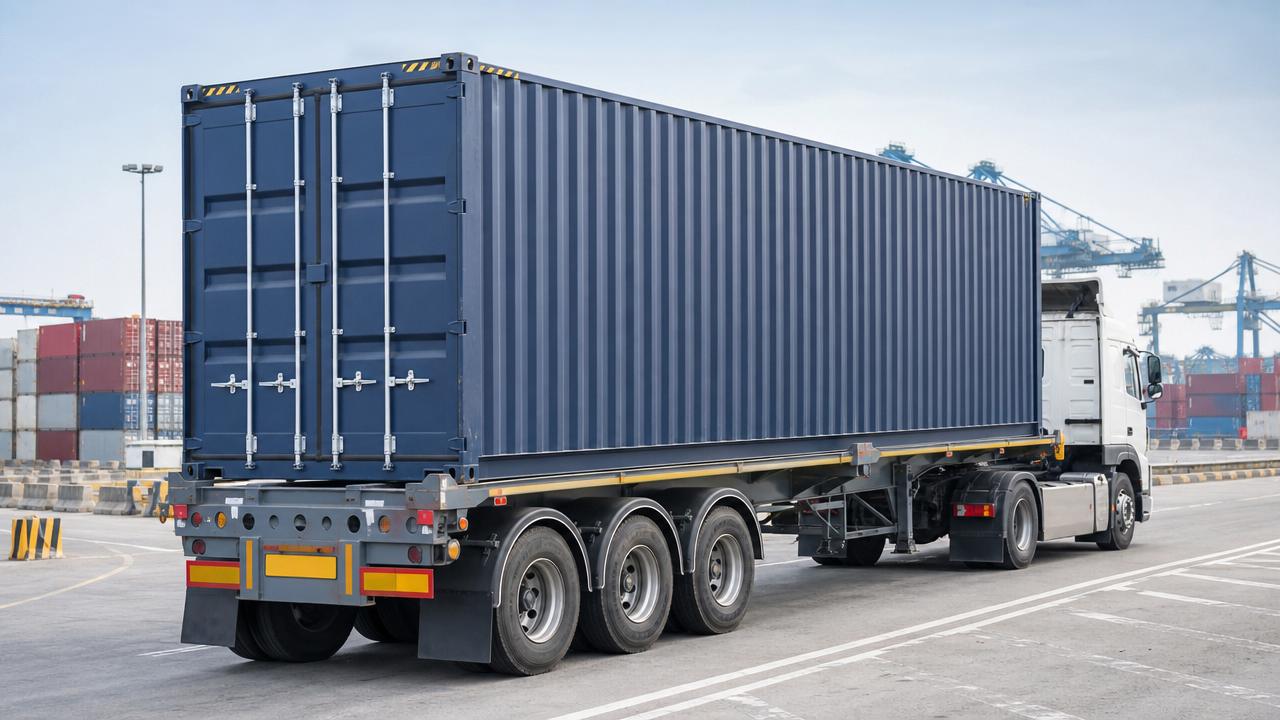
Choosing the right Skeleton (Container) Semi-Trailer is critical for safe, efficient, and cost-effective port container haulage. For procurement professionals, the decision goes beyond price and requires evaluating load capacity, chassis strength, axle configuration, compliance standards, and long-term operating reliability. This guide will help you identify the key factors that matter when selecting a trailer supplier and product for demanding port logistics operations.
Why does Skeleton (Container) Semi-Trailer selection matter in port haulage?
Port container transport is a high-frequency, high-pressure operation. Trailers move between terminals, bonded yards, logistics parks, and inland distribution points under strict timing and load requirements. A poorly selected Skeleton (Container) Semi-Trailer can increase tire wear, loading delays, structural fatigue, and compliance risk.
For procurement teams, the challenge is not simply buying a trailer that can carry a container. The real task is matching trailer configuration to road conditions, container types, tractor head compatibility, expected annual mileage, maintenance capacity, and local regulations.
In engineering vehicle procurement, lifecycle performance matters more than the initial invoice. A lower-priced unit may become more expensive if it causes downtime, higher fuel consumption, axle overload issues, or frequent welding repairs near the main beam and twist lock areas.
- Port turnaround is time-sensitive, so trailer stability and lock reliability directly affect loading and dispatch speed.
- Mixed cargo routes often involve both terminal roads and public roads, which raises requirements for suspension, braking, lighting, and chassis durability.
- Procurement errors can create hidden costs in spare parts stocking, operator training, and compliance documentation.
Which trailer structure is better for your container transport scenario?
Not every Skeleton (Container) Semi-Trailer is built for the same duty cycle. Some are optimized for short-distance port shuttles, while others are designed for longer regional haulage with better chassis reinforcement and more stable running performance.
Before comparing quotations, procurement personnel should classify the working scenario. This step improves technical discussions with suppliers and avoids paying for features that the operation does not need.
Typical application scenarios
The table below helps map common port logistics conditions to a suitable Skeleton (Container) Semi-Trailer configuration. It is especially useful when evaluating axle layout, frame reinforcement, and container adaptability.
This comparison shows why scenario-driven procurement is essential. A trailer suitable for repetitive terminal shuttle work may not perform equally well on longer routes with rough road sections, heavier container turnover, or stricter public-road inspection requirements.
How to define your actual duty profile
- Confirm whether the trailer mainly carries 20ft, 40ft, or mixed container sizes.
- Estimate the average round-trip distance and daily number of trips.
- Check road quality, turning radius limits, and yard maneuvering space.
- Review local axle load rules, lighting rules, and braking requirements.
- Assess how fast your maintenance team can support wear parts replacement.
What technical specifications should procurement teams focus on?
A Skeleton (Container) Semi-Trailer looks simple, but purchasing decisions should not rely on appearance. Structural design, steel grade, axle match, suspension form, brake layout, and lock quality all affect service life and operational safety.
Procurement teams should request a clear technical sheet and compare units line by line. Ask suppliers to explain not only nominal payload, but also how the chassis is reinforced in high-stress zones.
Core technical checkpoints
The following parameter guide can be used during supplier review meetings, factory audits, or quotation comparison for a Skeleton (Container) Semi-Trailer intended for port container haulage.
These checks help procurement teams separate a basic trailer from one built for repeated industrial-duty operation. In practice, frame design and lock accuracy often have a greater impact on operational reliability than a small price difference at the purchasing stage.
Parameters often overlooked by buyers
- Fifth wheel matching height, which affects tractor-trailer balance and loading angle.
- Electrical harness protection, especially in wet and corrosive port environments.
- Anti-corrosion treatment on the chassis, cross members, and exposed weld zones.
- Spare parts commonality with existing fleet components to simplify stocking.
How do you compare suppliers beyond the quoted price?
For procurement professionals, supplier capability is just as important as trailer specification. A good Skeleton (Container) Semi-Trailer supplier should support stable supply, specification confirmation, export documentation, shipping coordination, and after-sales response.
This is where many projects face avoidable delays. A supplier may offer a competitive price but fail to confirm compatibility details, local road compliance items, or delivery preparation steps. The result is not savings, but rework and lost operating time.
A practical supplier evaluation framework
Use the table below to compare suppliers of Skeleton (Container) Semi-Trailer solutions in a more structured way. It covers product, service, and export execution factors that influence total procurement risk.
A structured review makes supplier comparison more objective. It also helps procurement managers justify decisions internally, especially when selecting a slightly higher-priced supplier with lower execution risk and stronger delivery assurance.
Why integrated export support matters
Shandong Livol Truck International Trade Co., Ltd. brings value not only through product supply, but through process coordination. As an authorized domestic and overseas dealer for FOTON, SHACMAN, and SINOTRUK, the company works from a strong commercial vehicle foundation and broad channel resources across China.
Its network of authorized 4S stores and sufficient vehicle inventory supports stable supply and faster response. For buyers facing tight project schedules, this can shorten procurement cycles and improve availability when fleet expansion is time-critical.
The company’s export team also supports vehicle selection, customization, documentation, customs clearance, and logistics coordination. For overseas buyers, this full-process service reduces communication fragmentation and helps align technical, commercial, and shipping steps under one supplier interface.
What compliance and quality checks should not be ignored?
Even a well-priced Skeleton (Container) Semi-Trailer can become a procurement problem if it does not match local compliance requirements or standard operating expectations. Procurement teams should verify applicable road transport rules, basic lighting and braking requirements, and any import-side documentation expectations before finalizing specifications.
Compliance is especially important in cross-border procurement because trailer use conditions differ by country. Axle limits, overall dimensions, reflective marking requirements, and brake system expectations can vary, and these differences must be considered early.
Basic quality and compliance checklist
- Confirm that container lock positions match the container types used in your operation.
- Review braking, lighting, reflective markings, and air line layout for local road use.
- Inspect weld consistency and reinforcement in high-stress zones such as beam joints and suspension mount areas.
- Ask for the paint or anti-corrosion process description if the trailer will operate in humid or coastal environments.
- Check whether the supplier can prepare export documentation aligned with the destination market process.
These checks do not require exaggerated claims or complicated testing language. They reflect practical engineering vehicle procurement discipline and help buyers avoid preventable issues after arrival or during registration and deployment.
How can buyers control cost without sacrificing reliability?
Cost control in Skeleton (Container) Semi-Trailer procurement should focus on total operating cost rather than the purchase price alone. The lowest quotation may still lead to higher expense through faster tire wear, more frequent structural repairs, longer idle time, or poor spare parts support.
A useful approach is to divide cost into acquisition, transportation, maintenance, downtime, and residual usability. This helps procurement teams compare offers on a realistic basis and communicate trade-offs to finance or operations departments.
Common cost drivers
- Over-specification, such as paying for long-haul features when the trailer is used only inside port zones.
- Under-specification, which often leads to frame stress and increased repair frequency on mixed-road routes.
- Poor compatibility with existing tractors, causing operational inefficiency and setup adjustments.
- Weak spare parts planning, which extends maintenance downtime for routine wear items.
The most cost-effective choice is usually a balanced one: a Skeleton (Container) Semi-Trailer with a clear structural logic, matched axle rating, dependable lock system, and support from a supplier that can deliver consistently and respond after shipment.
FAQ: what do procurement teams ask most often?
How do I choose between a trailer for 20ft containers and one for mixed 20ft/40ft use?
Start with the actual container mix in your fleet schedule. If operations regularly switch between 20ft and 40ft containers, choose a Skeleton (Container) Semi-Trailer with suitable lock arrangement and verified positioning accuracy. If most routes use a single container type, a more dedicated layout may improve simplicity and reduce unnecessary complexity.
Which is more important: payload rating or frame durability?
Both matter, but in real port haulage, frame durability often determines long-term value. A trailer may meet nominal load requirements on paper, yet perform poorly if reinforcement is weak in high-stress areas. Buyers should evaluate load rating together with beam structure, suspension mounting strength, and lock installation quality.
What are the most common mistakes when buying a Skeleton (Container) Semi-Trailer?
The most common mistakes are focusing only on price, ignoring tractor compatibility, skipping road compliance checks, and failing to define the real route profile. Another frequent issue is not discussing spare parts support in advance, which can increase downtime after deployment.
How can overseas buyers reduce delivery and documentation risk?
Work with a supplier that can support the full export process, not just product shipment. Buyers should confirm specification sheets, packing or shipping plans, customs-related documents, and communication points before production or dispatch begins. This is especially valuable when project timing is tight or multiple units are involved.
Why choose us for your Skeleton (Container) Semi-Trailer procurement?
Shandong Livol Truck International Trade Co., Ltd. supports commercial vehicle buyers with a practical combination of product access, export experience, and process coordination. Based in Shandong, China, the company serves global customers as a professional commercial vehicle exporter with strong industry resources and years of overseas trade experience.
As the official authorized domestic and overseas dealer for FOTON, SHACMAN, and SINOTRUK, the company is positioned to support buyers looking for reliable supply channels and coordinated vehicle solutions. Its authorized 4S store network and sufficient inventory help improve supply stability and delivery responsiveness.
If you are evaluating a Skeleton (Container) Semi-Trailer for port container haulage, you can consult us on parameter confirmation, axle and suspension selection, container type matching, delivery lead time, customization options, export documentation, customs clearance coordination, and quotation planning. This makes procurement discussions more efficient and reduces uncertainty before order placement.
If your project involves urgent deployment, mixed container operations, or destination-specific compliance concerns, share your operating scenario and required configuration. We can help you review the suitable trailer solution, discuss supply timing, and align technical and logistics details in one communication process.
Search Starts Here