
News
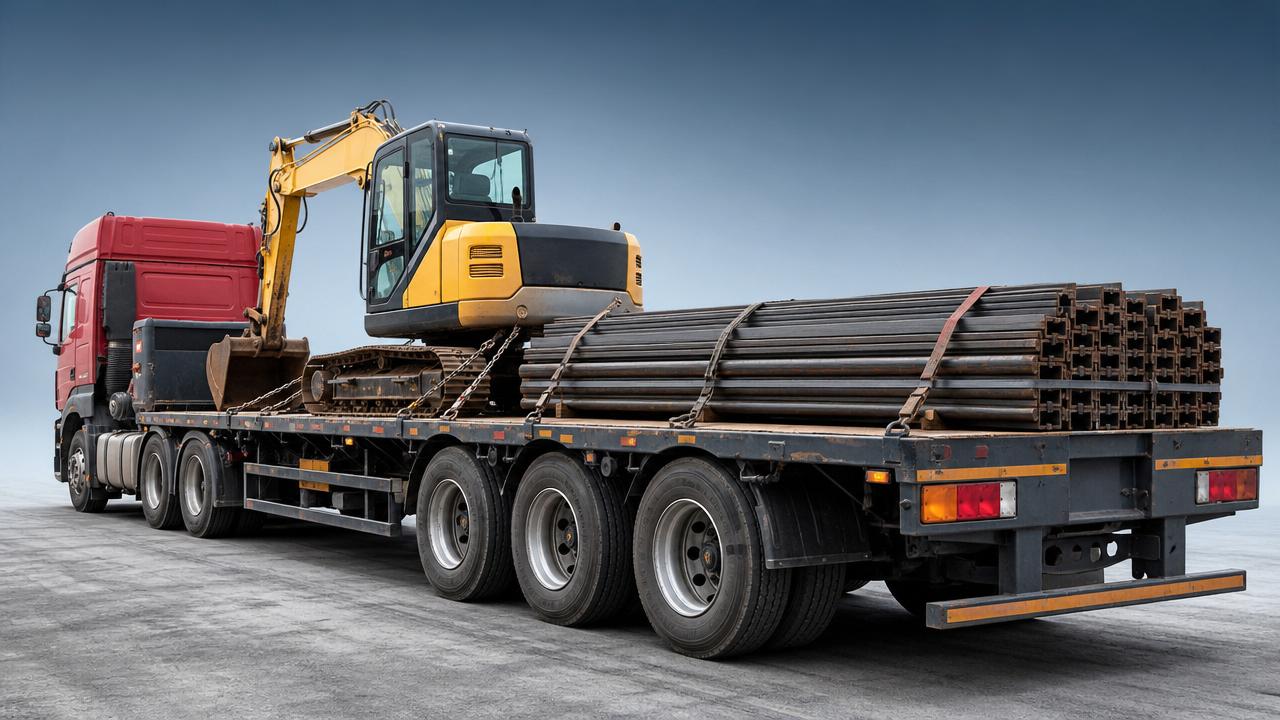
Before investing in a Flatbed Semi-Trailer, technical evaluators must verify whether the deck strength can safely handle real operating loads, repeated stress and demanding road conditions. A reliable assessment goes beyond specifications alone, covering material quality, structural design, crossmember layout, welding integrity and load distribution performance. This guide explains the key factors to examine before purchase, helping buyers reduce risk, improve safety and select a trailer that delivers long-term value.
Understanding deck strength in a Flatbed Semi-Trailer
Deck strength is the deck’s ability to support cargo without excessive bending, cracking, local deformation or fatigue damage during transport.
For a Flatbed Semi-Trailer, deck strength depends on steel grade, beam dimensions, crossmember spacing, flooring thickness and joint quality.
Published payload figures are useful, but they do not fully reveal how the trailer handles concentrated loads.
Engineering vehicles, construction machinery and steel products often create point loads, edge loads and dynamic shock.
That is why deck strength must be reviewed as a structural system, not as a single specification line.
Main deck load conditions
- Uniform distributed loads from palletized goods or bundled materials
- Concentrated loads from excavator tracks, wheel hubs or machine feet
- Impact loads during braking, potholes and rough site access
- Torsional loads when one side of the Flatbed Semi-Trailer rides over uneven ground
Key industry concerns before purchase
In the engineering vehicle sector, deck failure rarely starts as a dramatic collapse.
It often begins with local deflection, cracked weld toes, loosened flooring and progressive fatigue around stress concentrations.
A Flatbed Semi-Trailer used for mixed cargo faces more severe stress variation than a unit assigned to stable freight.
Structural elements that determine Flatbed Semi-Trailer deck strength
The main longitudinal beams carry most of the global bending load.
Deeper beam sections generally improve stiffness, but geometry and reinforcement details are equally important.
Material selection
Check whether the Flatbed Semi-Trailer uses verified high-strength structural steel from stable sources.
Ask for material grade, yield strength and traceable mill documentation for main beams and deck components.
Higher strength steel can reduce weight, but poor forming or welding can offset the benefit.
Crossmember layout
Crossmembers distribute local loads from the deck plate into the main frame.
Wide spacing may save cost, yet it raises deck deflection under excavator tracks or forklift wheel loads.
Compare spacing in high-stress zones such as axle areas, gooseneck transitions and ramp approach sections.
Deck plate and flooring
The deck plate should match actual cargo contact pressure, not just total payload rating.
For machinery transport, thicker steel plates or reinforced timber-steel combinations often perform better.
Inspect whether anti-slip surfaces reduce cargo movement, because shifting cargo increases stress concentration.
Weld quality and connection details
A strong Flatbed Semi-Trailer can still fail early if weld penetration, fit-up or residual stress control is poor.
Look for uniform weld beads, smooth transitions and no visible undercut, porosity or overlap.
Critical joints include crossmember ends, suspension brackets, kingpin structure and beam transition zones.
How to evaluate load distribution performance
Deck strength is not only about maximum load capacity.
It is also about how the Flatbed Semi-Trailer spreads weight across the frame under realistic operating conditions.
Questions to ask during technical review
- What is the rated payload under uniform load and under concentrated load?
- What cargo contact area was assumed during structural calculation?
- Where are reinforced loading paths for tracks, wheels or steel coil saddles?
- What is the allowable deck deflection under full working load?
- Has the design been verified by road testing or fatigue simulation?
If the answers are vague, the deck strength claim may be incomplete.
Reliable exporters and authorized dealers should provide technical clarity, not only sales brochures.
Typical transport scenarios and deck strength priorities
Matching the Flatbed Semi-Trailer design to cargo pattern is often more important than chasing the highest nominal payload.
Practical inspection points before ordering
A visual and document review can reveal major quality differences before the order is confirmed.
- Measure main beam height, flange thickness and web thickness at several positions
- Check crossmember spacing consistency and reinforcement at high-load zones
- Inspect weld seams around the neck, landing gear mounts and suspension brackets
- Confirm deck plate thickness and material type against the drawing
- Review corrosion protection, especially in underside cavities and welded edges
- Request production standards, inspection reports and loading test evidence when available
If possible, observe a loaded Flatbed Semi-Trailer on level ground and on mild articulation.
Visible deck sag, abnormal twist or cracking around brackets should not be ignored.
Long-term business value of correct deck strength selection
Choosing the right Flatbed Semi-Trailer deck strength protects uptime, cargo safety and maintenance cost control.
An underbuilt deck may appear economical at purchase, but repair downtime and structural risk quickly erase savings.
A correctly specified trailer also improves loading confidence for engineering vehicle transport across mixed road conditions.
Shandong Livol Truck International Trade Co., Ltd. supports global customers with commercial vehicle export experience, stable supply and coordinated service.
As an authorized dealer for FOTON, SHACMAN and SINOTRUK, the company provides vehicle selection, customization, documentation, customs clearance and logistics support.
That integrated process helps ensure the selected Flatbed Semi-Trailer aligns with technical use conditions and delivery requirements.
Next-step evaluation framework
Use a simple sequence before final approval.
- Define actual cargo type, axle load pattern and road severity
- Match those conditions to deck structure, plate thickness and reinforcement layout
- Verify material certificates, fabrication quality and testing evidence
- Compare at least two Flatbed Semi-Trailer configurations on total lifecycle value
- Confirm export service capability, spare support and after-sales response
A careful technical review before purchase leads to safer transport and more dependable long-term performance.
When evaluating any Flatbed Semi-Trailer, focus on real deck behavior under real loads, not only on headline capacity figures.
Search Starts Here