
News
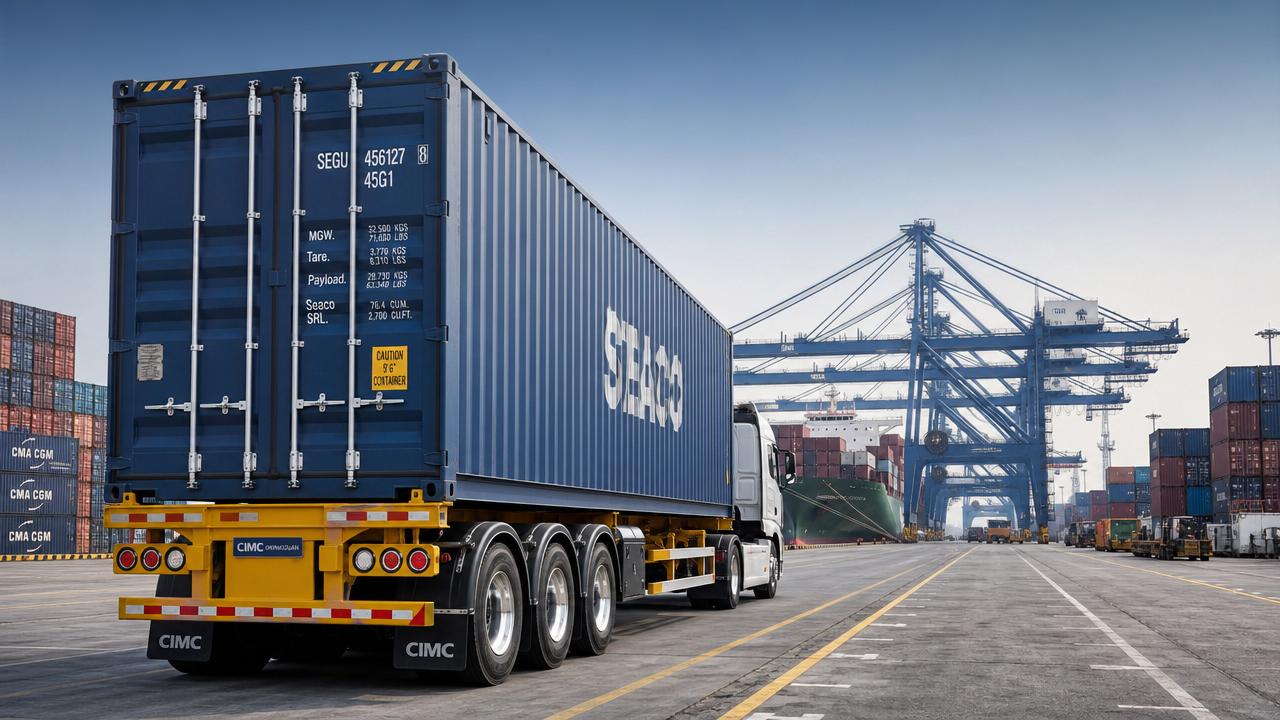
Choosing the right Skeleton (Container) Semi-Trailer has become more strategic in port container haulage. Efficiency, payload stability, compliance, and lifecycle cost now matter as much as purchase price.
Port operations are moving faster, cargo mixes are becoming more diverse, and road enforcement is becoming stricter. A trailer that once seemed acceptable may now create delays, overload risks, or maintenance losses.
This makes trailer selection a forward-looking decision. The best Skeleton (Container) Semi-Trailer should fit container sizes, terminal routines, road surfaces, and the operating rhythm of your transport network.
Port container haulage is changing faster than many fleets expect
Container haulage around ports is no longer defined only by moving boxes from terminal to yard. The work now depends on turnaround speed, route flexibility, and equipment reliability under higher daily pressure.
At many ports, mixed container flows are increasing. Operators may handle 20ft, 40ft, and sometimes 45ft containers within the same working cycle. That raises the importance of trailer adaptability.
Short-haul port routes also create unique stress. Frequent braking, cornering, queueing, and rough loading zones can accelerate wear on twist locks, suspension, tires, and the frame of a Skeleton (Container) Semi-Trailer.
In parallel, shippers increasingly expect predictable delivery windows. That means downtime caused by weak structure, poor parts quality, or difficult maintenance can directly reduce business performance.
The strongest trend signal is the shift from low-cost buying to fit-for-operation selection
The market is clearly moving away from choosing a trailer by price alone. Buyers now compare total operating value, especially in demanding port and intermodal environments.
A low initial price can hide higher fuel use, uneven tire wear, structural fatigue, and more workshop time. A better-matched Skeleton (Container) Semi-Trailer often lowers cost over several years.
Another signal is the growing preference for configuration-based selection. Axle layout, beam design, landing gear strength, and lock arrangement are now evaluated against real duty cycles.
Main factors driving this change
Container compatibility is becoming the first technical filter
Before comparing brands or prices, confirm which container lengths and load patterns the trailer must support. This is the first step to selecting the correct Skeleton (Container) Semi-Trailer.
If operations mainly move one standard size, a dedicated layout may be enough. If the route mix changes daily, flexible locking positions and a practical frame geometry become more valuable.
Key compatibility points to verify
- Support for 20ft, 40ft, or multiple container lengths
- Twist lock layout and locking speed
- Frame length matched to terminal and road space limits
- Weight distribution when carrying dense cargo
- Clearance and stability during turning or ramp entry
A mismatch here can create frequent repositioning, loading errors, or axle overload. Good compatibility improves both speed and compliance, especially in busy port schedules.
Frame strength and axle layout now shape long-term economics
The visible simplicity of a Skeleton (Container) Semi-Trailer can be misleading. The core value often depends on steel quality, welding consistency, cross-member design, and stress distribution.
Port roads may include potholes, uneven yard pavement, and hard braking zones. Under these conditions, weak structure shortens service life and increases repair frequency.
What to compare in structural design
- Main beam section and material grade
- Cross-member reinforcement around lock points
- Axle brand, load rating, and brake reliability
- Suspension type for local roads and payload intensity
- Landing gear durability for repeated loading cycles
Axle layout matters as well. Two-axle and three-axle options serve different legal limits, container weights, and route conditions. The right choice depends on payload reality, not assumption.
A properly configured Skeleton (Container) Semi-Trailer can reduce tire scrub, improve braking balance, and lower frame fatigue. These gains are small daily, but significant over years.
Operating conditions are influencing trailer specifications more than catalog claims
Selection should be based on where the trailer will actually work. Port haulage can include short terminal transfers, bonded yard movement, city connectors, and regional container distribution.
Each scenario puts different pressure on the Skeleton (Container) Semi-Trailer. Frequent turns favor stability. Rough surfaces favor stronger suspension. Longer roads favor braking consistency and component endurance.
How operating conditions change the ideal specification
The biggest business impact often comes from maintenance and compliance, not purchase price
A trailer that performs well on paper may still fail in operation if spare parts are difficult to source or inspections are difficult to complete quickly.
For a Skeleton (Container) Semi-Trailer, routine maintenance should be simple. Brake parts, suspension components, lamps, tires, and locking mechanisms should be easy to inspect and replace.
Compliance is equally important. Legal axle load, reflective markings, lighting, and mechanical safety must match local transport requirements. Ignoring these details can stop operations without warning.
Priority checkpoints before final selection
- Can the trailer meet local road and weight regulations?
- Are service parts available in your market?
- Is the lock system durable under repeated port use?
- Does the chassis design support stable load distribution?
- Can the supplier provide documentation and after-sales support?
Reliable export support is becoming part of the trailer value itself
As buying decisions become more technical, supplier capability matters more. A dependable exporter should support configuration matching, quality control, documentation, shipping coordination, and after-sales follow-up.
Shandong Livol Truck International Trade Co., Ltd. provides integrated commercial vehicle export services from China. The company works as an official authorized dealer for FOTON, SHACMAN, and SINOTRUK.
With extensive 4S store resources, stable inventory, and export experience, the company supports faster delivery and smoother international transactions for engineering vehicle and transport equipment needs.
This kind of support reduces uncertainty when selecting a Skeleton (Container) Semi-Trailer, especially when buyers need customized specifications, documentation accuracy, and dependable logistics coordination.
A practical next-step framework helps turn market signals into a better buying decision
The current trend is clear: choose for operating fit, not for headline price. The most suitable Skeleton (Container) Semi-Trailer is the one that matches container type, route intensity, compliance needs, and service reality.
Use this short framework before confirming any order:
- Map actual container sizes and typical cargo weights.
- Check legal axle and gross weight limits.
- Match axle count and frame strength to route conditions.
- Confirm lock layout, parts support, and maintenance convenience.
- Evaluate supplier documentation, stock capacity, and after-sales response.
If you are comparing options for port container transport, now is the time to review real operating needs and request a specification-based solution. A well-chosen Skeleton (Container) Semi-Trailer will improve uptime, safety, and long-term cost control.
Search Starts Here