
News
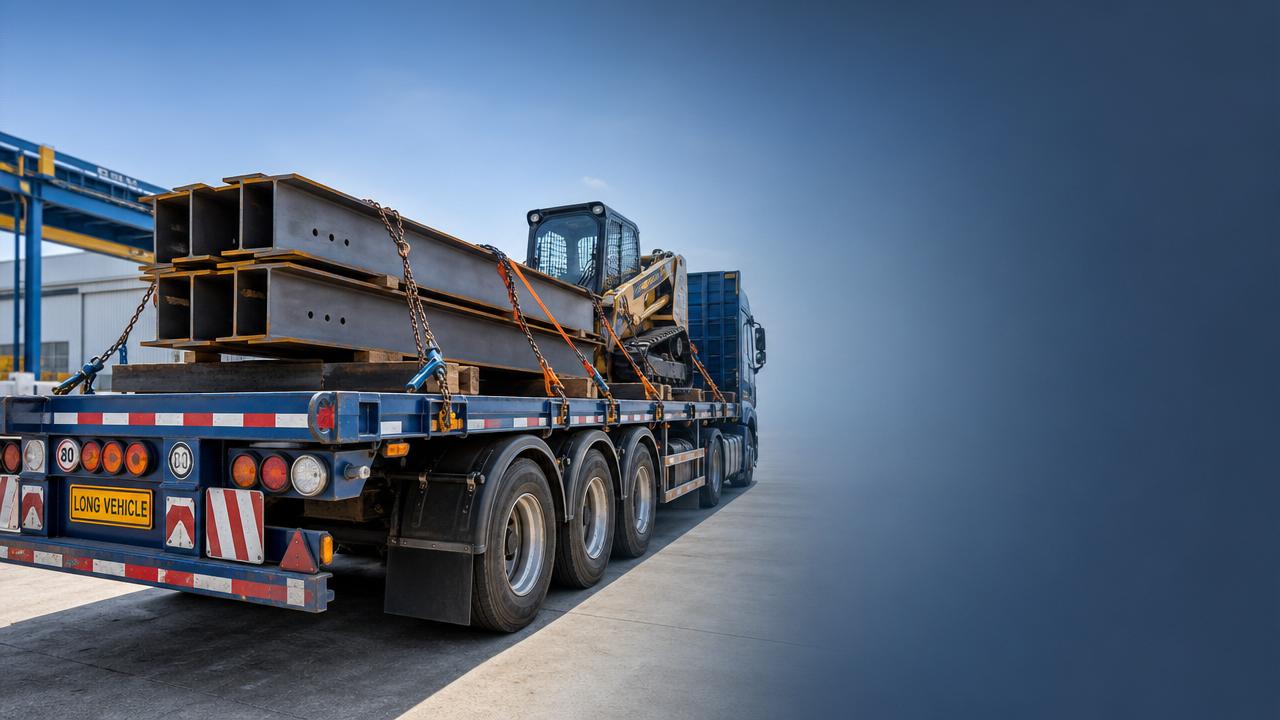
Understanding Flatbed Semi-Trailer load limits and securement basics is essential for operators who want safer transport, better cargo protection, and compliance on every trip. From weight distribution to tie-down practices, the right knowledge helps reduce risk, improve efficiency, and avoid costly mistakes. This guide outlines the key points every user should know before loading and securing cargo on a flatbed trailer.
Why Flatbed Semi-Trailer Load Limits Matter in Engineering Vehicle Transport
A Flatbed Semi-Trailer is one of the most practical transport tools in the engineering vehicle sector. It handles steel structures, machinery, pallets, pipes, precast components, and oversized jobsite materials that cannot fit inside enclosed bodies.
For operators, the biggest mistake is thinking load limit only means maximum weight. In real operations, legal payload, axle distribution, deck strength, cargo center of gravity, and securement points all work together. If one factor is ignored, the trip becomes less safe.
In construction and heavy-duty logistics, poor loading on a Flatbed Semi-Trailer can cause trailer instability, uneven tire wear, weak braking performance, damaged cargo, or roadside penalties. These risks increase when roads are rough, weather changes quickly, or equipment must be delivered on tight schedules.
- Overloading can stress the trailer frame, suspension, tires, and braking system beyond intended operating conditions.
- Incorrect weight distribution may overload one axle group even when total cargo weight looks acceptable.
- Weak securement allows shifting during turning, emergency braking, or movement over uneven surfaces.
- Mismatched trailer selection can slow loading, increase damage risk, and raise overall transport cost.
This is why operators should evaluate the trailer and the cargo as one system. In engineering transport, safe delivery starts long before the vehicle leaves the yard.
How to Read Flatbed Semi-Trailer Load Limits Correctly
When users review a Flatbed Semi-Trailer specification, they should not focus on one payload number alone. Load decisions depend on trailer tare weight, axle rating, tire capacity, kingpin load, deck structure, and the tractor-trailer combination.
Key load terms operators should understand
- Gross combination limit: the total allowable weight of tractor, trailer, cargo, fuel, and accessories as permitted by equipment and local regulations.
- Payload: the cargo weight that remains after subtracting the trailer’s own weight from the permitted total.
- Axle load: the weight carried by each axle set. A legal total can still be non-compliant if axle loads are uneven.
- Point load: concentrated force under machinery tracks, support legs, coils, or narrow contact points that can damage the deck.
- Securement working load: the rated restraining capacity of chains, straps, binders, anchor points, and related hardware.
The table below gives a practical way to connect these concepts during pre-loading checks on a Flatbed Semi-Trailer.
A simple review like this helps operators avoid two common errors: using estimated cargo weight instead of verified weight, and ignoring how the same cargo behaves differently on different trailer layouts.
Which Cargo Scenarios Need Different Securement on a Flatbed Semi-Trailer?
Securement is not one-size-fits-all. Engineering cargo varies in shape, density, friction, and movement risk. A Flatbed Semi-Trailer carrying steel beams needs a different strategy from one transporting compact equipment or bagged construction materials.
Typical engineering transport scenarios
The table below compares common cargo types and the practical securement focus for each Flatbed Semi-Trailer application.
Operators should always match securement hardware to the cargo shape and movement direction. Flat cargo can shift forward under braking, long cargo can bounce or flex, and machinery can creep if friction is low or the deck is wet.
Basic securement checklist before departure
- Verify the real cargo weight from shipping documents, scale data, or equipment plate information.
- Inspect anchor points, chains, straps, binders, and edge protectors for wear, cuts, cracks, or deformation.
- Confirm enough tie-downs are installed to resist forward, rearward, and lateral movement.
- Check cargo contact surfaces and add anti-slip materials where friction is low.
- Recheck tension after initial movement, especially in the first part of the route.
How Operators Can Improve Weight Distribution and Road Stability
Good weight distribution on a Flatbed Semi-Trailer improves steering response, braking control, and tire life. It also reduces stress on suspension components and helps maintain better contact between all wheels and the road surface.
In engineering logistics, uneven loading often happens when machinery is positioned for easy loading instead of correct axle balance. Another issue appears when mixed cargo is stacked according to unloading order but not according to weight priority.
Practical placement principles
- Place the heaviest item as low as possible to keep the center of gravity down.
- Avoid concentrating excessive mass at the extreme front or rear of the Flatbed Semi-Trailer.
- Spread concentrated loads with timber, mats, or steel plates if the cargo contact area is narrow.
- Keep left-right balance in mind, especially for machinery with offset engines or attachments.
- Plan for route conditions. Rough roads, slopes, and repeated cornering amplify poor balance.
Operators should also remember that a legal load on one route may become risky on another. Mountain roads, urban delivery areas, and temporary construction access roads all place different demands on a loaded Flatbed Semi-Trailer.
What to Check When Choosing a Flatbed Semi-Trailer for Daily Work
If your operation handles mixed engineering cargo, trailer selection should support daily loading efficiency, securement flexibility, and long-term durability. The right Flatbed Semi-Trailer is not always the one with the highest nominal payload. It is the one that fits your cargo profile, route, and compliance needs.
The comparison below helps users and fleet decision-makers evaluate a Flatbed Semi-Trailer based on actual use instead of brochure language.
For export buyers, it is also important to confirm local operating regulations, preferred component brands, and service access before ordering. Small configuration details can strongly affect daily uptime.
Compliance, Inspection, and Common Mistakes Operators Should Avoid
A compliant Flatbed Semi-Trailer operation is more than paperwork. It depends on whether the trailer, cargo, and securement method align with road rules and good transport practice. Regulations vary by market, but the core principles are consistent: know the weight, secure the cargo, and maintain equipment condition.
Common mistakes in daily operations
- Using damaged straps or chains because they still appear usable from a distance.
- Securing machinery by non-designated parts instead of approved tie points.
- Ignoring deck contamination such as mud, oil, or water that reduces friction.
- Failing to retighten tie-downs after cargo settles in the first kilometers.
- Assuming the same securement setup works equally well for every load type.
Operators should build a short inspection routine before each trip and after each major stop. This routine costs little time compared with the cost of damaged cargo, delayed delivery, or enforcement action.
Basic pre-trip inspection points
- Check tires, wheel fasteners, air lines, lights, brakes, and suspension condition.
- Inspect the deck for cracks, deformation, broken boards, or damaged steel sections.
- Verify cargo placement against axle balance and kingpin load expectations.
- Confirm that all securement equipment matches the cargo weight and shape.
- Ensure documents, route permits, and special transport requirements are ready when needed.
FAQ About Flatbed Semi-Trailer Load Limits and Securement
How do I know if my Flatbed Semi-Trailer is overloaded?
Do not judge by appearance. Confirm cargo weight, trailer tare weight, and axle distribution together. A load may look moderate but still overload one axle set or exceed local legal limits. When possible, verify with scale data before dispatch.
Are straps enough for all engineering cargo on a Flatbed Semi-Trailer?
No. Straps work well for many palletized or finished materials, but heavy steel, machinery, and loads with sharp edges often require chains, blocking, chocks, or a combined securement method. Hardware choice should match weight, friction, and movement risk.
Why does cargo still move even when it is tightly tied down?
Tension alone is not always enough. Movement can result from low friction, poor anchor angles, weak edge protection, cargo settling, or incorrect weight placement. Securement works best when restraint, friction, and blocking support each other.
What should buyers ask before ordering a Flatbed Semi-Trailer for export?
Ask about axle configuration, deck dimensions, suspension type, tie-down layout, landing gear specification, brake system compatibility, and the documents needed in your market. Also confirm spare parts support and delivery timing to avoid operational delays.
Why Work With a Professional Commercial Vehicle Export Partner
For many users, the challenge is not only choosing a Flatbed Semi-Trailer. It is choosing the right specification for the cargo, road conditions, compliance environment, and delivery schedule. This becomes even more important in cross-border procurement.
Shandong Livol Truck International Trade Co., Ltd. supports customers in the engineering vehicle field with practical export coordination and vehicle sourcing capability. As an authorized domestic and overseas dealer for FOTON, SHACMAN, and SINOTRUK, the company benefits from broad supply channels and stable inventory resources across China.
Its professional export team can help customers review vehicle selection, customization points, documentation, customs clearance, and logistics arrangements. For operators and fleet buyers, this reduces the risk of ordering a trailer or truck configuration that does not match the intended working conditions.
- Confirm trailer and tractor matching based on payload, route, and cargo profile.
- Discuss customization for deck layout, axle setup, or market-specific requirements.
- Check delivery timing against project deadlines and inventory availability.
- Review export documents and shipping arrangements before final order confirmation.
Contact Us for Flatbed Semi-Trailer Selection and Delivery Planning
If you are comparing Flatbed Semi-Trailer options for engineering transport, you can contact us for practical support rather than general sales talk. We can discuss payload range, deck dimensions, axle preferences, securement needs, and trailer suitability for your cargo and road conditions.
You may also consult us about tractor matching, delivery lead time, customization possibilities, export documentation, logistics planning, and after-sales support arrangements. This is especially useful when your project has strict timing, local compliance concerns, or mixed cargo requirements.
A well-matched Flatbed Semi-Trailer helps operators work safer and more efficiently. If you want help confirming parameters, reviewing configuration choices, or requesting a quotation, our team is ready to support your next transport plan.
Search Starts Here