News
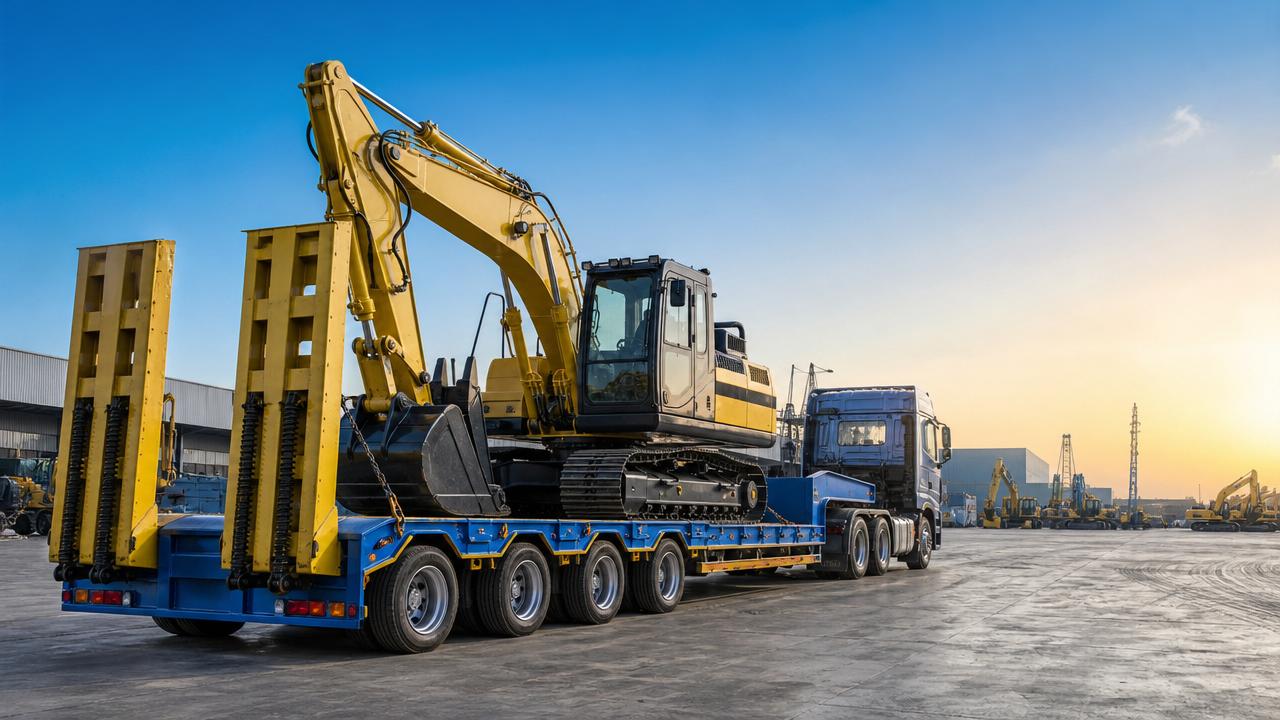
Choosing the right Low Plate trailer is critical for safe, compliant, and cost-effective oversize cargo transport. For procurement professionals, a clear buying checklist helps reduce operational risk, improve load efficiency, and ensure long-term fleet value. Backed by strong export capability and deep commercial vehicle experience, this guide highlights the key factors to evaluate before purchasing a Low Plate trailer for demanding engineering transport needs.
In engineering vehicle procurement, trailer selection affects far more than purchase price. It influences route feasibility, axle compliance, loading time, maintenance cost, and the ability to transport excavators, transformers, steel structures, and other oversized equipment safely across regional and cross-border projects.
For buyers managing fleet expansion or replacement, a Low Plate decision should be based on cargo profile, tractor matching, legal limits, structural durability, and supplier support. A well-structured checklist helps prevent under-specification, over-investment, and delivery delays that can impact project schedules.
Why a Low Plate Trailer Matters in Oversize Engineering Transport
A Low Plate trailer is designed with a lower deck height to carry heavy and tall cargo within road height restrictions. In many engineering transport scenarios, reducing deck height by even 150–300 mm can improve bridge clearance, loading stability, and route flexibility.
Procurement teams usually compare payload, deck structure, axle arrangement, and compatibility with prime movers. For oversize cargo, these factors are interconnected. A trailer rated for 40–80 tons may still underperform if the deck length, suspension, or ramp design does not fit actual loading patterns.
Typical cargo types and operating demands
Engineering fleets commonly use a Low Plate for excavators, loaders, rollers, cranes, agricultural machinery, and industrial modules. Cargo dimensions often vary from 8–18 meters in length, 2.5–3.5 meters in width, and 20–80 tons in operating weight depending on project requirements.
- Construction equipment transport between job sites
- Heavy machinery delivery from ports to inland destinations
- Oversize cargo movement for mining, energy, and infrastructure projects
- Regional and international road transport where height control is critical
Main procurement risks if specification is wrong
The wrong Low Plate configuration can create 4 major issues: reduced legal payload, faster tire wear, unstable load distribution, and difficulty obtaining transport permits. In practical terms, a mismatch may increase operating cost by 10%–20% over a 3–5 year ownership period.
A procurement checklist should therefore focus on lifecycle suitability, not only purchase budget. Buyers who align trailer specification with route class, cargo center of gravity, and tractor output usually achieve better fleet utilization and fewer dispatch interruptions.
Core value points for B2B buyers
- Lower deck height improves compliance under height-sensitive routes.
- Stronger frame design supports repeated heavy-duty engineering use.
- Better axle and suspension matching reduces uneven loading stress.
- Correct ramp and deck layout shortens loading and unloading cycles.
- Reliable after-sales support protects uptime during long export operations.
Low Plate Buying Checklist: Key Technical Factors to Evaluate
A practical Low Plate buying checklist should cover at least 7 technical areas before order confirmation. These include payload rating, axle count, deck dimensions, suspension type, ramp design, frame material, and brake or electrical system compatibility with the intended tractor head.
1. Payload rating and axle configuration
Start with the actual gross cargo weight, not the nominal machine weight. Add attachments, fuel, accessories, and safety margin. For many engineering applications, a 10%–15% reserve is advisable to avoid running continuously at the maximum rated load.
Axle selection should match legal road requirements and operational frequency. Common options include 2-axle, 3-axle, and 4-axle Low Plate trailers. Higher axle counts generally improve load distribution, but they also affect turning radius, tare weight, and maintenance complexity.
2. Deck height, deck length, and usable platform area
Low deck height is one of the most important reasons buyers choose a Low Plate. A lower platform helps transport taller cargo under bridge and tunnel restrictions. Buyers should verify overall loaded height based on actual machine dimensions, not brochure estimates.
Deck length must support safe placement of tracked or wheeled machinery. In many cases, usable platform length between 8 and 13 meters is a practical starting range, but larger industrial modules may require extended sections or customized layouts.
The table below shows how procurement teams can compare key Low Plate specifications according to common engineering transport needs.
For most procurement projects, specification errors happen when one parameter is considered in isolation. Payload, deck height, and axle layout should always be reviewed together, especially when the Low Plate will serve multiple machine categories within one fleet.
3. Suspension, frame strength, and structural durability
Suspension choice affects ride stability, frame stress, and tire life. Mechanical suspension is often preferred for cost control and straightforward maintenance, while air suspension may offer benefits for sensitive cargo or stricter road conditions in certain markets.
The main frame should be assessed for beam design, weld consistency, reinforcement at stress points, and steel thickness appropriate to intended duty cycles. A Low Plate serving daily site-to-site hauling will need stronger fatigue resistance than one used only a few times per month.
Questions buyers should ask suppliers
- What is the rated payload under standard road conditions?
- Which axle brands and suspension types are available?
- Can the deck and ramp design be customized for tracked machinery?
- What spare parts are normally included or recommended for export orders?
- How are welding, paint, and final inspection handled before shipment?
Compliance, Safety, and Operational Efficiency Checklist
A Low Plate that looks suitable on paper may still fail in operation if legal compliance and loading safety are not reviewed in advance. Procurement teams should assess 3 layers at minimum: road regulations, cargo securing practice, and serviceability in the destination market.
Road limits and permit considerations
Oversize transport regulations vary by country and even by province. Buyers should confirm legal gross vehicle weight, axle load limits, total height, and escort requirements before finalizing any Low Plate specification. A trailer that is legal in one market may need modification for another.
As a working rule, review 5 compliance points before purchase: deck height after loading, axle spacing, braking system, lighting and reflective markings, and permit category for oversize cargo. This early check can reduce customs and registration issues later in the process.
Loading safety and tie-down planning
A Low Plate should provide sufficient anchor points, anti-slip deck treatment, and ramp strength for repeated heavy equipment loading. Procurement staff should ask whether tie-down points are positioned for both tracked equipment and wheeled machines, since securing geometry differs significantly.
Safe loading usually follows a 4-step process: ramp positioning, machine alignment, center-of-gravity placement, and final lashing inspection. If any of these steps is compromised by poor trailer design, loading time increases and accident risk rises.
The following table outlines operational checkpoints that buyers can use to compare Low Plate safety and compliance readiness across suppliers.
For procurement teams, these checks are not administrative details. They directly affect whether the Low Plate can enter service quickly, operate safely, and maintain compliance during repeated engineering transport assignments.
Maintenance access and spare parts planning
A cost-effective Low Plate is one that remains serviceable over time. Buyers should review wear parts such as brake chambers, tires, bearings, electrical connectors, and suspension components. For export fleets, keeping a 6–12 month spare parts plan is often more practical than reactive sourcing.
Service intervals depend on road conditions and load intensity, but routine checks after every trip and deeper inspections every 5,000–10,000 km are common for heavy-use engineering applications. Easy access to parts and technical support reduces downtime significantly.
Supplier Evaluation, Export Support, and Total Procurement Value
Choosing the right Low Plate also means choosing the right supplier. Price comparison alone is incomplete if the supplier cannot support specification confirmation, export documentation, delivery coordination, and after-sales follow-up in your destination market.
What procurement teams should expect from a qualified exporter
A dependable commercial vehicle exporter should be able to provide product matching advice, clear production or inventory timelines, pre-shipment inspection support, and logistics coordination. This becomes especially important when the Low Plate is purchased together with tractor heads or other engineering transport equipment.
Shandong Livol Truck International Trade Co., Ltd., based in Shandong, China, offers strong industry resources and practical export support for commercial vehicle buyers. As an authorized domestic and overseas dealer for FOTON, SHACMAN, and SINOTRUK, the company operates multiple authorized 4S stores and maintains vehicle inventory for stable supply and faster response.
For international buyers, procurement efficiency depends on full-process coordination. A professional export team can assist with vehicle selection, customization, documentation, customs clearance, and logistics, helping reduce communication gaps across the 5 key stages from inquiry to final delivery.
Recommended supplier review checklist
- Can the supplier confirm Low Plate specifications based on your cargo list?
- Is there sufficient stock or a clear lead time, such as 2–6 weeks?
- Can export documents and customs procedures be handled accurately?
- Are spare parts and after-sales communication available after delivery?
- Can the supplier coordinate matched solutions with tractor brands if needed?
Looking beyond initial purchase price
The lowest quotation is not always the best procurement result. Buyers should calculate total cost across at least 4 dimensions: acquisition, transport efficiency, maintenance, and downtime risk. A better-specified Low Plate may reduce route restrictions, shorten loading cycles, and improve asset utilization over several years.
In practical terms, a trailer that saves 30–60 minutes per loading cycle and avoids repeated overloading or permit problems can create measurable operational value. This is especially relevant for contractors, equipment rental companies, and transport operators handling frequent project movements.
Common buying mistakes to avoid
- Selecting a Low Plate only by nominal tonnage without reviewing deck layout
- Ignoring loaded height and local route limitations
- Underestimating spare parts demand for export markets
- Choosing ramps unsuitable for tracked or high-clearance equipment
- Overlooking tractor and trailer compatibility in braking and connection systems
Final Checklist for Procurement Decision-Making
Before placing a Low Plate order, procurement teams should confirm 8 final points: cargo dimensions, target payload, axle arrangement, deck height, ramp type, compliance needs, spare parts plan, and supplier delivery capability. This final review helps turn a technical shortlist into a sound commercial decision.
The most effective Low Plate purchase is one that fits your transport routes, machinery profile, maintenance resources, and project schedule from day one. Buyers who use a structured checklist are better positioned to control risk, protect operating margins, and improve fleet reliability in oversize cargo transport.
If you are sourcing a Low Plate trailer or a matched engineering transport solution, Shandong Livol Truck International Trade Co., Ltd. can support vehicle selection, customization, export handling, and delivery coordination. Contact us today to discuss your cargo requirements, get a tailored recommendation, and learn more about practical solutions for heavy-duty transport projects.
Search Starts Here