
News
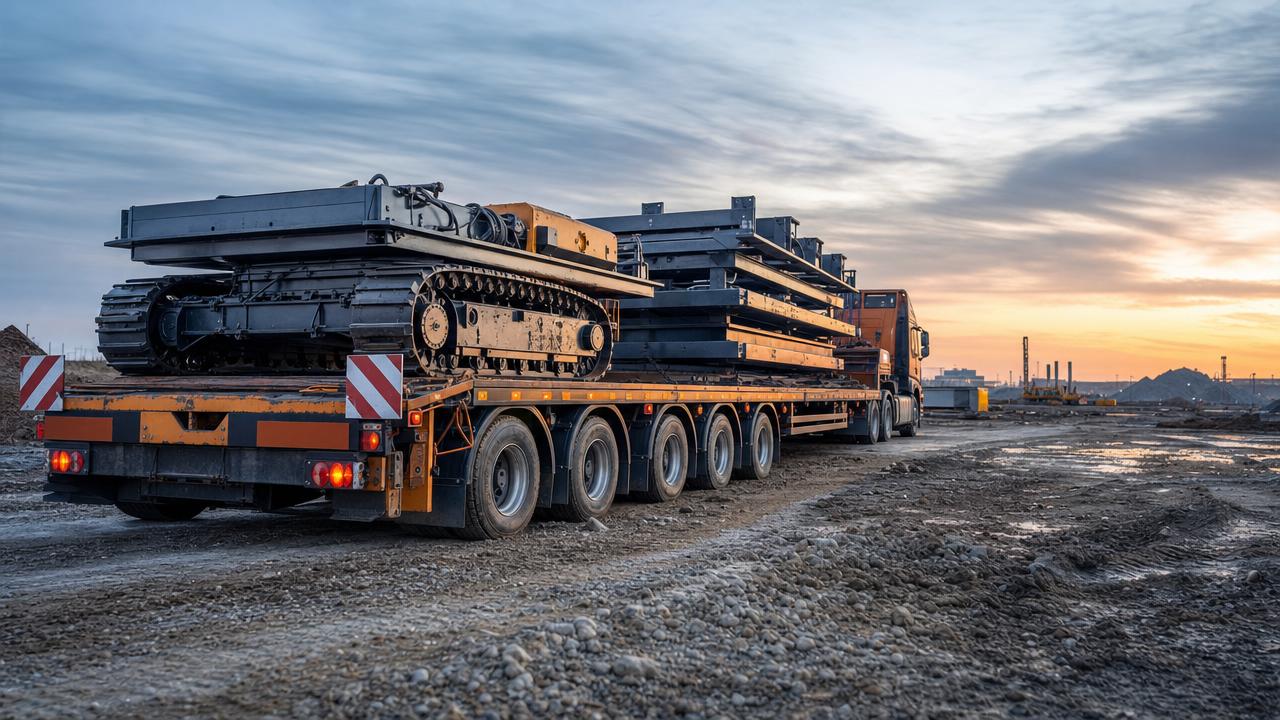
For technical evaluators, understanding Flatbed Semi-Trailer load limits is essential to judging on-site safety, handling and operating efficiency. Stability is influenced by far more than payload alone, including load distribution, axle configuration, road conditions and trailer structure. This article explains the key factors that affect performance in real working environments and helps support more accurate equipment selection and risk assessment.
Why do Flatbed Semi-Trailer load limits affect site stability so much?
In engineering vehicle operations, a Flatbed Semi-Trailer is rarely working in ideal highway conditions. It may enter quarry roads, temporary access lanes, muddy yards, uneven construction platforms or mixed urban-rural delivery routes. In these environments, load limit is not just a legal number on a specification sheet. It is a practical indicator of how safely the trailer can carry, turn, brake and remain stable under changing site conditions.
Technical evaluators often face a difficult question: two trailers may show similar rated capacity, but one performs more predictably on site while the other becomes unstable under the same cargo class. The reason is simple. Rated payload alone does not explain dynamic stability. Chassis rigidity, deck height, axle spacing, suspension type, tire matching and cargo securing all influence whether the load remains controlled during real operations.
For buyers in engineering transport, the evaluation process should therefore move beyond gross tonnage and focus on the full operating system. A Flatbed Semi-Trailer that is technically acceptable on paper may still create rollover risk, uneven axle loading, premature tire wear or braking imbalance once it enters a jobsite with frequent starts, stops and lateral movement.
- Static load capacity shows what the trailer can carry under controlled conditions.
- Dynamic stability shows how the trailer behaves during turning, braking, reversing and uneven ground transfer.
- Site suitability depends on both values, not on payload alone.
Static rating versus real operating load
A rated load limit usually assumes proper loading, balanced axle share and compliant road conditions. On site, these assumptions are often broken. Concentrated steel structures, machinery with off-center mass, pipe bundles or tracked equipment may place a much higher point load on one section of the deck. That changes the center of gravity and increases frame stress. Evaluators should ask where the weight sits, not only how much it weighs.
This is especially important when transporting engineering equipment with asymmetrical geometry. Excavator arms, generators, concrete forms and small machines may create front-heavy or side-biased loading. Even when total weight stays within limit, improper placement can overload one axle group and reduce directional stability.
What are the main technical factors behind Flatbed Semi-Trailer stability?
The table below summarizes the main factors that technical evaluators should review when assessing a Flatbed Semi-Trailer for engineering vehicle applications. These factors directly affect stability, axle compliance and handling consistency on mixed routes.
This comparison shows why technical evaluation must be multidimensional. A Flatbed Semi-Trailer selected for heavy engineering tasks should be reviewed as a complete load platform, not as a deck with wheels. Structural design and actual cargo behavior matter as much as nominal tonnage.
Load distribution is the first control point
Among all variables, load distribution is usually the fastest way to improve safety without changing the trailer itself. The same Flatbed Semi-Trailer can perform very differently depending on how operators place the cargo. Concentrated weight near the rear may reduce kingpin load and cause poor tractor-trailer coordination. Too much weight near the front may overload the tractor drive axles and affect steering response.
For technical evaluators, this means a procurement review should include loading method assumptions. Ask whether the trailer will carry long steel sections, palletized materials, compact machines or mixed equipment. Each category behaves differently under acceleration and braking.
Axle layout changes both compliance and handling
A two-axle, three-axle or multi-axle Flatbed Semi-Trailer may all serve engineering transport, but they will not behave the same. More axles can improve load sharing and lower ground pressure, but they also change turning radius, tire scrub and maintenance points. Wider axle spacing can help distribute weight, yet it may reduce maneuverability in confined sites.
Evaluators should compare the trailer not only against cargo weight, but also against site geometry. A stable trailer on a long-haul route may become inefficient in a plant yard with tight turning zones and ramp entries.
Which site conditions most often reduce Flatbed Semi-Trailer stability?
Engineering vehicle work introduces environmental variables that can quickly reduce the safe operating margin of a Flatbed Semi-Trailer. These conditions should be considered before purchase, especially when transport includes loading yards, mine roads, temporary detours or unfinished construction surfaces.
- Soft or uneven ground can create left-right wheel height differences, increasing torsional stress in the frame.
- Steep ramps can shift the center of gravity longitudinally and change kingpin pressure during entry or exit.
- Frequent stop-start movement increases cargo shift risk if securing points are poorly designed or underused.
- Mixed paved and unpaved routes create alternating vibration loads that affect tire temperature and suspension wear.
In practice, many stability complaints are not caused by severe overload. They are caused by moderate loads operating on poor surfaces with insufficient cargo restraint. This is why technical evaluators should inspect lashing point quantity, frame reinforcement in high-load zones and the compatibility between trailer deck design and the customer’s loading equipment.
Road condition and speed interact with load limit
A Flatbed Semi-Trailer that is acceptable at low speed over short internal transfer routes may not remain equally stable at higher road speed after leaving the site. Dynamic forces rise quickly during emergency braking, lane correction and cornering. That means route planning and operating speed should be included in the technical review, especially when the trailer moves between project areas and public roads.
How should technical evaluators compare trailer options before procurement?
The best selection method is to compare trailer options against the actual operating profile rather than against a single capacity number. The table below can be used as a practical procurement review framework for Flatbed Semi-Trailer selection in engineering transport.
This type of structured review helps technical teams avoid under-specification and over-specification at the same time. A heavier trailer is not automatically the better choice. If the route demands tight maneuvering or repeated loading cycles, a balanced specification often performs better than a trailer selected only for maximum rated payload.
Key questions to ask suppliers
- What cargo types and typical dimensions has this Flatbed Semi-Trailer configuration been designed to support?
- How is axle load expected to distribute under common loading scenarios?
- Which structural areas receive reinforcement for concentrated engineering loads?
- What documentation can be prepared for export, customs and destination market compliance?
- How quickly can replacement parts, specification clarification or after-sales support be arranged?
Common mistakes when assessing Flatbed Semi-Trailer load limits
Many procurement risks come from evaluation shortcuts. Technical teams under schedule pressure may compare only price and nominal payload, then discover stability issues after deployment. The most common mistakes are predictable and avoidable.
Mistake 1: treating rated capacity as usable capacity in every scenario
Rated capacity must be interpreted together with terrain, cargo shape, securing method and legal axle load limits. A trailer that can safely carry a uniformly distributed load may not safely carry a compact machine with a high center of gravity on a rutted site road.
Mistake 2: ignoring tractor and trailer matching
A Flatbed Semi-Trailer does not work alone. Kingpin load, fifth wheel compatibility, braking response and tractor power reserve all influence control. Poor matching can create instability even when the trailer itself is technically suitable.
Mistake 3: underestimating delivery and support requirements
For international buyers, a technically correct trailer that arrives late or lacks export coordination can still disrupt a project. Technical evaluation should include supply reliability, inventory responsiveness, documentation handling and after-sales communication efficiency.
How can Shandong Livol support more reliable evaluation and selection?
For engineering vehicle buyers, product choice is only one part of the decision. The other part is execution. Shandong Livol Truck International Trade Co., Ltd. supports customers with a full-process export approach that helps technical evaluators move from specification review to practical delivery planning.
As an official authorized domestic and overseas dealer for FOTON, SHACMAN and SINOTRUK, the company operates authorized 4S stores across China and maintains vehicle inventory for stable supply and faster response. This matters when projects require time-sensitive dispatch, comparative model review or coordinated procurement across multiple vehicle categories.
For technical evaluators assessing a Flatbed Semi-Trailer or related engineering transport solution, support is most useful when it includes specification clarification, customization discussion, export documentation preparation, customs coordination and logistics planning. A strong supplier should reduce uncertainty at every stage, not simply issue a quotation.
- Vehicle selection support based on cargo category, route condition and project use case.
- Customization coordination for configuration details linked to real operating needs.
- Documentation and customs support to improve export process predictability.
- Logistics and after-sales communication to reduce downtime and follow-up risk.
FAQ for technical evaluators reviewing Flatbed Semi-Trailer stability
How do I know whether a Flatbed Semi-Trailer is suitable for concentrated equipment loads?
Start by identifying the equipment footprint, axle or track contact area and center of gravity. Then compare these with deck reinforcement zones, axle layout and suspension behavior. Concentrated loads are more demanding than evenly distributed cargo, so frame design and load placement guidance are critical.
Which matters more for stability: total payload or deck height?
Both matter, but deck height often has a stronger effect on rollover tendency when cargo is tall or top-heavy. A lower deck usually improves center-of-gravity control. However, the final judgment must still include axle distribution, road condition and cargo securing quality.
What should be checked before importing a Flatbed Semi-Trailer for engineering use?
Review local axle load rules, braking and lighting requirements, transport dimensions, customs documentation and destination registration expectations. Import decisions should align engineering suitability with compliance readiness, otherwise project deployment may be delayed.
Is a higher axle count always better for heavy engineering transport?
Not always. More axles can improve load sharing, but they may increase complexity, tire wear in tight turns and maintenance demand. The correct axle count depends on cargo density, route constraints, legal limits and the space available for maneuvering on site.
Why choose us for Flatbed Semi-Trailer selection and export coordination?
If your team is comparing Flatbed Semi-Trailer options for engineering vehicle transport, the most valuable next step is a specification-based discussion rather than a generic inquiry. Shandong Livol can support technical review around payload assumptions, axle configuration, delivery timing and export process details.
You can consult us on cargo type matching, trailer selection logic, available configurations, estimated delivery cycle, customization possibilities, documentation preparation, logistics arrangements and after-sales coordination. This is particularly useful when your project involves multiple operating environments or strict timeline requirements.
When technical evaluators need clearer decision support, we can help organize the discussion around real project variables: expected load profile, route condition, compliance concerns, budget boundaries and supply urgency. That makes the procurement process more efficient and reduces the chance of choosing a Flatbed Semi-Trailer that looks adequate on paper but performs poorly on site.
Search Starts Here