
News
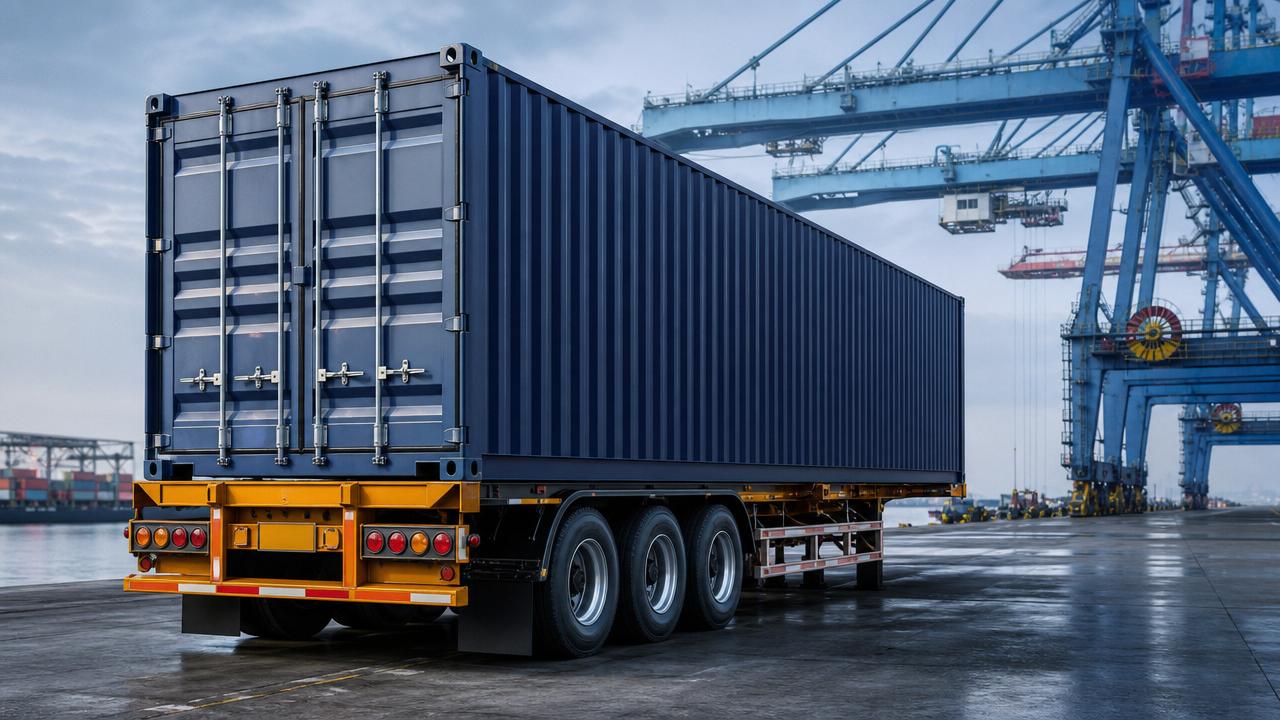
Choosing the right Skeleton (Container) Semi-Trailer is becoming more important as port logistics grows faster, container turnover becomes tighter, and transport operators face higher expectations for safety, payload efficiency, and lifecycle cost. In port container haulage, the trailer is no longer just a basic carrier. It directly affects loading compatibility, turnaround speed, maintenance frequency, driver confidence, and long-term profitability. A well-matched Skeleton (Container) Semi-Trailer helps reduce downtime, support stable container movement, and improve transport reliability under real working conditions.
Port container haulage is shifting toward higher efficiency and stricter trailer selection
Across many ports and inland transport corridors, container transport demand is becoming more dynamic. Operators are handling mixed box types, tighter delivery windows, heavier cargo concentrations, and more demanding compliance requirements. As a result, selecting a Skeleton (Container) Semi-Trailer now requires more than checking overall dimensions or comparing initial purchase prices. The market is clearly moving toward trailers that combine structural strength, flexible container locking positions, dependable axle systems, and easier maintenance access.
This shift also reflects a broader change in engineering vehicle operations. Fleet decisions are increasingly based on total operating value rather than simple acquisition cost. In practical terms, that means chassis durability, tare weight control, corrosion resistance, brake system performance, and spare parts availability all matter more than before. For port container haulage, the best Skeleton (Container) Semi-Trailer is the one that fits route conditions, container types, legal axle load limits, and expected utilization intensity.
The main signals behind demand changes in the Skeleton (Container) Semi-Trailer market
Several visible signals are shaping how buyers evaluate a Skeleton (Container) Semi-Trailer. Port operations are more time-sensitive, and unplanned trailer failure can quickly disrupt scheduling. At the same time, roads linking ports to warehouses, inland depots, and industrial zones may include rough surfaces, frequent braking, and repeated turning under load. These realities are pushing the market toward stronger frames, better suspension matching, and more stable support for repeated container handling.
Why these changes are happening in engineering vehicle operations
The growing importance of the Skeleton (Container) Semi-Trailer is driven by both infrastructure and operational realities. Port traffic density is increasing, but congestion and loading windows leave less tolerance for equipment delays. In addition, container cargo is not always evenly distributed, so trailers must deal with concentrated load points and repeated stress. A weak frame design may look acceptable on paper but perform poorly over time in high-frequency port use.
- Heavier operational cycles require stronger main beams, cross members, and weld quality.
- Intermodal flexibility increases the need for adaptable container locking systems.
- Rising maintenance costs make durable axles, suspension, and landing gear more valuable.
- Export and cross-border operations often require dependable documentation support and standardized configurations.
- Fleet operators increasingly measure equipment by uptime, not just by purchase invoice.
These factors explain why many buyers now ask more detailed questions about steel grade, axle brand, suspension type, lock mechanism durability, and paint or coating treatment. In short, a modern Skeleton (Container) Semi-Trailer is expected to deliver both operational flexibility and predictable long-term service.
The biggest operational impact is on safety, compatibility, and lifetime cost
The selection of a Skeleton (Container) Semi-Trailer affects multiple business links. At the loading point, poor fitment or inconvenient locking positions can slow container placement. On the road, axle mismatch or weak suspension can reduce stability and accelerate tire wear. At the maintenance stage, difficult access to components or low-quality parts can increase service downtime. These impacts accumulate quickly in port container haulage, where trip frequency is high and delays can affect the full transport chain.
Another practical issue is route diversity. Some trailers work mainly inside port zones, while others run between seaports, inland container depots, bonded warehouses, and factories. A Skeleton (Container) Semi-Trailer that performs well in short shuttle work may not be ideal for longer regional transport. Matching the trailer to axle load rules, pavement conditions, turning radius demands, and expected annual mileage is critical for controlling total cost.
What to evaluate before finalizing a trailer specification
- Container type compatibility: confirm whether the trailer is designed for 20ft, 40ft, one 40ft plus one 20ft, or optional 45ft operations.
- Payload and weight distribution: check rated loading capacity and how the frame handles concentrated cargo loads.
- Axle configuration: choose 2-axle or 3-axle layout based on local road rules, cargo weight, and trip profile.
- Suspension choice: mechanical suspension offers proven durability, while air suspension may improve ride performance for certain routes.
- Corrosion protection: coastal and port environments require effective surface treatment and anti-rust design.
- Brake and electrical systems: stable braking and reliable lighting are essential for road safety and compliance.
The best Skeleton (Container) Semi-Trailer choice depends on route intensity and service strategy
Instead of searching for a universally “best” Skeleton (Container) Semi-Trailer, it is more useful to identify the most suitable configuration for actual operating conditions. A lighter trailer may improve payload efficiency, but if it sacrifices frame rigidity, the long-term cost can rise through repairs and downtime. A heavy-duty model may offer better durability, but if route loads are moderate and regulations are strict on gross combination weight, excessive tare weight can reduce economic return.
The most important points to watch when comparing suppliers and trailer solutions
Supplier capability matters almost as much as trailer specification. A strong exporter can help ensure that the selected Skeleton (Container) Semi-Trailer is not only technically suitable but also delivered with clear documentation, stable production support, and reliable after-sales coordination. That becomes especially important when trailers must be adapted for local regulations, axle preferences, or specific operating environments.
- Verify whether the supplier can support customization for dimensions, axle brands, suspension, tires, and lock arrangement.
- Check if quality control includes chassis inspection, weld checking, brake testing, and loading-related structural review.
- Confirm spare parts support and response speed for service issues after delivery.
- Review export handling ability, including documentation, customs support, and shipping coordination.
- Look for stable inventory or dealer strength, which helps reduce waiting time for fleet expansion.
Shandong Livol Truck International Trade Co., Ltd., based in Shandong, China, brings value in this area through strong commercial vehicle export experience, professional full-process service, and a reliable supply system. As an authorized dealer for FOTON, SHACMAN, and SINOTRUK, with multiple authorized 4S stores and sufficient inventory, the company supports customers with vehicle selection, customization, documentation, customs clearance, logistics, strict quality control, and after-sales coordination. For buyers evaluating a Skeleton (Container) Semi-Trailer alongside broader commercial vehicle planning, this kind of integrated support helps reduce sourcing risk.
A practical way to make the right decision in the next selection cycle
A sound decision starts with real operating data. Review container sizes, average payload, route distance, road quality, legal axle limits, annual mileage, and maintenance history. Then compare each Skeleton (Container) Semi-Trailer option against those conditions rather than against a generic specification sheet. This approach makes it easier to balance upfront cost with structural reliability, loading efficiency, and service life.
- Define the main haulage pattern: port shuttle, inland depot transfer, or mixed long-distance operation.
- List required container combinations and local compliance limits.
- Compare frame design, axle layout, suspension, tare weight, and anti-corrosion treatment.
- Request detailed technical confirmation and after-sales terms from the supplier.
- Choose the Skeleton (Container) Semi-Trailer that offers the best total operating value, not just the lowest quote.
If the goal is stable port container haulage, the right trailer decision should improve safety, compatibility, uptime, and cost control at the same time. A carefully selected Skeleton (Container) Semi-Trailer can become a long-term productivity asset rather than a recurring maintenance burden. The next step is to match your operating profile with a trusted export partner that can provide the right specification, dependable supply, and responsive support from selection through delivery.
Search Starts Here