
News
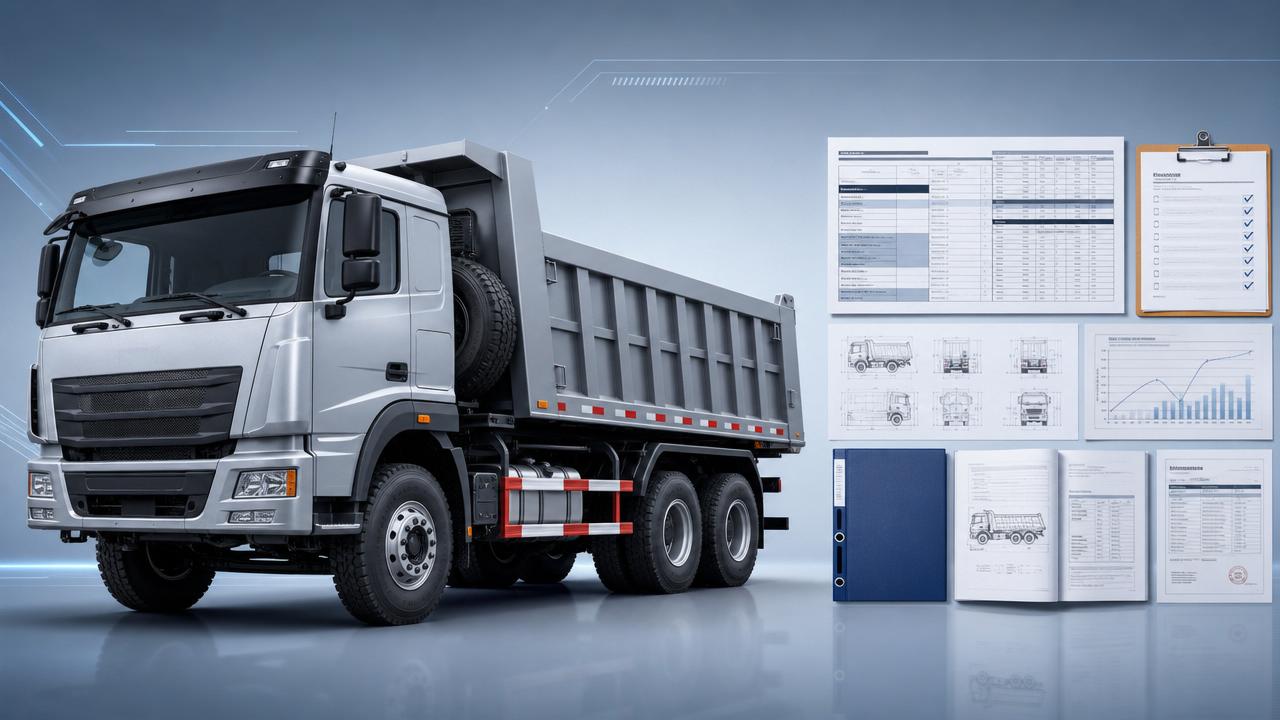
For dealers, distributors, and agents, understanding the Cangshan Vehicle Configuration List is essential to selecting the right commercial vehicles without overlooking critical specs. From drivetrain and payload to cabin features and compliance details, every item affects purchasing decisions, customer satisfaction, and market competitiveness. This guide helps you read the Cangshan Vehicle Configuration List more efficiently, so you can compare options with confidence and make smarter sourcing decisions.
Why a checklist approach matters before you compare models
Many buyers review a Cangshan Vehicle Configuration List too quickly and focus only on headline figures such as engine horsepower or price. For commercial vehicle dealers, that is rarely enough. A configuration list is not just a sales document; it is a decision tool that shows whether a truck can match local road conditions, legal requirements, customer loading patterns, service expectations, and total operating cost.
Using a checklist method helps you avoid the most common sourcing mistakes: choosing the wrong axle ratio for terrain, overlooking body dimension limits, accepting a cabin spec that does not fit your end market, or missing compliance items that delay customs clearance. When you read the Cangshan Vehicle Configuration List in a structured way, you can compare units faster, negotiate more accurately, and reduce the risk of post-delivery disputes.
The first items to confirm on any Cangshan Vehicle Configuration List
Before going into detailed options, confirm the basic identity of the vehicle. This is the fastest way to filter unsuitable units and keep your sourcing process efficient.
- Model code and vehicle type: Verify whether the unit is a cargo truck, dump truck, tractor head, mixer, municipal vehicle, or another engineering vehicle variant.
- Drive form: Check 4x2, 6x4, 8x4, or all-wheel-drive layout according to road condition and payload expectations.
- Gross vehicle weight and rated payload: Make sure legal carrying limits and real operating needs are aligned.
- Wheelbase and overall dimensions: These directly affect body length, turning radius, and local registration restrictions.
- Emission level and market compliance: Confirm whether the listed standard matches the destination country’s import and operating rules.
- Cabin version and seating: This matters for driver comfort, crew size, and local buyer expectations.
If any of these basic items are unclear, do not move on to optional features yet. Request a corrected or complete Cangshan Vehicle Configuration List first, because detailed comparison is only useful when the base platform is confirmed.
Core technical checklist: the specs that affect real performance
1. Engine and power matching
Do not judge the engine by horsepower alone. A strong Cangshan Vehicle Configuration List should also show torque, displacement, fuel type, emission route, and engine brand or series. For engineering vehicles, torque output at working speed often matters more than peak horsepower. Dealers serving mining, hilly, or overloaded environments should prioritize low-speed pulling power and cooling reliability.
2. Transmission and driveline
Check manual or automated transmission type, number of gears, PTO compatibility if special upper bodies are involved, and clutch specification. Transmission choice influences fuel economy, driver adaptation, maintenance complexity, and jobsite usability. Also confirm axle ratio, because it determines the balance between climbing ability and highway speed.
3. Axles, suspension, and frame strength
The Cangshan Vehicle Configuration List should clearly show front axle capacity, rear axle capacity, suspension structure, and frame dimensions. Heavy engineering applications require more than acceptable nominal load; they require long-term durability under repeated stress. Reinforced leaf springs, stronger chassis rails, and stable axle brands are often more important than cosmetic cabin upgrades.
4. Tires and wheel setup
Tire size, ply rating, tubeless or tube-type structure, and on-road versus mixed-terrain suitability are easy to overlook. Yet tire mismatch can quickly raise operating cost. In some markets, tire specification availability is also a service issue, so dealers should choose configurations that local replacement channels can support.
5. Braking and safety systems
Check whether the unit includes air brakes, ABS, exhaust brake, retarder options, parking brake structure, and emergency warning features. For export-oriented purchasing, braking specification is not a minor detail; it can affect market acceptance, insurance conditions, and fleet safety reputation.
How to read body, payload, and dimension data without confusion
A Cangshan Vehicle Configuration List often includes dimensional data that looks straightforward but needs interpretation. Dealers should separate legal dimensions, practical body capacity, and payload efficiency instead of treating them as the same thing.
- Confirm overall length, width, and height against local road regulations and container or ro-ro shipping limitations.
- Check cargo body length and internal volume for actual loading scenarios, not just brochure claims.
- Compare curb weight with rated payload to evaluate carrying efficiency.
- Review overhang and wheelbase because these influence maneuverability on job sites and city routes.
- For dump or special engineering bodies, verify hydraulic system capacity, material thickness, and lifting angle if listed separately.
This is especially important for distributors selling to contractors. A vehicle may appear competitive on paper but become less useful if body layout reduces loading convenience or if axle distribution limits practical payload in rough terrain.
Cabin and operator features: not optional for resale success
For many fleet buyers, cabin specification is no longer secondary. Driver retention, comfort, and fatigue management are real purchasing factors. When reviewing the Cangshan Vehicle Configuration List, pay attention to sleeper arrangement, air conditioning, seat type, window configuration, steering adjustment, instrument cluster, reversing support, and storage space.
Agents working in hot regions, long-haul operations, or labor-short markets should give these items more weight. A slightly higher-spec cabin can improve customer acceptance and strengthen your pricing position. On the other hand, if your market is highly price-sensitive and vehicles are used for short-distance engineering tasks, focus on durability and easy maintenance over premium interior features.
Scenario-based checks for dealers, distributors, and agents
If you sell to construction and infrastructure fleets
Prioritize frame reinforcement, suspension strength, axle capacity, power reserve, and off-road adaptability. In this case, the Cangshan Vehicle Configuration List should be reviewed with harsh working conditions in mind rather than ideal road use.
If you target urban distribution or municipal projects
Look carefully at overall dimensions, turning radius, fuel efficiency, brake safety, and cabin visibility. Compact layouts and compliance-friendly specs may matter more than maximum payload.
If you serve long-distance cargo buyers
Engine economy, gearbox ratios, sleeper comfort, fuel tank capacity, and after-sales parts availability should be checked first. In this segment, lifecycle cost often outweighs initial purchase price.
If you build private-label or customized export orders
Use the Cangshan Vehicle Configuration List as a base sheet, then mark all custom items separately. This prevents confusion between standard factory specification and destination-market modifications such as tire brand, warning devices, body design, language labels, or climate package.
Commonly missed items that can create sourcing risk
- Emission and homologation mismatch, causing import delays or registration failure.
- Fuel tank size that is too small for local route patterns.
- Axle ratio unsuited to mountainous or high-speed operating conditions.
- Tire specs that are hard to replace in the local market.
- Cabin details omitted from the Cangshan Vehicle Configuration List, leading to buyer complaints after delivery.
- Insufficient clarity on standard versus optional equipment.
- No confirmation of spare parts support, service manuals, or after-sales documentation.
These oversights are costly because they usually appear after ordering, not during quotation review. A disciplined checklist process protects both your margin and your reputation.
A practical execution method for comparing multiple configuration lists
When you receive several vehicle offers, do not compare them line by line in random order. Use a priority sequence. First, eliminate non-compliant models. Second, compare payload-platform fit. Third, evaluate powertrain suitability. Fourth, review body and cabin details. Fifth, assess service support, spare parts readiness, and delivery timeline.
This method is especially useful when sourcing from major Chinese commercial vehicle channels. A professional exporter should be able to explain not only what appears on the Cangshan Vehicle Configuration List, but also how each specification affects real deployment. Companies with authorized dealership resources, stock availability, and export service experience can usually help buyers verify factory specs, customization feasibility, documents, and shipping arrangements more efficiently.
Questions to ask suppliers before final confirmation
Before placing an order, ask for clear answers to the following points:
- Is this Cangshan Vehicle Configuration List based on a current production model?
- Which items are standard, and which are optional or customized?
- Can the supplier provide VIN-level confirmation or factory build confirmation before shipment?
- What compliance documents are available for the destination market?
- What is the spare parts support plan for the chosen configuration?
- How will bodywork, color, branding, or technical modifications be documented?
FAQ about the Cangshan Vehicle Configuration List
How detailed should a reliable configuration list be?
It should cover model identity, engine, transmission, axle data, dimensions, weight limits, tire specs, cabin details, safety items, and compliance information. If key values are missing, request revision before quoting to end customers.
Can two vehicles with similar horsepower perform very differently?
Yes. Torque, gearbox matching, axle ratio, curb weight, and suspension setup can produce very different real-world results even when horsepower figures look close.
Why do dealers need to check cabin features on engineering vehicles?
Because operator comfort affects resale speed, fleet acceptance, and customer satisfaction. In many markets, even worksite vehicles must meet rising expectations for usability and driver comfort.
Final checklist and next step
To read the Cangshan Vehicle Configuration List effectively, start with the non-negotiable basics: vehicle type, drive form, weight class, dimensions, and compliance. Then move to powertrain, axles, suspension, tires, brakes, cabin, and application-specific details. Finally, verify which specs are standard, which are optional, and which require factory confirmation. This checklist-based review helps dealers and distributors make faster, safer, and more profitable purchasing decisions.
If you need to confirm specification matching, customization options, delivery cycle, export documentation, or suitable FOTON, SHACMAN, or SINOTRUK alternatives for your market, it is best to prepare your target payload, road conditions, compliance standard, budget range, and preferred body type in advance. With that information, a professional export partner such as Shandong Livol Truck International Trade Co., Ltd. can help you evaluate the Cangshan Vehicle Configuration List more accurately and turn technical data into a workable sourcing plan.
Search Starts Here