News
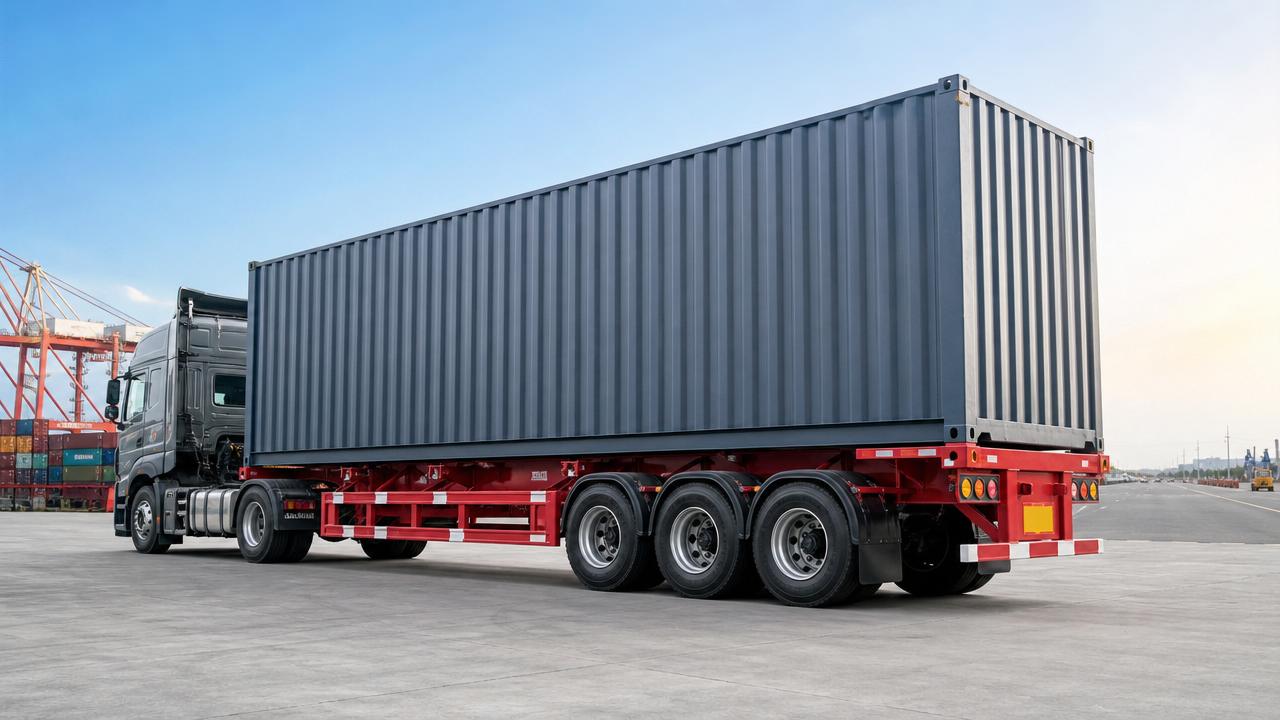
Choosing the right Skeleton (Container) Semi-Trailer is essential for procurement teams handling both port operations and long-distance road transport. The right model can improve loading efficiency, reduce operating costs, and ensure reliable container movement under demanding conditions. This guide explains the key factors buyers should evaluate to select a durable, cost-effective trailer that matches transport needs, compliance requirements, and long-term fleet performance goals.
What should procurement teams understand first about a Skeleton (Container) Semi-Trailer?
A Skeleton (Container) Semi-Trailer is a purpose-built engineering vehicle trailer designed to carry ISO containers efficiently. Instead of a full platform body, it uses a reinforced frame structure with twist locks, cross members, landing gear, suspension, axles, braking components, and electrical systems configured for container transport. This design reduces dead weight and supports faster loading and unloading in ports, depots, logistics yards, and intercity freight routes.
For procurement personnel, the core question is not simply price. It is fitness for operation. A trailer that performs well inside a port may not be the best option for long highway runs, rough access roads, or high-frequency container turnover. Buying the wrong specification can lead to frame stress, premature tire wear, poor tractor matching, inefficient loading cycles, and rising maintenance costs.
In practical purchasing decisions, the Skeleton (Container) Semi-Trailer must be evaluated as part of a full transport system. That includes the tractor head, the route condition, container size mix, legal axle load limits, maintenance capability, and the importer’s documentation and customs requirements. This system-level view helps avoid short-term savings that become long-term operating losses.
- Port use often prioritizes quick positioning, repeated loading cycles, and resistance to impact from handling equipment.
- Road transport requires stable tracking, reliable braking, suitable suspension, and a frame strong enough for uneven surfaces and long-distance fatigue loads.
- Cross-border or export procurement also requires attention to dimensional compliance, lighting configuration, documentation accuracy, and spare parts availability.
Which operating scenarios demand different trailer configurations?
Not all container movements are the same. Some buyers handle short shuttle trips between port terminals and nearby warehouses. Others need regular intercity road transport across mixed terrain. The best Skeleton (Container) Semi-Trailer specification depends on cycle distance, road quality, container type, and frequency of operation.
The table below helps procurement teams compare common application scenarios and the trailer features that matter most in each one.
The same Skeleton (Container) Semi-Trailer can look similar from outside, yet its true suitability depends on structural details and route conditions. Buyers who define the operating scenario early can shorten the selection cycle and avoid over-specifying or under-specifying the equipment.
Why scenario-based procurement reduces risk
Scenario-based selection gives procurement teams a practical framework. Instead of comparing only brochure descriptions, they can ask targeted questions: How many 20ft and 40ft containers will be moved? Are roads inside the port flat or damaged? Is the route exposed to salt spray? Will maintenance be done in-house or outsourced? These answers directly influence frame design, coating choice, axle specification, and brake system requirements.
How to evaluate key technical specifications before purchase
For a Skeleton (Container) Semi-Trailer, technical selection should focus on the parts that affect service life, legal compliance, safety, and operating cost. Procurement teams do not need to overcomplicate the process, but they do need a disciplined checklist.
Key specification areas to confirm
- Container capacity and lock arrangement: confirm whether the trailer will carry 20ft, 40ft, or mixed container sizes, and verify twist lock positions and securing reliability.
- Axle configuration: assess axle number and load rating according to local transport regulations, target payload, and route distance.
- Suspension type: mechanical suspension may suit many standard operations, while air suspension can improve ride quality and cargo protection on higher-value routes.
- Main beam and frame structure: inspect material grade, beam height, weld quality, cross-member design, and reinforcement in stress concentration zones.
- Braking and electrical systems: ensure compatibility with the tractor unit and destination market requirements, especially for road safety inspections.
- Anti-corrosion treatment: coating quality matters for port environments, humid regions, and areas with high salt exposure.
The table below provides a practical technical review framework that many buyers use when comparing multiple trailer offers.
A structured review like this makes supplier comparison more objective. It also helps internal procurement teams explain purchase decisions to finance, operations, and fleet management departments.
What are the most common buying mistakes with a Skeleton (Container) Semi-Trailer?
Many procurement problems do not come from the trailer itself. They come from incomplete evaluation. A low initial quotation may hide higher maintenance cost, delivery delays, weak documentation support, or poor parts availability. In engineering vehicle procurement, these risks often appear only after the trailer enters service.
Frequent mistakes to avoid
- Buying by unit price alone without calculating lifecycle cost, including tires, brake wear, suspension repair, downtime, and resale condition.
- Ignoring local compliance details such as lighting configuration, reflective markings, axle load rules, and import documentation format.
- Selecting a generic Skeleton (Container) Semi-Trailer for rough inland roads when reinforced structure and better suspension would be more suitable.
- Failing to confirm delivery readiness, spare parts support, and after-sales communication channels before issuing the purchase order.
- Not matching the semi-trailer correctly with the tractor, fifth wheel height, brake interface, and actual loading pattern.
These mistakes are avoidable when procurement teams work with an exporter that understands both commercial vehicle supply and the export execution process. This is especially important when trailers must be shipped within a tight schedule or customized for a destination market.
How should buyers compare cost, durability, and delivery capability?
The lowest purchase cost rarely means the best transport value. A better approach is to compare three dimensions together: acquisition cost, operating durability, and supply reliability. Procurement teams responsible for port and road transport usually face pressure from both budget control and fleet uptime targets.
The following comparison table can support commercial evaluation across multiple suppliers of Skeleton (Container) Semi-Trailer solutions.
A balanced choice usually delivers a better total result for the buyer. This is particularly true when the trailer will operate in demanding engineering vehicle environments where unscheduled downtime affects loading schedules, transport commitments, and customer satisfaction.
Why supply capability matters in commercial vehicle export
A strong supplier should not only quote a Skeleton (Container) Semi-Trailer. The supplier should also support specification confirmation, export paperwork, customs coordination, shipment planning, and after-sales follow-up. Shandong Livol Truck International Trade Co., Ltd. brings practical value here through its experience in commercial vehicle export, its authorized dealer background for FOTON, SHACMAN and SINOTRUK, its network of authorized 4S stores, and its available inventory base that supports stable supply and faster delivery response.
For procurement teams, this means fewer gaps between technical selection and actual delivery execution. It also helps reduce the risk of miscommunication when customization, logistics scheduling, or destination-market documents must be handled accurately.
What compliance and documentation points should not be overlooked?
Compliance is often underestimated during early sourcing. Yet for an imported Skeleton (Container) Semi-Trailer, document errors or configuration mismatches can delay customs clearance or registration. Requirements vary by market, so buyers should confirm them before production or dispatch rather than after shipment.
- Check local dimensional and axle load rules for the target transport route.
- Confirm lighting, reflective markings, and braking interfaces required by destination regulations.
- Review the exact content required on commercial invoices, packing lists, certificates, and shipping documents.
- If market-specific inspections apply, align the trailer configuration and export file set in advance.
An experienced export partner can coordinate these steps more efficiently. Shandong Livol Truck International Trade Co., Ltd. provides full-process services covering vehicle selection, customization, documentation, customs clearance, and logistics. That integrated support is especially helpful for buyers managing multiple stakeholders across procurement, operations, and import administration.
FAQ: practical questions buyers ask before ordering
How do I choose between a port-use trailer and a road-use Skeleton (Container) Semi-Trailer?
Start with the actual duty cycle. If the trailer mostly shuttles containers inside or near the port, prioritize structural durability, lock reliability, and maintenance convenience. If it will spend significant time on highways or mixed roads, focus more on suspension, brake stability, axle quality, corrosion protection, and long-term tire wear control.
What should procurement teams ask suppliers before final approval?
Ask for the full specification sheet, container compatibility, axle and suspension details, brake and electrical configuration, surface treatment description, estimated delivery time, documentation scope, and spare parts support plan. Also verify whether customization is available for route condition, regulatory demand, or fleet standardization.
Is a heavier trailer always better for durability?
Not necessarily. Extra weight can reduce payload efficiency and increase operating cost. The right goal is optimized structure, not simply more steel. A well-designed Skeleton (Container) Semi-Trailer balances strength, weight, and service life according to actual application conditions.
How important is after-sales support for this type of trailer?
It is very important because trailer uptime depends on parts replacement speed, technical response, and correct maintenance guidance. Port and road transport operations often run on tight schedules. Even a small issue with braking, lighting, suspension, or locking hardware can disrupt dispatch plans if support is not available in time.
Why choose us for Skeleton (Container) Semi-Trailer sourcing and export support?
For procurement teams, the challenge is rarely limited to selecting a trailer. The real challenge is securing the right specification, at the right time, with the right documents, and with clear support after delivery. Shandong Livol Truck International Trade Co., Ltd. supports this process with strong commercial vehicle industry experience, practical export execution ability, and stable supply resources.
As an official authorized domestic and overseas dealer for FOTON, SHACMAN and SINOTRUK, and with a large number of authorized 4S stores across China, we can respond more effectively to sourcing needs linked to tractors, engineering vehicles, and integrated fleet planning. Our sufficient inventory helps reduce lead-time uncertainty, while our export team supports selection, customization, documentation, customs clearance, and logistics coordination.
If you are evaluating a Skeleton (Container) Semi-Trailer for port transfer, inland container transport, or mixed road conditions, you can contact us for practical procurement support. We can assist with parameter confirmation, configuration matching, container application analysis, delivery schedule discussion, export document review, customization options, and quotation communication based on your target market and operating needs.
Search Starts Here