News
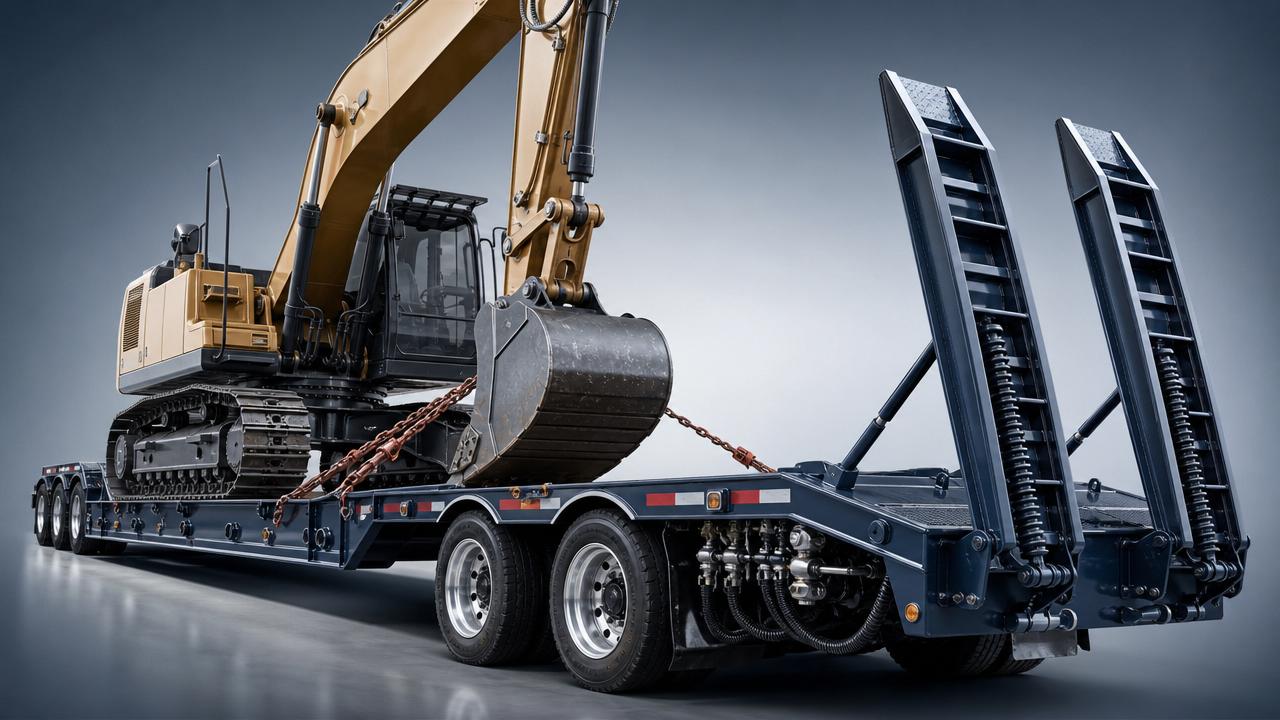
Before moving heavy machinery, a thorough Low Plate safety check is essential to reduce transport risks, protect equipment, and ensure compliance. For quality control and safety managers, understanding key inspection points—from structural integrity and tire condition to load securing and braking performance—can prevent costly delays and accidents. This guide outlines the critical checks needed to keep every haul safer, more efficient, and fully prepared for demanding transport tasks.
Why do Low Plate safety checks matter so much before heavy machinery transport?
In engineering vehicle operations, a Low Plate trailer is often used to move excavators, loaders, rollers, bulldozers, drilling rigs, and other oversized equipment. These loads are heavy, high-value, and difficult to recover if a transport incident occurs. For quality control personnel and safety managers, the trailer itself is not just a transport tool. It is a critical risk point that directly affects cargo integrity, road safety, delivery timing, and site readiness.
A poor pre-transport inspection can lead to structural failure, unstable loading, brake imbalance, tire heat buildup, chain loosening, or deck damage during transit. In real project conditions, these failures usually do not stay isolated. One weak point often creates a chain reaction: a damaged tie-down point affects restraint tension, load shift increases axle stress, and braking distance becomes less predictable on slopes or wet roads.
That is why the Low Plate inspection process should be treated as a formal control procedure rather than a casual walk-around. In companies managing construction fleets, mining support vehicles, or cross-border equipment delivery, the inspection checklist should be standardized, documented, and linked to dispatch approval. Safety is not only about avoiding accidents. It also protects utilization rates, maintenance budgets, and customer confidence.
- It reduces the risk of transport interruption caused by trailer defects or insufficient load restraint.
- It helps verify that the Low Plate is suitable for the machine’s weight, dimensions, and center of gravity.
- It supports internal compliance records for dispatch, handover, and safety accountability.
- It lowers the likelihood of equipment damage claims, roadside inspection issues, or project delays.
What should quality and safety teams inspect first on a Low Plate trailer?
The most effective Low Plate inspection starts with the highest-risk items: structure, running gear, braking, and restraint points. These are the systems most directly linked to safe movement of heavy machinery. A visual inspection is necessary, but it is not enough. The check should combine visual review, basic measurement, functional testing, and verification against the expected load plan.
1. Structural integrity of the deck and frame
Inspect the main frame, gooseneck area, cross members, weld seams, deck plate, and ramp hinges. Look for cracks, visible bending, corrosion at stress points, loose fasteners, and local deformation caused by previous overload events. Pay special attention to the transition area between the low deck and front section, because concentrated stress often appears there during loading and braking.
2. Tire, axle, and suspension condition
Low Plate tire failures are especially dangerous because heavy machinery loads create high sidewall stress and heat. Check tread wear, cuts, embedded metal, sidewall bulging, valve condition, and inflation consistency. Axles should be reviewed for oil leakage, abnormal noise, loose hub components, and uneven load marks. Suspension parts need inspection for cracked brackets, damaged bushings, weak air bags if fitted, or leaf spring defects.
3. Brake system and air line readiness
Heavy machinery transport often includes uneven roads, jobsite slopes, and long stopping distances. Brake chamber condition, brake lining wear, drum or disc surface, air hoses, couplings, and air leakage should all be checked before dispatch. Parking brake holding performance is equally important during loading and unloading. A Low Plate with acceptable visual condition but inconsistent braking should not be released.
4. Ramps, landing gear, and access components
Many incidents happen while the machine is climbing onto the Low Plate rather than while the trailer is already on the road. Confirm ramp alignment, anti-slip surface condition, hinge pin wear, hydraulic or mechanical support stability, and landing gear strength. If the ramps bounce, flex excessively, or do not sit evenly, the loading process becomes high risk for both operator and equipment.
5. Load securing points and restraint hardware
D-rings, lashing points, chain anchors, binders, and deck contact points must match the transport task. Check for elongation, cracking around welds, corrosion, and deformation from prior use. A good Low Plate is only as safe as its restraint system. If the machine cannot be secured at the correct angle and capacity, the transport plan should be revised before loading starts.
The checklist below helps standardize the first-line inspection for a Low Plate before heavy equipment dispatch.
For QC and safety teams, this kind of structured Low Plate checklist makes inspection results easier to compare across units and dispatch dates. It also supports better maintenance decisions, because recurring defects become visible instead of being hidden in verbal reports.
How do you match a Low Plate trailer to different heavy machinery scenarios?
A safe Low Plate transport plan depends on fit, not just capacity. The trailer must suit the machine’s operating weight, track or wheel layout, deck contact pattern, height profile, and loading method. A compact excavator, a crawler dozer, and a road roller may all be heavy, but they do not stress the trailer in the same way.
Common scenario factors that change inspection priorities
- Tracked equipment can create high point loads on the deck and may accelerate plate wear if contact pads are damaged.
- Tall machinery raises center of gravity concerns, increasing the importance of deck height and lateral stability.
- Machines with attachments, such as booms or blades, may require revised tie-down positions and route clearance review.
- Short-distance site transfers can still be high risk if surfaces are rough, muddy, or include steep access roads.
The following table shows how Low Plate inspection emphasis shifts by application scenario in the engineering vehicle sector.
This comparison is useful during trailer assignment and dispatch review. It shows that the right Low Plate decision is not simply about “can it carry the weight.” It is about whether the trailer can safely support, restrain, and maneuver the machine in the actual transport environment.
Which loading and securing mistakes are most often overlooked?
Even when a Low Plate passes a mechanical inspection, transport risk remains high if loading and securing are handled casually. Many safety failures happen because teams rely on operator experience alone instead of a documented loading method. For safety managers, the goal is to remove assumptions from the process.
Frequent oversights during loading
- Loading the machine too far forward or too far back, which disturbs kingpin load and axle distribution.
- Ignoring deck contamination such as mud, oil, or loose debris that reduces tire or track grip.
- Using tie-down hardware with unknown working load limit or visible wear.
- Securing only for vertical hold-down without accounting for forward, rearward, and lateral movement.
- Skipping a re-tension check after the first short travel segment.
Good Low Plate securing practice for heavy machinery
Use a restraint plan that matches machine type and route conditions. Tie-down points should create balanced restraint angles and avoid sharp edges. Attachments should be lowered, articulated parts secured, and parking mechanisms engaged according to the machine manufacturer’s transport guidance. If timber blocking, anti-slip mats, or edge protection are required, they should be checked as part of the Low Plate dispatch approval rather than added informally on site.
For cross-regional or export-related transport, safety managers should also consider local road rules, escort requirements, dimension control, and cargo marking requirements. A technically sound Low Plate can still create compliance problems if the load profile exceeds route limitations or mandatory transport documentation is incomplete.
How can procurement teams evaluate a Low Plate before purchase or fleet expansion?
Quality and safety personnel are often asked to support procurement decisions, especially when fleet expansion is urgent or project requirements change quickly. In that situation, the best Low Plate choice should be judged by safety margin, serviceability, and suitability for real equipment, not by price alone. A lower acquisition cost can easily be offset by maintenance downtime, dispatch restrictions, or repeated adaptation work.
Core procurement checkpoints
- Rated payload should match actual transport plans with a sensible operating margin rather than theoretical maximum use.
- Deck length, width, and height should fit the main machinery categories in your fleet.
- Ramp design should suit tracked and wheeled loading patterns and expected site conditions.
- Brake and suspension configuration should reflect road quality, travel distance, and terrain variation.
- Parts supply and after-sales responsiveness matter when equipment utilization cannot tolerate long downtime.
This Low Plate procurement matrix can help procurement, QC, and safety teams align their evaluation criteria before issuing an order.
A structured buying review is especially important when multiple projects require different engineering vehicles and transport solutions. It keeps the Low Plate decision practical, measurable, and easier to defend across operations, finance, and safety departments.
What compliance and documentation points should not be missed?
A safe Low Plate operation is not only a mechanical issue. It also depends on traceable records and compliance discipline. Depending on the country and route, teams may need to review gross vehicle limitations, axle load restrictions, cargo over-dimension permits, load marking, lighting condition, and transport route restrictions. Internal check records should identify the trailer, the inspector, the date, and any corrective action before release.
Where international delivery is involved, documentation becomes even more important. Technical specifications, packing information, dispatch coordination, and customs-related paperwork should align with the actual Low Plate configuration and shipment plan. Inconsistent paperwork can create delays that affect site schedules just as seriously as mechanical defects.
- Keep inspection records linked to trailer number and dispatch order for auditability.
- Verify that the declared trailer specifications match the equipment actually supplied.
- Review route, permit, and load dimension requirements before final loading.
- Ensure operators and site teams share the same loading sequence and restraint instructions.
FAQ: practical Low Plate questions from QC and safety managers
How often should a Low Plate receive a formal safety check?
A Low Plate should receive a pre-dispatch inspection before each heavy machinery movement, plus scheduled deeper maintenance inspections based on usage intensity, travel distance, and operating environment. Trailers used for daily site movement, rough roads, or high-load work usually require more frequent underframe, brake, and suspension review than lightly used units.
What is the most common mistake when transporting heavy machinery on a Low Plate?
The most common mistake is assuming load capacity alone determines safety. In practice, load position, restraint quality, deck condition, and brake performance are just as important. A Low Plate may technically carry the machine’s weight, but still be unsafe if axle distribution is poor or tie-down angles are incorrect.
What should buyers ask suppliers before ordering a Low Plate trailer?
Buyers should ask about payload range, deck dimensions, axle configuration, ramp design, available customization, spare parts support, and delivery lead time. It is also wise to discuss the actual machinery to be transported, because the best Low Plate configuration depends on machine size, ground clearance, center of gravity, and route conditions.
Can one Low Plate handle all engineering vehicle transport tasks?
Not always. A general-purpose Low Plate may cover a broad range of equipment, but highly specialized machines, frequent overload-edge operations, or unusual dimensions may require a different configuration or a dedicated transport plan. For fleet efficiency, many companies standardize around common machinery categories and supplement with custom arrangements when needed.
Why choose us for Low Plate sourcing and heavy transport support?
For buyers responsible for engineering vehicle quality, safety, and delivery reliability, supplier capability matters as much as product specification. Shandong Livol Truck International Trade Co., Ltd. is based in Shandong, China, and focuses on professional commercial vehicle export with solid industry experience and established global trade operations. As an official authorized domestic and overseas dealer for FOTON, SHACMAN, and SINOTRUK, we can support customers who need coordinated vehicle and transport solution planning rather than isolated product supply.
Our advantages are practical for QC and safety managers. We operate authorized 4S stores across China, maintain available inventory for stable supply and faster dispatch, and provide full-process support covering vehicle selection, customization, documentation, customs clearance, and logistics. This is valuable when Low Plate selection must align with engineering vehicle transport tasks, project schedules, and export procedures at the same time.
If you are reviewing Low Plate options for machinery transport, you can contact us for specific support on:
- Parameter confirmation based on machinery weight, dimensions, and loading method
- Product selection for different engineering vehicle transport scenarios
- Delivery schedule review for urgent projects or multi-unit orders
- Customization discussion for deck layout, ramp form, or operating conditions
- Documentation and export coordination for overseas delivery requirements
- Quotation communication for fleet procurement, replacement planning, or trial orders
A reliable Low Plate decision starts with the right inspection logic and the right supply partner. When safety, compliance, and delivery timing all matter, a well-matched trailer and a responsive export team can reduce risk across the entire transport process.
Search Starts Here