
News
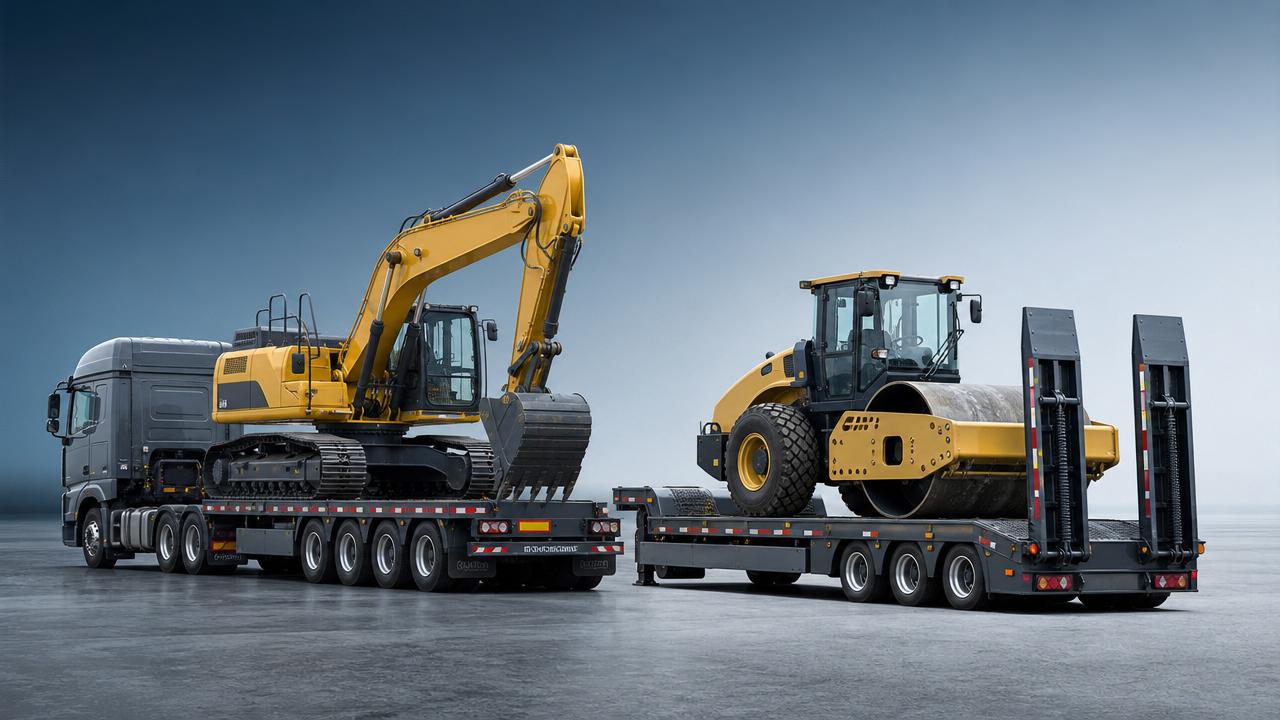
When planning heavy equipment transport, choosing between a Flatbed Semi-Trailer and a low plate trailer can directly affect loading efficiency, route flexibility, and project costs. For project managers and engineering leaders, understanding the differences is essential to keeping operations safe and on schedule. This guide compares both options to help you select the right solution for demanding equipment moves.
Why a checklist-based decision works better for equipment transport planning
For engineering projects, the trailer decision is rarely just about capacity. A Flatbed Semi-Trailer may look more flexible on paper, while a low plate trailer may appear safer for tall or heavy machinery. In practice, project success depends on a series of linked checks: equipment dimensions, site access, bridge and road limits, loading method, delivery urgency, and total logistics cost. A checklist approach helps project teams avoid choosing only by habit or purchase price.
This is especially important when moving excavators, loaders, rollers, cranes, pavers, or other construction equipment across multiple job sites. The correct trailer can reduce loading time, improve route compliance, lower escort requirements, and protect equipment during transit. The wrong choice can lead to delays, permit issues, damage risks, and higher operating costs. That is why comparing a Flatbed Semi-Trailer with a low plate trailer should start with operational checkpoints rather than general assumptions.
Start with these priority checks before comparing trailer types
Before deciding whether a Flatbed Semi-Trailer or a low plate trailer is the better fit, project managers should confirm the following points. These checks create the baseline for any practical transport recommendation.
- Measure the actual operating weight of the equipment, not only the brochure weight. Attachments, fuel, and accessories can significantly change transport mass.
- Confirm overall transport dimensions, including machine height after loading. Height is often the deciding factor between a Flatbed Semi-Trailer and a low plate trailer.
- Review loading and unloading conditions at both ends. Ramp angle, yard slope, and surface strength affect whether standard deck access is practical.
- Check route restrictions such as overpass clearance, turning radius, bridge limits, and regional permit rules for oversized cargo.
- Estimate move frequency. A trailer used for daily site transfer may need more versatility than one used for occasional long-haul delivery.
- Evaluate the mix of equipment to be transported. If the fleet includes both heavy machinery and palletized materials, the more adaptable option may offer better lifecycle value.
Core comparison checklist: Flatbed Semi-Trailer vs low plate trailer
The key difference is deck height and loading suitability. A Flatbed Semi-Trailer typically offers a simple, open deck layout that supports a broad range of cargo, while a low plate trailer lowers the cargo platform to improve stability and transport clearance for heavier or taller machines. The better option depends on how your equipment interacts with roads, ramps, and project schedules.
When a Flatbed Semi-Trailer is usually the better choice
A Flatbed Semi-Trailer is often the smarter option when the project needs flexibility across different cargo types. If your team transports compact construction machines, steel components, generators, pipes, containers, or site materials in addition to equipment, this trailer format supports broader use. It also works well when machine height remains within transport limits and loading conditions are straightforward.
For contractors managing multiple short-haul assignments, a Flatbed Semi-Trailer may simplify dispatch because it can shift between machinery and general freight. That means higher utilization and a better return on equipment investment. It is also easier to standardize if your fleet already uses common tie-down methods and standard loading ramps.
When a low plate trailer usually delivers better results
A low plate trailer tends to perform better when transporting excavators, road machinery, drilling equipment, or other heavy units with significant height and weight. The lower deck helps reduce overall loaded height, which can be critical on routes with bridges, power lines, or tunnel restrictions. It also improves balance and confidence when moving machines with a high center of gravity.
If your equipment frequently travels long distances or enters regions with strict oversized transport controls, a low plate trailer may reduce route complications and make permit planning easier. In many heavy equipment scenarios, the gain in transport stability and compliance can outweigh the reduced cargo versatility.
Use-case checklist by project scenario
Urban infrastructure projects
In city projects, route clearance is often the first constraint. Overpasses, traffic regulations, night delivery windows, and tighter turning areas all favor careful trailer selection. If equipment height is close to legal limits, a low plate trailer often gives project teams more room for compliance. A Flatbed Semi-Trailer may still work well for smaller machines and mixed deliveries to dense job sites.
Mining, quarry, and remote site operations
Remote work requires attention to road condition, frame strength, suspension durability, and serviceability. Here, the decision is not only Flatbed Semi-Trailer versus low plate, but also axle configuration, tire specification, and maintenance support. Heavy machines with difficult access routes generally benefit from low deck loading and stronger transport stability. However, if supply runs also include tools, materials, and support units, a Flatbed Semi-Trailer can remain valuable as part of a mixed fleet.
Road building and plant-to-site transfer
Road rollers, pavers, and milling equipment often require regular movement between staging areas and active sites. In these cases, loading frequency matters as much as carrying capacity. If operators need quick machine drive-on access and stable transport for frequent moves, a low plate trailer often improves efficiency. If the transfer plan includes spare parts, attachments, or secondary cargo, a Flatbed Semi-Trailer may offer more scheduling flexibility.
Commonly overlooked items that can change the trailer decision
- Attachment height after loading. Buckets, booms, and mounted tools can turn a legal load into an over-height load.
- Ramp approach angle. Some machinery with low ground clearance may scrape or bottom out on steeper loading geometry.
- Weight distribution by axle. Total payload may be legal, but poor axle load balance can still create compliance and safety problems.
- Tie-down points and lashing convenience. The trailer must support securement that matches machine structure and regional transport standards.
- Driver familiarity and operating routine. A technically suitable trailer can still cause delays if the crew is not used to its loading process.
- Future equipment growth. If your fleet may soon include larger machines, selecting only for current dimensions may limit long-term value.
Practical selection standards for project managers
If you need a fast internal decision, use these practical standards. Choose a Flatbed Semi-Trailer when cargo variety, fleet utilization, and general logistics flexibility are higher priorities than minimum deck height. Choose a low plate trailer when machine height, loading safety, route clearance, and heavy equipment stability are the critical drivers.
Also think in terms of total project impact rather than trailer price alone. A Flatbed Semi-Trailer can produce excellent value when the same unit serves multiple cargo tasks across departments. A low plate trailer can deliver better economics when it prevents permit delays, reduces escort complexity, speeds equipment transfer, or lowers damage risk for high-value machines.
Execution advice before placing an order
Before procurement or export shipment, prepare a transport requirement sheet with machine models, operating weight, loaded dimensions, preferred axle count, route type, and loading method. This allows suppliers to recommend the right Flatbed Semi-Trailer or low plate configuration instead of offering only a standard unit. Details such as reinforced main beams, suspension choice, tire size, ramp structure, and brake setup should match the real work cycle.
For international buyers, delivery reliability and after-sales support are also important. Shandong Livol Truck International Trade Co., Ltd. provides commercial vehicle export solutions backed by authorized access to FOTON, SHACMAN, and SINOTRUK resources, strong inventory support, and full-process service covering selection, customization, documentation, customs clearance, and logistics. For project-driven buyers, that means the trailer decision can be connected to broader fleet planning and supply stability rather than treated as a one-time purchase.
FAQ: quick answers for heavy equipment moves
Is a Flatbed Semi-Trailer suitable for excavator transport?
Yes, a Flatbed Semi-Trailer can transport many excavators, especially medium or compact units, if loaded height, deck strength, and axle distribution remain within safe and legal limits. For taller or heavier excavators, a low plate trailer is often the safer and more practical option.
Which option is better for reducing transport height?
A low plate trailer is generally better for reducing total transport height because of its lower cargo platform. This can be decisive on restricted routes.
Can one trailer type cover all project needs?
Usually not. A Flatbed Semi-Trailer offers broad versatility, but a low plate trailer handles specific heavy equipment tasks better. Many contractors eventually benefit from a mixed fleet strategy.
Final decision guide and next step
If your priority is cargo flexibility, broad utilization, and routine transport of mixed engineering loads, a Flatbed Semi-Trailer is often the stronger operational choice. If your priority is transporting taller, heavier, or more specialized machinery with better clearance and stability, a low plate trailer usually works better. The right answer depends on the machine profile, route restrictions, loading environment, and long-term fleet plan.
To move from comparison to action, prepare five items first: equipment model list, loaded dimensions, target payload range, route conditions, and delivery schedule. With that information, you can quickly confirm the most suitable Flatbed Semi-Trailer specification, compare it against a low plate alternative, and evaluate total project value. If you need to confirm configuration, export lead time, customization options, or matching solutions for engineering vehicles, it is best to discuss these technical points early with an experienced commercial vehicle exporter.
Search Starts Here