
News
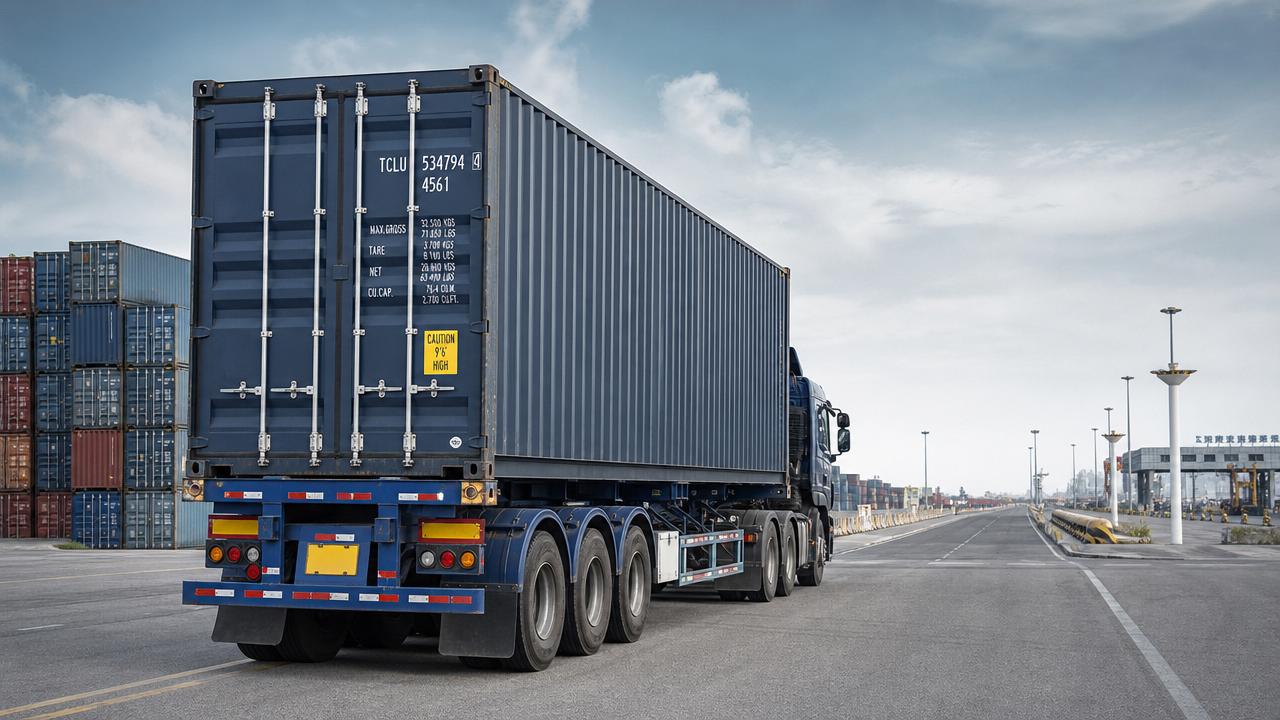
How to Choose a Skeleton Container Semi-Trailer for Port and Inland Haulage
Choosing the right Skeleton (Container) Semi-Trailer is essential for improving efficiency, lowering transport costs, and ensuring safe container movement between ports and inland destinations.
For buyers, the right decision affects uptime, compliance, maintenance budgets, and fleet flexibility for years, not just at the point of purchase.
This guide explains how to evaluate a Skeleton (Container) Semi-Trailer for port and inland haulage with practical criteria that support confident sourcing decisions.
Start with the Real Operating Scenario
A Skeleton (Container) Semi-Trailer should match the route, cargo flow, and loading pattern before anything else.
Port shuttle work is different from long inland transport. Short loops need fast loading and high durability. Inland lanes often need better stability and lower lifecycle cost.
In real operations, asking the right questions early avoids expensive mismatches later.
- What container sizes move most often: 20ft, 40ft, or mixed loads?
- How rough are the port roads, terminals, and inland highways?
- What is the average payload and how often is the trailer fully loaded?
- Are there bridge, axle load, or overall length limits on the route?
- How important is rapid turnaround at container yards?
The clearer the route profile, the easier it becomes to narrow the right Skeleton (Container) Semi-Trailer specification.
Check Container Compatibility First
Container compatibility is a basic requirement, yet it is one of the most overlooked points during trailer selection.
A Skeleton (Container) Semi-Trailer may be designed for one container size or for multiple configurations through adjustable locking positions.
If the business handles mixed cargo flows, flexibility matters more than the lowest upfront price.
Key compatibility points
- Support for 20ft, 40ft, and optional 45ft containers.
- Reliable twist locks with secure and simple operation.
- Accurate container positioning to prevent shifting during braking.
- Chassis geometry that keeps the load balanced across axles.
If container types change by season or contract, an adaptable Skeleton (Container) Semi-Trailer usually brings stronger long-term value.
Evaluate Chassis Strength and Structural Design
The chassis is the core of any Skeleton (Container) Semi-Trailer. Its quality directly affects durability, safety, and maintenance frequency.
Port operations can be punishing. Frequent turns, uneven surfaces, and repeated loading cycles create stress that weaker structures cannot handle for long.
From a sourcing perspective, it is wise to focus on structural details instead of brochure claims alone.
- Main beam material grade and thickness.
- Crossmember layout and reinforcement around lock positions.
- Welding quality and consistency at stress points.
- Corrosion protection, especially for coastal environments.
- Landing gear durability for repeated yard handling.
Galvanizing or high-quality anti-rust coating can be especially valuable for port haulage where salt exposure accelerates wear.
A well-built Skeleton (Container) Semi-Trailer may cost more initially, but it often reduces repair downtime and extends service life.
Choose the Right Axle Configuration
Axle configuration affects payload distribution, tire wear, road compliance, and turning performance.
In many markets, the best Skeleton (Container) Semi-Trailer is not the one with the highest theoretical capacity. It is the one aligned with local regulations.
Common options
- 2-axle trailers for lighter operations and easier maneuvering.
- 3-axle trailers for broader use and stronger payload support.
- Specialized axle layouts for demanding routes or local compliance needs.
When comparing models, look beyond axle count. Suspension type, axle brand, brake system, and spare parts availability matter just as much.
Mechanical suspension is often preferred for rugged work. Air suspension may improve ride behavior, depending on local use and budget.
Balance Payload, Tare Weight, and Efficiency
A lighter Skeleton (Container) Semi-Trailer can improve fuel efficiency and legal payload room, but only if strength is not compromised.
This is where many decisions become more nuanced. Lowest tare weight does not always mean best business value.
For port and inland haulage, the goal is a stable balance between carrying capacity, durability, and operating cost.
The most effective Skeleton (Container) Semi-Trailer is usually the one that performs consistently across thousands of trips, not just on a specification sheet.
Focus on Safety, Braking, and Compliance
Safety features deserve close attention because container haulage involves high inertia, frequent stops, and mixed road conditions.
A Skeleton (Container) Semi-Trailer should include dependable braking performance and clear compliance with destination market standards.
- Brake chamber quality and response stability.
- ABS or other required safety systems.
- Lighting and reflective markings for road visibility.
- Kingpin quality and compatibility with tractor units.
- Compliance documents for local registration and inspection.
It also helps to confirm whether the trailer design matches port rules, road laws, and axle load limits in the target country.
Look at Maintenance and Parts Support
A competitively priced Skeleton (Container) Semi-Trailer can become costly if wear parts are difficult to source or service is slow.
This becomes even more important when fleets run tight schedules between ports, depots, and inland delivery points.
A practical supplier should be able to explain maintenance intervals, spare parts options, and technical response times clearly.
Useful maintenance checkpoints
- Standardized parts for axles, suspension, and brakes.
- Easy access to twist locks and wear components.
- Clear warranty terms and claim process.
- Technical documentation in usable export format.
Strong service support often protects operating efficiency more effectively than a small discount on the purchase price.
Assess Supplier Strength, Not Just Product Price
A good Skeleton (Container) Semi-Trailer supplier should support the full buying process, from technical matching to export execution.
This is where supply stability and experience start to matter more clearly.
Shandong Livol Truck International Trade Co., Ltd., based in Shandong, China, brings strong commercial vehicle export capability and practical industry experience.
As the official authorized domestic and overseas dealer for FOTON, SHACMAN, and SINOTRUK, the company supports customers with reliable sourcing channels and stable vehicle availability.
Its broad authorized 4S network across China, sufficient inventory, and professional export team help shorten delivery cycles and improve order coordination.
That matters when a Skeleton (Container) Semi-Trailer purchase is part of a larger fleet deployment or route expansion plan.
End-to-end services such as customization, documentation, customs clearance, logistics, and after-sales support also reduce transaction risk.
A Simple Selection Framework
If several options look similar, a structured comparison can make the final choice easier and more objective.
- Define route type, container mix, and legal load limits.
- Shortlist the right Skeleton (Container) Semi-Trailer configurations.
- Compare beam strength, axle setup, and suspension quality.
- Review braking, safety systems, and compliance documents.
- Estimate lifecycle cost, not only purchase price.
- Confirm supplier inventory, lead time, and after-sales support.
This approach keeps the decision grounded in operating reality instead of marketing language alone.
Final Thoughts
Choosing a Skeleton (Container) Semi-Trailer for port and inland haulage is really about fit, durability, compliance, and dependable support.
The best choice should handle container types efficiently, perform well on actual routes, and stay economical across long service cycles.
When technical evaluation is combined with a capable export partner, the purchase becomes more predictable and far less risky.
For teams reviewing the next Skeleton (Container) Semi-Trailer purchase, starting with route data, compliance needs, and supplier capability is the most practical way to move forward.
Search Starts Here