
News
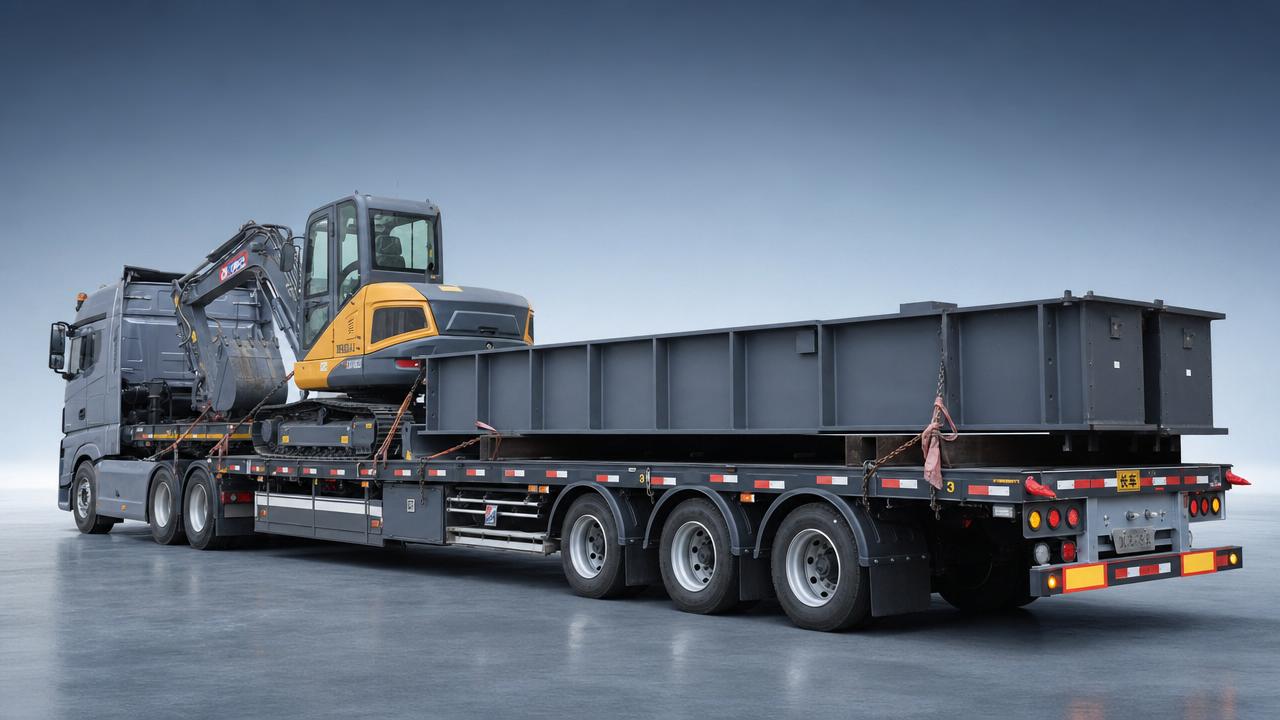
A Flatbed Semi-Trailer may look straightforward, but real transport decisions rarely are. Deck length alone does not confirm suitability. Load limits, axle distribution, cargo shape, securement points, and route restrictions all determine whether a trailer will move equipment safely and efficiently.
That is why this topic matters in engineering vehicle transport. Machinery, steel structures, containers, and oversized components often push a trailer close to operational limits. A mismatch between cargo and trailer can lead to poor stability, compliance issues, premature wear, or costly loading delays.
In export and cross-border projects, the evaluation becomes even more practical. Trailer choice affects documentation, customs planning, inland delivery, and the matching of tractors from brands such as FOTON, SHACMAN, and SINOTRUK. The goal is not just to carry weight, but to carry the right load in the right way.
What load limits really mean on a Flatbed Semi-Trailer
When people discuss capacity, they often focus on a single number. In practice, a Flatbed Semi-Trailer has several limits working together. Gross vehicle weight rating, payload capacity, axle rating, tire rating, and kingpin load all matter at the same time.
A trailer may be rated for a certain payload, yet still be unsuitable for concentrated loads. For example, a compact excavator or transformer can place heavy pressure on a short footprint. That creates deck stress and uneven axle loading, even when total weight seems acceptable.
This is where technical assessment becomes more precise. The question is not only “How much can it carry?” A better question is “How is the load transferred through the deck, suspension, axles, tires, and tractor connection?”
- Uniform loads are easier to manage than point loads.
- Higher payload does not cancel axle law restrictions.
- Suspension type influences stability on rough roads.
- Cross-border use may require different legal weight calculations.
Usually, the safest evaluation starts with the heaviest expected cargo, then checks its footprint, center of gravity, and securement demands against the trailer structure.
Deck size is more than length and width
Deck size is often treated as a dimensional checklist. That is too narrow. For a Flatbed Semi-Trailer, usable deck space includes loading height, neck design, side access, stake pockets, floor material, and clearance around tires or landing gear.
A standard deck may fit palletized cargo very well, yet become inefficient for tracked machines, pipe bundles, or long fabricated beams. Sometimes the cargo length fits, but overhang rules, turning radius, or front bulkhead clearance make the arrangement impractical.
Loading height deserves extra attention. In engineering transport, a few centimeters can decide whether a machine can legally pass under bridges or enter project sites. Lower deck height can improve route flexibility, especially where regional infrastructure is limited.
Dimensions that affect real cargo fit
Simple dimensional fit is only the first screen. Efficient fit means the cargo can be loaded, centered, secured, and unloaded without forcing risky compromises.
Cargo compatibility in typical engineering transport
A Flatbed Semi-Trailer is commonly used because it offers open access and good flexibility. Still, not every engineering load behaves the same way. Steel coils, crawler attachments, generators, rebar bundles, and prefabricated modules create different stress patterns.
Long cargo often raises bending and overhang issues. Wide cargo brings escort, permit, or route planning questions. Tall cargo creates clearance risks. Heavy compact cargo challenges floor strength and axle distribution. Irregular cargo increases securement complexity.
In actual use, compatibility depends on how many variables align at once. That includes cargo geometry, lifting method, loading equipment, road surface, weather exposure, and unloading conditions at the destination.
Common cargo types and evaluation focus
- Construction machinery: check track or tire contact area, center of gravity, and ramp approach angle.
- Steel sections and beams: review support spacing, twist resistance, and front-rear balance.
- Industrial equipment: confirm lashing points, vibration tolerance, and weather protection needs.
- Building materials: assess unitization, stacking height, and edge protection requirements.
A trailer that works well for mixed materials may not be the best choice for repeated machine hauling. Selection should reflect transport frequency and cargo profile, not just one shipment.
Where current industry attention is shifting
Today, trailer evaluation is increasingly tied to total operating efficiency. Buyers are looking beyond purchase price and considering downtime, maintenance cycles, legal compliance, fuel impact, and compatibility with existing tractor fleets.
This is especially relevant in export business. Delivery schedules, spare parts access, and document accuracy can matter as much as structural specifications. A reliable Flatbed Semi-Trailer program often depends on supply stability and coordinated after-sales support.
Companies with broad vehicle resources can help reduce mismatch risk. Shandong Livol Truck International Trade Co., Ltd., for example, works with FOTON, SHACMAN, and SINOTRUK platforms, while also supporting customization, logistics, and export documentation. That kind of integration helps align the trailer with the tractor, route, and shipment plan instead of treating each item separately.
Another point worth noting is standardization. Many fleets now prefer trailer configurations that simplify parts replacement, service training, and driver familiarity across different operating regions.
Practical checks before approving a trailer specification
A sound review process usually compares expected cargo data against trailer structure and route conditions. This avoids choosing a Flatbed Semi-Trailer based only on brochure figures.
- Verify payload under local regulations, not only factory rating.
- Map cargo footprint to axle positions and deck reinforcement zones.
- Check deck height against bridge, port, and site access limitations.
- Confirm lashing capacity, anchor point spacing, and side access.
- Review tire, suspension, and braking configuration for road conditions.
- Match the trailer with available tractor units and fifth-wheel setup.
If the operation includes international delivery, it is also useful to confirm homologation, shipping dimensions, customs paperwork, and spare parts planning before final approval.
Why these checks save time later
Many transport issues do not start on the road. They start during specification. An undersized deck can force awkward loading. Weak securement planning can delay dispatch. Poor tractor matching can reduce stability and increase tire wear.
By contrast, a properly matched Flatbed Semi-Trailer supports smoother loading cycles, more predictable compliance, and better equipment utilization across multiple job types.
A sensible next step for evaluation
The most useful next step is to build a clear cargo-and-route profile before comparing models. List the heaviest loads, the most difficult dimensions, the usual road class, and the tractors already in operation. That baseline makes specification review far more accurate.
From there, compare Flatbed Semi-Trailer options by real loading conditions rather than catalog numbers alone. When supply, customization, export handling, and after-sales coordination are also considered, the selection becomes more dependable over the full service life.
In other words, the right trailer is the one that fits cargo, law, equipment, and workflow at the same time. That is the standard worth using when the shipment involves valuable engineering assets and demanding delivery schedules.
Search Starts Here