
News
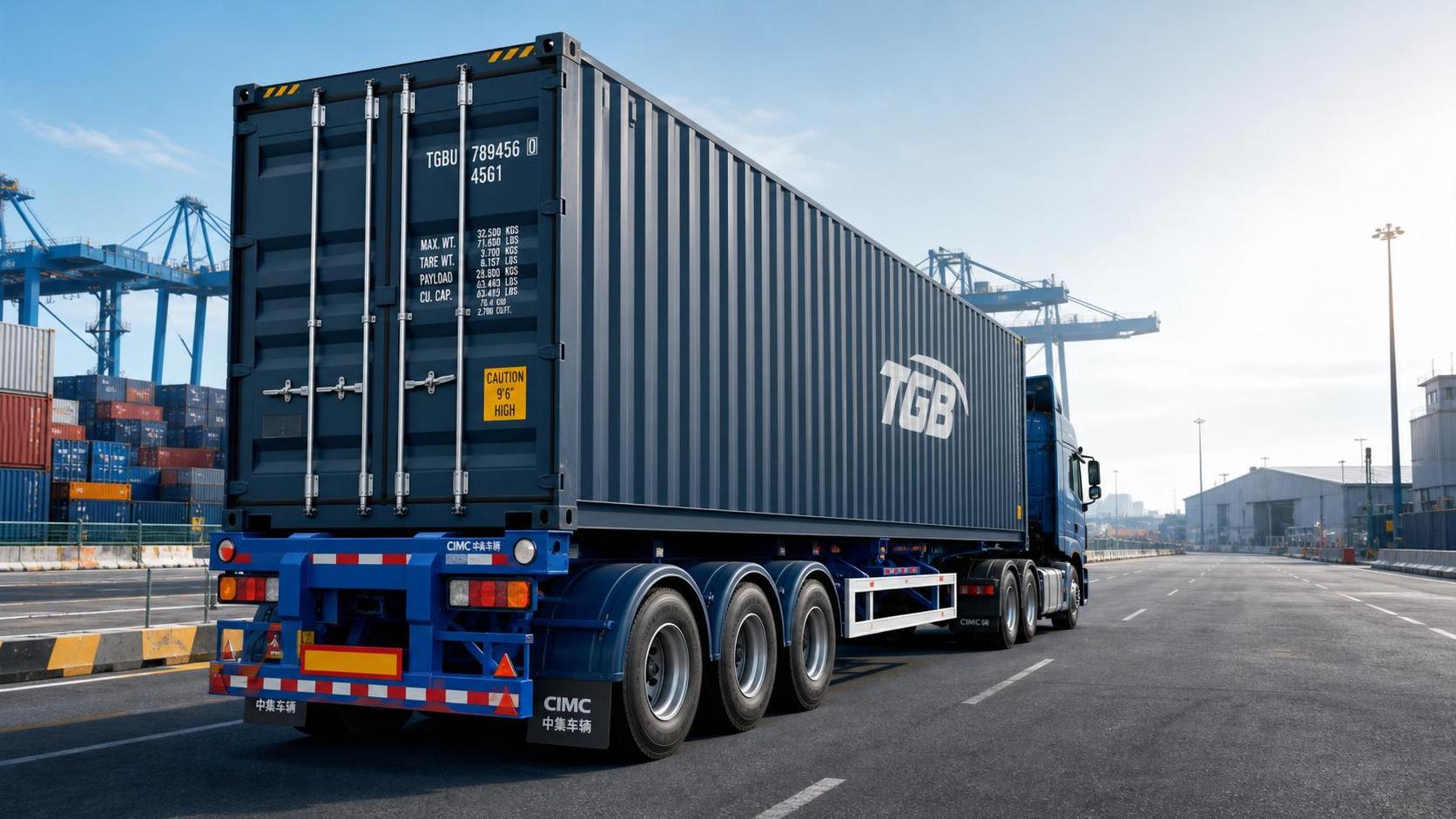
Choosing a Skeleton (Container) Semi-Trailer for port and inland haul is rarely a simple price decision. In engineering transport, trailer performance affects container turnover, road safety, unloading rhythm and the reliability of the entire vehicle plan. When routes begin at a port gate and end at warehouses, plants or project sites, the right configuration can reduce delays, protect cargo and keep operating costs more predictable.
That is why the selection process should go beyond basic dimensions. Container type, road condition, axle load, chassis durability and service support all matter. A well-matched Skeleton (Container) Semi-Trailer helps fleets handle both short shuttle work and longer inland transport without creating unnecessary maintenance pressure.
What a Skeleton (Container) Semi-Trailer is really expected to do
A Skeleton (Container) Semi-Trailer is designed to carry ISO containers with a stripped-down frame structure rather than a full deck. The concept is straightforward, but the working demands are not.
In port operations, the trailer must support fast loading, secure locking and frequent stop-and-go movement. In inland haul, it also needs stable tracking, strong torsional resistance and enough durability for mixed road surfaces.
This makes the trailer an important link between container terminals, industrial yards, construction-related supply points and regional logistics corridors. If the frame, suspension or locking system is not suited to the task, inefficiency appears very quickly.
Why selection standards have become stricter
Port and inland haul work now faces tighter delivery windows and heavier utilization. Equipment is expected to work longer hours with fewer interruptions. That changes how buyers should evaluate a Skeleton (Container) Semi-Trailer.
The concern is not only payload. Operators also watch turnaround time, tire wear, fuel impact on the tractor, brake consistency and ease of spare parts replacement. A trailer that looks adequate on paper may still become expensive if it creates downtime.
Another factor is route diversity. Many transport programs no longer stay within one predictable loop. A trailer may serve port transfer one week and factory delivery or inland depot movement the next. Flexibility has become part of the value calculation.
Start with container compatibility and loading pattern
The first filter should be container handling requirements. Not every Skeleton (Container) Semi-Trailer suits the same mix of 20ft, 40ft, 45ft or tandem container transport.
Questions worth clarifying early
- Will the trailer carry one container size most of the time, or switch frequently?
- Is the main job port shuttle, regional haul or mixed-duty operation?
- Are containers loaded by crane, reach stacker or yard equipment with limited alignment accuracy?
- Do local regulations limit gross combination weight or axle distribution?
A mismatch here leads to repeated compromise. For example, a trailer built mainly for 40ft containers may not deliver the same efficiency in high-frequency 20ft heavy-load work. Twist lock position, frame balance and axle arrangement all need to match the real loading pattern.
Frame strength matters more than appearance
In engineering vehicle operations, the chassis is the true working core. A Skeleton (Container) Semi-Trailer may look structurally simple, but the frame absorbs repeated stress from loading impact, braking force, uneven yards and rough inland roads.
High-tensile steel, sound welding quality and rational cross-member design are more important than decorative finishing. A strong frame resists deformation, protects container alignment and extends suspension life.
It is also useful to check whether the trailer is optimized for local operating conditions. Corrosion resistance, coating quality and reinforcement in high-stress zones can make a noticeable difference in coastal and humid environments.
Practical signs of a durable build
Axles, suspension and brakes shape daily efficiency
Port haul often creates frequent acceleration, hard turning and short-distance braking cycles. Inland routes add potholes, speed variation and longer travel hours. Because of that, running gear quality should be judged as carefully as the frame.
Axle brand reputation, bearing reliability, brake chamber quality and suspension tuning all influence availability. Mechanical suspension may suit heavy-duty simplicity, while air suspension may help protect cargo and improve road handling in certain routes.
Brake response is especially important when container transport shares roads with busy industrial traffic. Consistent braking reduces tire scrub, supports tractor control and lowers the risk of schedule disruption from unscheduled repairs.
A useful way to compare operating priorities
Road adaptability is often underestimated
Many trailer decisions are made around maximum payload and purchase budget, yet route reality often decides success. Inland haul may involve port pavement, highways, local roads, temporary detours and project access roads in one trip.
Ground clearance, approach angle, suspension travel and tire specification should be reviewed against these conditions. A Skeleton (Container) Semi-Trailer that works smoothly on terminal pavement may suffer on broken surfaces if the setup is too road-limited.
This is also where engineering transport differs from purely urban container movement. Site-related logistics often require stronger tolerance for shock loads, uneven turning radii and temporary operating environments.
Lifecycle cost should guide the final decision
The cheapest trailer is not always the most economical one. A lower initial price can be offset by faster bushing wear, frame fatigue, higher tire consumption or difficult spare parts sourcing.
A better approach is to estimate total operating value over time. That includes purchase cost, expected utilization, maintenance intervals, parts availability, workshop familiarity and resale condition.
- Check whether common wear parts are easy to source locally.
- Review service access for axles, suspension and brake systems.
- Confirm documentation and homologation support for the destination market.
- Consider whether fleet standardization will simplify maintenance planning.
These points become even more relevant in cross-border procurement, where the trailer is only one part of the delivery chain.
Why supplier capability influences trailer value
A suitable Skeleton (Container) Semi-Trailer depends not only on factory specification but also on the supplier’s ability to match configuration with transport reality. That includes selection advice, customization accuracy, export documentation and after-sales coordination.
Shandong Livol Truck International Trade Co., Ltd. operates in this wider context. As an authorized dealer for FOTON, SHACMAN and SINOTRUK, with broad domestic 4S resources and stable inventory, the company is positioned to support commercial vehicle programs that need dependable delivery and coordinated service.
For buyers managing port and inland haul equipment, this matters because lead time, configuration consistency and export process control can directly affect project schedules. Vehicle selection is stronger when it is linked with customization, logistics support and practical after-sales response.
A practical way to narrow the shortlist
A useful shortlist usually comes from matching three layers: cargo pattern, route condition and support capability. Once these are clear, technical comparison becomes much more meaningful.
Focus on these decision points
- Choose frame strength according to actual load intensity, not only nominal payload.
- Match axle and suspension setup to road quality and trip distance.
- Verify container compatibility for the sizes used most often.
- Compare maintenance convenience, not just purchase specification.
- Assess supplier support for export, parts and delivery continuity.
When those points are reviewed together, the right Skeleton (Container) Semi-Trailer becomes easier to identify. The goal is not simply to move containers, but to keep transport stable under real operating pressure.
The next step is usually a route-based assessment: list container types, weekly mileage, surface conditions, legal load limits and maintenance resources. With that baseline, comparing trailer configurations becomes a business decision grounded in use, not assumption.
Search Starts Here