
News
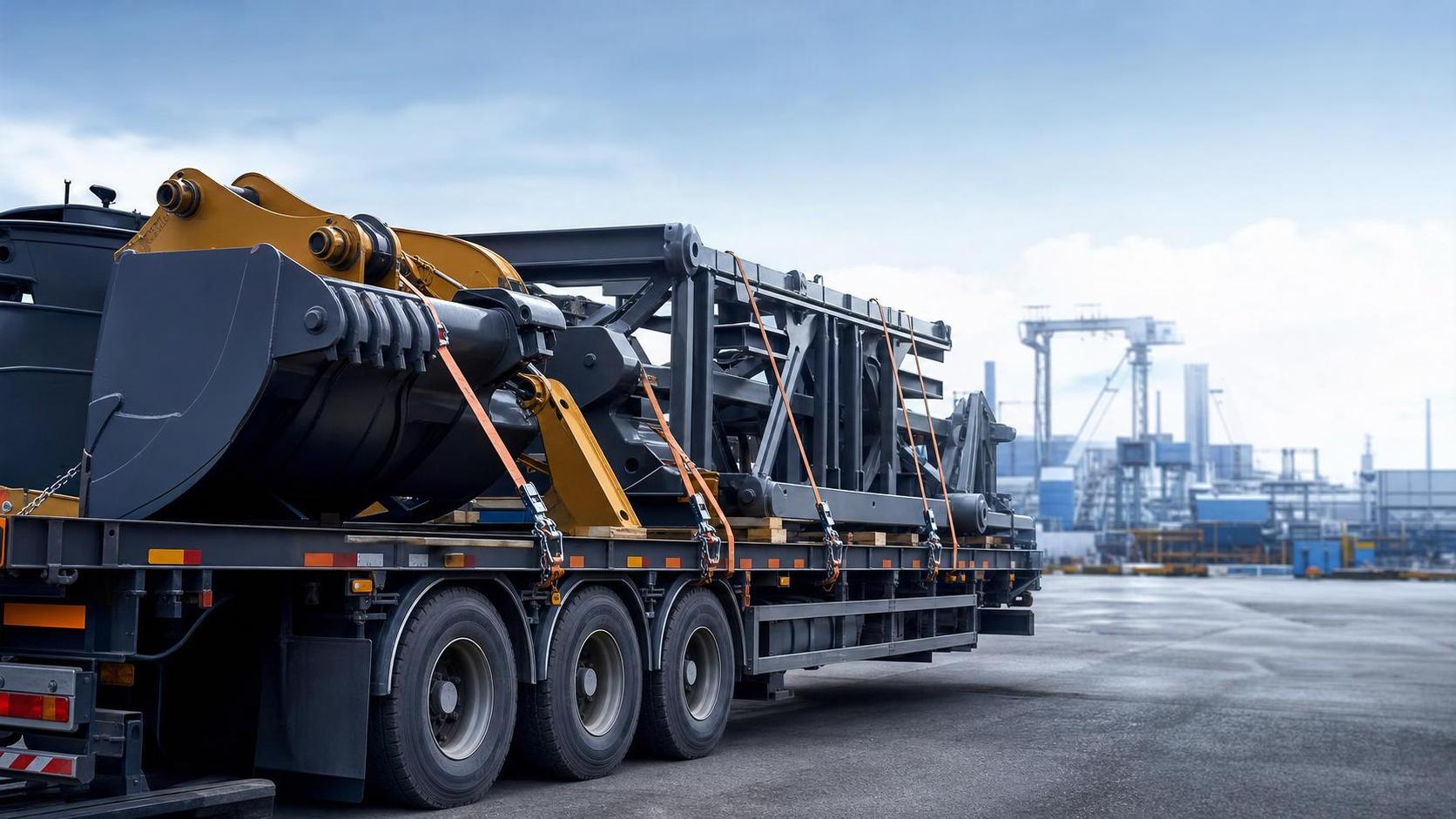
Choosing a Flatbed Semi-Trailer is rarely about deck size alone. Load limits, usable deck length, and real cargo fit determine whether a transport plan stays safe, compliant, and efficient across engineering vehicle operations, machinery delivery, and cross-border project logistics.
A trailer may look suitable on paper, yet fail once axle loading, cargo overhang, tie-down space, or route restrictions are checked. That is why a technical review must connect specification sheets with actual transport conditions, not just nominal dimensions.
For engineering transport, the Flatbed Semi-Trailer remains one of the most practical platforms because it supports diverse cargo shapes, easier loading from different sides, and straightforward integration with tractors from major commercial vehicle brands.
Why flatbed selection matters in engineering transport
Engineering vehicle logistics often involves steel structures, equipment modules, construction materials, attachments, and oversized components. These loads vary in weight concentration, footprint, and lashing needs.
In this context, a Flatbed Semi-Trailer is not just a carrier. It becomes part of the load control system, the route compliance strategy, and the operating cost model.
A mismatch creates familiar problems: overloaded axles, wasted deck space, unstable weight distribution, difficult loading angles, and avoidable delays at ports or checkpoints.
More attention is also going to fleet standardization. Operators prefer trailer specifications that work reliably with available tractor heads, workshop support, and export documentation requirements.
Load limits mean more than maximum payload
The first number many buyers notice is payload capacity. That figure matters, but it is only the starting point for evaluating a Flatbed Semi-Trailer.
Actual load limits depend on several linked factors:
- Gross vehicle combination limits on the target market route
- Trailer axle number, axle rating, and suspension layout
- Fifth-wheel load transfer to the tractor
- Deck structure, crossmember spacing, and concentrated load tolerance
- Legal restrictions for bridge, road, and port operations
A 30-ton machine does not automatically require a 30-ton payload trailer. If the machine places most of its mass on a short track area, point loading may exceed what the deck structure is designed to handle.
The same issue appears with bundled steel, generators, or compact equipment frames. Concentrated loads can be more demanding than evenly distributed cargo of higher total weight.
Distributed load versus concentrated load
Distributed load spreads weight across a broader area. Palletized materials, long pipes, and fabricated frames often fit this pattern.
Concentrated load places heavy force on limited contact points. Tracked equipment, industrial units on skids, and machinery with narrow support legs are common examples.
When reviewing a Flatbed Semi-Trailer, deck strength details are therefore as important as stated payload. Reinforced sections, floor material, and beam design affect durability over repeated heavy-duty cycles.
Deck length is a planning tool, not just a size figure
Deck length influences more than whether cargo can be placed on the trailer. It affects weight balance, turning behavior, loading convenience, and legal overhang.
A longer deck improves flexibility for mixed cargo and long engineering components. It can also help position heavy cargo more precisely between kingpin and axle group.
However, extra length is not always better. A very long Flatbed Semi-Trailer may reduce maneuverability on constrained work sites, urban roads, mining access paths, or port yards.
How usable deck length differs from nominal length
Nominal deck length is the advertised measurement. Usable deck length is what remains after accounting for front structures, lashing clearance, ramp interfaces, and load securement zones.
That difference matters when transporting wheel loaders, excavator attachments, concrete forms, or prefabricated structural elements. Cargo may fit dimensionally, yet still leave no safe room for blocking and tie-down.
Real cargo fit depends on shape, height, and securing space
Cargo fit is often misunderstood as a simple length-by-width check. In practice, fit also includes height envelope, center of gravity, access for lifting tools, and compatibility with lashing points.
For a Flatbed Semi-Trailer carrying engineering equipment, the key question is whether the load can sit in a stable position without creating avoidable transport risk.
Height becomes critical when machinery is loaded with cabs, booms, guardrails, or mounted accessories. A flatbed may offer easy deck access, but the total loaded height can still exceed route limits.
Width can be equally sensitive. Outriggers, buckets, side platforms, and support frames may require detachable components or a different trailer format if legal width is exceeded.
Common cargo fit checks
- Measure cargo footprint at transport configuration, not working configuration
- Confirm contact points and load spread requirements
- Reserve space for chains, binders, blocks, and edge protection
- Review overall loaded height against country-specific limits
- Check whether accessories must be removed before shipping
Where flatbed trailers fit best in current operations
The Flatbed Semi-Trailer remains a strong option when the cargo is heavy, irregular, or loaded from the side or top. This suits many engineering and construction logistics tasks.
Typical use cases include machinery transfers between project sites, export delivery of vehicle chassis or attachments, steel and concrete component transport, and mixed industrial cargo movements.
It is especially useful where unloading equipment is available and weather protection is not the main concern. Open deck access saves time during crane loading and inspection.
On the other hand, if cargo height is extreme, point loads are severe, or loading needs a lower approach angle, low bed or specialized trailer designs may be more appropriate.
Practical selection points beyond the brochure
A sound trailer decision combines technical data with supply capability and service support. This becomes more important for export projects where operating conditions differ by country.
Shandong Livol Truck International Trade Co., Ltd. operates in this space with experience across vehicle selection, customization, customs documentation, logistics coordination, and after-sales follow-up.
That background matters because the right Flatbed Semi-Trailer may require more than choosing a standard specification. Suspension type, axle arrangement, deck reinforcement, and tractor matching often need alignment with project reality.
Access to established commercial vehicle platforms such as FOTON, SHACMAN, and SINOTRUK also helps when trailer selection must be considered together with tractor compatibility, service availability, and delivery timing.
A useful review checklist
- Match cargo weight to both payload and axle distribution limits
- Verify usable deck length, not only published trailer length
- Assess concentrated load tolerance for machinery contact points
- Confirm loaded height, width, and overhang against route rules
- Review lashing point quantity and position for the target cargo mix
- Check tractor compatibility, especially fifth-wheel height and load transfer
- Consider spare parts, delivery lead time, and export process support
Turning specifications into a workable decision
The best Flatbed Semi-Trailer choice is usually the one that fits the cargo profile repeatedly, not the one with the largest numbers in every category.
A clear decision starts with three checks: how the load sits on the deck, how the weight moves across axles, and how the loaded combination performs on the intended route.
From there, compare deck structures, axle layouts, and securement features against the actual engineering cargo mix. If export delivery is involved, include documentation, logistics timing, and local service coverage in the same review.
That approach gives the Flatbed Semi-Trailer a proper evaluation context. It also reduces the risk of buying a trailer that fits a catalog description better than it fits real operations.
The next practical step is to organize frequent cargo dimensions, heaviest point loads, route limits, and tractor data into one comparison sheet. Once those figures are visible together, the right trailer configuration becomes much easier to judge.
Search Starts Here