
News
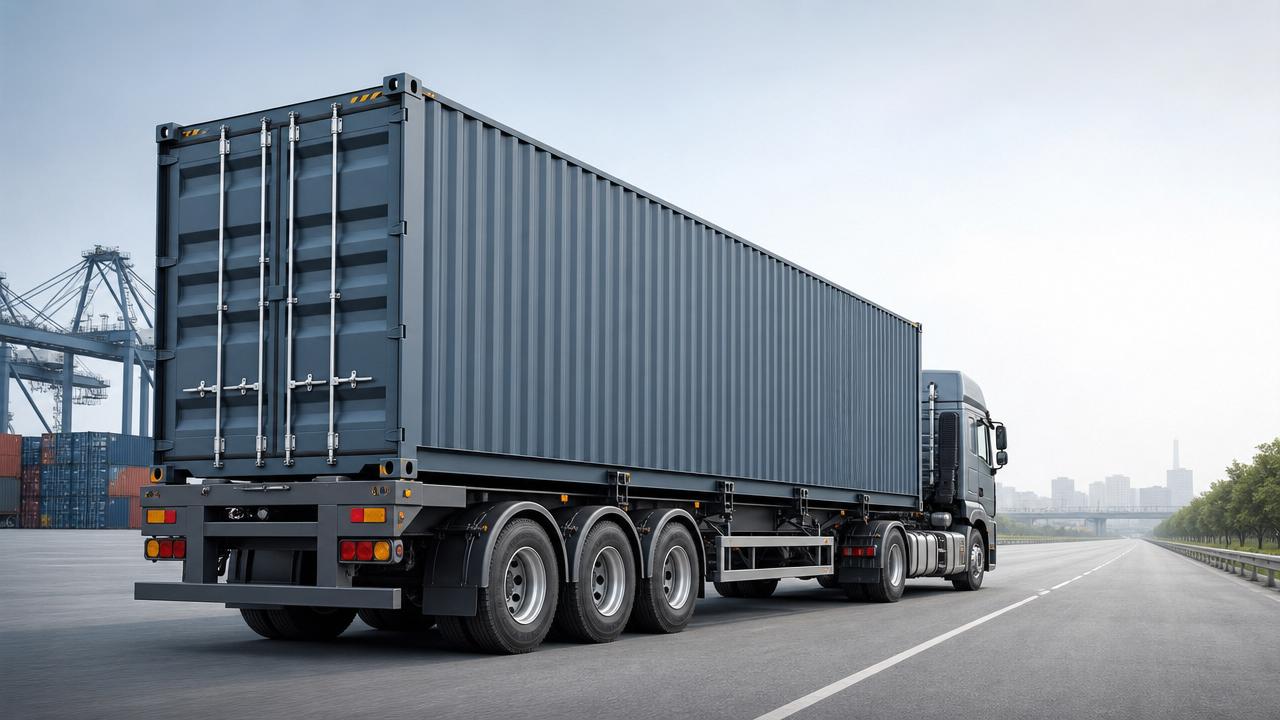
Why the Right Skeleton (Container) Semi-Trailer Matters
Choosing the right Skeleton (Container) Semi-Trailer directly affects port turnaround, inland delivery speed, equipment safety, and long-term operating cost.
In container logistics, a poor trailer choice can create loading delays, chassis mismatch, tire wear, and repeated maintenance interruptions.
A well-matched Skeleton (Container) Semi-Trailer improves container flow between terminals, depots, warehouses, rail yards, and industrial distribution points.
It must support stable payloads, frequent docking, rough road sections, and the high cycle intensity common in engineering vehicle operations.
This article explains the core selection factors, common configurations, practical use scenarios, and key checks before placing an order.
Basic Definition and Structural Overview
A Skeleton (Container) Semi-Trailer is a lightweight frame trailer designed specifically to carry ISO containers rather than bulk or general cargo.
Its open chassis structure reduces self-weight while maintaining enough rigidity to secure 20ft, 40ft, or mixed container combinations.
The main structure usually includes longitudinal beams, cross members, twist locks, landing gear, axles, suspension, braking system, and rear lighting assemblies.
Compared with flatbed trailers, a Skeleton (Container) Semi-Trailer focuses more on container positioning accuracy and locking reliability.
Its design is especially suitable for repetitive short-haul port transfer and medium-to-long inland container transportation.
Common container compatibility options
- 20ft single container chassis
- 40ft single container chassis
- 20ft and 40ft combined-purpose chassis
- 20ft two-container configuration in some regulated transport conditions
- Extendable chassis for variable container lengths
Current Industry Priorities in Port and Inland Haul
Container transport now demands faster turnover, higher equipment utilization, and stronger lifecycle cost control than in previous years.
Ports operate under tighter scheduling pressure, while inland routes often combine highways, terminal yards, uneven industrial roads, and seasonal weather exposure.
As a result, the best Skeleton (Container) Semi-Trailer is not simply the lowest-priced option.
Selection increasingly depends on durability, compatibility, maintenance simplicity, and reliable supply support.
Key Selection Factors for a Skeleton (Container) Semi-Trailer
1. Container type and transport mission
Start with the actual container mix. Frequent 20ft heavy boxes require a different load layout from regular 40ft dry containers.
If routes involve both port transfer and inland delivery, a combined-purpose Skeleton (Container) Semi-Trailer often offers better flexibility.
2. Payload capacity and tare weight
A lighter trailer can increase legal payload, but excessive weight reduction may weaken long-term structural reliability.
Balance tare weight with beam thickness, axle rating, and expected road intensity.
3. Chassis material and frame design
High-strength steel is common for modern trailer frames because it supports good load performance with manageable self-weight.
Pay close attention to welding quality, cross-member reinforcement, gooseneck structure, and anti-torsion capacity.
4. Twist lock configuration
Twist locks are critical safety components. Poor lock alignment can delay loading and create container fixation risks.
Check lock quantity, position accuracy, corrosion resistance, and ease of operation under frequent terminal cycles.
5. Suspension and axle system
Mechanical suspension is widely used for durability and easy service. Air suspension may suit routes needing smoother ride control.
Reliable axles, brake chambers, hubs, and bearings are essential for heavy-use Skeleton (Container) Semi-Trailer operations.
6. Braking and safety systems
Effective braking is especially important when moving loaded containers through congested port roads or downhill inland sections.
Evaluate ABS availability, air line layout, parking brake response, reflective markings, and rear underride protection.
7. Anti-corrosion protection
Salt air, rain, mud, and standing water accelerate corrosion in coastal environments.
A Skeleton (Container) Semi-Trailer with strong blasting, primer, and topcoat treatment usually keeps value and appearance longer.
Operational Value for Engineering Vehicle Fleets
The right trailer delivers value beyond simple container movement. It supports higher equipment uptime and more predictable logistics planning.
In engineering vehicle fleets, transport equipment often works under demanding schedules and mixed infrastructure conditions.
A dependable Skeleton (Container) Semi-Trailer helps stabilize transport performance in these environments.
- Faster loading and unloading through accurate container fit
- Lower downtime from stronger frame and better components
- Improved route flexibility across ports, depots, and inland yards
- Reduced maintenance cost through standardized service parts
- Better lifecycle return when resale condition remains strong
These benefits become more visible when trailer specifications match the real transport pattern instead of a generic catalog choice.
Typical Configuration Choices by Transport Scenario
Practical Inspection Points Before Ordering
A specification sheet alone is not enough. Visual and technical verification should happen before final confirmation.
- Confirm actual container sizes, weights, and route conditions.
- Review drawings for axle spacing, lock layout, and rear structure.
- Check steel grade, beam dimensions, and weld consistency.
- Verify brake brands, axle specifications, tire options, and landing gear quality.
- Inspect coating process and anti-rust treatment for coastal use.
- Confirm spare parts availability and after-sales response capability.
- Match the trailer to destination country compliance requirements.
The most suitable Skeleton (Container) Semi-Trailer is the one that fits operations, regulations, and maintenance resources at the same time.
Supply Reliability and Export Support
Equipment quality is important, but supply continuity also matters for commercial vehicle and trailer projects.
Shandong Livol Truck International Trade Co., Ltd., based in Shandong, China, provides professional commercial vehicle export support with strong industry resources.
As an official authorized domestic and overseas dealer for FOTON, SHACMAN, and SINOTRUK, the company operates authorized 4S stores across China.
Sufficient inventory helps support stable supply and fast delivery for vehicle and transport equipment needs.
Its export team supports vehicle selection, customization, documentation, customs clearance, logistics coordination, and after-sales communication.
For buyers evaluating a Skeleton (Container) Semi-Trailer, this kind of full-process support can reduce procurement risk and execution delays.
Next Steps for a Better Trailer Decision
A Skeleton (Container) Semi-Trailer should be selected according to container mix, road conditions, compliance rules, and expected service intensity.
Frame strength, payload design, lock accuracy, axle quality, and corrosion protection should all be reviewed together.
If project details are already clear, prepare route data, container specifications, and preferred configuration requirements before requesting a quotation.
That approach makes it easier to compare solutions and choose a Skeleton (Container) Semi-Trailer built for reliable port and inland haul performance.
Search Starts Here