
News
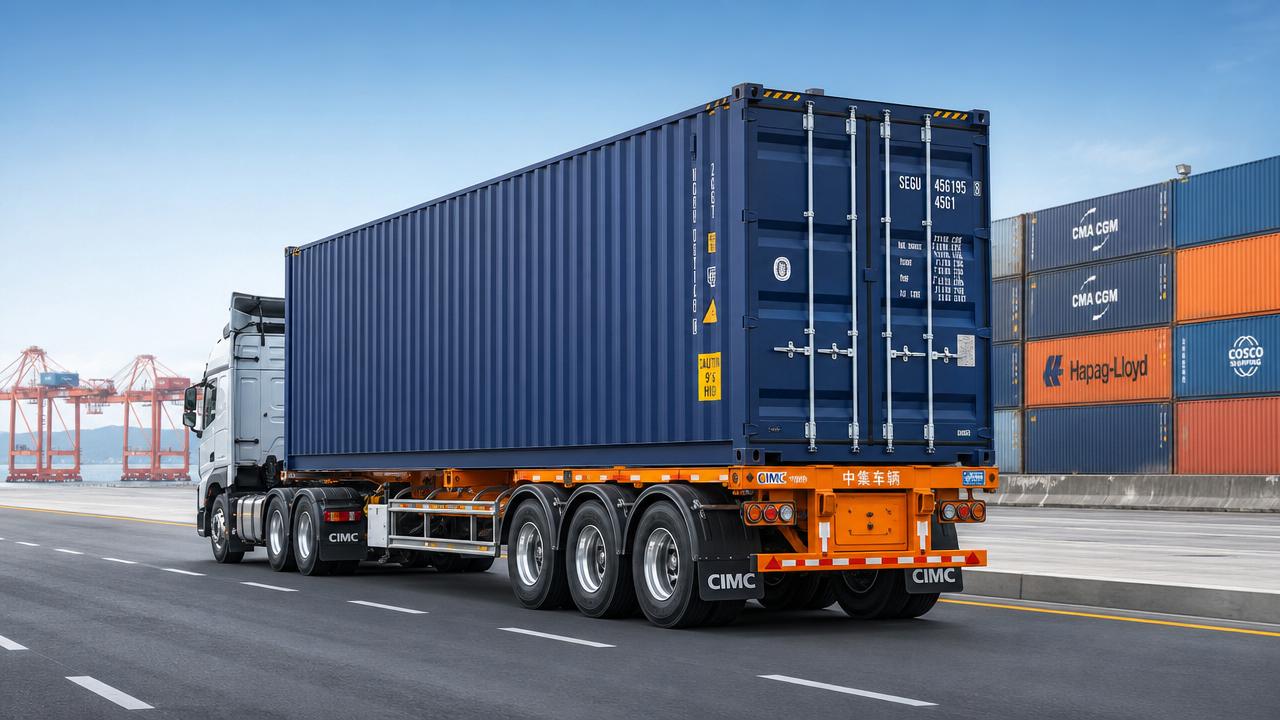
Choosing a Skeleton (Container) Semi-Trailer for port and freight work is rarely a simple price decision. In container transport, trailer performance affects loading rhythm, yard turnover, compliance, maintenance cost, and delivery reliability. A well-matched unit supports faster movement between terminals, warehouses, and inland routes, while a poor match can create avoidable downtime and higher operating risk.
That is why selection should start with operating reality. Port roads, container sizes, axle load rules, turnaround frequency, and service support all shape what the right Skeleton (Container) Semi-Trailer looks like in practice. For companies sourcing engineering and commercial transport equipment, the strongest option is usually the one that fits the route profile, not the one with the longest specification sheet.
Why this trailer matters in container logistics
A Skeleton (Container) Semi-Trailer is designed to carry containers through a structural frame rather than a full deck body. This reduces dead weight and makes loading and unloading more efficient in ports, depots, and intermodal yards.
In short-haul port movement, that lighter structure can improve operational speed. In longer freight runs, the right frame design can also improve payload efficiency and reduce unnecessary fuel use.
More importantly, this trailer sits at the center of container flow. If twist locks misalign, the chassis flexes excessively, or axle layout does not suit local regulations, the entire transport chain slows down.
Start with the container and route profile
Before comparing brands or quotations, define what the trailer must carry every day. A Skeleton (Container) Semi-Trailer used mainly for 20-foot containers may need a different configuration from one handling mixed 20-foot, 40-foot, or high-cube containers.
Route conditions matter just as much. Port shuttling often means frequent starts, stops, turns, and queue time. Inland freight usually adds higher road speeds, longer distances, and more demanding suspension behavior.
- Container types handled most often
- Average payload and peak load scenarios
- Distance between port, warehouse, and final site
- Road quality, turning radius, and ramp conditions
- Local axle load and transport regulations
These factors determine whether a fixed-length, extendable, tandem-axle, or tri-axle solution is the better fit. Without that baseline, comparison becomes too abstract.
Structural strength should be judged beyond headline payload
Payload capacity is important, but the frame design deserves closer attention. A Skeleton (Container) Semi-Trailer works under repeated stress from uneven surfaces, dock approaches, and concentrated container loads.
The key issue is not only how much weight the trailer can carry once, but how well it resists fatigue over years of daily work. Main beam material, cross-member layout, welding quality, and anti-corrosion treatment all influence lifespan.
For coastal and port environments, corrosion resistance becomes especially relevant. Salt, humidity, and frequent washing accelerate wear on exposed steel parts, landing gear, and locking components.
Useful checks during evaluation
- Steel grade and beam section design
- Welding consistency at stress points
- Surface treatment and paint process
- Twist lock quality and placement accuracy
- Landing gear durability under frequent coupling
A lower purchase price can lose value quickly if the trailer requires frequent frame repair or lock replacement. That cost usually appears later, in operations rather than procurement files.
Axle configuration affects compliance, wear, and turnaround
Axle selection is one of the most practical decision points. In port transport, the wrong axle setup can create tire wear, poor stability, or regulatory issues even if the trailer looks suitable on paper.
A 2-axle Skeleton (Container) Semi-Trailer may suit lighter or shorter-cycle work where maneuverability matters. A 3-axle version often provides better load distribution for heavier containers or stricter road requirements.
The best configuration depends on the full operating chain. It should suit both the container weight and the roads the trailer must travel after leaving the terminal.
Daily usability often decides long-term value
Some trailers meet the specification but remain inconvenient in daily work. This usually appears in lock operation, container positioning, landing gear effort, or maintenance access.
For port and freight use, small operational details can have a measurable impact. A Skeleton (Container) Semi-Trailer that is easier to couple, inspect, and service reduces idle minutes across every shift.
Look for practical efficiency features
- Reliable locking points for common container sizes
- Clear layout for brake and electrical lines
- Strong rear protection and lighting design
- Accessible grease points and wear parts
- Spare parts compatibility in destination markets
These details may seem minor at purchase stage, yet they shape service intervals, repair speed, and driver acceptance over time.
Supplier capability is part of the equipment decision
In export procurement, the trailer itself is only part of the risk profile. Delivery stability, documentation accuracy, customization support, and after-sales coordination can directly affect deployment schedules.
This is where an experienced commercial vehicle exporter adds practical value. Shandong Livol Truck International Trade Co., Ltd., based in Shandong, China, combines vehicle supply capability with export process support across selection, customization, customs clearance, and logistics.
Its background as an authorized dealer for FOTON, SHACMAN, and SINOTRUK, together with wide 4S network coverage and inventory resources, points to a supply chain advantage that matters when lead time and service continuity are under pressure.
For a Skeleton (Container) Semi-Trailer project, this kind of support helps buyers evaluate not only the unit specification, but also how quickly the equipment can be delivered, documented, and maintained.
Common buying mistakes in port and freight operations
One common mistake is choosing by tonnage alone. High nominal capacity does not guarantee better performance if the trailer is too heavy, poorly balanced, or mismatched with the road permit framework.
Another issue is ignoring local service conditions. If twist locks, axles, brake parts, or tires are hard to source after delivery, downtime can increase sharply.
There is also a tendency to treat all container chassis as interchangeable. In reality, a Skeleton (Container) Semi-Trailer for intensive port transfer can differ significantly from one intended for longer regional freight work.
A more reliable review process includes
- Matching the trailer to actual container mix
- Checking local legal limits before final configuration
- Reviewing wear-part supply in the target country
- Confirming corrosion protection for port environments
- Comparing lifecycle cost, not only initial quote
How to move from comparison to decision
A solid purchase decision usually comes from a short checklist, not a very long brochure review. Define the route profile, required container formats, legal limits, expected annual mileage, and maintenance conditions first.
Then compare each Skeleton (Container) Semi-Trailer against those fixed conditions. If possible, ask for detailed technical drawings, component brand lists, anti-corrosion information, and confirmation of support for export documentation and parts supply.
At that stage, the best option becomes easier to identify. It is the trailer that fits operational intensity, remains compliant on the road, and can be supported throughout its service life.
For companies planning container transport expansion, the next useful step is to organize demand by route and load pattern, then review candidate Skeleton (Container) Semi-Trailer configurations against real operating data. That approach leads to a more durable investment and fewer surprises after delivery.
Search Starts Here