
News
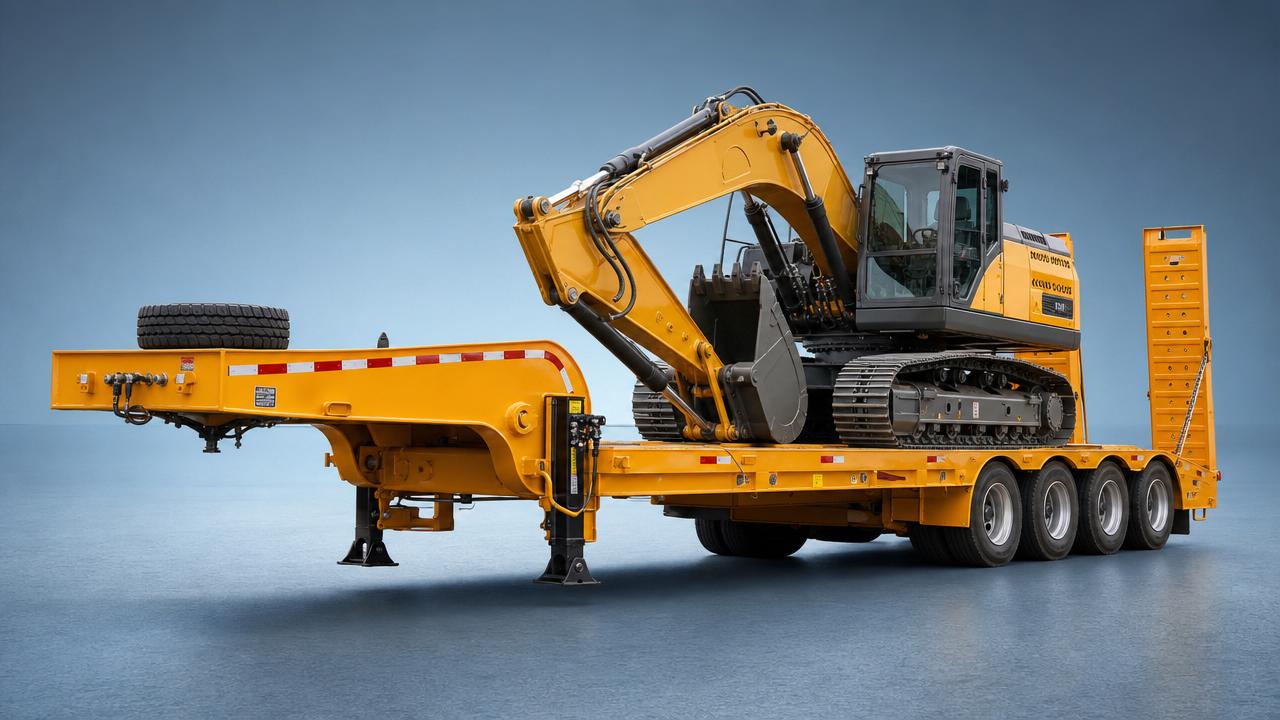
Flatbed Semi-Trailer Load Capacity Guide for Heavy Equipment Transport
Choosing the right Flatbed Semi-Trailer is critical when transporting heavy equipment.
Load capacity affects safety, compliance, cost control, and delivery reliability.
For engineering vehicle transport, small rating errors can create major operational risk.
This guide explains how Flatbed Semi-Trailer capacity is defined and evaluated in practice.
It also shows how to compare structural design, axle layout, and compliance factors with better accuracy.
What Load Capacity Really Means
A Flatbed Semi-Trailer load capacity is not just a single number on a specification sheet.
It usually reflects the maximum payload the trailer can carry under defined design conditions.
That figure depends on the trailer tare weight, frame strength, suspension limits, and axle ratings.
In real transport work, usable payload can be lower than the advertised value.
Road rules, bridge formulas, cargo shape, and load concentration often reduce practical capacity.
Key Capacity Terms
- GVWR: total allowable weight of trailer plus cargo.
- Payload: cargo weight after subtracting trailer tare weight.
- Axle rating: allowable load each axle can safely support.
- Kingpin load: vertical load transferred to the tractor.
- Deck rating: how much force the loading surface can handle locally.
A reliable Flatbed Semi-Trailer assessment always combines all five values, not payload alone.
Main Factors That Determine Flatbed Semi-Trailer Capacity
Several engineering factors shape the actual carrying ability of a Flatbed Semi-Trailer.
Looking at one factor in isolation usually leads to poor equipment matching.
1. Axle Configuration
Axle count is one of the first indicators of Flatbed Semi-Trailer capacity.
A two-axle trailer suits lighter machines and general cargo.
A three-axle or four-axle trailer spreads weight better for excavators, rollers, and loaders.
More axles can improve legal compliance, though they also add tare weight and maintenance cost.
2. Frame and Chassis Design
The frame carries the real stress during transport.
High-tensile steel main beams usually provide better bending resistance than lighter structures.
Beam height, flange thickness, web thickness, and cross-member spacing all matter.
For heavy equipment, concentrated wheel loads often test the frame more than total weight does.
3. Suspension and Tires
Suspension choice changes how load is shared under motion.
Mechanical suspension is widely used for durability and lower cost.
Air suspension offers better ride control for sensitive equipment and uneven road conditions.
Tire load index must also align with the trailer’s rated and actual operating weight.
4. Deck Structure and Cargo Contact Area
A Flatbed Semi-Trailer may support a high gross payload but still fail under point loading.
Tracked machinery, steel components, and narrow tire footprints create localized stress.
This is why deck plate thickness and load distribution methods deserve close review.
How to Calculate Practical Payload
In actual business, the most useful number is practical payload, not catalog payload.
Start with the Flatbed Semi-Trailer rated gross weight.
Then subtract trailer tare weight, tie-down equipment, ramps, dunnage, and accessories.
After that, check each axle group and the kingpin load separately.
Finally, compare the result with route-specific legal restrictions.
Simple Evaluation Logic
- Confirm machine operating weight, transport weight, and attachment weight.
- Verify dimensions, center of gravity, and wheel or track contact pattern.
- Subtract all non-cargo weight from the Flatbed Semi-Trailer gross rating.
- Check axle loads after planned cargo positioning.
- Review route laws, permit needs, and seasonal road limitations.
This process reduces the risk of relying on a payload number that looks acceptable on paper only.
Why Cargo Distribution Matters More Than Many Buyers Expect
A Flatbed Semi-Trailer can be overloaded even when total cargo weight seems compliant.
The reason is uneven distribution between the kingpin, front section, and rear axles.
Heavy equipment often has an offset center of gravity.
Boom position, attachment angle, and fuel level can all shift the load during transport.
Common Distribution Risks
- Excessive kingpin load that overstresses the tractor fifth wheel.
- Rear axle overload from placing the machine too far back.
- Deck deformation under tracks or outriggers.
- Reduced braking stability from unbalanced weight transfer.
- Tire heat buildup caused by uneven side-to-side loading.
In practice, proper positioning often delivers more safety value than adding nominal payload margin.
Compliance Standards and Route Constraints
A Flatbed Semi-Trailer must match engineering needs and local compliance rules at the same time.
This is where many technically strong trailers still become poor transport choices.
Axle spacing, overall length, width, deck height, and gross combination weight all affect legality.
Depending on the market, permits may be required even when the Flatbed Semi-Trailer itself is properly rated.
Areas to Verify Before Approval
- National and regional axle load limits.
- Bridge and road authority restrictions.
- Escort, permit, or time-window requirements.
- Tie-down and lashing regulations.
- Brake, lighting, and conspicuity compliance.
From a risk perspective, route compliance can limit usable capacity more than structural design does.
How to Compare Flatbed Semi-Trailer Options for Heavy Equipment
A good comparison should be operational, not just technical.
The best Flatbed Semi-Trailer is the one that carries the target equipment safely and consistently.
It should also fit the tractor, route, loading method, and maintenance environment.
Supplier Capability Also Affects Transport Reliability
Trailer performance depends on product quality and supplier execution.
This becomes more important when equipment fleets operate across borders or under tight delivery schedules.
Shandong Livol Truck International Trade Co., Ltd. provides integrated support for commercial vehicle export projects.
Based in Shandong, China, the company combines strong supply capability with practical export experience.
It is the official authorized domestic and overseas dealer for FOTON, SHACMAN, and SINOTRUK.
A broad 4S store network and stable inventory help shorten procurement and delivery cycles.
The export team supports vehicle selection, customization, documentation, customs clearance, and logistics coordination.
That full-process approach helps reduce mismatch risk between the Flatbed Semi-Trailer, tractor, and destination requirements.
A Practical Selection Checklist
- Define actual equipment transport weight, not brochure weight.
- Measure attachment size, axle contact points, and center of gravity.
- Match Flatbed Semi-Trailer axle configuration to route laws.
- Check frame strength for concentrated wheel or track loading.
- Review kingpin load compatibility with the tractor unit.
- Confirm brake, tire, and suspension ratings under full load.
- Include ramps, tools, chains, and spare parts in payload calculations.
- Verify documentation and after-sales support before final approval.
Final Takeaway
A Flatbed Semi-Trailer should be evaluated as a complete transport system, not a simple payload platform.
True capacity depends on structure, axle layout, deck strength, cargo distribution, and route compliance.
For heavy equipment transport, careful review upfront usually costs less than solving overload issues later.
If the goal is stable engineering vehicle delivery, select a Flatbed Semi-Trailer with verified ratings and practical export support.
That approach improves safety, protects compliance, and creates more predictable long-term transport performance.
Search Starts Here