
News
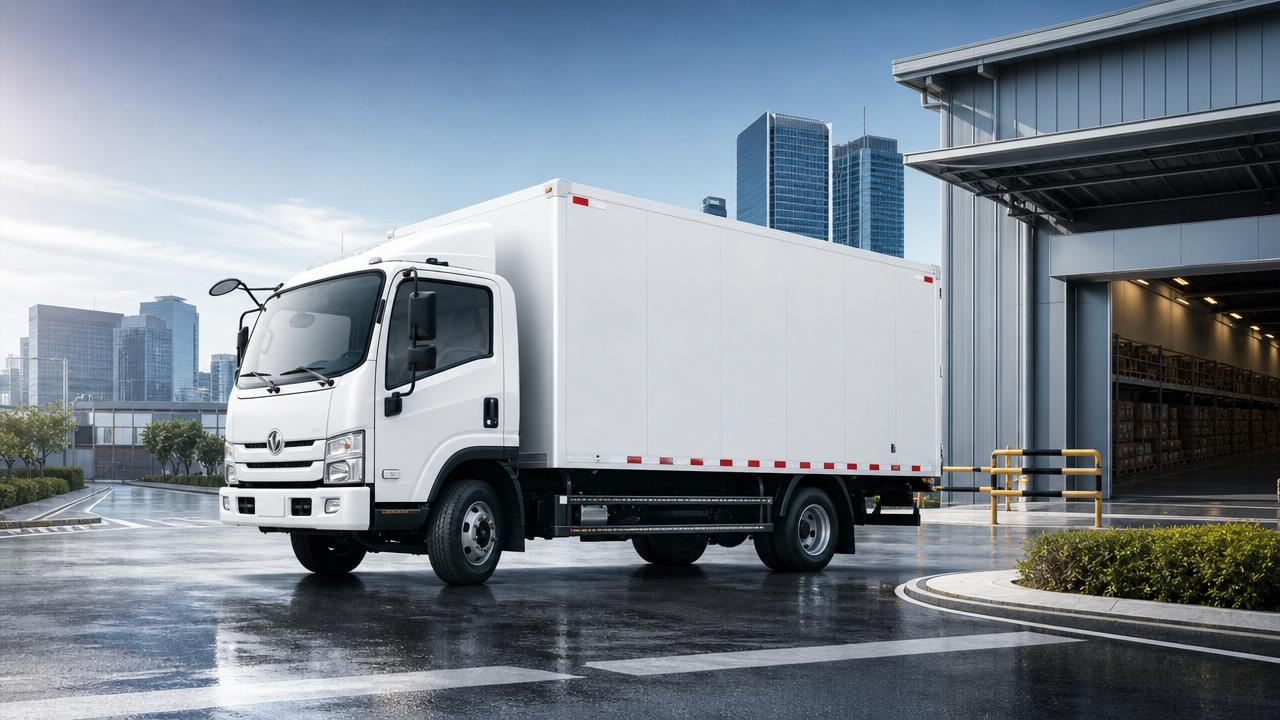
A 4_2 Cargo Truck is a practical choice for operators who need reliable payload capacity and smooth performance in busy urban delivery routes. Balancing loading efficiency, maneuverability and operating cost, it fits many short- and medium-distance transport tasks. Understanding payload limits, road conditions and delivery demands helps users choose the right configuration for safer, more efficient daily operations.
Why does a 4_2 Cargo Truck work well for urban delivery?
For many operators, the main challenge is simple: carry enough cargo without making city driving difficult. A 4_2 Cargo Truck answers that need by combining a single front steering axle with one driven rear axle, giving a useful balance between payload, turning control and daily operating simplicity.
In dense urban areas, vehicles often face narrow roads, repeated stop-start movement, loading dock delays and restrictions on vehicle dimensions or gross vehicle weight. A larger multi-axle truck may offer more capacity, but it can increase tire wear, fuel use, unloading time and route limitations.
That is why the 4_2 Cargo Truck is widely considered a practical urban freight solution. It supports supermarket replenishment, building material distribution, industrial parts transport, municipal support jobs and mixed retail delivery where route flexibility matters as much as capacity.
- Easier maneuvering in crowded streets, warehouse yards and neighborhood access roads.
- Lower empty vehicle weight than many larger rigid trucks, helping preserve legal payload margin.
- Simpler maintenance structure for many fleets focused on high daily utilization.
- Good compatibility with cargo boxes, stake bodies, side curtain bodies and insulated applications.
What operators should evaluate first
Before comparing brands or prices, operators should check their average load weight, cargo volume, route length, road gradient, unloading frequency and local compliance rules. These factors shape whether a 4_2 Cargo Truck will improve delivery rhythm or create overload and downtime risks.
Payload limits: what matters beyond the brochure?
Payload is not just the number shown in a specification sheet. For a 4_2 Cargo Truck, real usable payload depends on chassis weight, body type, axle rating, suspension setup, tire specification, fuel carried, driver count and any added equipment such as tail lifts or refrigeration units.
Operators sometimes compare nominal gross vehicle weight but overlook curb weight. Two trucks with similar legal gross weight can deliver very different payload results if one has a heavier body structure or more accessories. In urban delivery, those differences directly affect trip count and profit per route.
The table below shows the practical variables that influence usable payload when selecting a 4_2 Cargo Truck for engineering-related urban transport and mixed commercial delivery.
The key lesson is clear: operators should calculate payload using real route conditions and full vehicle setup, not only headline ratings. This is especially important when the 4_2 Cargo Truck will carry dense cargo such as cement products, mechanical parts, packaged beverages or tools for engineering support teams.
Common payload mistakes
- Using volume-based body dimensions for heavy cargo without checking axle load concentration.
- Adding accessories after purchase and losing planned payload margin.
- Assuming every urban road allows the same gross weight and body length.
- Ignoring load distribution, which can overload the rear axle before gross limit is reached.
Which urban delivery scenarios suit a 4_2 Cargo Truck best?
Not every route needs the same truck. The best use of a 4_2 Cargo Truck appears where operators need moderate payload, frequent unloading and reliable access through mixed road conditions. For engineering vehicle users, urban support and project-linked supply distribution are especially relevant.
The following scenario table helps operators judge whether a 4_2 Cargo Truck is the right fit for specific delivery tasks.
This comparison shows that the 4_2 Cargo Truck performs best in balanced jobs rather than extreme heavy-haul roles. If your route includes repeated site access, municipal restrictions and quick unloading, it is often a stronger fit than a larger rigid truck.
Scenario-based selection tips
For boxed consumer goods, prioritize cargo body volume and side-door convenience. For engineering supplies, prioritize rear axle rating, frame durability and floor strength. For longer suburban loops, focus on fuel economy, engine torque curve and driver comfort because fatigue affects delivery performance as much as mechanical capability.
How should operators compare 4_2 Cargo Truck configurations?
A good 4_2 Cargo Truck is not chosen by engine power alone. Real value comes from matching the full configuration to cargo weight, route style and service frequency. Operators should compare engine, transmission, wheelbase, body type and suspension as one system.
Key configuration points
- Engine output should match duty cycle. Urban stop-start work needs stable low-speed torque more than top-end speed.
- Wheelbase affects both turning radius and cargo body length. Longer is not always better in city lanes.
- Transmission ratios should support loaded starts on ramps, not just cruising fuel economy.
- Suspension should match the cargo character. Fragile goods and rough access roads need a better balance between load support and ride stability.
Operators comparing FOTON, SHACMAN and SINOTRUK platforms often need help understanding which brand and configuration best fit a local route profile. This is where a supplier with authorized access and practical export experience becomes valuable, especially when the truck must satisfy both application needs and import procedures.
What should you check before buying a 4_2 Cargo Truck?
Purchase mistakes usually happen when buyers focus only on unit price. A low entry price can become costly if the truck is underpowered, overweight after body installation, or difficult to service in the destination market. The buying process should start with route data, not catalog images.
The table below provides a practical selection checklist for a 4_2 Cargo Truck purchase.
A buyer who completes this checklist will make better decisions on specification, delivery planning and budget control. It also creates a more efficient discussion with the supplier because the recommended 4_2 Cargo Truck can be matched to real operating conditions instead of assumptions.
Budget control without sacrificing utility
If budget is tight, reduce unnecessary accessories before reducing structural capability. It is usually safer to keep the right axle, frame and powertrain level, then simplify optional comfort features. A truck that cannot legally or reliably carry the intended load will cost more over time.
Cost, service and delivery: what affects total operating value?
For operators, total value is measured over months and years, not on the invoice date. The real cost of a 4_2 Cargo Truck includes fuel use, tire wear, routine maintenance, spare parts access, downtime risk and whether the truck reaches the site when promised.
Shandong Livol Truck International Trade Co., Ltd. supports this process with authorized access to FOTON, SHACMAN and SINOTRUK resources, a broad 4S store network in China and sufficient inventory for stable supply. For overseas buyers, that matters because availability and export coordination often decide whether a fleet expansion stays on schedule.
Why supply chain support matters for operators
- Authorized sourcing reduces uncertainty when verifying vehicle origin and configuration consistency.
- Available inventory helps shorten waiting time for common 4_2 Cargo Truck requirements.
- Export handling support can simplify documentation, customs and logistics coordination.
- After-sales communication is easier when the supplier understands both vehicle details and cross-border delivery procedures.
When operators need body customization, technical confirmation or shipping schedule alignment, a professional exporter can prevent common mistakes such as sending unsuitable wheelbase versions, missing documentation details or delaying port release due to incomplete pre-shipment checks.
Compliance, safety and risk points operators should not ignore
A 4_2 Cargo Truck must not only carry cargo efficiently. It also has to meet local registration, road use, loading and safety requirements. Depending on the destination market, buyers may need to confirm emissions level, lighting setup, reflective marking, braking performance and vehicle documentation format.
Even when exact local standards differ, the practical approach stays the same: confirm compliance before finalizing specification. That is safer than adjusting after shipment. For engineering vehicle users, it is also wise to confirm whether site access rules require special body features, warning devices or load securing arrangements.
Basic risk checklist
- Verify gross weight and axle load compliance for the destination region.
- Confirm body dimensions against city road restrictions and depot access limitations.
- Check that cargo securing points fit the goods being transported.
- Ask for documentation support early if import procedures are strict or time-sensitive.
FAQ about choosing a 4_2 Cargo Truck
How do I know if a 4_2 Cargo Truck is enough for my payload?
Start with actual trip records, not estimated demand. Measure average cargo weight, the heaviest regular load, body volume used and route type. If your loads are often dense and close to axle limits, a larger or more specialized configuration may be necessary. If loads are moderate but frequent, a 4_2 Cargo Truck is often a strong choice.
Is a longer cargo body always better for city delivery?
No. A longer body may improve cubic volume but reduce maneuverability in older city districts, loading bays and project entrances. It can also affect turning radius and weight distribution. Choose the shortest body that still supports your standard load pattern efficiently.
What is the biggest buying mistake operators make?
The most common mistake is buying by price alone. A lower-cost truck may create losses through overload risk, higher fuel use, poor route fit or delayed delivery. A better method is to compare total working value, including payload reality, route suitability, maintenance practicality and supply support.
How important is exporter support when ordering overseas?
It is very important when buyers need documentation accuracy, customization, steady supply and logistics coordination. A professional exporter can help align vehicle specification, paperwork and shipping schedule, reducing the chance of customs delays or receiving a truck that does not match operational needs.
Why choose us for your 4_2 Cargo Truck project?
If you are comparing 4_2 Cargo Truck options for urban delivery, project support transport or regional distribution, Shandong Livol Truck International Trade Co., Ltd. can help you move from uncertain specification lists to a workable purchase plan. We are an authorized domestic and overseas dealer for FOTON, SHACMAN and SINOTRUK, with a broad 4S network, stable inventory and practical export experience.
Our team can support parameter confirmation, brand and configuration selection, body customization discussion, delivery schedule planning, documentation preparation, customs process coordination and logistics arrangement. If your market has specific compliance expectations, route limits or budget targets, we can help you narrow the right 4_2 Cargo Truck solution before shipment.
Contact us to discuss payload requirements, cargo body type, expected delivery cycle, destination import documents, optional configurations and quotation details. A clear technical and supply discussion at the start can save time, avoid mismatch and improve daily operating results after the truck enters service.
Search Starts Here