
News
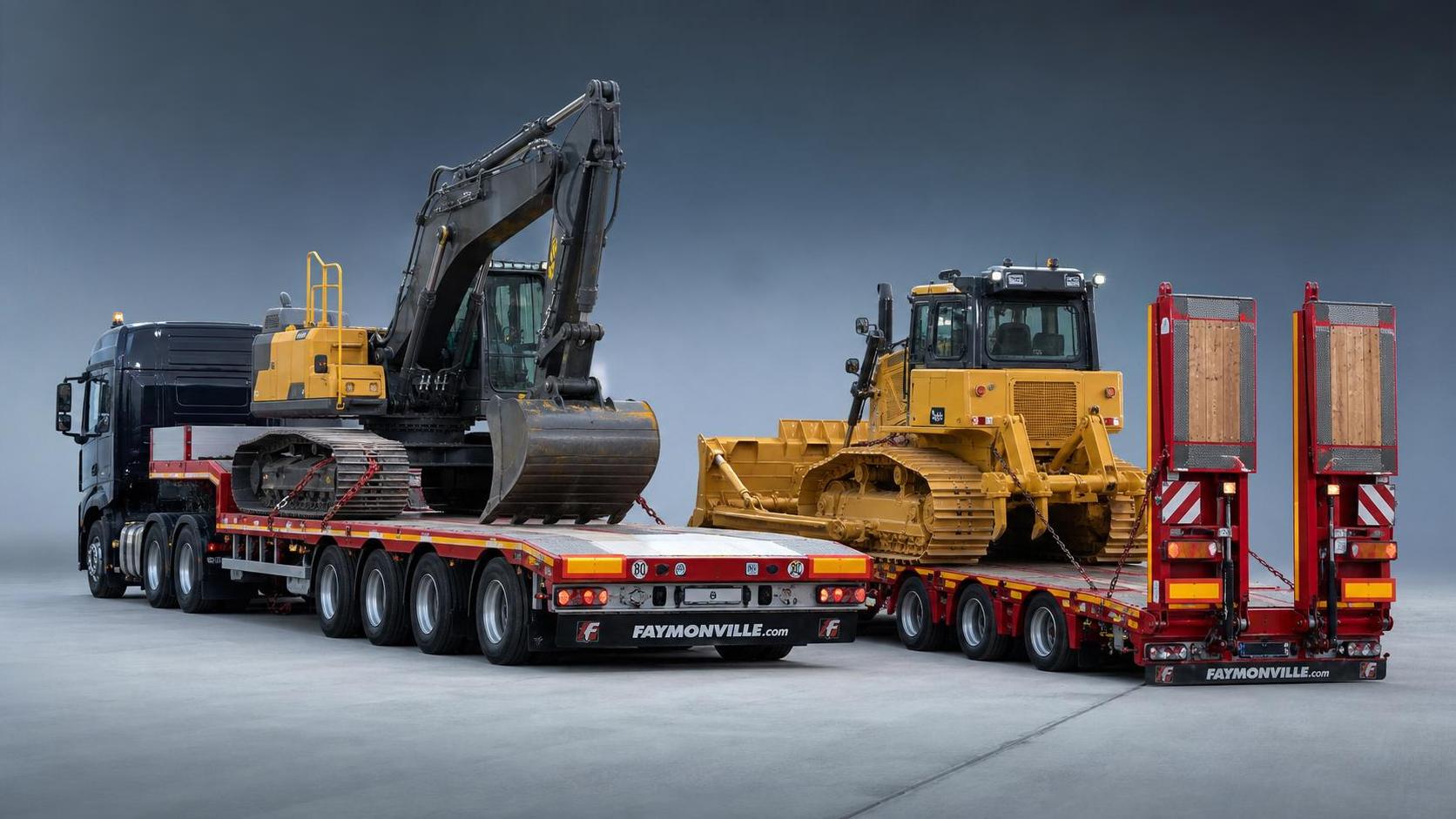
Choosing the right trailer for heavy equipment is rarely a minor detail. In engineering vehicle transport, the difference between a Flatbed Semi-Trailer and a low plate trailer can shape loading speed, route planning, cargo safety, and even handover schedules on site.
That matters even more when machinery moves across regions, ports, and job locations with different road limits. A transport setup that looks efficient on paper may become costly if deck height, axle distribution, or ground clearance does not match the machine being moved.
For construction fleets, mining support, and infrastructure projects, the comparison is practical rather than theoretical. A Flatbed Semi-Trailer offers flexibility for many loads, while a low plate trailer is often chosen when height control and heavy machine stability are more critical.
The best choice depends on equipment dimensions, loading method, road conditions, and delivery rhythm. Looking closely at these factors makes the decision clearer and reduces avoidable transport risk.
What separates these two trailer types
A Flatbed Semi-Trailer usually has a straight, open deck with a relatively simple structure. It is widely used for engineering vehicles, steel, containers, machinery modules, and other loads that do not require an especially low carrying platform.
A low plate trailer, often called a low-bed or lowboy style solution in some markets, places the deck closer to the ground. That lower platform creates extra vertical clearance for taller equipment and improves balance when transporting machines with a high center of gravity.
In simple terms, the Flatbed Semi-Trailer is more universal. The low plate trailer is more specialized. Both can serve heavy equipment transport, but they solve different operational problems.
Why this comparison matters in engineering transport
Heavy equipment rarely travels under ideal conditions. Excavators, rollers, bulldozers, and loaders may leave one country, pass through a port, and reach a rough project road before unloading. Every stage puts pressure on transport accuracy.
If trailer selection is wrong, the consequences appear quickly. Equipment may exceed legal height. Loading angles may become unsafe. Tire wear can increase. Route options can shrink. Escort needs may rise. Delivery can slow down long before the machine reaches the work zone.
This is why the Flatbed Semi-Trailer remains a common reference point in fleet planning. It is often the baseline option. The low plate trailer becomes the better answer when cargo dimensions and transport difficulty move beyond standard limits.
A practical comparison of transport performance
The most useful way to compare both options is to look at the conditions that affect actual delivery performance.
The table shows why one trailer is not automatically better than the other. Transport value depends on matching structure to the machine, not on choosing the heaviest-looking option.
When a Flatbed Semi-Trailer makes more sense
A Flatbed Semi-Trailer is often the right choice when cargo variety is high. Some projects move attachments, medium equipment, spare parts, and support materials alongside machines. In that environment, flexibility often outweighs ultra-low deck design.
It also works well when equipment height remains within normal road limits after loading. Wheeled construction machines, compact loaders, generator sets, and certain road machinery can often travel efficiently on a standard flatbed platform.
Another advantage is operational simplicity. A Flatbed Semi-Trailer is generally easier to schedule across multi-purpose fleets. If the transport plan changes, the same trailer may still be used for another cargo category without major adjustment.
For international exporters handling mixed orders, that flexibility can help maintain delivery rhythm. This is especially relevant for companies managing inventory across multiple vehicle brands and serving customers with different machinery profiles.
Where the low plate trailer gains an advantage
A low plate trailer becomes more valuable when the equipment is tall, heavy, or difficult to stabilize. Excavators with large booms, bulldozers, drilling units, and some mining support machines fit this category.
The lower deck reduces total loaded height. That can be the deciding factor when passing bridges, overhead utilities, tunnels, or port entry points with strict clearance control.
There is also a safety benefit. A lower center of gravity helps reduce sway during braking, turning, or uneven-road movement. In practical use, that can make securing and long-distance transport more predictable.
Low plate trailers also tend to support easier ramp access for certain self-loading machines. Where loading time is tight and cranes are limited, this feature can improve site coordination.
Common situations that favor a low plate design
- Transporting tracked machines with high operating weight
- Moving equipment through areas with strict height restrictions
- Handling machinery with a tall upper structure or attachment
- Requiring better balance on longer regional transport routes
The decision is not only about payload
Payload rating is important, but it is only one part of trailer selection. Many transport mistakes happen because the checklist stops at tonnage. Real compatibility depends on how weight, length, width, and height work together.
For example, a machine may be within the payload range of a Flatbed Semi-Trailer, yet still create problems because the loaded height becomes excessive. In another case, the weight may be acceptable, but axle load distribution may not suit the route permit.
That is why transport teams often compare several variables at once:
- Overall machine dimensions after securing attachments
- Ground clearance needed during loading and unloading
- Road surface quality between port and project site
- Local legal limits for height, width, and axle loads
- Availability of ramps, cranes, and lifting support
Seen this way, the Flatbed Semi-Trailer is often part of a broader transport strategy rather than a standalone product choice.
How export and supply conditions influence trailer choice
Trailer selection also connects with sourcing reliability and logistics coordination. A technically suitable platform still needs dependable supply, compliant paperwork, and shipment planning that fits the project schedule.
This is where experienced exporters add practical value. Shandong Livol Truck International Trade Co., Ltd., based in Shandong, China, works in this space as an authorized dealer for FOTON, SHACMAN, and SINOTRUK, with inventory support and an established 4S network.
That background matters because heavy equipment transport is rarely solved by trailer specification alone. Vehicle selection, customization, export documentation, customs handling, and logistics timing need to align with the application scenario.
In cross-border projects, a Flatbed Semi-Trailer may be preferred because it offers broader reuse across cargo types. In contrast, a low plate trailer may justify its specialization when the transported machines are oversized and project-critical.
A clear way to evaluate your next transport plan
A useful decision process starts with the machine, not the trailer brochure. Measure the real transport profile of the equipment, including attachments, loading method, and destination road conditions.
Then compare those conditions against the strengths of each option. If the load is standard in height and the transport mission is varied, a Flatbed Semi-Trailer often delivers the best balance of flexibility and cost control.
If the cargo is taller, heavier, or more sensitive to stability, the low plate trailer usually becomes the safer operational fit. The key is to evaluate legal clearance, loading angle, center of gravity, and route restrictions before booking transport.
For companies moving engineering vehicles regularly, it also helps to build a simple selection standard. Define which machine classes can use a Flatbed Semi-Trailer, which require a low plate trailer, and which need case-by-case review.
That approach improves consistency, reduces last-minute changes, and supports better communication between sourcing, logistics, and site delivery teams. It is a more reliable next step than choosing by habit or short-term availability alone.
Search Starts Here