
News
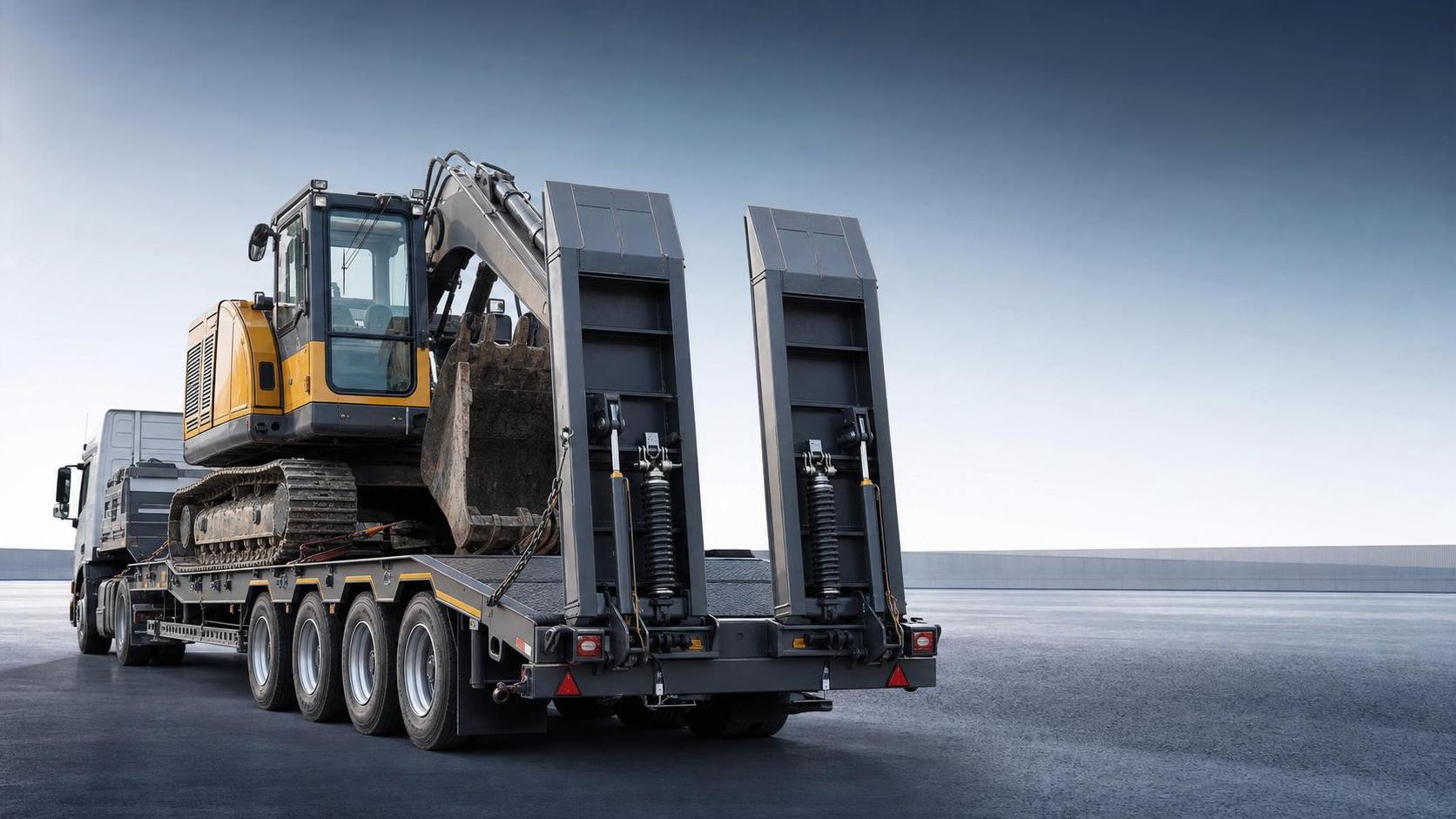
Low Plate Trailer Selection: Common Mistakes That Raise Transport Risk
Choosing the right Low Plate trailer affects safety, cargo protection, delivery timing, and total operating cost.
A poor decision may look acceptable on paper, then fail under real road, load, and compliance pressure.
That is why Low Plate selection should never focus on price alone.
In actual transport projects, risk usually comes from overlooked details rather than obvious technical defects.
Load rating, axle layout, deck structure, route limits, and supplier support all shape real-world performance.
Why Low Plate Selection Directly Impacts Transport Risk
A Low Plate trailer is often used for heavy equipment, construction machinery, and oversized cargo.
These loads have high value and often move under tight schedules.
If the trailer is mismatched, the result may include cargo instability, tire stress, frame fatigue, or permit issues.
From a procurement angle, this also means hidden cost after delivery.
A lower purchase price can quickly turn into higher repair cost, route delay, and project disruption.
What usually goes wrong
- The cargo weight is calculated, but dynamic road force is ignored.
- The trailer size fits the machine, but turning radius is not checked.
- The Low Plate design looks strong, but local road compliance is missing.
- The supplier offers a unit, but not long-term parts and service support.
Mistake 1: Focusing on Static Load Capacity Only
This is one of the most common Low Plate selection errors.
Many buyers compare rated payload figures and stop there.
But transport conditions are never static.
Braking, cornering, uneven roads, slopes, and repeated vibration create dynamic stress.
A Low Plate trailer rated for a certain load may still perform poorly if weight distribution is uneven.
This becomes more serious when transporting excavators, rollers, cranes, or tracked equipment.
Better evaluation points
- Check axle load distribution under real loading positions.
- Review frame strength, crossbeam design, and deck reinforcement.
- Confirm tire specification against route and climate conditions.
- Ask for use-case matching, not only catalog payload data.
A safer Low Plate decision comes from load behavior analysis, not just a rated number.
Mistake 2: Ignoring Axle Configuration and Suspension Matching
Axle setup directly affects stability, road adaptation, maintenance cost, and legal compliance.
Still, this part is often treated as a standard item.
That is a risky assumption.
Different Low Plate applications require different axle counts, spacing, and suspension types.
A route with rough surfaces may need stronger suspension tuning than a paved highway route.
If the trailer bounces too much, cargo restraint risk rises fast.
Questions worth asking before purchase
- How many axles are needed for the typical cargo profile?
- Is mechanical or air suspension better for the route condition?
- Will axle spacing meet local bridge and road load rules?
- Are spare parts easily available in the target market?
A Low Plate trailer should fit the transport environment, not just the cargo dimensions.
Mistake 3: Underestimating Deck Height, Length, and Loading Angle
Low Plate buyers often compare deck size but overlook operating practicality.
A trailer can carry the equipment in theory and still create loading trouble onsite.
This usually happens when ramp angle is too steep or usable deck length is too short.
For machines with low ground clearance, loading angle matters even more.
A poor Low Plate layout increases loading time and raises the chance of equipment damage.
In time-sensitive projects, that extra handling risk can become expensive very quickly.
Practical checks for fit
- Measure actual loading length after ramps and neck structure are considered.
- Check deck height against road clearance and legal height restrictions.
- Review ramp strength and angle for tracked or wheeled equipment.
- Confirm tie-down positions support safe cargo securing.
Mistake 4: Overlooking Local Regulations and Route Conditions
A technically strong Low Plate trailer can still become the wrong choice in a specific market.
The reason is simple.
Transport risk is shaped by regulations as much as engineering.
Length limits, axle load rules, braking standards, lighting requirements, and permit procedures vary by country.
From recent market changes, compliance review is becoming a more visible decision factor.
This also means selection teams should involve logistics and regulatory checks early, not after ordering.
Risk points that deserve early review
- Maximum legal dimensions for target countries and routes.
- Road surface quality, turning limits, and bridge restrictions.
- Permit processing time for oversized transport.
- Required brake, reflector, and safety system specifications.
The right Low Plate is compliant before it is delivered, not corrected afterward.
Mistake 5: Choosing a Supplier Without Full Export and Service Capability
This mistake is less technical, but often more damaging.
A Low Plate trailer is not only a factory product.
It is also an export project involving configuration accuracy, documents, shipping coordination, and after-sales response.
If the supplier cannot manage the full process, risk shifts to the buyer.
That shift usually appears as delays, missing certificates, wrong specifications, or slow spare parts supply.
In real business, a reliable partner lowers selection risk before the trailer even reaches the port.
What a strong supplier should provide
- Clear guidance on Low Plate configuration for actual transport tasks.
- Customization support for axle, deck, ramps, and compliance items.
- Accurate export documentation and customs coordination.
- Stable inventory, delivery planning, and after-sales support.
Shandong Livol Truck International Trade Co., Ltd. offers this kind of integrated support.
Based in Shandong, China, the company has strong industry resources and extensive export experience.
It is the official authorized domestic and overseas dealer for FOTON, SHACMAN, and SINOTRUK.
A wide 4S store network and sufficient inventory help maintain stable supply and faster delivery.
Its export team also supports vehicle selection, customization, documentation, customs clearance, logistics, and after-sales coordination.
A Simple Low Plate Evaluation Framework
When comparing Low Plate options, a structured review makes decisions clearer and faster.
How to Make a Safer Final Decision
A safer Low Plate procurement process starts with the transport task, not the brochure.
Define the cargo, route, operating frequency, compliance needs, and service expectations first.
Then compare trailer options against those conditions.
More importantly, choose a partner that can explain why one Low Plate configuration is safer than another.
That kind of support reduces uncertainty across purchase, shipment, and later operation.
In the current market, smart selection is not about buying the heaviest trailer.
It is about buying the right Low Plate for the real transport mission.
If the goal is lower risk, better uptime, and smoother project delivery, careful Low Plate evaluation is the right place to start.
Search Starts Here