
News
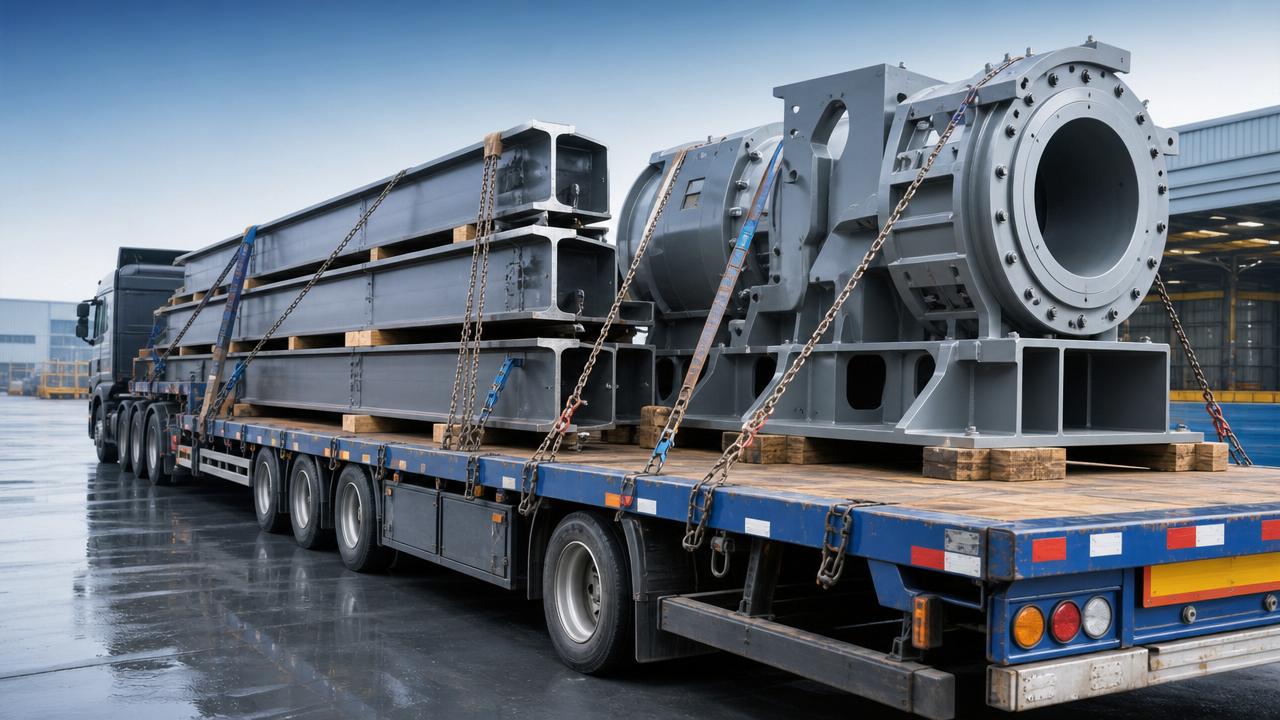
Even a well-maintained Flatbed Semi-Trailer can become a major safety risk when load securing is handled incorrectly. For quality control and safety management teams, small mistakes in restraint selection, weight distribution, or inspection routines can lead to cargo damage, regulatory issues, and serious transport accidents. Understanding these common errors is essential to improving fleet safety, compliance, and operational reliability.
In engineering vehicle transport, the stakes are especially high because loads often include steel structures, machinery parts, construction equipment, pipes, precast sections, and oversized components. Many of these loads have irregular centers of gravity, hard edges, or variable contact points, which makes a Flatbed Semi-Trailer more sensitive to securing errors than enclosed transport.
For quality control personnel and safety managers, the focus is not only on whether cargo reaches the destination, but whether every trip meets internal inspection standards, road compliance requirements, and fleet risk-control targets. A poor securing decision made in 10 minutes can create losses that affect delivery schedules, repair budgets, insurance exposure, and customer trust for weeks.
This article examines the most common load securing mistakes on a Flatbed Semi-Trailer, explains why they happen, and outlines practical controls that can reduce risk across loading, dispatch, transit, and arrival inspection stages.
Why Load Securing Errors on a Flatbed Semi-Trailer Create Disproportionate Risk
A Flatbed Semi-Trailer is designed for flexibility, but that same open structure exposes cargo to braking force, lateral sway, road vibration, wind pressure, and uneven deck friction. During a hard brake event, cargo can shift forward with force close to 0.8g, while cornering can create lateral forces in the 0.3g to 0.5g range, depending on speed and road conditions.
For engineering cargo, a load shift of even 50 to 100 mm may be enough to loosen chains, damage edge protection, or change axle loading. Once restraint tension is lost, the remaining securement system can fail rapidly. This is why quality and safety teams should review load securing as a system, not as a checklist item performed only at the loading yard.
High-risk conditions often seen in engineering transport
- Mixed cargo weights on the same trailer deck
- Machinery parts with uneven or elevated centers of gravity
- Smooth steel-to-steel contact with low friction resistance
- Insufficient anchor points for oversized cargo layouts
- Long-distance trips over 300 to 800 km without mid-route checks
The table below shows how common transport forces interact with typical engineering cargo on a Flatbed Semi-Trailer and why safety controls must be matched to cargo type rather than applied uniformly.
The key takeaway is that a Flatbed Semi-Trailer carrying engineering cargo must be secured for motion in at least 3 directions: forward, sideways, and vertical rebound. If one direction is ignored, overall risk remains high even when the load appears tight before departure.
The Most Common Load Securing Mistakes Quality and Safety Teams Should Audit
Most transport failures are not caused by one dramatic error. They come from several small weaknesses that combine during transit. On a Flatbed Semi-Trailer, the following mistakes are among the most common and the most preventable.
Mistake 1: Using the wrong restraint type for the cargo shape and mass
Chains, webbing straps, wire ropes, blocking, and anti-slip mats do different jobs. A heavy steel component weighing 8 to 15 tons usually requires a different restraint method from palletized equipment weighing 2 to 4 tons. Yet many loading teams still choose securing tools based on availability rather than cargo behavior.
A common example is using straps on sharp-edged fabricated steel without adequate corner protection. In the first 100 km, vibration can cut webbing fibers, reduce working load capacity, and create a hidden failure point. Chains may be more appropriate, but only if the anchor points and tensioning hardware are rated accordingly.
Audit questions
- Does the restraint material match the load surface and edge condition?
- Is the lashing capacity sufficient for the gross cargo weight?
- Are corner protectors or friction materials used where needed?
Mistake 2: Incorrect weight distribution across the trailer deck
Even when restraints are technically adequate, poor weight placement can destabilize a Flatbed Semi-Trailer. If too much load is concentrated at the front, rear, or one side, axle loads become uneven and the trailer reacts poorly during braking and lane changes. This raises rollover risk and accelerates tire and suspension wear.
For many engineering loads, the center of gravity should be kept as low and as central as practical. A difference of a few hundred kilograms between left and right sides may not matter on light cargo, but with 20-ton-plus loads it can materially affect handling. Safety teams should check both gross weight and distribution geometry before release.
Mistake 3: Relying on tie-down force without friction control
Tie-down securing works by increasing friction between cargo and deck. If the contact surface is dusty, wet, oily, or smooth, friction can drop sharply. In practice, that means the same number of straps may deliver much less real restraint than expected. This is a major blind spot in many dispatch operations.
On a Flatbed Semi-Trailer carrying steel beams, machine frames, or pipe bundles, anti-slip mats and clean contact surfaces can make a measurable difference. Without them, loaders often compensate by adding more straps, but added quantity does not solve a weak friction base.
Mistake 4: Ignoring anchor point capacity and lashing angles
A securement system is only as strong as its weakest point. If a chain is connected to an anchor point with lower rated strength, the full system capacity is reduced. The same problem occurs when lashings are applied at poor angles. Excessively shallow angles can reduce effective restraint, especially against side movement.
Quality teams should verify 4 elements together: cargo mass, restraint rating, anchor point rating, and lashing angle. Reviewing only the chain grade or strap label is not enough. This is particularly important when trailers are used across multiple cargo categories in a shared fleet.
Mistake 5: Skipping re-tension checks after departure
Initial securement can loosen within the first 30 to 50 km due to load settling, deck vibration, and compression of dunnage. This is one of the most common reasons why a Flatbed Semi-Trailer leaves the yard compliant but reaches the highway under-secured. A first-stop inspection should be treated as mandatory, not optional.
For long-haul routes, many operators adopt a 3-point inspection rhythm: before departure, after the first short segment, and at regular intervals such as every 150 to 250 km. The exact interval depends on road quality, cargo type, and weather exposure.
Mistake 6: Incomplete documentation and inconsistent inspection records
From a safety management perspective, undocumented control is unreliable control. If the team cannot confirm who checked the load, when tension was verified, what hardware was used, and whether defects were found, then recurring failures become difficult to trace. This also weakens internal accountability and can complicate incident review.
A simple digital or paper form with 6 to 10 required checkpoints can improve consistency significantly. For export-oriented engineering transport, documentation is also useful when coordinating between supplier, yard, carrier, and destination receiver.
A Practical Inspection Framework for Flatbed Semi-Trailer Load Control
Safety outcomes improve when inspection is standardized. The goal is to move from individual judgment to repeatable control points that can be audited. For quality and safety teams, a staged inspection framework is often more effective than a single departure check.
Recommended 4-stage inspection process
- Pre-loading review: confirm cargo dimensions, weight, center of gravity, and required restraint method.
- Post-loading inspection: verify deck contact, restraint count, edge protection, anchor connection, and axle balance.
- Early-route check: inspect after 30 to 50 km for tension loss, settling, or movement marks.
- En-route routine checks: repeat every 150 to 250 km, and after severe braking, heavy rain, or rough-road exposure.
The table below converts that framework into a usable audit tool for a Flatbed Semi-Trailer operation handling engineering cargo.
This framework helps standardize decisions across drivers, loaders, dispatchers, and supervisors. It also gives safety managers a traceable record for corrective action, especially when the same Flatbed Semi-Trailer serves multiple projects with different cargo profiles.
Minimum control points worth documenting
- Total cargo weight and declared center-of-gravity notes
- Number and type of chains or straps used
- Condition of anchor points and tensioning devices
- Use of anti-slip mats, dunnage, and corner protectors
- Time and location of the first recheck
- Driver sign-off and supervisor verification
How Vehicle Selection and Supply Support Affect Securing Safety
Load securing does not begin with the chain or strap. It begins with the suitability of the trailer itself. A Flatbed Semi-Trailer used for engineering vehicle logistics should be selected according to deck length, axle arrangement, structural condition, anchor point layout, and compatibility with the cargo categories being moved.
For procurement teams and fleet managers, this is where supplier capability matters. Reliable vehicle exporters can support the selection of suitable transport equipment based on operational use rather than price alone. That reduces the likelihood of using a marginal trailer configuration for heavy or irregular engineering loads.
What buyers and safety managers should evaluate
When reviewing a Flatbed Semi-Trailer for engineering applications, it is useful to compare not only payload targets, but also practical securing factors. These include deck material condition, spacing and number of lashing points, maintenance accessibility, and compatibility with regional road and compliance requirements.
These points are especially relevant for companies transporting engineering equipment across regions or export corridors. The right Flatbed Semi-Trailer setup supports safer securing routines, faster loading, and more predictable operational control.
Why integrated export and support capability matters
Shandong Livol Truck International Trade Co., Ltd., based in Shandong, China, provides commercial vehicle export services with experience in vehicle selection, customization, documentation, customs clearance, and logistics coordination. For buyers managing engineering transport risk, this type of end-to-end support can simplify sourcing decisions and reduce mismatches between vehicle specification and actual operating conditions.
As an authorized domestic and overseas dealer for FOTON, SHACMAN, and SINOTRUK, with a network of authorized 4S stores and available inventory, the company is positioned to support customers that need stable supply, faster delivery cycles, and clearer coordination during procurement. That is valuable when fleet expansion or replacement must align with project deadlines and safety requirements.
Action Priorities for Reducing Securing Failures in Daily Operations
If your team is reviewing recurrent transport incidents, near misses, or cargo shift observations, the most effective next step is usually not a broad policy rewrite. It is a focused improvement plan built around the highest-frequency failure points on each Flatbed Semi-Trailer route and cargo category.
A practical 5-point improvement plan
- Classify cargo into 3 to 5 securing categories based on shape, mass, and edge condition.
- Standardize approved restraint combinations for each category.
- Require first-stop re-tension checks within the initial 30 to 50 km.
- Use a documented inspection form with at least 6 mandatory control points.
- Review trailer suitability and anchor point condition every maintenance cycle.
For quality control personnel, this creates measurable checkpoints. For safety managers, it creates an auditable system. For procurement teams, it highlights when a Flatbed Semi-Trailer is being asked to perform outside its most suitable transport profile.
Reducing load securing risk is not only about preventing accidents. It also protects cargo value, improves dispatch reliability, lowers avoidable downtime, and supports more consistent compliance across engineering transport operations. If you are evaluating Flatbed Semi-Trailer options, refining transport safety procedures, or planning fleet procurement for heavy-duty applications, contact Shandong Livol Truck International Trade Co., Ltd. to discuss suitable vehicle configurations, export support, and practical transport solutions for your operation.
Search Starts Here