
News
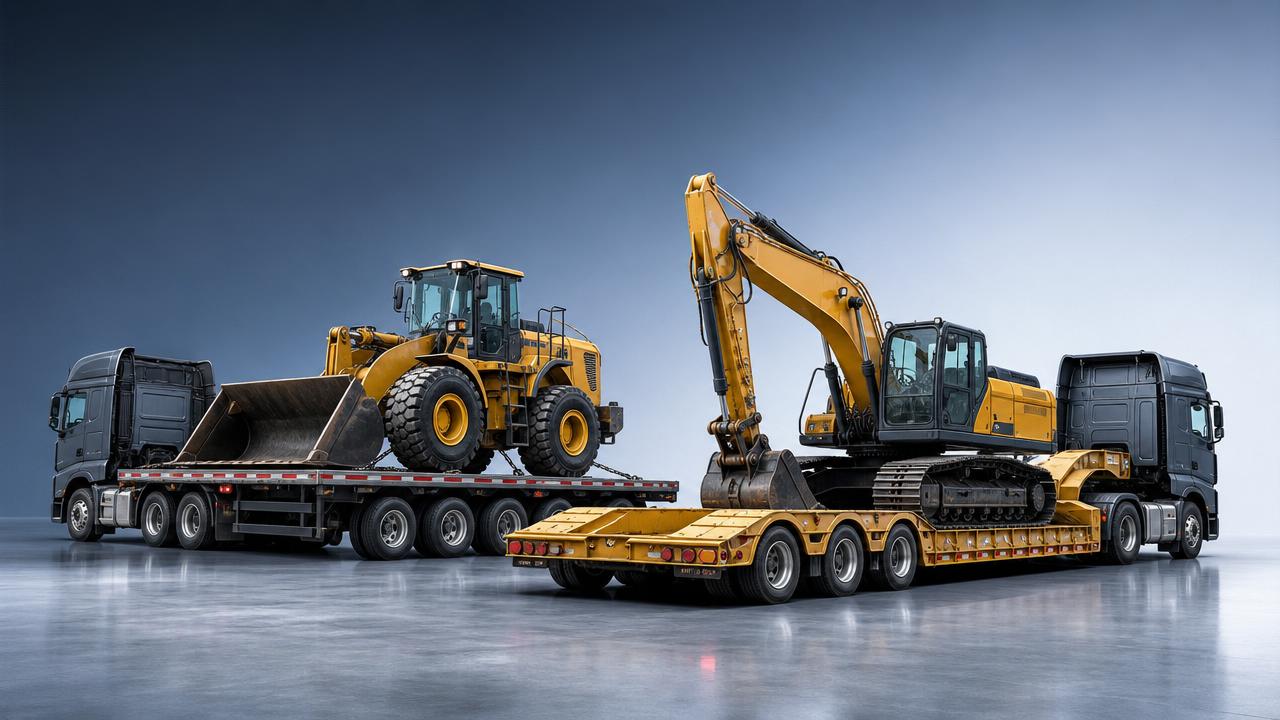
Choosing between a Flatbed Semi-Trailer and a low plate trailer can shape transport safety, loading speed, and route flexibility. In engineering vehicle operations, the right trailer supports stable movement of excavators, loaders, rollers, cranes, and oversized jobsite machines.
This guide explains the real difference between a Flatbed Semi-Trailer and a low plate design. It focuses on deck height, payload behavior, loading conditions, road limits, and practical selection points for heavy equipment transport.
What is a Flatbed Semi-Trailer, and how is it different from a low plate trailer?
A Flatbed Semi-Trailer usually has a straight, open deck. It is designed for flexible cargo handling, easy side loading, and broad compatibility with different engineering vehicle transport tasks.
A low plate trailer, often called a lowbed or low-loader, has a much lower cargo platform. That lower center of gravity improves stability for tall, heavy, or oversized equipment.
The biggest difference is deck height. A Flatbed Semi-Trailer sits higher, while a low plate trailer reduces overall transport height and improves clearance compliance for large machinery.
Their structures also differ. Flatbeds emphasize versatility and quick loading. Low plate trailers emphasize concentrated load support, better balance, and easier machine climbing with ramps.
- Flatbed Semi-Trailer: general-purpose, open deck, adaptable cargo space
- Low plate trailer: lower platform, stronger heavy equipment focus
- Flatbed Semi-Trailer: better for mixed cargo and standard-height machines
- Low plate trailer: better for taller, wider, and heavier construction equipment
Which trailer handles heavy equipment better in real engineering transport?
For many heavy machines, the low plate trailer performs better. It is especially useful for excavators, bulldozers, graders, pavers, and mining equipment with high weight and high body profiles.
A lower deck reduces rollover risk during cornering and uneven road travel. That matters on rough access roads, temporary site roads, and long-distance infrastructure transport routes.
However, a Flatbed Semi-Trailer still works well for many machines. Compact loaders, forklifts, smaller rollers, steel structures, and attachments often fit efficiently on a flatbed platform.
If the equipment has moderate height and balanced axle pressure, a Flatbed Semi-Trailer can deliver faster dispatch and simpler operation. It also helps when cargo types change frequently between trips.
In short, low plate trailers usually fit extreme heavy equipment better. A Flatbed Semi-Trailer fits broader transport needs better when height, weight, and access conditions are less demanding.
Typical equipment match
How do loading efficiency and site conditions affect the choice?
Loading efficiency depends on machine mobility, ramp angle, ground condition, and available handling tools. A Flatbed Semi-Trailer is often faster for palletized cargo, attachments, and wheeled machines.
Low plate trailers offer easier self-loading for tracked equipment because the deck is closer to the ground. That reduces climbing angle and lowers stress during machine boarding.
On crowded construction sites, a Flatbed Semi-Trailer may be easier to position for crane-assisted loading. Its open sides can also simplify tie-down work and unloading sequence adjustments.
On muddy or uneven temporary roads, low plate trailers bring more confidence for tall equipment. Better balance means fewer sudden shifts when turning, braking, or crossing broken surfaces.
- Choose a Flatbed Semi-Trailer for mixed freight and frequent cargo changes
- Choose a low plate trailer for self-propelled heavy machinery
- Check ramp strength, deck traction, and tie-down point layout
- Match trailer type to road quality and loading space limits
What risks are often overlooked when comparing a Flatbed Semi-Trailer and low plate?
A common mistake is focusing only on payload rating. The true decision should include equipment height, axle distribution, machine width, center of gravity, and route restrictions.
Another risk is ignoring legal transport height. A Flatbed Semi-Trailer may carry the weight, but the final loaded height can exceed bridge or highway limits.
Tie-down strategy also matters. A high machine on a standard Flatbed Semi-Trailer may need stronger restraint planning to prevent movement during emergency braking or sharp lane changes.
Low plate trailers reduce some stability risks, but they are not automatically perfect. Poor weight positioning can still overload axles, damage tires, or create unsafe kingpin pressure.
Maintenance is another hidden factor. Heavy engineering transport demands durable suspension, strong frame welding, reliable braking, and consistent spare parts support.
Quick risk checklist
How should cost, delivery needs, and long-term use influence the decision?
Purchase price matters, but operating value matters more. A Flatbed Semi-Trailer often offers higher utilization because it can carry more than one cargo category across different projects.
A low plate trailer may deliver better value when heavy machinery transport is frequent. Fewer loading limitations and safer handling can reduce delays, escort issues, and damage-related costs.
Delivery support is also important. Reliable exporters with inventory, documentation experience, and technical coordination help reduce lead time and import friction for engineering vehicle fleets.
Shandong Livol Truck International Trade Co., Ltd. provides integrated commercial vehicle export support from China. Its authorized dealer network, stable stock, and full-process service improve purchasing efficiency.
That service includes vehicle selection, customization, export documents, customs coordination, and logistics planning. For trailer buyers, these steps can be as important as the trailer specification itself.
How can you decide whether a Flatbed Semi-Trailer is the better fit?
Choose a Flatbed Semi-Trailer when cargo variety is high, equipment dimensions stay within normal transport limits, and loading methods often change between crane lifting and self-driving access.
Choose a low plate trailer when equipment is very heavy, very tall, track-based, or sensitive to loading angle. It is often the safer answer for oversized engineering machines.
Use this decision sequence before ordering:
- Measure machine weight, width, height, and axle contact points.
- Check route rules for total loaded height and road access.
- Review loading method, ramp angle, and site terrain.
- Compare utilization rate between dedicated and multi-purpose use.
- Confirm after-sales parts, brake system support, and delivery timeline.
FAQ summary table
A Flatbed Semi-Trailer is the stronger choice when flexibility, quick turnover, and mixed engineering transport matter most. A low plate trailer is the better match when maximum stability and low deck height are critical.
The best result comes from matching trailer structure to real equipment data and route conditions. If you need dependable export supply and tailored commercial vehicle solutions, Shandong Livol Truck International Trade Co., Ltd. can support the next step efficiently.
Search Starts Here