
News
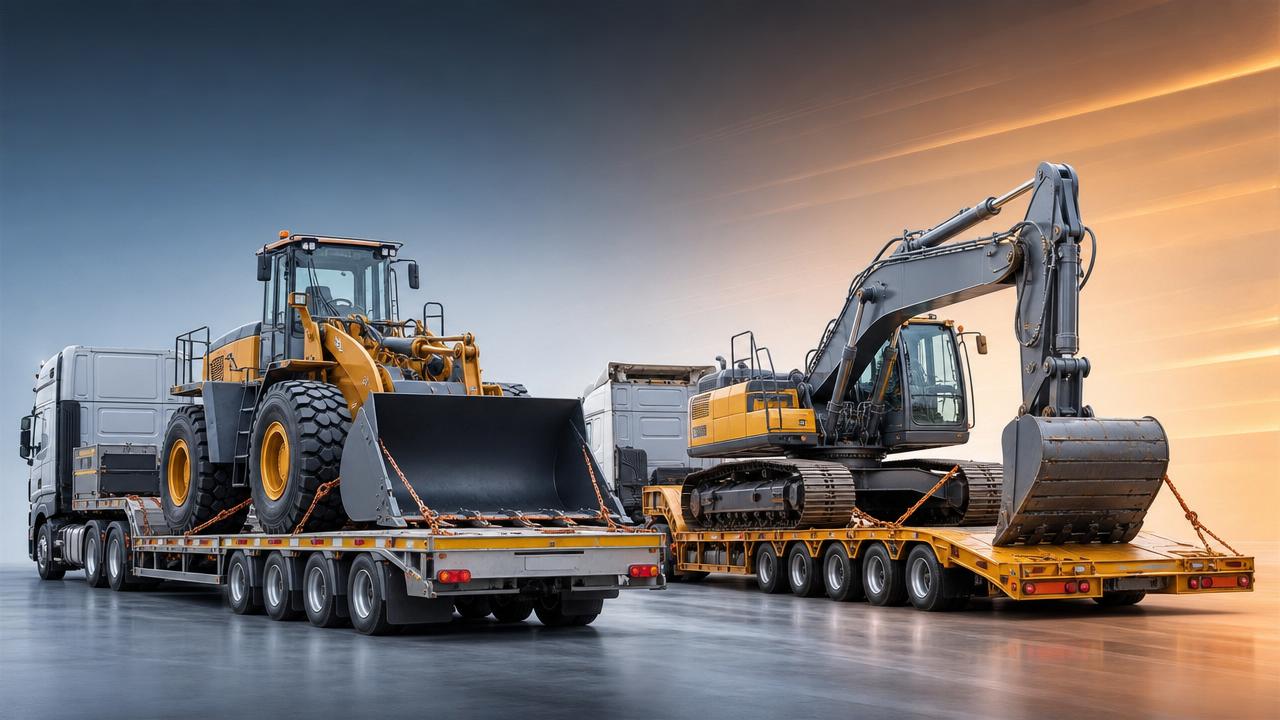
Flatbed Semi-Trailer vs Low Plate: why this choice matters more today
When transporting excavators, loaders, or oversized machines, trailer selection now affects more than basic hauling capacity.
It influences site access, permit planning, fuel use, loading time, tire wear, and equipment safety across the whole engineering vehicle workflow.
The debate between a Flatbed Semi-Trailer and a low plate trailer has become sharper as equipment grows heavier and road restrictions tighten.
A Flatbed Semi-Trailer remains popular for versatility, easier dispatching, and broader cargo compatibility.
A low plate trailer, often called a lowboy or lowbed in many markets, answers a different need.
It focuses on lower deck height, better center of gravity, and improved clearance for tall or concentrated heavy equipment.
In current engineering operations, the best answer is rarely universal.
The better fit depends on changing transport conditions, machine dimensions, route limits, and project rhythm.
Engineering transport trends are changing what “better fit” really means
Heavy equipment transport used to focus mainly on load rating.
Now, transport decisions are increasingly shaped by total height control, faster site turnover, and reduced compliance risk.
Machines are becoming more specialized, with wider tracks, taller cabs, and attachments that complicate standard hauling plans.
At the same time, urban projects, mining support roads, and cross-border corridors apply stricter axle, height, and route requirements.
This shift makes the Flatbed Semi-Trailer strong in some scenarios, yet less ideal in others.
A low plate trailer gains value where overall loaded height becomes the controlling variable.
Another visible trend is mixed fleet utilization.
Operators want one trailer to cover different tasks, but projects increasingly demand specialized transport performance.
That tension is exactly why comparing a Flatbed Semi-Trailer with a low plate option is no longer a simple specification exercise.
The key forces behind the shift toward more precise trailer matching
Several factors are pushing engineering transport toward more exact trailer selection.
These forces explain why neither trailer type fully replaces the other.
Instead, each responds to a different transport trend within engineering vehicle operations.
Where a Flatbed Semi-Trailer keeps its advantage
A Flatbed Semi-Trailer is still the preferred solution when flexibility is the first priority.
It handles machinery, steel structures, pallets, attachments, and irregular construction cargo with fewer operational adjustments.
For many engineering fleets, that versatility improves daily utilization and supports better return on equipment transport assets.
Best-fit applications for a Flatbed Semi-Trailer
- Wheel loaders with manageable total transport height
- Compact excavators and backhoe loaders
- Mixed project cargo with changing daily load types
- Regional routes with fewer bridge or tunnel height constraints
- Operations needing quick loading from different angles
A Flatbed Semi-Trailer also simplifies access for forklifts, cranes, and side loading in some construction logistics environments.
That matters when transport planning must adapt to changing site conditions without waiting for specialized equipment.
However, deck height becomes the main limitation.
If the machine is tall, adding a standard deck can push the total loaded height into restricted territory.
Why low plate trailers are gaining ground for heavy equipment transport
Low plate trailers are becoming more relevant because modern heavy equipment often challenges standard transport envelopes.
Their lower platform reduces overall height and improves load stability during turns, braking, and uneven road conditions.
This makes them especially suitable for tracked excavators, bulldozers, road rollers, and machines with high upper structures.
Situations where a low plate trailer usually fits better
- High-tonnage excavators with tall booms or cabs
- Bulldozers and tracked machines with concentrated ground pressure
- Long-distance hauls through regulated routes
- Projects crossing tunnels, overpasses, or urban corridors
- Transport plans where machine stability is a critical concern
The trade-off is reduced general-purpose use.
A low plate trailer may not match the day-to-day cargo flexibility of a Flatbed Semi-Trailer.
But for large engineering machines, it often lowers hidden costs tied to detours, permit limits, and loading risk.
The operational impact reaches beyond the trailer itself
Choosing between a Flatbed Semi-Trailer and a low plate trailer changes several connected business results.
The difference appears not only at loading time, but also in route approval, equipment uptime, and transport predictability.
Main areas affected
- Loading efficiency and ramp alignment
- Loaded height compliance and permit complexity
- Machine stability during long-haul movement
- Fuel efficiency from weight distribution and drag profile
- Site turnaround speed and scheduling reliability
- Maintenance pressure on suspension, tires, and deck structure
For engineering vehicle operations, the wrong trailer often creates indirect losses before any visible failure appears.
These losses include delayed dispatch, route redesign, extra escort arrangements, or partial disassembly of transported equipment.
That is why trailer selection should be reviewed as a fleet performance decision, not only a single-trip transport decision.
What deserves closer attention before deciding
Before selecting a Flatbed Semi-Trailer, or shifting toward low plate transport, several practical checks should be prioritized.
- Measure real transport height after loading, not machine height alone.
- Check axle load distribution against local road rules.
- Review entry and exit angles for tracked equipment.
- Evaluate whether the trailer will serve mixed cargo or dedicated machinery hauling.
- Compare route restrictions across all regular operating regions.
- Estimate loading frequency, not just maximum tonnage.
- Consider attachment transport, spare parts, and tie-down requirements.
This review usually reveals whether the real bottleneck is height, flexibility, stability, or utilization.
Once that bottleneck is clear, the better trailer type becomes easier to identify.
A practical comparison for current engineering vehicle needs
In short, a Flatbed Semi-Trailer fits better when transport diversity leads the decision.
A low plate trailer fits better when heavy equipment dimensions and route limits lead the decision.
The smarter next step is matching supply capability with transport reality
Engineering transport is moving toward more precise, route-aware, equipment-specific trailer planning.
That means comparing a Flatbed Semi-Trailer with a low plate trailer through real operating data, not assumptions.
Shandong Livol Truck International Trade Co., Ltd. supports this need with reliable commercial vehicle export resources and integrated service capability.
Based in Shandong, China, the company is an authorized dealer for FOTON, SHACMAN, and SINOTRUK, with broad inventory and stable supply.
Its professional export team provides vehicle selection, customization, documentation, customs clearance, logistics coordination, and after-sales support.
When project demands involve machinery transport, discussing operating routes, machine dimensions, and trailer usage frequency can clarify the right configuration faster.
If your priority is broad cargo coverage, a Flatbed Semi-Trailer may be the stronger long-term asset.
If your focus is tall, heavy, and regulation-sensitive equipment, low plate transport may deliver safer and more efficient results.
The best outcome comes from aligning trailer type with actual engineering vehicle transport conditions before the next shipment moves.
Search Starts Here