
News
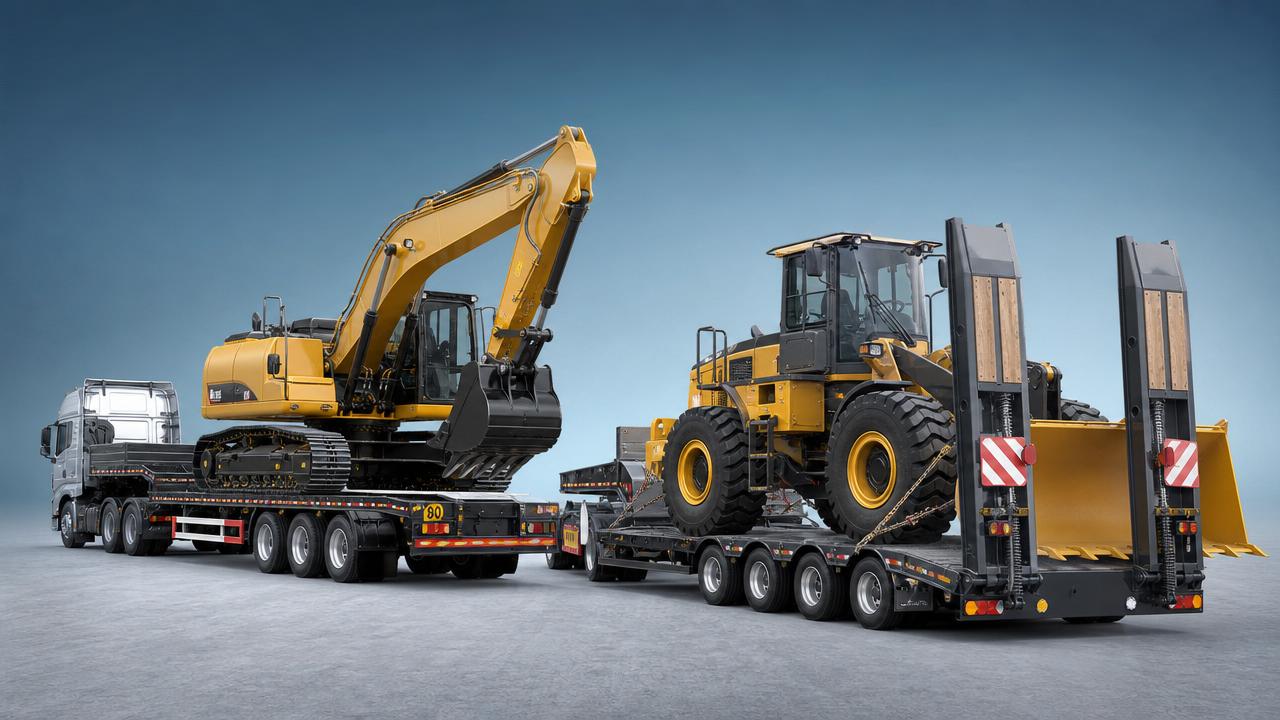
When evaluating heavy equipment transport solutions, choosing between a Flatbed Semi-Trailer and a low plate trailer directly affects loading efficiency, route flexibility, safety, and total operating cost. For technical assessment teams, understanding the structural differences and application limits of each option is essential for selecting the right transport configuration for excavators, loaders, and other oversized machinery.
Why This Comparison Matters More Now
The comparison between a Flatbed Semi-Trailer and a low plate trailer is no longer a simple product choice. In the engineering vehicle sector, transport requirements are changing because equipment is getting heavier, job sites are becoming more dispersed, and project timelines are tighter than before. Technical evaluation teams are now expected to assess not only whether a trailer can carry a machine, but also whether it can do so efficiently across varying road conditions, permit constraints, loading methods, and fleet utilization targets.
This shift is especially visible in construction, mining support, roadwork, and infrastructure contracting. Equipment owners increasingly want transport solutions that reduce idle time, simplify dispatching, and adapt to different machine sizes without creating unnecessary compliance risks. As a result, the practical question has changed from “Which trailer is stronger?” to “Which trailer works better under today’s operating pressures?” That is why the Flatbed Semi-Trailer remains highly relevant, while the low plate trailer continues to dominate in specific heavy-duty scenarios.
The Main Industry Signals Behind the Shift
Several market signals are shaping how transport planners compare these two trailer types. First, there is a clear increase in mixed-equipment transport needs. Contractors may move skid steers, wheel loaders, compact rollers, excavators, attachments, and support materials within the same weekly schedule. Second, route restrictions and bridge clearance concerns are creating a stronger preference for transport setups that balance deck height, axle load distribution, and maneuverability. Third, fuel efficiency and turnaround time are receiving more attention because transport costs now influence project profitability more directly.
These signals do not automatically make one option better than the other. Instead, they show that application matching has become more important. A Flatbed Semi-Trailer often performs well when cargo dimensions stay within manageable height and weight ranges, loading access is straightforward, and route flexibility matters. A low plate trailer becomes more competitive when machine height, center of gravity, or concentrated axle load makes deck height reduction a critical safety and compliance factor.
A Practical Trend Comparison for Technical Assessment Teams
The table below summarizes the current decision trend. It is not a universal rule, but it reflects how many evaluation teams are now framing the choice between a Flatbed Semi-Trailer and a low plate trailer.
What Is Driving the Preference for Lower Deck Solutions
One of the strongest shifts in heavy equipment logistics is the rising importance of transport geometry. As excavators, road machinery, and specialized engineering vehicles become larger or carry more complex upper structures, total loaded height becomes a central design issue. In these cases, the low plate trailer gains attention because it lowers the cargo platform and improves stability for taller machines.
This does not reduce the value of the Flatbed Semi-Trailer. In fact, many fleets still prefer flatbeds for their simpler structure, easier maintenance access, and broader cargo compatibility. But the trend suggests that when transport planning becomes more risk-sensitive, especially on routes with overpasses, uneven access roads, or strict local enforcement, lower deck configurations are being evaluated more often at the early technical stage rather than only after problems appear in operation.
Why Flatbed Semi-Trailer Demand Remains Strong
Even with growing attention to low plate designs, the Flatbed Semi-Trailer continues to hold a strong position because the market still rewards versatility. Many engineering vehicle operators do not transport one machine type only. They may alternate between palletized cargo, attachments, small construction machines, steel components, or containerized support equipment. In such operating environments, a flatbed offers better scheduling flexibility and often better overall return on asset use.
Another reason is operational simplicity. A Flatbed Semi-Trailer can reduce complexity in loading procedures, inspection routines, and cross-use across departments. For technical evaluators, this matters because the best equipment is not always the most specialized one. It is often the one that meets most transport tasks safely while minimizing downtime, training burden, and spare parts complexity. This explains why flatbeds remain common in fleets that need a practical balance between heavy equipment movement and general commercial use.
The Structural Difference That Changes Real-World Outcomes
From an evaluation standpoint, the structural difference between the two trailer types affects more than appearance. A Flatbed Semi-Trailer typically offers a level deck suitable for broad cargo categories, while a low plate trailer is designed to place the cargo deck closer to the ground. This lower center of loading can improve stability, ease equipment climbing angle, and reduce overall loaded height. However, it may also make the trailer more purpose-driven and less suitable for certain general freight tasks.
Technical teams should therefore compare structure against mission frequency. If a fleet regularly moves mid-size machines within standard height limits, a flatbed may produce better lifecycle value. If the fleet repeatedly transports tall or concentrated-load equipment, the low plate configuration may reduce operational friction enough to justify its narrower application range.
How the Impact Varies Across Roles and Business Functions
The trailer decision does not affect only drivers or transport managers. It influences several functions across an engineering vehicle business. This is why the comparison should be treated as a cross-functional technical decision rather than a basic purchasing exercise.
Signals That a Flatbed Semi-Trailer Is the Better Fit
A Flatbed Semi-Trailer generally works better when the transport program includes diverse cargo, medium-weight equipment, and routes that do not create severe height restrictions. It is also a strong choice when fleet managers need interchangeability between heavy equipment transport and broader commercial logistics tasks. For exporters and international buyers, flatbeds can also be easier to standardize across markets when the use case is not highly specialized.
This option becomes even more attractive when serviceability, spare parts access, and multi-brand tractor compatibility matter. Companies such as Shandong Livol Truck International Trade Co., Ltd., which work with commercial vehicle supply, customization, and export coordination, often see that buyers value not only carrying capacity but also dependable delivery, clear specifications, and fit-for-purpose configuration support. In many projects, the winning specification is the one that supports everyday operations smoothly rather than the one designed only for extreme cases.
Signals That Low Plate Trailers Are Gaining Ground
Low plate trailers are gaining stronger consideration in projects where larger excavators, high-body loaders, drilling equipment, or machines with strict center-of-gravity requirements are moved frequently. Their advantage becomes clearer when loading angle, deck approach, and machine clearance affect both safety and speed. In some operating environments, the difference of a lower deck can determine whether transport remains within manageable route parameters.
This trend is particularly relevant for technical teams that support infrastructure contractors, overseas project fleets, and mining-adjacent operations. As equipment dimensions trend upward and transport tolerance narrows, low plate trailers are no longer seen only as niche tools. They are increasingly part of strategic fleet planning, especially where load predictability is high and transport specialization creates measurable operational benefits.
How to Judge the Better Option in the Next Procurement Cycle
The most useful evaluation method is to build the decision around actual transport patterns instead of nominal payload figures alone. A Flatbed Semi-Trailer may appear sufficient on paper, yet become less effective if repeated transports face height issues or unstable loading geometry. On the other hand, a low plate trailer may look technically superior, but underperform financially if the fleet often needs broader cargo flexibility.
Technical assessment teams should review at least five dimensions: average machine envelope, peak machine envelope, route restrictions, loading environment, and annual trailer utilization mix. These dimensions reveal whether the business is moving toward specialization or preserving general-use transport capacity. They also help avoid a common mistake: purchasing based on one exceptional transport case rather than the dominant operating profile.
A Simple Decision Framework
Use the Flatbed Semi-Trailer as the preferred option when machine dimensions are moderate, cargo diversity is high, and utilization depends on cross-task flexibility. Favor the low plate trailer when machine height is consistently challenging, loading stability is a priority, and route compliance would benefit from a lower platform. If both use cases are frequent, the right answer may not be one trailer replacing the other, but a staged fleet structure with distinct roles.
What Companies Should Watch Going Forward
Looking ahead, three signals deserve close attention. First, machine size trends will continue to influence trailer selection. Second, buyers will increasingly demand customized configurations rather than standard builds, especially in export markets with different road conditions and regulatory expectations. Third, total operating efficiency will outweigh simple acquisition cost in trailer decisions. This means technical teams should work more closely with procurement, operations, and suppliers during early specification review.
For businesses involved in engineering vehicle supply and international trade, this is also a service opportunity. Supporting customers with better transport matching, documentation clarity, and configuration guidance can improve project outcomes and reduce post-delivery mismatch. That is especially important when choosing between a Flatbed Semi-Trailer and a low plate trailer, because the difference affects not only transport capability, but also fleet efficiency over time.
Final Judgment and Action Points
There is no universal winner in the Flatbed Semi-Trailer versus low plate debate. The better choice depends on how transport demand is changing inside the business. If the direction is toward mixed loads, multi-use scheduling, and broad fleet flexibility, a Flatbed Semi-Trailer often delivers better value. If the direction is toward taller, heavier, or more stability-sensitive machinery, the low plate trailer is gaining strategic importance.
If your company wants to judge the impact of this trend on its own transport operations, focus on these questions: What equipment profile will dominate in the next two to three years? How often do loaded height and loading angle create constraints? Is trailer utilization driven by specialization or flexibility? Which option better supports safety, compliance, and dispatch efficiency together? Answering these points will lead to a more reliable configuration decision than comparing specifications in isolation.
Search Starts Here