
News
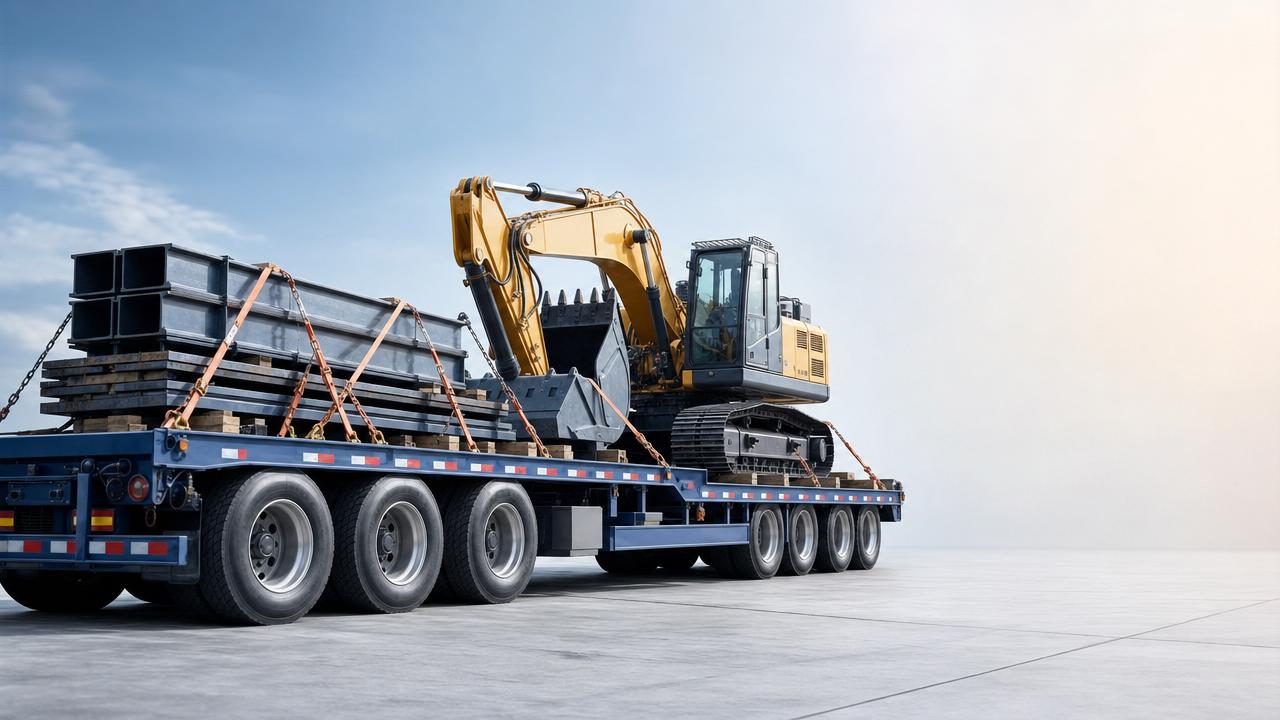
Improper loading can turn a reliable Flatbed Semi-Trailer into a costly risk, leading to cargo damage, safety hazards, and delivery delays. For operators and users, understanding the most common loading mistakes is essential to protecting equipment, reducing losses, and improving transport efficiency. This article explores the key errors to avoid and the practical steps that help ensure every load stays secure from departure to destination.
For operators in engineering vehicle transport, a checklist-based approach works better than general advice because cargo damage rarely comes from one dramatic failure. In most cases, it starts with small missed checks: wrong weight distribution, weak tie-down points, unsuitable blocking, poor deck condition, or no reinspection after the first kilometers. A Flatbed Semi-Trailer is designed for flexibility, but that flexibility only delivers value when loading decisions are disciplined, repeatable, and matched to the cargo.
Whether the load is construction machinery, steel components, pallets of parts, pipes, containers, or oversized equipment, the loading process should follow clear judgment standards. The priority is simple: confirm load condition, match the cargo to the trailer, position the weight correctly, secure the load with the right restraint method, and verify stability before departure. The sections below turn those priorities into practical checks that users and operators can apply every day.
Why the first checks matter before loading a Flatbed Semi-Trailer
Many cargo damage incidents happen before the cargo even touches the deck. Operators often focus on tie-downs too late and forget that the trailer, the load, and the route must already be compatible. If one of those three factors is ignored, even a strong Flatbed Semi-Trailer can experience shifting, vibration damage, broken packaging, axle overload, or unstable braking behavior.
- Confirm cargo type, dimensions, center of gravity, and fragility before assigning the trailer.
- Check the trailer deck, side access, lashing points, tires, suspension, and structural condition.
- Review route conditions such as slopes, sharp turns, rough surfaces, bridge limits, and weather exposure.
- Match restraint tools to the cargo: chains, webbing straps, edge protectors, timber blocking, anti-slip mats, and corner protection.
- Verify legal load limits, axle distribution, overhang requirements, and permit needs for special loads.
This preloading discipline reduces guesswork and helps the operator use the Flatbed Semi-Trailer as a controlled transport platform rather than a simple carrying surface.
Core loading mistakes that most often lead to cargo damage
1. Uneven weight distribution
One of the most common mistakes is placing too much weight at the front, rear, or on one side of the Flatbed Semi-Trailer. This can overload axles, reduce steering stability, increase tire wear, and create trailer sway. More importantly, badly balanced cargo moves differently during braking and cornering, which increases the chance of internal shifting or surface impact damage.
Priority check: place the heaviest cargo low and as close as possible to the intended load center while staying within axle limits. Avoid stacking heavy items over lighter ones unless engineered support is used.
2. Using too few or the wrong type of restraints
Another frequent error is assuming that one securing method fits every cargo type. Chains may be ideal for heavy machinery, while webbing straps may be better for finished surfaces that scratch easily. When restraints are too weak, too loose, or incorrectly angled, the cargo can bounce, rotate, or slide across the deck of the Flatbed Semi-Trailer.
Priority check: select restraints based on cargo weight, shape, contact surfaces, and expected road forces. Securement should resist forward, rearward, and lateral movement, not just vertical bounce.
3. Ignoring friction and deck condition
Oil, mud, water, loose rust, worn wood, or polished steel decks can sharply reduce friction. Operators sometimes overestimate the holding power of straps without considering that a low-friction deck allows the load to slide under repeated vibration. A Flatbed Semi-Trailer with a damaged or contaminated deck increases cargo risk even when tie-down numbers look acceptable on paper.
Priority check: clean the deck, replace damaged boards, and use anti-slip mats where appropriate. Friction support should never replace proper restraint, but it greatly improves load stability.
4. Poor blocking and bracing
Many operators secure cargo downward but fail to stop rolling or creeping movement. Cylindrical items, tracked equipment, bundled steel, and machines with wheels require positive blocking. Without chocks, timber stops, or engineered bracing, cargo may shift even if straps remain tight.
Priority check: for rolling or irregular loads on a Flatbed Semi-Trailer, combine tie-down force with blocking. Do not rely on tension alone to control shape-driven movement.
5. Loading with the wrong center of gravity assumption
Large equipment often has an uneven center of gravity because of engines, booms, tanks, or mounted tools. If operators guess instead of confirming lifting and balance points, the cargo may lean, overload one section of the deck, or place abnormal stress on securing equipment. High-center loads on a Flatbed Semi-Trailer are especially vulnerable during lane changes and on uneven roads.
Priority check: identify the real weight concentration and load the cargo as low and centered as practical. If uncertain, request technical loading information before transport.
6. Skipping edge protection
Sharp corners can cut straps, while unprotected chains can damage painted or finished surfaces. This is a common source of both cargo damage and restraint failure. Edge protectors are often treated as optional, but they are essential when securing machinery panels, metal frames, or packaged engineering components on a Flatbed Semi-Trailer.
7. Failing to recheck after departure
Newly loaded cargo often settles during the first part of the trip. Straps relax, timber compresses, and suspension movement changes tension. Operators who do not stop and reinspect may miss early warning signs before they turn into expensive damage.
Priority check: inspect the Flatbed Semi-Trailer and all securement systems shortly after departure and at planned intervals, especially on long-distance or rough-road transport routes.
Quick judgment table: what to check before the vehicle moves
Use the following checklist as a practical go/no-go reference before dispatching a Flatbed Semi-Trailer.
Extra loading points for different engineering cargo scenarios
Construction machinery and wheeled equipment
For excavators, loaders, rollers, and similar machines, operators should lower booms, lock moving parts, apply parking systems, and use wheel chocks or track blocking. Hydraulic components and attachments should not be left in transport-sensitive positions. On a Flatbed Semi-Trailer, machine orientation also matters because projecting arms or buckets can affect both balance and legal dimensions.
Steel, pipes, and bundled materials
These loads often appear stable but can roll or spread under vibration. Use saddles, cradles, separators, and side restraint strategy. A Flatbed Semi-Trailer carrying round or bundled materials needs more than top-down pressure; it needs positive shape control.
Palletized or packaged components
Packaging damage is common when operators tighten straps directly over weak cartons or stack pallets unevenly. Use load spreaders, corner boards, and surface protection to prevent crushing. For mixed cargo on a Flatbed Semi-Trailer, separate heavy and fragile items clearly instead of trying to secure them as one block.
Commonly overlooked risk items operators should not skip
- Weather exposure: rain reduces friction, wind affects tall loads, and temperature changes can alter strap tension.
- Lashing point condition: damaged anchor points can fail before the strap or chain does.
- Mixed cargo interaction: different shapes and materials move differently on the same Flatbed Semi-Trailer.
- Emergency braking force: the load must remain secure under sudden deceleration, not only normal driving conditions.
- Driver visibility and vehicle handling: badly placed cargo can interfere with maneuvering confidence and safe operation.
Practical execution advice for safer daily loading
To improve results consistently, operators should standardize loading decisions instead of depending on personal habit alone. Build a simple loading workflow for every Flatbed Semi-Trailer dispatch: verify cargo data, inspect the trailer, prepare restraint tools, load according to weight plan, secure with the correct method, perform a walk-around inspection, and schedule the first recheck stop. Even a short written checklist can prevent expensive mistakes.
It is also wise to train teams using actual cargo categories they handle most often. Machinery, fabricated steel, spare parts, and oversized engineering components do not fail in the same way during transit. The more specific the loading standard, the better the protection performance of the Flatbed Semi-Trailer in real operating conditions.
FAQ about preventing cargo damage on a Flatbed Semi-Trailer
How often should securement be rechecked?
A first recheck should be done shortly after departure, then at regular intervals, and after harsh braking, rough road sections, or major weather changes.
Are more straps always better?
Not necessarily. More straps do not fix poor angles, weak anchor points, or bad weight placement. The right restraint design is more important than quantity alone.
What is the biggest beginner mistake with a Flatbed Semi-Trailer?
Usually it is treating securement as the last step instead of planning the entire load from cargo characteristics, deck condition, and axle balance first.
Final checklist and next step for users and fleet buyers
A Flatbed Semi-Trailer can safely carry demanding engineering cargo, but only when loading discipline is consistent. The most important actions are to confirm cargo characteristics in advance, keep weight distribution under control, match restraint methods to the load, use blocking and protection properly, and reinspect after departure. These steps reduce cargo damage, improve road safety, and support more reliable delivery performance.
If you need to further confirm trailer parameters, deck configuration, axle arrangement, load capacity, customization options, delivery cycle, export documents, or suitability for specific machinery and engineering transport tasks, it is best to prepare those operating details early. Shandong Livol Truck International Trade Co., Ltd., as an authorized dealer for FOTON, SHACMAN, and SINOTRUK with strong export experience, can help customers review practical matching points for commercial vehicles and transport equipment, from selection and customization to logistics and after-sales support.
Search Starts Here