
News
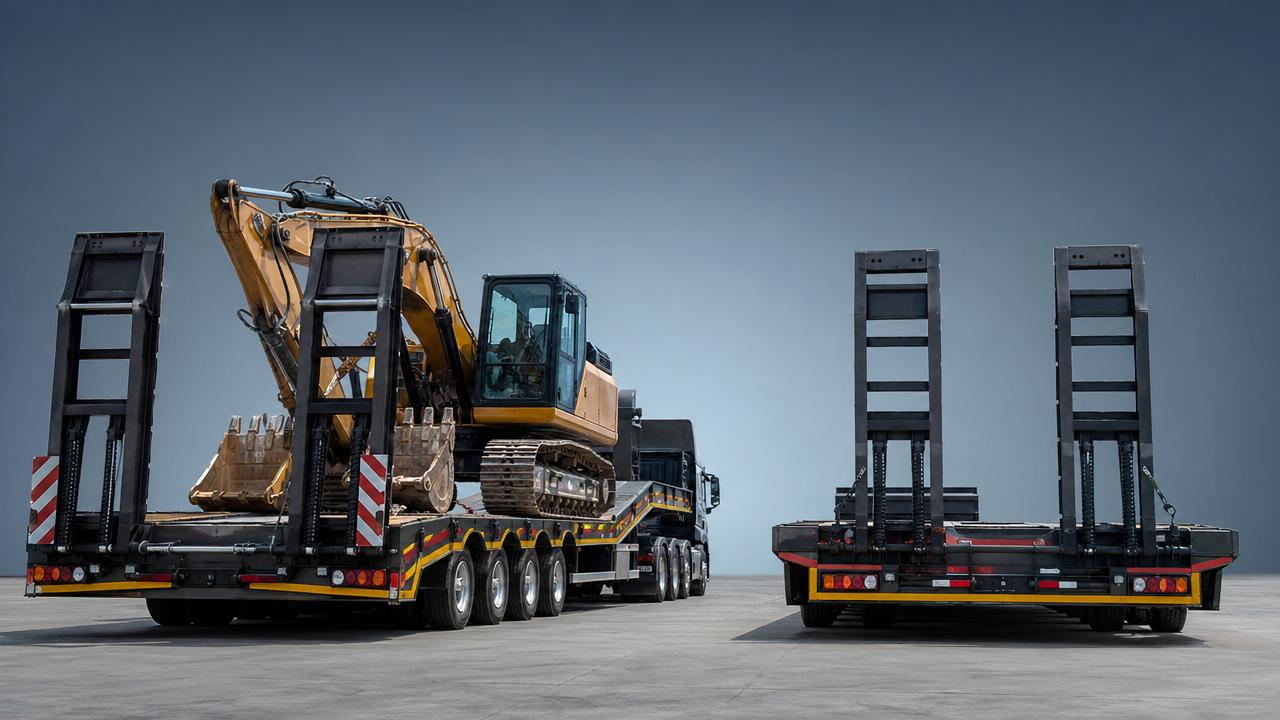
When comparing a Flatbed Semi-Trailer with a low plate for heavy equipment transport, technical evaluators must balance loading height, axle distribution, cargo stability and route compliance. Each trailer type offers distinct advantages depending on machinery size, operating conditions and delivery requirements. This article breaks down the key differences to help you identify the most efficient and reliable transport solution for demanding engineering vehicle applications.
What is the real difference between a Flatbed Semi-Trailer and a low plate trailer?
For technical evaluation teams, the comparison usually starts with structure, but the more useful question is functional intent. A Flatbed Semi-Trailer is a versatile transport platform with a relatively simple deck structure, open loading area and broad compatibility with different cargo types. It is widely used for machinery, steel, containers, construction materials and general oversized loads that do not require an extremely low deck height.
A low plate trailer, often referred to in practical heavy-haul discussions as a low-bed or low-deck transport solution, is designed specifically to reduce cargo center of gravity and overall transport height. Its deck sits lower to the ground, which makes it better suited for tall, heavy or high-center-of-gravity engineering equipment such as excavators, bulldozers, graders, rollers and certain mining machines.
In other words, the Flatbed Semi-Trailer wins on flexibility, while the low plate focuses on height control and heavy-equipment stability. That is why the choice is not only about what the trailer is, but about whether the transported machine creates restrictions on bridge clearance, turning safety, axle load balance or loading access.
Why do technical evaluators often hesitate between these two options?
The hesitation comes from overlapping use cases. Many types of engineering vehicles can physically fit on either a Flatbed Semi-Trailer or a low plate, especially medium-size wheel loaders, compact excavators and road equipment. However, “can be loaded” is very different from “should be transported this way.” Technical evaluators must consider not just fit, but transport efficiency, safety margin, route legality and unloading practicality.
For example, a standard crawler excavator may be transportable on a Flatbed Semi-Trailer if overall height remains compliant and the machine can be secured with proper tie-down geometry. Yet if that same machine has a tall boom profile, wide track stance or concentrated rear counterweight, a low plate may significantly reduce risk during braking, cornering and route passage under overhead obstacles.
Another reason for uncertainty is procurement strategy. Some fleets want one trailer type that can support multiple project needs. In such cases, the Flatbed Semi-Trailer looks attractive because it serves both machinery transport and general freight applications. By contrast, a low plate often delivers better performance in specialized heavy equipment transport but may be less universal for standard cargo categories.
Which trailer handles heavy engineering equipment more safely in real operating conditions?
In pure heavy-equipment safety terms, the low plate usually has the advantage. Its lower deck reduces the center of gravity of the transported machine, which improves dynamic stability during turns, emergency maneuvers and uneven road transitions. This becomes especially important when transporting tracked equipment, tall construction machines or loads with uneven weight distribution.
That said, a Flatbed Semi-Trailer can still be a safe and effective choice when the equipment profile is moderate, the route is predictable and the trailer is matched correctly in deck length, axle capacity, suspension and lashing points. Safety is not decided by trailer category alone. It depends on whether the cargo weight is distributed properly across kingpin load, trailer axles and tractor unit capacity.
Ramp angle is another key issue. Many engineering machines with low ground clearance or long wheelbase struggle with steep loading angles. A low plate trailer often provides easier loading because its deck sits lower and loading geometry is more favorable. This helps reduce the chance of undercarriage scraping, ramp slipping or unstable machine climbing during loading and unloading.
If your evaluation standard prioritizes cargo stability, loading confidence and reduced rollover risk, the low plate generally performs better. If your standard prioritizes balanced utility across various transport tasks, the Flatbed Semi-Trailer may offer better fleet economics.
How should you compare loading height, payload distribution and route compliance?
This is the decision point where many technical teams move beyond assumptions and into measurable criteria. A Flatbed Semi-Trailer may provide strong payload flexibility, but its deck height can become a limitation when carrying tall equipment across regions with strict height restrictions. Even a few hundred millimeters can determine whether a shipment travels directly or requires route deviation, escort support or permit adjustments.
Low plate trailers reduce overall loaded height, which often makes route planning easier for construction machinery with cabs, booms, arms or overhead structures. They also improve weight placement by allowing heavy components to sit lower and closer to the structural centerline. This can enhance braking balance and reduce sway.
However, route compliance is not only about height. Evaluators should also confirm:
- Gross vehicle weight and local axle load limits
- Bridge and pavement restrictions on project routes
- Turning radius in mine sites, plants and urban delivery zones
- Ramp access at loading yards and unloading locations
- Permit requirements for overlength, overwidth or oversize transport
A Flatbed Semi-Trailer may remain fully compliant and more cost-effective for medium-height equipment and regional highway transport. But when equipment dimensions are close to legal thresholds, the low plate often creates a larger operational safety buffer.
Is there a quick comparison table for technical assessment?
Yes. The table below summarizes the most common evaluation points for a Flatbed Semi-Trailer versus a low plate in engineering vehicle logistics.
When is a Flatbed Semi-Trailer the better choice despite the low plate advantage?
A Flatbed Semi-Trailer becomes the better option when the transported equipment does not push legal height limits, when loading surfaces are standardized and when the fleet needs broad utilization across multiple cargo categories. This is common in engineering contractors who move not only machines but also attachments, steel sections, pallets, generators or prefabricated project materials.
It may also be the stronger commercial choice where transport frequency is high but cargo variety is wide. In those cases, one specialized low plate may sit idle between machinery moves, while a Flatbed Semi-Trailer can remain active across more jobs. That improves trailer utilization rate and may lower total cost of ownership over time.
Technical evaluators should also look at maintenance simplicity. Depending on configuration, a Flatbed Semi-Trailer may have a more straightforward structure, easier deck access and simpler operational handling for teams already familiar with standard semi-trailer loading procedures. If the machinery portfolio mainly consists of moderate-size wheel equipment, the flatbed can be a practical and efficient solution.
What common mistakes lead to poor trailer selection?
One common mistake is evaluating only rated payload while ignoring machine geometry. A trailer may carry the weight on paper but still be unsuitable because the equipment is too tall, too long between support points or too concentrated in one section. This often leads to poor axle distribution and increased tire, suspension or frame stress.
Another mistake is treating all machinery as static cargo. Engineering equipment often has irregular shapes, attachments, booms, blades and offset mass. A Flatbed Semi-Trailer carrying a compact roller is not the same as carrying a tracked excavator with a heavy rear counterweight. The securing plan, deck position and route behavior will be different.
A third mistake is overlooking loading and unloading environments. Even if road transport is compliant, the actual work site may have soft ground, limited maneuver space or uneven approach ramps. In these situations, the lower working height of a low plate can make loading safer and faster.
Finally, some buyers focus only on purchase price. The lower upfront cost of one trailer type can be offset by permit complications, route inefficiency, equipment handling delays or reduced cargo compatibility. The better decision is lifecycle-based, not invoice-based.
What should a technical evaluator confirm before choosing a trailer specification?
Before selecting a Flatbed Semi-Trailer or a low plate, confirm the actual operating envelope rather than relying on nominal machine data only. The most useful checklist includes machine operating weight, transport weight, overall length, overall width, shipping height, axle or track contact points, attachment removal plan and loading method. It is also important to verify whether the same trailer will serve one machine type or a mixed fleet.
You should also assess the tractor head pairing, because trailer performance depends heavily on tractor compatibility, especially in braking capacity, fifth-wheel load acceptance and route terrain. For cross-border or export operations, documentation, compliance and local transport regulation should be reviewed early to avoid redesign after purchase.
For companies sourcing from experienced exporters, it helps to work with suppliers that understand both equipment transport logic and international commercial vehicle delivery. Shandong Livol Truck International Trade Co., Ltd., based in Shandong, China, supports customers with vehicle selection, customization, export documentation, customs coordination and logistics planning. With authorized resources across major Chinese commercial vehicle brands and practical overseas delivery experience, the company can help technical teams align trailer choice with actual project use rather than generic catalog descriptions.
So, which one fits heavy equipment transport better?
If the main task is transporting tall, heavy, high-center-of-gravity engineering machines under strict route conditions, a low plate trailer usually fits better. It provides a lower deck, improved stability, easier loading geometry and stronger suitability for specialized heavy equipment transport.
If the transport task includes a broader mix of cargo, moderate-size machinery and a need for higher fleet utilization, the Flatbed Semi-Trailer often delivers better overall value. It is especially effective when route height is manageable and operational flexibility matters as much as machinery handling.
The right answer is therefore not universal. It depends on machine dimensions, transport frequency, route restrictions, site loading conditions and whether your fleet strategy is specialized or multi-purpose. If you need to confirm a specific Flatbed Semi-Trailer or low plate configuration, the best next step is to discuss machine parameters, target markets, axle requirements, loading method, compliance limits, delivery timeline and after-sales support before finalizing procurement.
Search Starts Here