News
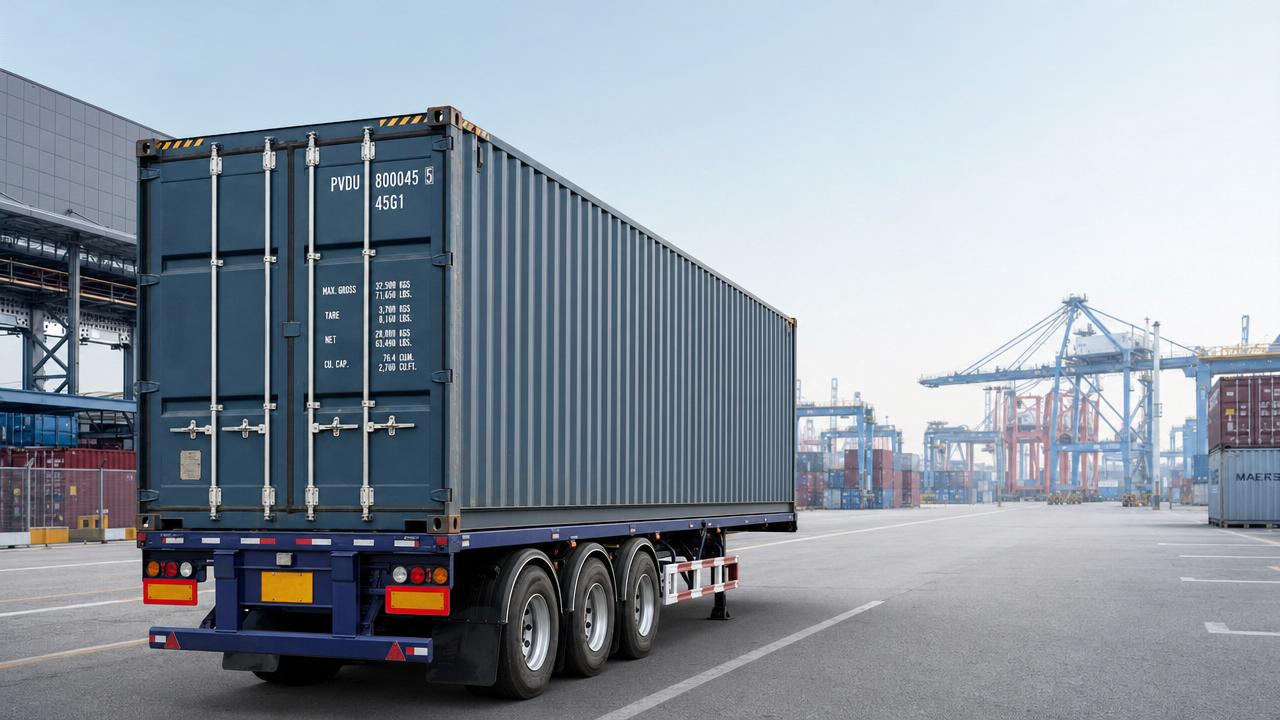
Choosing the right Skeleton (Container) Semi-Trailer is essential for procurement teams handling port transfer and inland haulage. The right model can improve loading efficiency, reduce operating costs, and support safe, reliable container transport under demanding working conditions. This guide explains the key factors buyers should evaluate, from chassis strength and axle configuration to compliance, durability, and supplier service capabilities.
What is a Skeleton (Container) Semi-Trailer, and why does it matter for port and inland haulage?
A Skeleton (Container) Semi-Trailer is a specialized semi-trailer designed to carry ISO shipping containers efficiently between ports, rail yards, logistics parks, warehouses, and inland delivery points. Unlike flatbeds or sidewall trailers, it uses a reinforced skeletal frame with container twist locks to secure 20ft, 40ft, or sometimes 45ft containers directly. For procurement teams, this matters because container transport is not just about moving cargo; it is about matching equipment to turnaround speed, road conditions, payload requirements, and fleet utilization targets.
In port operations, loading and unloading speed are critical. A well-designed Skeleton (Container) Semi-Trailer allows quick container positioning, stable locking, and reduced waiting time under cranes or reach stackers. In inland haulage, the trailer must also withstand rough roads, frequent braking, uneven loading environments, and long-distance transport cycles. Choosing the wrong model can lead to frame fatigue, excessive tire wear, poor fuel economy, or operational delays.
For buyers in commercial vehicle procurement, the product should be treated as a long-term transport asset rather than a simple low-price purchase. The best selection is the one that aligns with your real container mix, legal payload limits, terminal conditions, maintenance capability, and driver usage habits.
Which operating scenarios require different Skeleton (Container) Semi-Trailer specifications?
Not every Skeleton (Container) Semi-Trailer should be configured the same way. Procurement teams should first map the trailer to actual use scenarios. A trailer used for short shuttle work inside or near the port may prioritize loading frequency, maneuverability, and durability under repetitive operations. A trailer used for inland transport may need stronger suspension, better anti-corrosion protection, and an axle setup optimized for legal road transport over longer routes.
Typical buying scenarios include:
- Port-to-yard transfer with high daily turnaround and short distances
- Port-to-warehouse inland haulage over highways or mixed roads
- Cross-border freight requiring strict compliance and documentation support
- Heavy-duty container movement with dense cargo and higher axle load demands
- Multi-container operations where 20ft and 40ft compatibility is equally important
If your operation handles mostly one type of container and follows fixed routes, a simpler standardized trailer may be sufficient. If the fleet serves multiple customers, variable container sizes, and changing road conditions, flexibility becomes more valuable. In that case, extendable structures, stronger beams, premium suspension components, and easier maintenance access can generate better lifecycle value than the cheapest base configuration.
What should buyers check first when selecting a Skeleton (Container) Semi-Trailer?
The first check is structural suitability. Many purchasing mistakes happen because teams focus on price before confirming whether the trailer frame matches operating stress. The chassis should be built from high-quality steel with rational beam design, good welding consistency, and sufficient torsional strength. Port and inland haulage often involve repeated container loading impacts, turning stress, and uneven ground contact, so structural integrity is the foundation of safe operation.
The second check is container compatibility. Confirm whether the Skeleton (Container) Semi-Trailer supports 20ft, 40ft, or dual 20ft configurations, and whether locking positions are practical for your loading patterns. Buyers should verify twist lock reliability, lock placement accuracy, and ease of operation, since poor locking systems directly affect safety and loading efficiency.
The third check is axle and suspension configuration. A 2-axle or 3-axle layout should be selected based on legal load limits, route conditions, and the type of container cargo. Heavier cargo and rougher roads usually require stronger suspension support and better load distribution. Mechanical suspension may offer lower cost and simple maintenance, while air suspension may improve ride stability and reduce cargo shock in specific markets.
The fourth check is braking and safety systems. Reliable brake chambers, ABS if required, proper air line layout, durable landing gear, and visible lighting are basic but essential details. For inland transport over longer distances, these points influence both safety compliance and operating confidence.
Quick procurement checklist
How do axle configuration, suspension, and dimensions affect performance?
These three factors strongly influence performance, compliance, and total operating cost. A Skeleton (Container) Semi-Trailer with the wrong axle arrangement may create overload risk or reduce maneuverability. In many markets, 3-axle trailers are preferred for standard 40ft container haulage because they balance payload capability and road compliance. However, if your operation mainly handles lighter loads on shorter routes, a different setup may be more economical.
Suspension choice affects ride behavior and maintenance. Mechanical suspension is widely used because it is robust, proven, and cost-effective. It performs well for heavy-duty logistics where maintenance simplicity is valued. Air suspension can improve stability and reduce vibration, but procurement teams must also consider service availability, component cost, and route demands before choosing it.
Dimensions also matter more than many first-time buyers expect. Overall trailer length, kingpin position, rear overhang, and container support layout influence turning radius, legal compliance, and loading convenience. Port access roads, warehouse ramps, and regional transport regulations should all be reviewed before finalizing specifications. A trailer that looks correct on paper may still create practical loading issues if dimensions are not matched to real sites.
What are the most common procurement mistakes when buying a Skeleton (Container) Semi-Trailer?
One common mistake is choosing only by initial purchase price. A lower-cost trailer may use thinner steel, lower-grade axles, weaker paint protection, or less reliable accessories. These hidden compromises often increase downtime, repairs, and tire consumption. For procurement teams managing fleet productivity, lifecycle cost is far more important than invoice price alone.
Another mistake is ignoring route conditions. Some buyers specify a standard trailer without considering bad roads, overloaded port surfaces, sharp turns, or long inland distances. This mismatch causes premature wear and a shorter service life. The right Skeleton (Container) Semi-Trailer should reflect where and how it will actually work, not just what is commonly available.
A third mistake is failing to verify compliance requirements. Depending on destination market, buyers may need to confirm dimensions, axle loads, lighting, braking standards, reflective markings, and documentation. In export business, this step is critical because a non-compliant configuration can create customs issues, registration delays, or expensive modifications after delivery.
The fourth mistake is underestimating supplier support. Even a good product can become difficult to operate if spare parts, technical communication, or after-sales coordination are weak. Procurement should evaluate not just the trailer itself, but the exporter’s experience, documentation capability, quality control process, and delivery reliability.
Common questions buyers ask before approval
How can buyers evaluate durability, corrosion resistance, and long-term value?
Durability is not only about steel thickness. It is about the entire build quality of the Skeleton (Container) Semi-Trailer. Buyers should ask about steel source, manufacturing process, beam reinforcement, cross-member design, and stress concentration control. Consistent welding and proper assembly alignment are especially important for trailers that operate continuously in busy terminals.
Corrosion resistance is another major factor, especially in port environments where salt, humidity, and standing water accelerate rust. Good surface treatment, blasting quality, primer performance, and topcoat durability all contribute to a longer service life. If the trailer will work near the coast or in tropical regions, anti-corrosion protection deserves higher procurement priority.
Long-term value should also include parts availability and maintenance convenience. Standardized components, reliable axle brands, and practical service design help reduce downtime. Buyers should ask whether wear parts are easy to source locally or through the exporter, how quickly technical support can be provided, and whether the supplier has real experience supporting overseas fleets.
For many procurement teams, the best Skeleton (Container) Semi-Trailer is not the most heavily specified model, but the one that balances durability, compliance, serviceability, and cost over years of operation.
Why does supplier capability matter as much as the trailer specification?
In international procurement, the supplier is part of the product. A capable exporter can help buyers avoid specification errors, delivery delays, and compliance risks. This is especially important for commercial vehicles used in engineering and logistics operations, where a small mismatch in specification can affect registration, axle legality, or cargo efficiency.
Shandong Livol Truck International Trade Co., Ltd., based in Shandong, China, is a professional and reliable commercial vehicle exporter with strong industry strength and rich global trade experience. As the official authorized domestic and overseas dealer for FOTON, SHACMAN and SINOTRUK, the company operates a large number of authorized 4S stores across China and maintains sufficient inventory for stable supply and fast delivery. For procurement teams, this means stronger product access, more dependable lead times, and better confidence in vehicle sourcing.
Equally important, the company provides full-process services including vehicle selection, customization, documentation, customs clearance, and logistics. When purchasing a Skeleton (Container) Semi-Trailer for port and inland haulage, these service capabilities reduce transaction risk. Professional export coordination, strict quality control, and responsive after-sales support can save significant time and cost during implementation.
Before requesting a quote, what should procurement teams confirm internally?
Before asking for pricing, procurement teams should align internally on several practical points. First, confirm the main container sizes and average cargo weight. Second, define route conditions, including port pavement quality, highway share, and distance range. Third, review local legal requirements for dimensions, axle loads, braking, and lighting. Fourth, decide whether standard specification is enough or if customization is needed for locks, suspension, tires, landing gear, or anti-rust treatment.
It is also useful to prepare expected order quantity, target delivery schedule, and preferred spare parts package. These details allow the supplier to recommend the right Skeleton (Container) Semi-Trailer more accurately and provide a quotation that reflects real operating needs rather than a generic baseline model.
If you need to further confirm a specific solution, parameters, lead time, quotation, or cooperation model, the best first discussion points are container type compatibility, required payload and axle setup, route conditions, compliance destination, customization scope, and after-sales support expectations. With these answers clarified early, buyers can compare options more effectively and choose a Skeleton (Container) Semi-Trailer that supports safe, efficient, and cost-controlled port and inland haulage.
Search Starts Here