
News
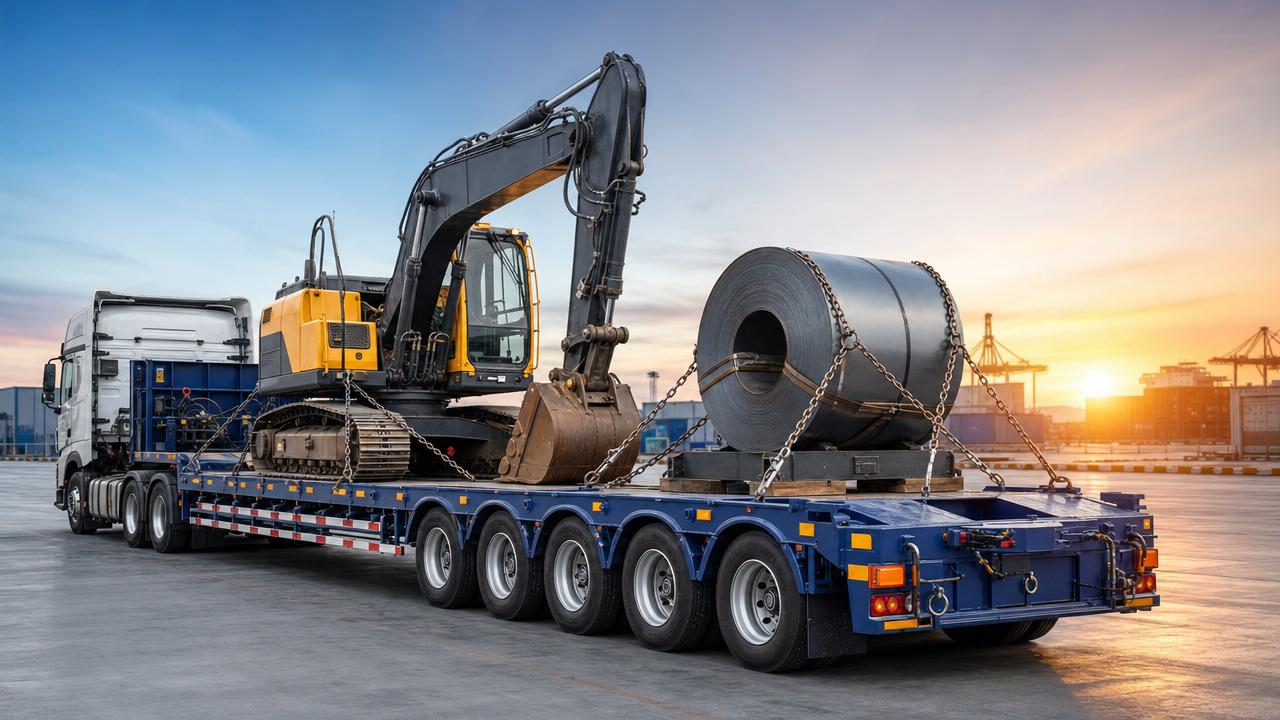
Selecting the right Flatbed Semi-Trailer for heavy loads requires more than comparing payload ratings. Technical evaluators must consider structural strength, axle configuration, deck design, braking performance, suspension type, and compatibility with tractors and transport regulations. With extensive export experience and authorized access to leading brands such as FOTON, SHACMAN, and SINOTRUK, Shandong Livol Truck International Trade Co., Ltd. helps global buyers assess vehicle specifications, customization options, and long-term operating value with confidence.
For engineering vehicle buyers, the evaluation process often involves 6 to 10 technical checkpoints before a purchase decision is approved. A Flatbed Semi-Trailer must match the cargo, road conditions, tractor capability, and legal operating limits.
Heavy-load transport may involve steel coils, construction machinery, prefabricated components, containers, mining equipment, or oversized industrial modules. Each cargo type creates different stress patterns on the deck, chassis, suspension, and braking system.
Understanding Heavy-Load Requirements Before Specification
A technical evaluation should begin with the load profile, not the trailer brochure. The same 40-ton cargo can create different engineering demands depending on its footprint, height, and center of gravity.
For a Flatbed Semi-Trailer, the rated payload is only one indicator. Evaluators should also review concentrated load capacity, frame deflection control, axle load distribution, and coupling height tolerance.
Cargo Dimensions and Load Distribution
Common flatbed trailer lengths range from 12 meters to 13.75 meters, while deck height, gooseneck design, and side beam structure vary by market. These dimensions directly affect loading efficiency.
Cargo with a narrow contact area may require reinforced cross members at 300 mm to 500 mm spacing. Wider machinery may need additional lashing points and stronger side rails.
Key Load Questions for Evaluators
- What is the maximum gross cargo weight, including accessories, packaging, and lifting fixtures?
- Is the cargo point-loaded, evenly distributed, self-propelled, or lifted by crane?
- Will the Flatbed Semi-Trailer operate on highways, mining roads, construction sites, or mixed routes?
- Are there local axle load limits, bridge restrictions, or road permit requirements?
These questions help define whether a standard flatbed configuration is suitable or whether reinforcement, additional axles, or a customized deck layout is required.
Structural Design Factors That Affect Long-Term Performance
The chassis is the core of a Flatbed Semi-Trailer. Under repeated heavy loading, poor material selection or weak welding can cause deformation, cracking, or uneven tire wear.
Technical buyers usually review the main beam, cross member layout, kingpin area, landing gear support, and rear bumper structure. These zones carry high stress during acceleration, braking, and turning.
The following table outlines core structural elements that should be checked when comparing heavy-duty flatbed trailer options for engineering vehicle operations.
The strongest specification is not always the heaviest one. A properly engineered Flatbed Semi-Trailer balances strength, tare weight, corrosion resistance, and allowable gross vehicle combination weight.
Material Selection and Welding Quality
High-strength steel may reduce tare weight by several hundred kilograms compared with conventional steel, but it must be matched with suitable welding procedures and quality inspection.
A practical inspection should include visual weld checks, dimensional measurement, paint thickness verification, and review of critical reinforcement areas. For export orders, photo and video inspection can support remote approval.
Axle, Suspension, and Braking Configuration
Axle configuration determines how the Flatbed Semi-Trailer transfers weight to the road. Common engineering vehicle applications use 2-axle, 3-axle, or multi-axle layouts depending on regulation and load.
For heavy-duty export projects, technical evaluators often compare 13-ton, 16-ton, or higher-rated axle options. The best choice depends on road quality, speed, maintenance access, and legal limits.
Mechanical Suspension or Air Suspension
Mechanical suspension is widely used in tough environments because it is simple, durable, and easier to maintain in remote construction zones or mining corridors.
Air suspension offers better cargo protection and ride stability, especially for high-value industrial equipment. However, it requires cleaner maintenance practices and more careful inspection of air circuits.
Braking System Review Points
- Check compatibility between tractor air pressure, trailer brake chambers, and emergency braking response.
- Review ABS or EBS requirements according to destination market regulations.
- Confirm brake drum or disc brake specification for operating speed and terrain.
- Define maintenance intervals, commonly every 10,000 km to 20,000 km under mixed operating conditions.
Braking performance should never be treated as an accessory issue. A loaded Flatbed Semi-Trailer descending a long slope places extreme thermal demand on brakes, tires, and suspension components.
Matching the Trailer with Tractor and Operating Regulations
A technically suitable Flatbed Semi-Trailer must work as part of a complete transport system. Tractor power, wheelbase, fifth-wheel height, and rear axle ratio all influence performance.
Shandong Livol Truck International Trade Co., Ltd. can support buyers in evaluating tractor-trailer matching across FOTON, SHACMAN, and SINOTRUK product ecosystems for different export markets.
Tractor Compatibility Checks
Before confirming an order, evaluators should verify 4 core interfaces: kingpin size, fifth-wheel height, air and electrical connectors, and allowable gross combination weight.
For high-temperature regions, engine cooling margin and transmission matching should also be reviewed. For mountainous routes, braking support such as engine brake or retarder may be necessary.
The table below connects operating scenarios with practical Flatbed Semi-Trailer configuration decisions. It helps evaluators convert transport conditions into procurement specifications.
The key conclusion is simple: trailer configuration should follow the route, not only the cargo weight. A 3-axle Flatbed Semi-Trailer may be efficient on highways but insufficient for specific off-road stress conditions.
Regulatory and Documentation Considerations
Export buyers must also verify local requirements for lighting, underrun protection, reflective markings, brake systems, axle loading, and registration documents before shipment.
Shandong Livol supports documentation, customs clearance, and logistics coordination through a full-process export service. This reduces communication gaps during the 2-week to 6-week delivery planning period.
Customization Options for Engineering Vehicle Applications
Customization is often necessary when a Flatbed Semi-Trailer is used for specialized engineering cargo. However, every modification should be evaluated against weight, cost, delivery cycle, and maintenance impact.
Typical customization items include deck thickness, toolboxes, stake sockets, container locks, hydraulic ramps, side boards, rear support legs, spare tire carriers, and additional tie-down rings.
Practical Customization Priorities
- For machinery transport, prioritize loading angle, ramp strength, anti-slip surface, and chain anchoring capacity.
- For steel transport, prioritize side posts, front board reinforcement, and deck abrasion resistance.
- For container use, prioritize twist lock placement and compliance with 20-foot or 40-foot container patterns.
- For long-distance highway logistics, prioritize tare weight control, tire selection, and aerodynamic accessories where applicable.
A well-customized trailer should reduce operating risk without creating unnecessary complexity. For many buyers, 3 to 5 targeted modifications provide better value than excessive optional equipment.
Balancing Cost and Operating Value
Technical evaluators should calculate cost beyond purchase price. Tire life, brake maintenance, fuel influence, downtime, repainting frequency, and spare parts availability all affect operating economics.
A slightly higher initial specification may be justified if it extends service intervals, improves load safety, or reduces structural repair over a 3-year to 5-year operating period.
Inspection, Delivery, and After-Sales Support
For international procurement, technical approval should be connected to clear inspection stages. This is especially important when the Flatbed Semi-Trailer is customized for heavy construction or industrial transport.
Shandong Livol maintains sufficient vehicle inventory and authorized 4S store resources across China, helping buyers shorten sourcing time and improve supply stability for commercial vehicle projects.
Recommended 5-Step Procurement Workflow
- Define cargo, route, payload, legal restrictions, and target delivery schedule.
- Confirm technical configuration, including axles, suspension, deck, brakes, tires, and coupling dimensions.
- Review drawings, photos, configuration sheets, and optional customization before production or allocation.
- Conduct pre-shipment inspection covering appearance, dimensions, lighting, braking lines, and key structural points.
- Arrange documentation, customs clearance, logistics, spare parts planning, and after-sales communication.
This workflow gives technical evaluators a transparent basis for approval. It also helps procurement teams avoid late-stage changes that may extend delivery by 7 to 15 days.
Maintenance Planning After Delivery
After delivery, operators should establish routine inspection for tire pressure, brake wear, suspension bolts, air leaks, lighting, lashing points, and deck deformation.
For heavy-duty use, daily visual checks and scheduled inspections every 10,000 km are practical starting points. Severe road conditions may require shorter intervals.
Common Selection Mistakes and Technical Recommendations
One common mistake is selecting a Flatbed Semi-Trailer only by advertised payload. This may overlook deck stress, axle compliance, braking margin, and tractor matching.
Another mistake is over-customization. Added equipment can increase tare weight, reduce payload efficiency, complicate maintenance, and create spare parts challenges in remote regions.
Technical Recommendation Checklist
- Compare at least 3 configuration options before finalizing the purchase specification.
- Confirm axle load distribution under both empty and fully loaded conditions.
- Check whether the trailer deck supports the real contact points of the cargo.
- Verify the tractor’s power, braking support, fifth-wheel height, and electrical interface.
- Plan spare parts for tires, brake components, air lines, lights, and suspension wear items.
These practical checks reduce procurement risk and improve lifecycle value. They also help technical teams communicate clearly with suppliers, operators, and finance departments.
When to Request Supplier Engineering Support
Supplier engineering input is valuable when cargo weight exceeds standard highway practice, routes include rough terrain, or the buyer needs multiple trailers with consistent configuration.
It is also recommended when destination regulations require special lighting, braking, axle spacing, or documentation. Early verification prevents redesign after production has already started.
Build a Reliable Heavy-Load Transport Solution
A dependable Flatbed Semi-Trailer selection process combines structural evaluation, axle planning, brake verification, tractor matching, regulatory review, and after-sales maintenance preparation.
For technical evaluators, the right trailer is not simply the strongest or cheapest option. It is the configuration that fits real cargo, routes, regulations, and operating economics.
Shandong Livol Truck International Trade Co., Ltd. provides professional export support, authorized brand resources, stable inventory, customization coordination, and full-process logistics assistance for global commercial vehicle buyers.
If you are evaluating a Flatbed Semi-Trailer for construction, mining, industrial logistics, or container transport, contact us to discuss specifications, compare configurations, and obtain a tailored solution.
Search Starts Here