
News
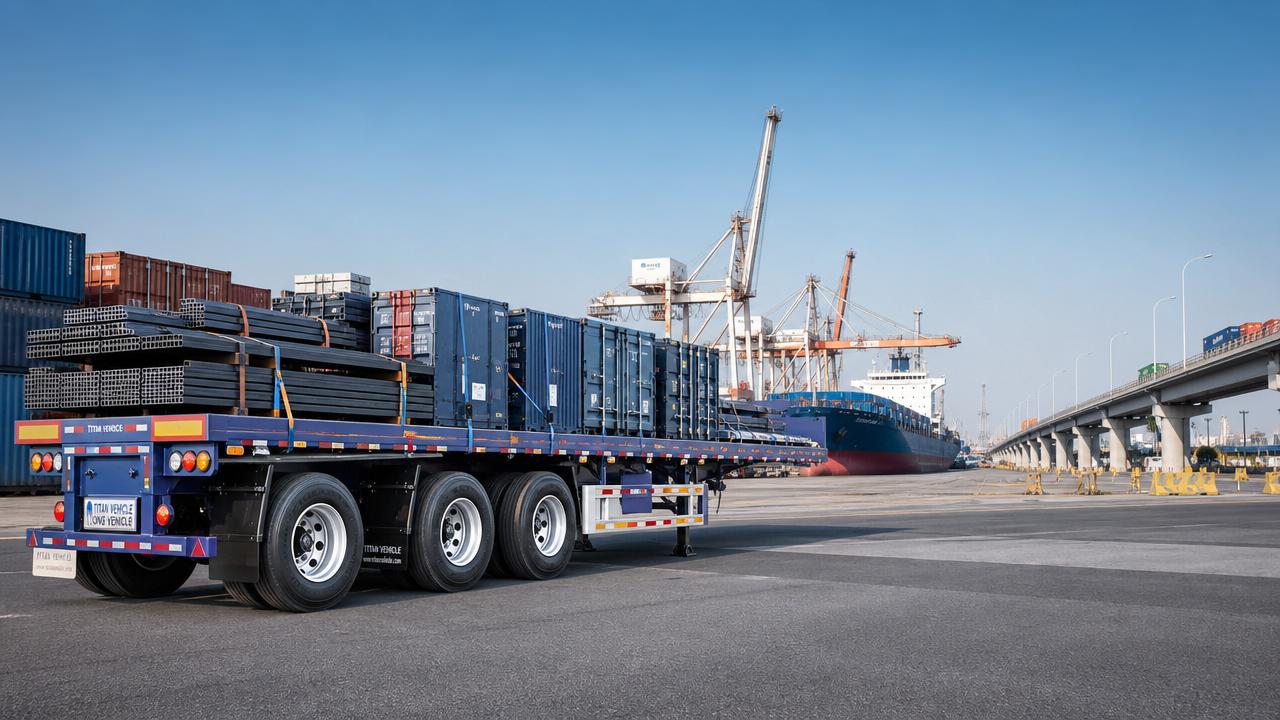
Approving a Flatbed Semi-Trailer purchase requires more than comparing the initial quotation. For finance decision-makers, the real cost depends on specifications, payload requirements, brand reliability, compliance, delivery terms, maintenance support, and long-term resale value. As an authorized exporter of FOTON, SHACMAN, and SINOTRUK commercial vehicles, Shandong Livol Truck International Trade Co., Ltd. helps buyers evaluate total investment clearly, reduce procurement risk, and secure dependable trailer solutions for global operations.
For a finance team, the key question is not only “How much is the trailer?” but “What total cost will this asset create over 3 to 7 years?” A Flatbed Semi-Trailer may operate across ports, mines, construction sites, highways, and cross-border logistics routes, so small specification differences can affect loading efficiency, fuel use, maintenance frequency, and regulatory exposure.
Why the Initial Quote Does Not Show the Full Cost
The first quotation usually covers the base trailer, common components, and standard export preparation. However, a Flatbed Semi-Trailer used for 40-foot containers, machinery transport, steel cargo, or construction materials may require different axle ratings, suspension options, tire configurations, twist locks, and deck reinforcement.
Finance approvers should separate the purchase into at least 5 cost layers: acquisition price, compliance cost, freight and insurance, operating cost, and residual value. Reviewing these layers early can prevent budget overruns after the purchase order is approved.
Common Cost Layers in a Trailer Investment
A well-structured cost review helps procurement, finance, and operations use the same evaluation language. The table below outlines practical cost factors that often influence the real investment value of a Flatbed Semi-Trailer.
The lowest initial quote may not deliver the lowest total cost. A trailer with suitable load capacity, reliable parts, and clear delivery terms can protect operating margins better than a cheaper asset that needs early reinforcement or frequent repairs.
Why Finance Teams Should Ask for a Landed Cost Breakdown
A landed cost breakdown should include trailer price, inland transport, port handling, ocean freight, insurance, customs documentation, destination charges, and local registration preparation if required. Even a 3%-8% difference in logistics expenses may change the approval result for fleet purchases.
Shandong Livol Truck International Trade Co., Ltd. supports buyers with quotation clarification, export documentation, customs clearance coordination, and logistics planning. This reduces the risk of hidden charges appearing after contract confirmation.
Specification Choices That Change Flatbed Semi-Trailer Pricing
A Flatbed Semi-Trailer is a versatile engineering transport asset, but its cost depends heavily on application requirements. Carrying excavators, precast concrete, pipes, containers, or steel coils places different stress on the frame, deck, suspension, and braking system.
Finance approvers should avoid approving a generic trailer specification without checking the load profile. A 12-meter flatbed used for container transport may need twist locks, while machinery transport may require ramps, reinforced beams, and stronger landing gear.
Key Technical Variables to Review
- Axle quantity and rating: common export configurations include 2 or 3 axles, selected according to legal load limits and route conditions.
- Payload capacity: many commercial applications fall within 30-60 tons, but local regulations may limit actual usable load.
- Suspension type: mechanical suspension is cost-effective, while air suspension may improve cargo protection and road compliance.
- Deck structure: flat steel plate, checker plate, or reinforced flooring should match loading equipment and cargo type.
- Brake system: air brake configuration, ABS options, and compatible couplings should match tractor head requirements.
Payload Is a Financial Variable, Not Only a Technical One
If a Flatbed Semi-Trailer carries 5 tons less than planned due to under-specification or local road limits, the operator may need more trips to move the same volume. That directly affects fuel, driver time, tire wear, and delivery schedule.
For heavy engineering logistics, a better frame specification may cost more at purchase but protect revenue capacity over thousands of kilometers. Finance teams should calculate cost per loaded trip instead of only unit purchase price.
Compliance, Delivery Terms, and Import Risk
International buyers face compliance risks that can affect the final cost of a Flatbed Semi-Trailer. Dimensions, lighting, side protection, braking requirements, axle load limits, and documentation rules differ across countries and regions.
A finance approval should include a compliance checklist before funds are released. Missing documents or incompatible specifications can lead to port delays, modification costs, or additional inspection fees after arrival.
Procurement Risk Control Checklist
Before approving a purchase order, finance teams can use the following checklist to verify whether the commercial, technical, and export terms are aligned with the intended operating country.
This checklist is especially useful when one finance department approves trailers for several operating markets. A 3-axle configuration may be suitable in one region but require adjustment in another due to axle load or registration rules.
Delivery Cycle and Inventory Availability
Delivery timing affects working capital and project mobilization. Standard trailer preparation may take 7-20 working days when inventory or semi-finished stock is available, while customized configurations may require 3-6 weeks depending on components.
Because Shandong Livol operates authorized 4S stores across China and maintains sufficient commercial vehicle inventory, buyers can receive clearer supply information and more realistic delivery scheduling before payment approval.
Maintenance, Downtime, and Life-Cycle Cost
A Flatbed Semi-Trailer is often expected to generate revenue for many years. Finance teams should therefore evaluate maintenance intervals, spare part availability, and repair complexity before approving a lower-priced but unfamiliar configuration.
Routine checks usually include tire pressure, brake chamber condition, air pipelines, kingpin wear, landing gear lubrication, suspension bolts, lights, and deck welds. In demanding engineering transport, these inspections may be needed weekly or before each long-haul trip.
Maintenance Items That Influence Operating Budget
- Tires: heavy loads, rough roads, and incorrect pressure can shorten tire life significantly.
- Brakes: regular adjustment and air leakage checks reduce safety risk and emergency repair cost.
- Suspension: leaf springs, bushings, and axle alignment should be monitored under high-frequency operation.
- Frame and deck: weld inspections help identify fatigue before cracks expand under repeated loads.
Downtime Has a Hidden Cost
If a trailer is unavailable for 2 or 3 days during a project peak, the cost may include idle tractor heads, delayed cargo delivery, penalty exposure, and additional subcontracted transport. These losses rarely appear in the original quotation.
A practical approval model should include expected spare parts availability and after-sales response. Shandong Livol’s export team supports customers through vehicle selection, customization, documentation, logistics coordination, and after-sales communication.
How Finance Decision-Makers Can Build a Strong Approval Model
A strong approval model converts operational requirements into financial indicators. Instead of approving a Flatbed Semi-Trailer based on a single supplier price, decision-makers can compare configurations through 6 measurable criteria.
A 6-Step Evaluation Framework
- Define cargo type, average payload, route condition, and annual mileage.
- Confirm legal limits, import requirements, and registration constraints in the destination market.
- Compare at least 2 suitable technical configurations, not only 2 price offers.
- Request a landed cost estimate including freight, insurance, documents, and local charges.
- Estimate maintenance and downtime exposure over a 3-year operating horizon.
- Review resale potential, component standardization, and supplier support capability.
This framework allows finance, procurement, and operations teams to discuss the same facts. It also helps prevent overbuying an unnecessarily heavy specification or underbuying a trailer that cannot handle real site conditions.
When a Higher Purchase Price May Be Justified
A higher purchase price may be reasonable when it includes reinforced structure, better braking compatibility, practical customization, faster delivery, or more reliable after-sales support. The benefit should be linked to measurable operating outcomes.
For example, if stronger suspension reduces unplanned repair events from 4 times per year to 2 times per year in rough-road service, the extra upfront cost may be recovered through fewer delays and lower emergency maintenance spending.
Why Work with Shandong Livol for Trailer Procurement
Shandong Livol Truck International Trade Co., Ltd. is based in Shandong, China, and focuses on commercial vehicle export with strong industry resources and global trade experience. The company is an official authorized domestic and overseas dealer for FOTON, SHACMAN, and SINOTRUK.
For buyers evaluating a Flatbed Semi-Trailer, authorized dealer capability matters because it improves access to vehicle resources, reliable documentation, coordinated export processes, and professional communication throughout procurement.
Support Across the Purchase Process
Shandong Livol provides full-process support covering vehicle selection, trailer customization, document preparation, customs clearance coordination, and logistics. This is valuable when finance teams need clear approval materials within 3-5 internal review steps.
Practical Advantages for Finance and Procurement Teams
- Clearer cost visibility from specification confirmation to export delivery.
- Professional guidance on matching trailer design with tractor heads and cargo needs.
- Stable supply support through authorized stores and available commercial vehicle inventory.
- After-sales communication that helps reduce uncertainty after shipment and delivery.
These advantages do not replace internal due diligence, but they make decision-making more efficient. A finance approver can review clearer documents, compare practical alternatives, and understand what each cost item means.
Final Purchasing Guidance
A Flatbed Semi-Trailer cost review should balance purchase price, payload suitability, compliance, delivery terms, maintenance planning, and long-term resale value. The right decision is usually the one that lowers risk across the full asset life cycle.
For finance decision-makers, the most reliable approval path is to request a detailed specification, landed cost breakdown, compliance review, and service plan before confirming the purchase. This creates a stronger basis for capital allocation.
If your team is evaluating a Flatbed Semi-Trailer for construction logistics, container transport, machinery delivery, or heavy cargo operations, Shandong Livol can help compare suitable solutions and prepare export-ready procurement information. Contact us to obtain a customized quotation, discuss product details, and explore dependable commercial vehicle solutions for your market.
Search Starts Here