News
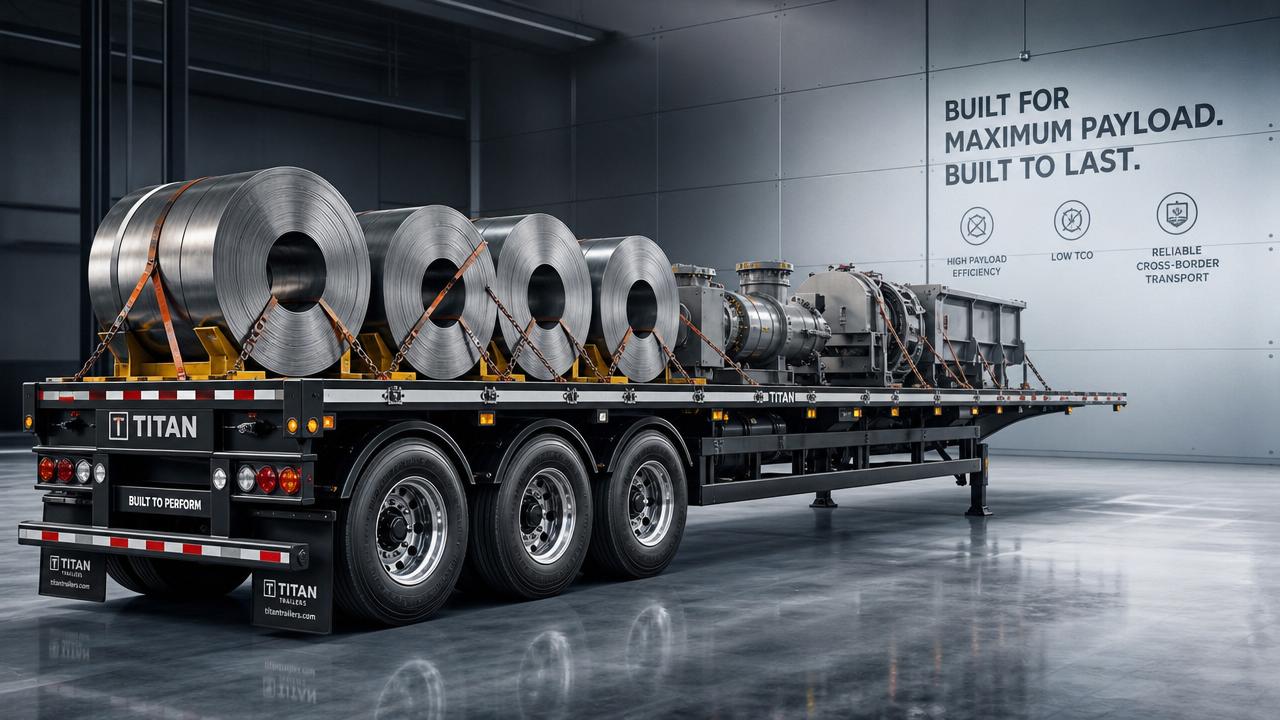
Flatbed Semi-Trailer cost differences rarely come down to purchase price alone. For financial decision-makers, total ownership is shaped by specification choices, payload efficiency, maintenance cycles, parts availability, compliance needs, and resale value. Understanding these cost drivers helps businesses compare options more accurately, reduce lifecycle risk, and invest in trailers that support both operational reliability and long-term budget control.
Why does one Flatbed Semi-Trailer cost more to own than another?
In engineering vehicle operations, a Flatbed Semi-Trailer is rarely a simple transport asset. It is a revenue tool tied directly to payload planning, route conditions, loading methods, downtime exposure, and fleet utilization. Two trailers with similar selling prices can produce very different ownership results over three to five years.
For finance approvers, the key question is not only “What is the unit price?” but also “What will this trailer cost us per operating month, per delivered ton, and per year of service?” That wider lens often reveals hidden cost gaps.
- Higher tare weight can reduce legal payload and increase cost per trip.
- Low-grade steel or poor welding may shorten service life and raise repair frequency.
- Non-standard axle, suspension, or braking components can complicate parts supply abroad.
- Incomplete export documentation or compliance mismatch may delay customs clearance and delivery.
This is why a proper Flatbed Semi-Trailer cost review should combine technical suitability, compliance, service support, and lifecycle economics. Purchase approval becomes stronger when procurement and finance evaluate the trailer as an operating system, not just a SKU.
What total ownership usually includes
A practical cost model for a Flatbed Semi-Trailer should include acquisition cost, freight and import charges, registration and compliance expenses, maintenance, tires, wear parts, downtime, and expected residual value. In international procurement, export execution quality also matters because delay costs can materially affect project schedules.
Which cost drivers matter most for finance approval?
The table below helps financial decision-makers compare major Flatbed Semi-Trailer cost drivers beyond list price. It focuses on the items that most often affect cash flow, operating stability, and lifecycle return in engineering vehicle fleets.
The main takeaway is simple: the most visible cost is not always the largest cost. In many engineering transport projects, lost operating days, weak payload efficiency, and difficult maintenance create a bigger financial gap than the original purchase discount.
How route and load profile change the answer
A Flatbed Semi-Trailer used for steel coils, machinery, construction materials, or containerized heavy cargo will face different stress patterns. Poor road surfaces, repeated side loading, and uneven weight distribution can quickly expose a low-cost build. Finance teams should ask operations for real route data before approving a specification.
- Confirm average cargo type, loading method, and weight concentration points.
- Check road quality, haul distance, and expected annual utilization.
- Match deck design, axle layout, and suspension type to the operating profile.
How do specification choices change Flatbed Semi-Trailer ownership cost?
Specification decisions shape lifecycle cost more than many buyers expect. A Flatbed Semi-Trailer that looks cheaper on paper may become more expensive if the deck is unsuitable for loading equipment, the brake system is hard to service locally, or the frame is oversized for the real job and reduces payload efficiency.
Key specification areas to review
- Deck length and width: must fit cargo dimensions without creating excess dead weight.
- Main beam and cross-member design: should match load concentration and road severity.
- Suspension type: mechanical systems may favor simplicity, while other options may better support ride and cargo stability depending on route.
- Axle configuration: influences legal load distribution, maintenance intervals, and spare parts planning.
- Brake and electrical system: impacts safety, inspection readiness, and field service convenience.
Finance approvers should push for a specification sheet linked to actual use. If engineering, procurement, and operations cannot explain why each core component was selected, cost overruns often appear later in the form of repairs, underutilization, or compliance revisions.
The comparison below shows how common specification paths can change the cost logic of a Flatbed Semi-Trailer purchase.
This kind of side-by-side review helps finance teams ask better questions. The objective is not to chase the lowest specification, but to purchase the right cost structure for the expected service environment.
What procurement mistakes create hidden cost gaps?
Many Flatbed Semi-Trailer purchases go wrong before manufacturing begins. The problem is usually not price negotiation. It is incomplete requirement definition. When the buyer approves a trailer without confirming load pattern, legal constraints, spare part channels, or destination compliance, later corrections become expensive.
Common cost-raising mistakes
- Approving based on brochure dimensions instead of cargo and route analysis.
- Ignoring local axle load regulations and registration requirements.
- Choosing a low purchase price without checking parts support in the destination market.
- Underestimating delivery timing risk linked to production scheduling and export documentation.
- Comparing quotations that do not include the same technical content.
For finance approvers, a normalized quotation sheet is essential. Every Flatbed Semi-Trailer offer should be compared using the same structure, including frame design, axle brand level, suspension details, tires, landing gear, electrical system, paint process, compliance documents, and delivery terms.
A practical approval checklist
- Verify operational requirement data from the end user, not only the buying office.
- Require a detailed specification and drawing confirmation before deposit release.
- Ask for expected maintenance points and key wear parts list.
- Confirm export documents, customs support scope, and logistics responsibilities.
- Estimate residual value and replacement timing under actual fleet policy.
How do compliance, logistics, and service support affect total ownership?
In cross-border engineering vehicle procurement, ownership cost is shaped by more than manufacturing quality. A Flatbed Semi-Trailer can be competitively built yet still become expensive if shipment coordination is weak, customs paperwork is incomplete, or the buyer receives limited technical follow-up after arrival.
This is where supplier capability matters. Shandong Livol Truck International Trade Co., Ltd. operates as a professional commercial vehicle exporter with strong domestic channel resources, sufficient inventory support, and experience in full-process export services. For buyers, that reduces coordination risk across selection, customization, documentation, customs clearance, and logistics.
The following table shows how service execution can influence Flatbed Semi-Trailer ownership cost even when product specifications are similar.
For finance teams, the value of a capable exporter is measurable. Faster delivery, fewer document issues, better parts planning, and coordinated after-sales support all reduce soft costs that are often ignored in headline pricing discussions.
Which Flatbed Semi-Trailer setup fits different engineering transport scenarios?
Not every engineering transport task needs the same Flatbed Semi-Trailer configuration. Matching the trailer to the work profile is one of the most effective ways to control total ownership. This is especially important when budgets are tight and fleet utilization must stay high.
Typical scenario-based guidance
- Long-distance highway hauling: prioritize payload efficiency, standardized running gear, and easy parts replacement.
- Mixed road construction logistics: focus on structural durability, brake reliability, and deck practicality for repeated loading.
- Heavy machinery movement: verify concentrated load handling, beam design, and axle distribution carefully.
- Cross-border regional trade: place extra attention on documentation, local registration compatibility, and delivery coordination.
Because Shandong Livol Truck International Trade Co., Ltd. serves global buyers and works with established Chinese commercial vehicle resources, the company can support customers who need not only trailer supply but also coordinated transport solutions around timing, customization, and export execution.
FAQ: what do financial decision-makers usually ask about Flatbed Semi-Trailer cost?
Is the lowest purchase price ever the best choice?
Usually not. A lower initial quotation for a Flatbed Semi-Trailer may hide higher maintenance frequency, lower payload efficiency, weaker durability, or poor parts accessibility. Finance teams should compare annual operating cost and expected service life, not just acquisition price.
What documents or compliance points should be checked before approval?
The buyer should verify destination-market registration requirements, axle and dimension limits, commercial invoice and packing accuracy, shipping arrangements, and any applicable inspection or conformity needs. Even when standards differ by country, early confirmation reduces rework cost and clearance delays.
How can we compare two Flatbed Semi-Trailer quotations fairly?
Use a normalized comparison sheet. Make sure both suppliers quote the same deck size, frame design level, axle and suspension specification, tire grade, electrical configuration, paint process, spare parts scope, and delivery terms. Without this, the cheaper quotation may not represent the same product value.
When should customization be approved?
Customization should be approved when it solves a real operating requirement such as concentrated heavy cargo, special loading equipment, local regulatory constraints, or unloading efficiency. It should not be added without a measurable business reason, because each customization can affect lead time, cost, and maintenance simplicity.
Why choose us for Flatbed Semi-Trailer sourcing and export support?
For financial approvers, the right supplier helps reduce both visible and hidden cost. Shandong Livol Truck International Trade Co., Ltd., based in Shandong, China, provides structured support across the full procurement chain. As an authorized domestic and overseas dealer for FOTON, SHACMAN, and SINOTRUK, with multiple authorized 4S stores and sufficient inventory resources, the company is positioned to support stable supply and faster delivery coordination.
Its professional export team can assist with vehicle selection, Flatbed Semi-Trailer specification confirmation, customization discussion, documentation preparation, customs clearance coordination, and logistics arrangement. This integrated process helps buyers avoid fragmented communication and lowers the risk of delay, mismatch, or avoidable administrative cost.
- Request parameter confirmation based on your cargo type, route, and legal load conditions.
- Discuss product selection if you need to compare Flatbed Semi-Trailer options for different budgets.
- Ask about delivery cycle planning, inventory availability, and export schedule coordination.
- Review customization needs, documentation scope, and destination compliance concerns before placing the order.
- Start a quotation discussion with a clearer ownership-cost framework, not just a list-price target.
If your team is evaluating Flatbed Semi-Trailer procurement for engineering transport, a more accurate cost decision starts with the right technical and commercial questions. A structured consultation can help you confirm specifications, compare options, estimate lifecycle impact, and align the purchase with budget control and operational reliability.
Search Starts Here