
News
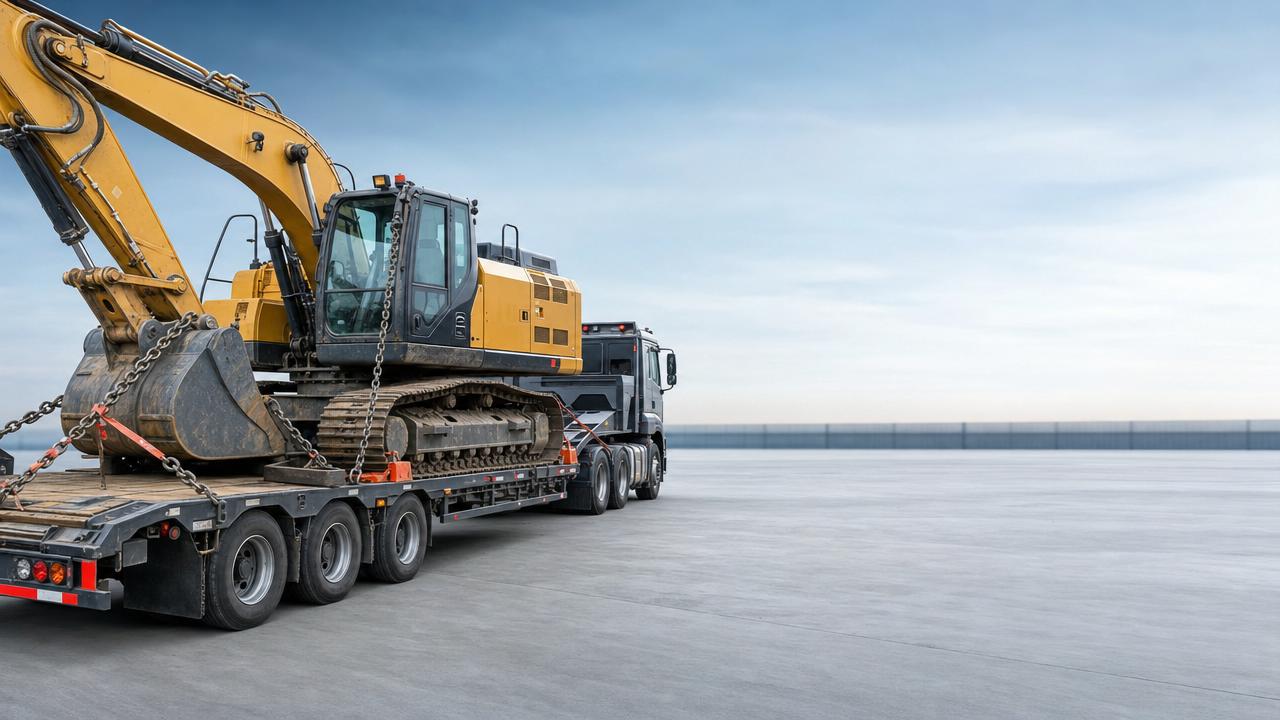
A Flatbed Semi-Trailer is essential for moving heavy machinery, construction materials, and oversized cargo, yet loading risks are often noticed too late.
When hidden hazards affect balance, fastening, deck condition, or route compliance, cargo damage and safety incidents can follow quickly.
Understanding these overlooked risks helps improve inspection routines, transport reliability, and overall control in engineering vehicle logistics.
Basic Role of a Flatbed Semi-Trailer in Engineering Transport
A Flatbed Semi-Trailer has an open platform without side walls or a roof.
This structure allows flexible loading of excavators, steel structures, pipes, containers, generators, and prefabricated components.
Compared with enclosed trailers, a Flatbed Semi-Trailer offers easier crane loading and faster access from multiple directions.
However, that openness also increases exposure to shifting, weather, impact, and improper restraint.
A safe loading result depends on trailer capacity, axle layout, deck strength, tie-down points, and cargo geometry.
Small loading errors may become serious when the Flatbed Semi-Trailer travels across uneven roads or long-distance corridors.
Industry Background and Current Safety Concerns
Engineering vehicle transport is becoming heavier, longer, and more schedule-sensitive.
Projects often require rapid delivery of construction machines, mining equipment, bridge materials, and industrial modules.
In this environment, the Flatbed Semi-Trailer is valued for adaptability and strong loading efficiency.
Still, pressure for fast dispatch may reduce attention to detailed inspection and correct securing practices.
These signals show why Flatbed Semi-Trailer loading control should be treated as a system, not a final checkpoint.
Weight Distribution Risks Often Missed
Poor weight distribution is one of the most common Flatbed Semi-Trailer loading risks.
Cargo may look stable while axle loads are uneven or beyond legal limits.
Overloading the front area can increase tractor stress and reduce steering performance.
Excess rear loading may reduce traction and create dangerous braking behavior.
Side-to-side imbalance is also serious, especially for tall machines and uneven road surfaces.
- Confirm gross vehicle weight before dispatch.
- Check axle load limits for each operating region.
- Place the heaviest cargo near the structural load center.
- Avoid high side loading on one edge of the deck.
- Recheck balance after loading additional attachments.
A Flatbed Semi-Trailer should never be evaluated only by its total rated payload.
Real safety depends on how that payload is positioned across the frame and axles.
Cargo Securing Errors and Restraint Fatigue
Cargo securing is often checked visually, but visual checks are not enough.
Chains, straps, binders, wedges, and edge protectors must match cargo weight and shape.
A Flatbed Semi-Trailer carrying machinery needs restraint against forward, rearward, lateral, and vertical movement.
One common error is securing only the visible side of the machine.
Another error is using worn straps on rough steel edges without protection.
Restraint fatigue also develops during long trips due to vibration, road shock, and cargo settling.
Key securing checks
- Inspect chains, hooks, ratchets, and anchor points before use.
- Use direct tie-downs for wheeled or tracked machinery.
- Install wheel chocks when machines have rolling potential.
- Protect straps from sharp edges and hot surfaces.
- Re-tighten restraints after the first travel interval.
A Flatbed Semi-Trailer load should be secured for real road conditions, not only yard movement.
Deck Condition, Loading Surface, and Contact Pressure
The trailer deck is sometimes treated as a simple platform.
In practice, deck condition directly affects safety, cargo stability, and maintenance cost.
Cracked flooring, loose boards, corrosion, oil contamination, and damaged cross members all create loading risk.
Heavy equipment may concentrate pressure through tracks, tires, landing legs, or steel feet.
A Flatbed Semi-Trailer deck must spread that pressure safely across the support structure.
If contact points are too narrow, local deformation or cargo movement may occur.
- Use timber, steel plates, or mats for pressure distribution.
- Remove oil, mud, and loose material before loading.
- Check deck locking points and side rail integrity.
- Avoid placing heavy legs over weak deck sections.
Deck inspection is especially important for used trailers or high-frequency construction transport.
Dimensional Compliance and Oversized Cargo Concerns
Oversized cargo is a major reason for choosing a Flatbed Semi-Trailer.
However, open loading does not remove regulatory limits on height, length, width, and axle weight.
Over-height machines may hit bridges, power lines, trees, or facility gates.
Over-width loads may require escorts, warning signs, special permits, and selected travel windows.
A Flatbed Semi-Trailer loading plan should include measurement after the cargo is fully secured.
Attachments, buckets, booms, and spare parts may change the final transport profile.
Trailer Selection and Specification Matching
Many loading risks begin before the cargo reaches the yard.
If the Flatbed Semi-Trailer specification is poorly matched, loading control becomes difficult.
Key factors include payload rating, frame design, axle quantity, suspension type, kingpin position, and deck length.
For road construction equipment, ramp compatibility and ground clearance are also important.
For steel transport, side stakes, rope hooks, and reinforced edges may be required.
For container movement, twist lock arrangement should be checked against actual container sizes.
A reliable Flatbed Semi-Trailer should support the intended cargo instead of forcing unsafe compromises.
Practical Loading Inspection Process
A structured inspection process reduces missed details and improves accountability.
The process should cover the trailer, cargo, lifting method, restraint equipment, documents, and route requirements.
- Confirm cargo weight, dimensions, center of gravity, and lifting points.
- Inspect the Flatbed Semi-Trailer frame, deck, tires, brakes, lights, and landing gear.
- Verify rated capacity, axle limits, and regional transport rules.
- Position cargo according to balance and structural support requirements.
- Apply suitable chains, straps, binders, chocks, mats, and edge protectors.
- Measure final height, width, length, and overhang after securing.
- Record photographs, checklist results, permit details, and driver confirmation.
- Schedule re-inspection after the first stop and at planned intervals.
This process turns Flatbed Semi-Trailer loading from experience-based judgment into repeatable control.
Business Value of Better Loading Control
Better loading control protects more than the cargo itself.
It reduces claims, repairs, roadside delays, regulatory penalties, and project schedule disruption.
A well-managed Flatbed Semi-Trailer operation also improves equipment utilization and driver confidence.
For international vehicle supply, loading safety supports export quality and delivery reputation.
Shandong Livol Truck International Trade Co., Ltd. provides commercial vehicle export solutions from Shandong, China.
The company is an authorized domestic and overseas dealer for FOTON, SHACMAN, and SINOTRUK.
Sufficient inventory, authorized 4S stores, and export experience support stable supply and fast delivery.
Vehicle selection, customization, documentation, customs clearance, logistics, and after-sales support can be coordinated through one process.
For Flatbed Semi-Trailer projects, this integrated support helps match specifications with real transport tasks.
Action Steps for Safer Flatbed Semi-Trailer Loading
The most effective safety improvement is to identify risks before loading starts.
Confirm whether the cargo, route, trailer, and securing equipment are compatible.
Use written checklists instead of relying only on memory or visual judgment.
Choose a Flatbed Semi-Trailer specification based on payload, deck structure, axle layout, and operating environment.
When cargo includes heavy machinery or oversized construction materials, request professional specification review before confirmation.
For reliable commercial vehicle sourcing and export support, Shandong Livol Truck can assist with practical trailer selection and logistics coordination.
A carefully selected Flatbed Semi-Trailer, combined with disciplined loading control, creates safer and more predictable engineering transport.
Search Starts Here