
News
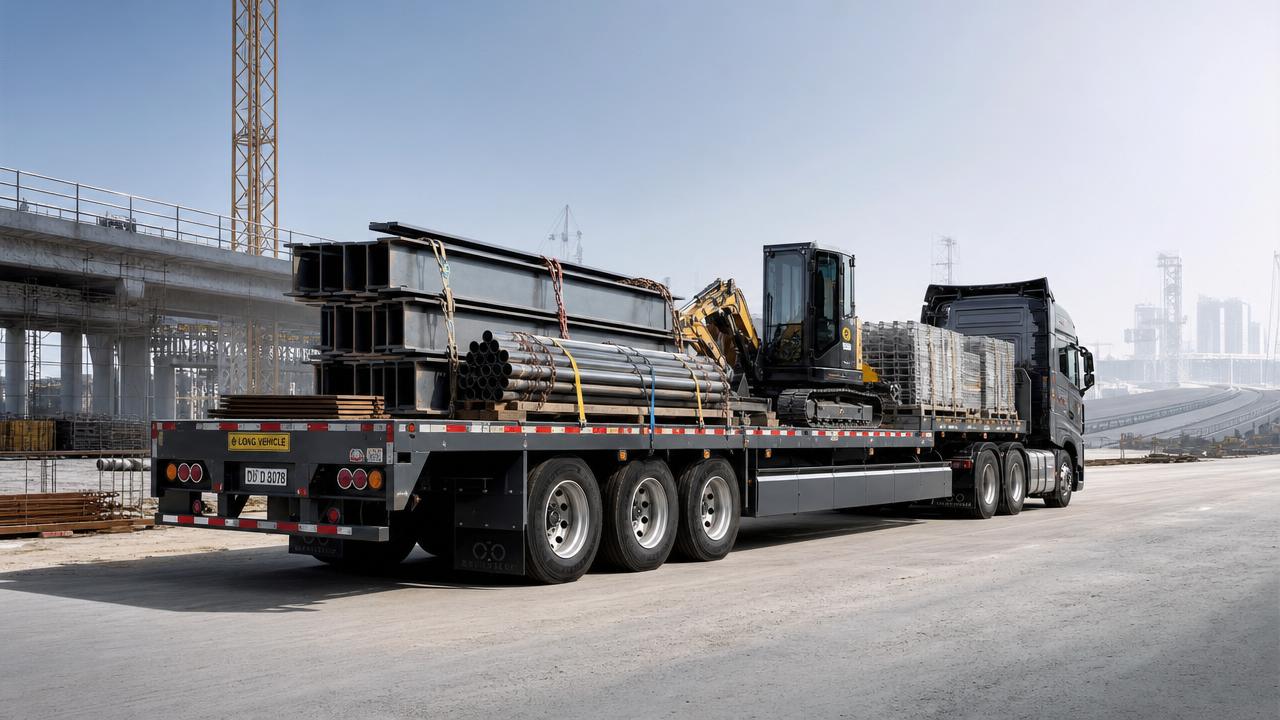
As construction logistics evolves in 2026, the Flatbed Semi-Trailer is becoming a strategic asset for companies focused on efficiency, payload flexibility, and delivery reliability. For business decision-makers, understanding the latest trailer trends is essential to reducing transport costs, improving project coordination, and securing long-term operational value in increasingly demanding engineering and infrastructure markets.
In engineering vehicle transport, the Flatbed Semi-Trailer now serves more than basic hauling. It supports steel, machinery, formwork, pipes, containers, and oversized project cargo.
The 2026 market is shaped by stricter efficiency targets, digital fleet control, changing road regulations, and pressure to reduce downtime. These changes directly affect trailer choice.
What makes the Flatbed Semi-Trailer more important in 2026 construction logistics?
Construction supply chains are becoming faster, less predictable, and more cost-sensitive. A Flatbed Semi-Trailer fits this environment because it handles mixed cargo types with fewer loading restrictions.
Compared with enclosed transport, flatbed equipment simplifies crane loading, side access, and unloading at incomplete job sites. That flexibility helps reduce waiting time.
In 2026, project schedules are tighter. Delays caused by unsuitable transport equipment create chain reactions across labor, machinery, and material planning.
A modern Flatbed Semi-Trailer also supports better load planning. Operators can move beams, rebar bundles, prefabricated sections, and heavy equipment using one adaptable platform.
This versatility matters in road construction, bridge work, industrial plants, energy projects, and urban infrastructure programs where cargo dimensions often change between deliveries.
Key drivers behind the trend
- Growing use of modular and prefabricated construction materials
- Higher demand for faster loading and unloading cycles
- Need to lower empty miles through multi-purpose trailer deployment
- Better alignment with heavy-duty engineering vehicle fleets
- Wider adoption of telematics and cargo visibility tools
Which 2026 Flatbed Semi-Trailer design trends matter most?
Not every trend has equal business value. The most useful changes improve payload efficiency, durability, safety, and compatibility with construction logistics operations.
1. Lightweight but stronger structures
Manufacturers are using higher-strength steel and optimized frame engineering. This lowers trailer tare weight while preserving structural integrity under demanding road conditions.
A lighter Flatbed Semi-Trailer can increase legal payload capacity. Over time, that may improve transport economics on repetitive project routes.
2. Smarter load securing systems
Integrated lashing points, adjustable stakes, anti-slip deck options, and easier tie-down layouts are becoming standard. These features improve safety and reduce loading errors.
3. Trailer telematics integration
2026 fleets increasingly want GPS tracking, axle load monitoring, tire pressure alerts, and maintenance reminders. A connected Flatbed Semi-Trailer supports planning and uptime control.
4. Better corrosion resistance
Construction logistics often involves mud, cement dust, water exposure, and rough sites. Improved coatings and anti-corrosion treatment extend service life and reduce refurbishment frequency.
5. Modular specification options
Buyers increasingly prefer configurable axle layouts, deck lengths, suspension systems, and side accessories. This helps align each Flatbed Semi-Trailer with actual project cargo requirements.
How should a Flatbed Semi-Trailer be selected for construction applications?
Selection should begin with cargo reality, not brochure specifications. The right trailer depends on load type, route profile, handling equipment, and local compliance requirements.
Start with these practical checks
- Define the typical cargo dimensions and weight range.
- Check whether loads are palletized, bundled, loose, or oversized.
- Evaluate job site access, turning radius, and ground conditions.
- Match axle configuration to legal limits and road distribution.
- Review tractor head compatibility, especially fifth wheel height.
- Confirm service support and spare parts availability.
For example, transporting steel coils, precast slabs, and mini excavators may require different deck reinforcement and securing arrangements, even within the same Flatbed Semi-Trailer family.
Suspension choice also matters. Mechanical suspension may offer simpler maintenance, while air suspension can support cargo protection and ride stability on mixed routes.
In cross-border engineering projects, documentation readiness and homologation support should also influence procurement decisions. Equipment suitability alone is not enough.
What are the main differences between standard and heavy-duty Flatbed Semi-Trailer options?
This is one of the most common comparison questions. The answer depends on whether daily operations prioritize versatility, extreme payloads, or specialized machinery transport.
Choosing the wrong category creates either underutilization or premature wear. The best approach is to compare actual annual cargo patterns, not occasional exceptions.
What risks and common mistakes should be avoided?
Many transport problems come from specification mismatch rather than product defects. A Flatbed Semi-Trailer performs well when operating conditions are understood clearly in advance.
Frequent mistakes in construction logistics
- Buying only on price without lifecycle cost analysis
- Ignoring deck height and loading equipment compatibility
- Underestimating legal axle load requirements
- Using weak load securing methods for irregular cargo
- Overlooking after-sales support and spare part supply
- Assuming one trailer setup fits every project type
Another risk is poor supplier evaluation. Exported engineering vehicle equipment should come with clear documentation, inspection standards, and realistic delivery schedules.
Reliable partners reduce uncertainty during customization, shipping, customs handling, and technical follow-up. That matters especially for international construction fleets.
How do cost, supply reliability, and export support influence the final decision?
In 2026, the purchase price of a Flatbed Semi-Trailer is only one part of the equation. Availability, customization speed, compliance support, and long-term service affect total value.
Stable supply is especially important for engineering projects with fixed mobilization windows. Delayed equipment delivery may disrupt whole transport plans.
Shandong Livol Truck International Trade Co., Ltd., based in Shandong, China, provides integrated support for commercial vehicle export. Its strength comes from industry experience and structured delivery capability.
As the official authorized domestic and overseas dealer for FOTON, SHACMAN and SINOTRUK, the company operates many authorized 4S stores across China and maintains sufficient inventory.
That inventory advantage supports stable supply and faster delivery for engineering vehicle and trailer-related transport solutions connected to project logistics needs.
Its professional export team offers full-process services, including vehicle selection, customization, documentation, customs clearance, and logistics coordination.
For international buyers evaluating a Flatbed Semi-Trailer or broader construction transport fleet, this kind of end-to-end support lowers transaction risk and improves execution speed.
Quick decision guide
The 2026 outlook shows that the Flatbed Semi-Trailer is no longer a simple transport platform. It is a productivity tool for modern construction logistics.
The strongest results come from matching trailer design with cargo profile, route conditions, compliance needs, and support capability. Trend awareness only matters when translated into operational choices.
If the goal is to improve engineering vehicle transport efficiency, reduce delivery risk, and secure dependable export execution, the next step is to review real project requirements in detail.
A well-selected Flatbed Semi-Trailer, backed by stable supply and professional service, can create measurable value across construction schedules, fleet utilization, and total transport cost.
Search Starts Here