
News
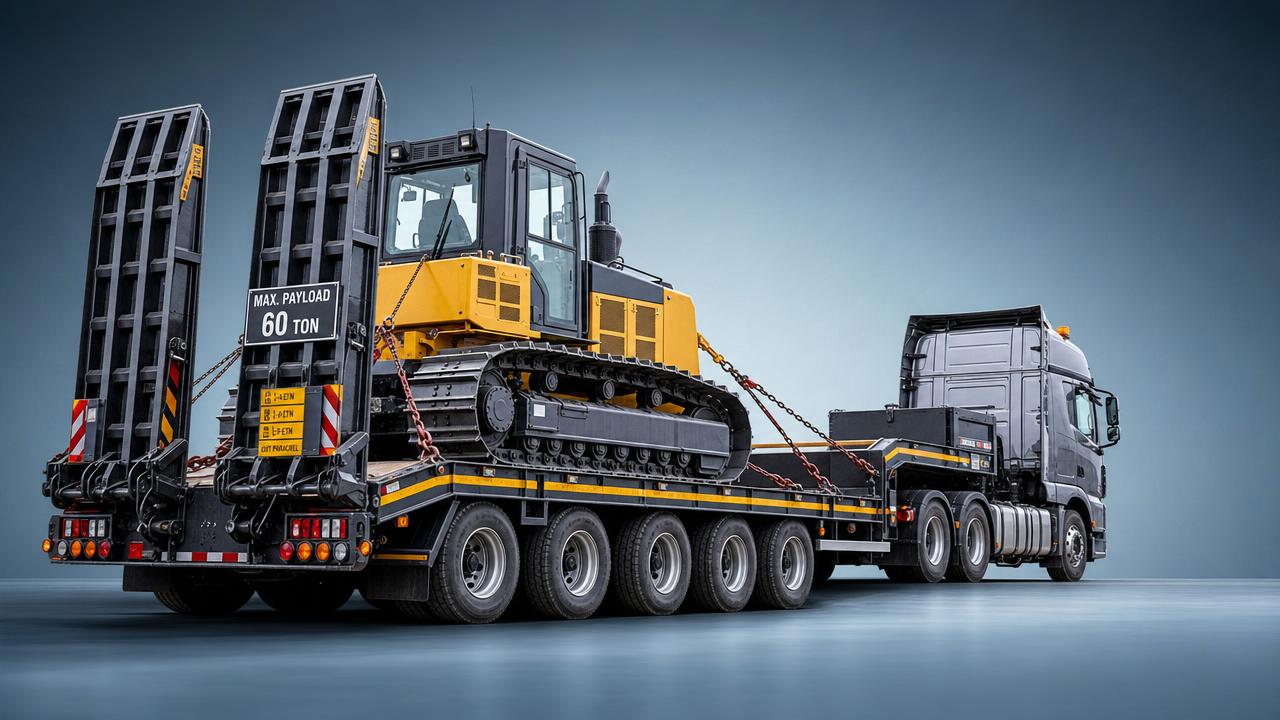
Understanding Flatbed Semi-Trailer load limits is becoming more important as freight tasks grow heavier, routes become tighter, and safety expectations rise across commercial vehicle operations.
A Flatbed Semi-Trailer is not defined by deck length alone. Its legal capacity, structural rating, axle setup, and cargo balance directly shape road safety, maintenance cost, and transport reliability.
For engineering vehicle transport, small specification gaps can create major risks. Overloaded decks, weak tie-down planning, or uneven axle pressure often lead to tire stress, brake fade, frame fatigue, and unstable handling.
This article reviews the key trends affecting Flatbed Semi-Trailer load limits, explains why specifications matter more today, and outlines practical points that support safer fleet decisions.
Why Flatbed Semi-Trailer Load Limits Are Receiving More Attention
Road safety standards are tightening in many regions. Weight enforcement is becoming more digital, more frequent, and more precise through weigh stations, onboard monitoring, and roadside inspections.
At the same time, transported equipment is becoming more diverse. Construction machinery, steel products, containers, and oversized cargo place different stress patterns on every Flatbed Semi-Trailer configuration.
This shift means old assumptions about payload are no longer enough. Safe operation now depends on matching axle ratings, suspension capacity, deck design, and cargo geometry to actual route conditions.
Another trend is lifecycle cost control. Fleets increasingly track tire wear, braking efficiency, fuel consumption, and structural repairs, all of which are strongly influenced by Flatbed Semi-Trailer loading practice.
The Main Forces Driving Safer Load Limit Decisions
Several industry forces explain why Flatbed Semi-Trailer specifications now receive closer review during planning, inspection, and export selection.
Key Flatbed Semi-Trailer Specs That Now Matter More Than Before
The safe load limit of a Flatbed Semi-Trailer depends on combined specifications. Looking at gross payload alone can hide critical weaknesses in actual road performance.
Axle Rating and Axle Spacing
Axle rating determines how much weight each axle group can legally and safely carry. Axle spacing also affects legal compliance across different road systems.
If cargo sits too far forward or too far back, one axle group may exceed limits even when total trailer weight seems acceptable.
Deck Strength and Concentrated Load Capacity
A Flatbed Semi-Trailer must resist both evenly distributed and concentrated loads. Engineering equipment often applies heavy pressure through tracks, outriggers, or point contact areas.
Deck material, crossmember spacing, beam design, and floor thickness all influence whether the trailer can carry dense cargo without permanent deformation.
Suspension and Tire Capacity
Suspension type affects stability, vibration control, and axle load sharing. Tire load index also plays a major role in safe Flatbed Semi-Trailer performance.
When tire capacity is mismatched to axle rating, the real operating limit may be lower than the stated trailer specification.
Kingpin Load and Tractor Matching
Trailer safety also depends on the tractor. Improper kingpin load transfer can overload the drive axle, reduce steering control, or create poor braking balance.
A Flatbed Semi-Trailer should always be evaluated as part of the full vehicle combination, not as a separate platform.
How These Changes Affect Daily Transport Operations
The practical impact is visible across loading, route planning, maintenance, and inspection. Load limits are no longer a paperwork issue. They affect real operating outcomes every day.
A correctly specified Flatbed Semi-Trailer improves lane stability, shortens braking risk under heavy conditions, and reduces abnormal frame twist on uneven roads.
- Loading teams need more accurate cargo placement standards.
- Inspection routines must verify actual axle pressure, not only gross mass.
- Maintenance cycles become more predictable when overload events are reduced.
- Export vehicle selection must reflect destination road regulations.
For cross-border commercial vehicle projects, specification mismatch can create delays, fines, and reduced service life. That makes pre-delivery technical review far more valuable than before.
The Most Important Checkpoints for Load Limit Control
Safe Flatbed Semi-Trailer use depends on disciplined control points before dispatch, during loading, and throughout operation.
- Confirm gross vehicle weight rating, payload rating, and each axle limit.
- Review deck design for concentrated cargo loads, not only general freight.
- Measure cargo center of gravity before final placement.
- Check tire specification, inflation condition, and matching load index.
- Verify suspension status, brake function, and frame integrity.
- Assess route limits including bridges, gradients, and local axle laws.
- Use compliant tie-down points that match cargo mass and movement risk.
These checkpoints help prevent the most common Flatbed Semi-Trailer safety failures: axle overload, structural fatigue, sway, tire overheating, and cargo shift.
What to Prioritize When Evaluating Future Flatbed Semi-Trailer Demand
The market is moving toward specification-based purchasing and export planning. Buyers increasingly compare not just price, but usable payload under real compliance conditions.
This is especially relevant in engineering vehicle logistics, where cargo weight distribution changes from project to project and standard assumptions quickly become unsafe.
A Practical Response for Safer Commercial Vehicle Operations
A stronger response starts with better technical screening. Flatbed Semi-Trailer decisions should combine structural data, operating environment, and compliance requirements from the beginning.
- Create a load matrix based on cargo type, weight concentration, and route limits.
- Standardize inspection items for axles, deck condition, tires, brakes, and tie-down points.
- Review actual legal load capacity instead of brochure payload alone.
- Work with experienced commercial vehicle exporters for configuration support.
Shandong Livol Truck International Trade Co., Ltd., based in Shandong, China, supports global commercial vehicle supply with strong inventory, export experience, and full-process service.
As an authorized dealer for FOTON, SHACMAN and SINOTRUK, the company provides vehicle selection, customization, documentation, customs clearance, logistics coordination, and after-sales support.
For projects involving a Flatbed Semi-Trailer, dependable technical communication helps reduce configuration errors and supports safer, more efficient transport outcomes.
The next step is simple: review current trailer specifications against actual cargo and road conditions, then upgrade any weak point before it becomes a safety issue.
Search Starts Here