News
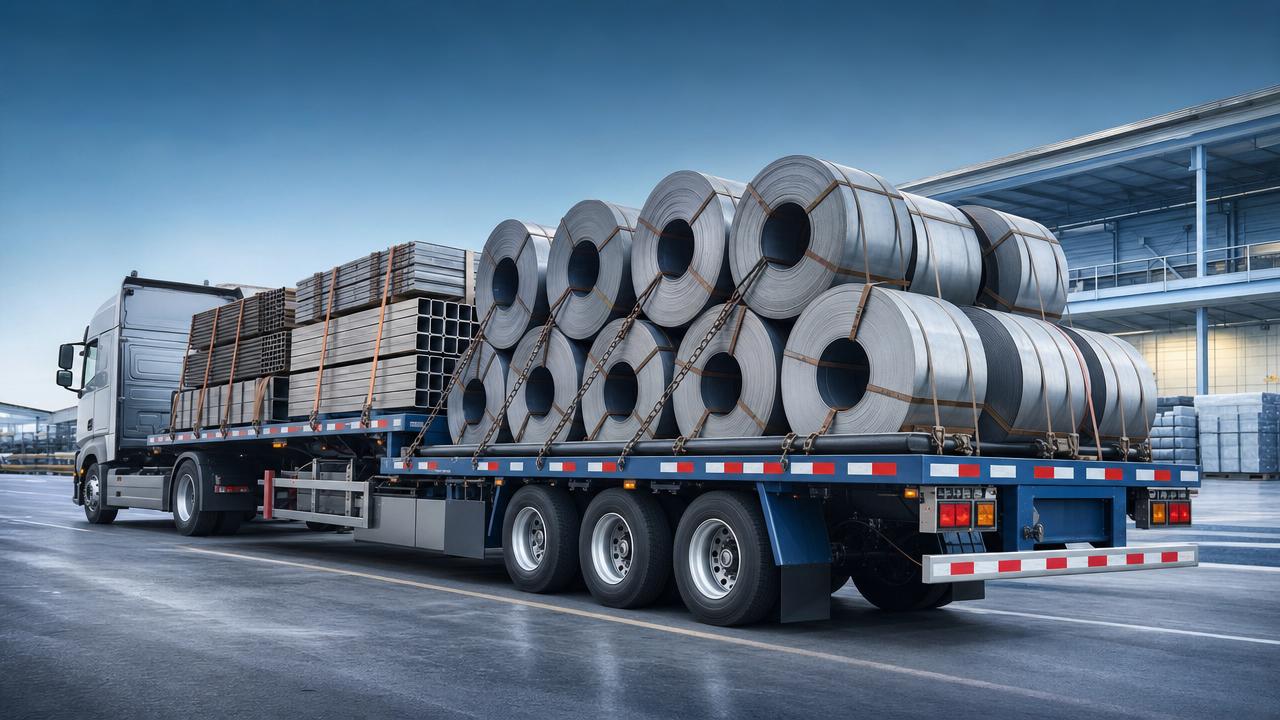
For fleet buyers and logistics decision-makers, Flatbed Semi-Trailer choices in 2026 will be shaped by three core factors: steel innovation, tare weight reduction, and total operating cost. Understanding how these trends affect payload efficiency, durability, fuel consumption, and lifecycle value is essential when planning equipment investment. This article outlines the market direction and key purchasing considerations for businesses seeking reliable, cost-effective transport solutions.
In heavy transport, a Flatbed Semi-Trailer is rarely a simple commodity purchase. For contractors, logistics firms, mining suppliers, and cross-border operators, trailer specification directly affects payload compliance, loading flexibility, tire wear, maintenance intervals, and return on investment over 3 to 7 years.
As 2026 approaches, buyers are paying closer attention to high-strength steel grades, tare weight targets, corrosion resistance, axle matching, and service support. The best procurement decisions are no longer based on purchase price alone, but on the balance between structural reliability and operating cost per kilometer.
Why 2026 Will Change Flatbed Semi-Trailer Buying Priorities
The market is moving toward more disciplined trailer selection because freight margins remain tight while compliance requirements are rising. In many regions, a 500 kg to 1,500 kg reduction in tare weight can create a measurable payload advantage across hundreds of trips per year.
At the same time, operators cannot afford to reduce weight by sacrificing frame durability. A Flatbed Semi-Trailer used for steel coils, machinery, timber, or construction materials must still withstand torsional stress, point loading, and uneven road surfaces over long operating cycles.
Three forces shaping the next buying cycle
- Higher use of high-tensile steel in main beams, side rails, and cross members
- Greater demand for lighter trailer structures without reducing rated capacity
- Stronger focus on total cost of ownership across fuel, tires, brakes, and downtime
For enterprise buyers, these changes matter because even a 2% to 4% efficiency gain can produce meaningful savings when a fleet operates 20, 50, or 100 trailers. Procurement teams are therefore comparing lifecycle cost more carefully than in previous years.
What decision-makers should evaluate first
Before comparing quotations, buyers should define four practical inputs: payload type, average route distance, road quality, and loading frequency. A Flatbed Semi-Trailer serving port drayage and one serving inland construction corridors may require very different steel thickness, suspension type, and deck configuration.
The table below shows how these priorities often shift by operating profile.
The key takeaway is that there is no single best Flatbed Semi-Trailer for every fleet. The right specification depends on load concentration, annual mileage, and the cost of downtime in each operating market.
Steel Innovation: Stronger Structures Without Excess Dead Weight
Steel selection is becoming a more strategic issue in trailer manufacturing. Many buyers now ask not only about beam dimensions, but also about where high-strength steel is used and whether the structure has been optimized for stress distribution rather than simply increased in thickness.
How steel trends are evolving
Traditional trailer design often relied on heavier sections to create a margin of safety. In 2026, more manufacturers are expected to combine finite structural optimization with higher-grade steel in selected areas such as the main beam web, flange, and critical joint zones.
This approach can reduce unnecessary material in low-stress areas while maintaining strength where dynamic loads peak. For many applications, the result is a lower tare weight without compromising rated payload in the 30-ton to 60-ton working range, depending on local regulations and axle setup.
Where better steel matters most
- Main beam fatigue resistance under repeated loading cycles
- Cross member stability during forklift or side-loading operations
- Neck area integrity under braking force and kingpin transfer load
- Side rail performance at tie-down and concentrated cargo contact points
For a Flatbed Semi-Trailer carrying steel products, heavy equipment, or palletized construction cargo, these details often matter more than headline dimensions alone. Two trailers with the same nominal capacity can perform very differently after 18 to 24 months of intensive service.
Questions buyers should ask suppliers
A serious procurement review should go beyond brochures. Buyers should ask which structural sections use higher-strength material, what corrosion protection is applied, how weld consistency is controlled, and whether the trailer design is aligned with the intended load type rather than a generic export configuration.
For international buyers, supplier consistency is equally important. Shandong Livol Truck International Trade Co., Ltd. supports global customers with vehicle selection, customization, export documentation, customs coordination, and logistics planning, helping reduce mismatch risk before production and delivery.
Weight Reduction and Payload Efficiency: The Real Business Impact
Weight reduction is one of the most practical 2026 trends because it affects revenue potential directly. When regulations set gross combination limits, every kilogram saved on the trailer can become usable payload, provided the structure remains fit for the duty cycle.
For example, if a fleet reduces trailer tare by 800 kg and completes 200 loaded trips annually, the additional freight opportunity may become commercially significant, especially for high-frequency routes or bulk building material distribution.
How to evaluate tare weight correctly
A lower tare figure is not automatically better. Buyers must compare tare weight together with deck strength, axle rating, suspension type, floor plate thickness, twist resistance, and lashing arrangement. A trailer that is too light for the application may generate repair costs that erase any initial payload advantage.
The table below outlines a practical comparison framework for weight-focused procurement.
This comparison shows why fleet managers should assess the complete trailer system, not just the brochure tare number. A balanced Flatbed Semi-Trailer usually delivers the best lifetime economics, not the lightest one on paper.
Typical mistakes in weight-focused buying
- Choosing the lowest tare option without matching cargo density
- Ignoring deck wear and floor deformation risk under repeated point loads
- Underestimating the effect of poor roads on fatigue and weld longevity
- Comparing trailers by price per unit instead of cost per payload-ton-kilometer
These mistakes are common when procurement teams are under pressure to cut capex. However, repair frequency, tire replacement, and trailer downtime can exceed the savings from a cheaper but poorly matched configuration within the first 12 to 18 months.
Operating Cost in 2026: Looking Beyond Purchase Price
Total operating cost is becoming the most important metric for large and mid-sized fleets. A Flatbed Semi-Trailer influences fuel consumption through weight, affects tire cost through axle alignment and suspension quality, and impacts uptime through brake reliability and parts availability.
For many fleets, the key question is not whether one trailer costs 3% less to buy, but whether it saves enough over 24 to 60 months to justify the investment. This is especially relevant for companies running high-mileage routes above 80,000 km per year.
The main cost drivers buyers should model
- Fuel effect from tare weight and drag exposure
- Tire wear caused by alignment, axle quality, and overload practice
- Brake and suspension service intervals
- Corrosion-related repair cost in coastal or humid environments
- Downtime from parts delays or weak after-sales coordination
A structured cost review should include at least 5 categories and cover a 3-year minimum horizon. Buyers that only compare factory price often overlook the impact of one extra maintenance stop per quarter or one unplanned repair cycle during peak season.
A practical 5-step procurement model
To reduce decision risk, enterprise buyers can use a step-based process before placing volume orders.
- Define cargo type, annual tonnage, and route conditions
- Set target tare range and required structural margins
- Review supplier manufacturing consistency and export support
- Compare parts access, service response, and delivery lead time
- Validate with a pilot order or sample inspection before fleet rollout
This approach is especially useful for importers and contractors buying from overseas. Shandong Livol Truck International Trade Co., Ltd. combines inventory support, customization coordination, documentation handling, customs clearance assistance, and logistics execution to simplify these 5 steps for international business buyers.
What to Look for in a Reliable Export Partner
A good trailer specification can still create problems if the export process is weak. For cross-border procurement, buyers should review not only the Flatbed Semi-Trailer itself, but also the supplier’s ability to manage communication, production coordination, inspection, shipping documents, and delivery timing.
Why service capability matters in B2B trailer procurement
Large projects often involve more than one vehicle category, staggered delivery schedules, and market-specific configuration adjustments. Delays in document preparation or specification confirmation can affect customs release, local registration, and project startup windows by 1 to 3 weeks.
Shandong Livol Truck International Trade Co., Ltd., based in Shandong, China, serves global customers as a professional commercial vehicle exporter. As the official authorized domestic and overseas dealer for FOTON, SHACMAN, and SINOTRUK, the company operates authorized 4S stores across China and maintains sufficient inventory for stable supply and faster delivery coordination.
Supplier selection checklist
- Can the supplier support trailer selection and customization clearly?
- Is there a professional export team familiar with documentation workflows?
- Can customs clearance and logistics steps be coordinated end to end?
- Is after-sales communication practical for overseas buyers?
These factors are often decisive for enterprise procurement because they reduce hidden costs outside the trailer invoice itself. In many projects, process reliability is as valuable as a small unit price reduction.
Final Buying Guidance for 2026 Fleet Planning
The 2026 Flatbed Semi-Trailer market will reward buyers who think in systems rather than single specifications. Steel innovation improves structural efficiency, tare reduction increases payload opportunity, and operating cost analysis protects long-term profitability.
For decision-makers in engineering transport, construction logistics, industrial cargo movement, and cross-border fleet operations, the smartest purchase is usually the one that balances 4 priorities: strength, legal payload, serviceability, and supply reliability.
If your business is planning new trailer procurement, replacement cycles, or integrated vehicle sourcing from China, working with an experienced exporter can shorten evaluation time and reduce execution risk. Shandong Livol Truck International Trade Co., Ltd. provides full-process support from selection and customization to documentation, customs clearance, logistics, and after-sales coordination.
To discuss the right Flatbed Semi-Trailer configuration for your routes, payload targets, and budget, contact us today for product details, a tailored sourcing plan, or broader commercial vehicle export solutions.
Search Starts Here