
News
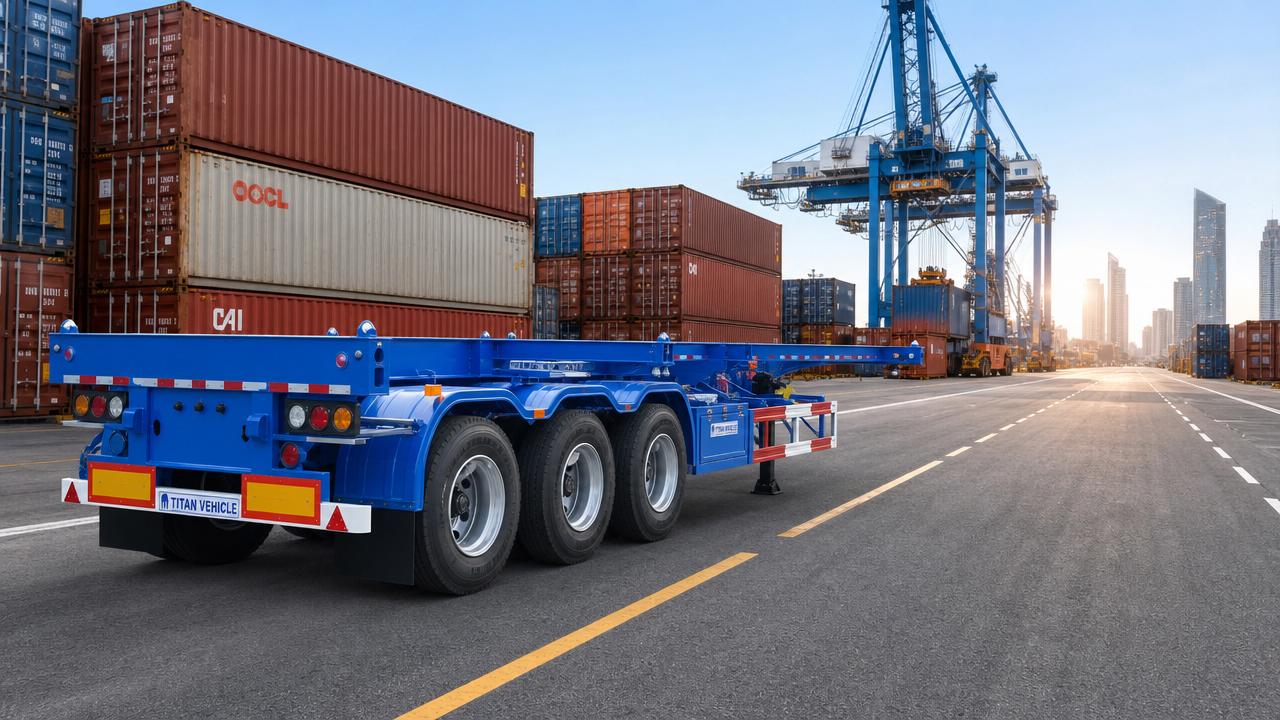
Choosing the right Skeleton (Container) Semi-Trailer for port and inland haul is essential for improving transport efficiency, reducing operating costs, and ensuring cargo safety. For procurement professionals, key factors such as load capacity, axle configuration, durability, and adaptability to different road and port conditions should be carefully evaluated. This guide will help you identify the most suitable trailer solution for reliable and cost-effective container transportation.
What Procurement Buyers Really Need to Decide First
If you are buying a trailer for container transport, the first question is not brand, price, or appearance. The real question is whether the trailer fits your operating routes, container mix, and loading frequency.
For port and inland haul, a mismatch in specification can quickly create higher fuel use, overloading risks, maintenance costs, and delays at terminals. A lower purchase price often becomes expensive during daily operation.
That is why procurement teams should evaluate a Skeleton Container Semi-Trailer as a working asset, not just a product. The best choice is the trailer that delivers stable uptime, compliance, and long-term cost control.
Understand the Core Search Intent Behind This Purchase
Buyers searching for how to choose a Skeleton Container Semi-Trailer usually want a practical selection method. They are comparing options and trying to avoid buying a trailer that looks suitable on paper but performs poorly in real conditions.
Their concerns are usually direct and commercial. Can the trailer carry the required containers safely? Will it work efficiently in both port yards and inland roads? How long will it last? Is it easy to maintain?
They also want clarity on total value. Procurement professionals are under pressure to balance acquisition cost, delivery time, service support, spare parts availability, and the risk of equipment downtime after deployment.
Start with Your Actual Transport Scenario
Before comparing technical details, define the operating scenario. Port shuttle transport, cross-docking, warehouse delivery, and long-distance inland haul place different demands on the same type of trailer.
If your fleet mainly serves short repetitive routes between terminals and nearby depots, maneuverability, fast loading alignment, and durable locking systems may matter more than maximum flexibility across many container sizes.
For longer inland routes, road stability, chassis strength, suspension durability, and brake performance become more important. Uneven roads, regional axle-weight regulations, and weather conditions should be included in your evaluation from the beginning.
It is also necessary to consider whether your operation handles standard 20-foot and 40-foot containers only, or whether you also move 45-foot containers, tank containers, or heavier high-cube units.
Choose the Right Container Compatibility
One of the biggest buying mistakes is assuming all skeleton trailers offer the same container adaptability. In practice, compatibility with multiple container lengths and types can directly affect dispatch efficiency and fleet utilization.
A common requirement is transport of 20ft and 40ft containers. Some buyers also need 45ft capability or multi-position locking arrangements. If your cargo flow changes by season or by customer, flexibility becomes valuable.
Check the twist lock layout carefully. A well-designed Skeleton Container Semi-Trailer should allow secure, efficient container positioning without creating unnecessary loading complexity or limiting the trailer to a narrow operating profile.
If your company handles different container categories from several customers, a multi-functional configuration may reduce the need for separate dedicated trailers. That can improve asset utilization and reduce total fleet investment.
Load Capacity Is More Than a Number
Procurement teams often focus on rated payload first, and that is reasonable. However, load capacity should be judged together with chassis design, axle selection, steel quality, and legal road compliance.
A trailer with attractive payload figures may not be the best choice if the structure experiences fatigue under frequent heavy-duty port cycles. Repeated braking, turning, and uneven surfaces put constant stress on the frame.
Ask not only for the nominal payload, but also for the intended duty cycle. Is the trailer designed for high-frequency container turnover? Is it suitable for overloaded local habits, or should strict compliance be enforced?
Reliable suppliers should be able to explain frame beam dimensions, reinforcement design, and the relationship between payload rating and expected service life. This helps buyers compare trailers beyond simple brochure claims.
Axle Configuration Affects Cost, Compliance, and Efficiency
Axle configuration is a major decision because it influences load distribution, road legality, tire wear, maintenance frequency, and fuel consumption. In most markets, buyers compare 2-axle and 3-axle skeleton trailer options.
A 2-axle trailer may offer lower tare weight and lower maintenance cost, making it useful for lighter applications or for routes with specific regulatory advantages. It can also be easier to maneuver in tight port spaces.
A 3-axle Skeleton Container Semi-Trailer is commonly preferred for heavier container transport and longer inland routes. It generally provides better load distribution and can help support higher operational stability under demanding conditions.
The right decision depends on legal axle-load limits, container weights, tractor matching, and road quality. Buyers should evaluate the complete transport unit rather than selecting axle count in isolation.
Durability Matters More Than Initial Price
For frequent port and inland work, durability is one of the strongest drivers of real return on investment. A trailer that spends less time in repair delivers more trips, more revenue, and less disruption to planning.
Focus on materials, welding quality, anti-corrosion treatment, and key wear parts. Salt air in port areas, rain exposure, rough pavement, and repeated container impact can shorten trailer life if the build quality is weak.
Inspect or request details about main beam material, cross-member construction, landing gear quality, brake system brand, axle brand, and surface treatment process. These factors strongly influence long-term operating reliability.
Paint quality alone is not a reliable indicator. Procurement teams should ask whether the trailer uses shot blasting, quality primer layers, and durable top coating systems suitable for marine or high-humidity transport environments.
Do Not Ignore Suspension and Braking Performance
Suspension choice affects ride stability, cargo security, tire wear, and maintenance behavior. Mechanical suspension is widely used because it is durable, simple, and cost-effective for many heavy-duty commercial applications.
Air suspension may offer benefits in specific markets or cargo conditions, especially where smoother ride quality, weight management, or regulatory preferences matter. However, it may involve higher cost and more complex maintenance.
Braking performance is equally important. Repeated stop-and-go movement in ports, ramps, and congested inland roads requires a dependable braking system. Buyers should review brake chamber quality, air line routing, and system serviceability.
If the trailer will run in markets with strict transport safety regulations, check whether ABS or other required braking-related configurations are necessary. Compliance issues can create hidden costs after delivery.
Port Conditions and Inland Roads Require Different Strengths
A trailer used mostly inside and around ports faces very different stress compared with one traveling long inland distances. Port surfaces may include uneven yards, curbs, high-frequency turning, and constant start-stop operation.
Inland routes may involve poor roads, long hours, steep grades, and weather exposure. If one trailer must handle both environments, specification balance is important. Over-optimizing for one condition can reduce efficiency in the other.
Procurement professionals should discuss route realities with operations teams, drivers, and maintenance staff. Their daily feedback often reveals practical issues that are not obvious in technical comparison sheets.
A suitable Skeleton Container Semi-Trailer for mixed duty should combine structural toughness, secure locking, stable axle performance, and practical service access for brakes, tires, and other regularly inspected parts.
Maintenance Access and Spare Parts Support Are Procurement Issues
Many buyers underestimate how strongly serviceability affects ownership cost. A trailer that is harder to inspect or repair can create longer downtime even when the component cost itself is not high.
Choose designs with practical access to brake components, air circuits, axle parts, lighting systems, and locking devices. Maintenance teams value straightforward structures because they reduce labor time and inspection difficulty.
Spare parts support is equally important, especially for export projects. Ask the supplier which axle, suspension, and brake brands are used, and whether replacement parts are easy to source in your region.
After-sales responsiveness matters too. Procurement should evaluate not only the trailer unit but also the supplier’s ability to provide documents, technical guidance, spare parts coordination, and long-term commercial support.
Look at Total Cost of Ownership, Not Only Purchase Cost
For a procurement decision, the cheapest trailer is not automatically the most economical. Total cost of ownership includes acquisition price, freight, customs, maintenance, tire consumption, downtime, fuel impact, and resale value.
A better-built trailer may cost more at the start but save money through longer service life and fewer repairs. This is especially true in high-frequency container operations where uptime has direct commercial value.
When comparing suppliers, create a simple evaluation model. Include specification match, expected annual mileage, average payload, repair intervals, spare parts availability, and likely operational life in your local conditions.
This approach helps procurement teams justify decisions internally. It also shifts discussion from unit price alone to measurable lifecycle value, which is often the more strategic purchasing standard for fleet assets.
Questions You Should Ask the Supplier Before Ordering
A strong supplier should welcome technical and commercial questions. Buyers should ask for detailed specifications, drawings if necessary, material information, axle and suspension brands, and explanations of optional configurations.
You should also ask whether the trailer can be customized for your market. Common custom points include axle count, tire specification, locking arrangement, landing gear, lighting standards, paint color, and regulatory compliance details.
Documentation is another key area. Confirm what export documents, inspection records, warranty terms, and packing or shipping arrangements the supplier can provide. Smooth documentation reduces import and registration risk.
Finally, ask for lead time, production schedule, and stock availability. For procurement planning, delivery reliability can be as important as technical suitability, especially when trailers are needed for urgent contract fulfillment.
Why Supplier Reliability Is Part of Product Quality
Even a well-built trailer can become a poor procurement result if the supplier lacks export experience, communication efficiency, or after-sales coordination. Product quality and supplier capability should be evaluated together.
Experienced commercial vehicle exporters understand specification confirmation, production follow-up, inspection, customs documentation, and international logistics. This reduces the chance of mismatch, delay, or post-delivery disputes.
Shandong Livol Truck International Trade Co., Ltd. brings this type of support to overseas buyers. With strong industry resources, sufficient inventory, and professional export experience, the company helps customers complete purchases with greater confidence.
As an authorized dealer for FOTON, SHACMAN, and SINOTRUK, and with extensive 4S network support in China, the company can provide integrated assistance from selection and customization to logistics and after-sales service.
A Practical Selection Checklist for Procurement Teams
To simplify evaluation, start with five filters: container sizes, route type, payload range, road conditions, and local regulations. These five factors usually narrow the suitable Skeleton Container Semi-Trailer options quickly.
Next, compare axle configuration, frame strength, suspension type, braking system, and corrosion protection. These are the technical factors most likely to influence uptime and long-term operating performance.
Then review supplier strength: production capability, export documentation support, spare parts access, customization flexibility, and after-sales response. This protects the purchase beyond the moment of shipment.
Finally, compare total cost of ownership rather than only factory price. A trailer that performs reliably in your real transport environment is the one that delivers the best procurement value.
Conclusion: Buy for Operating Reality, Not Just Specification Sheets
The right Skeleton Container Semi-Trailer for port and inland haul is the one that matches your real operating pattern, legal requirements, container mix, and maintenance capability. There is no single best model for every buyer.
For procurement professionals, the smartest decision comes from linking technical specification with business outcome. Focus on compatibility, payload suitability, axle setup, durability, serviceability, and supplier reliability.
When these factors are assessed together, you can reduce purchase risk, improve fleet efficiency, and secure better long-term returns. In container transport, a carefully chosen trailer is not just equipment, but a strategic operational asset.
Search Starts Here