
News
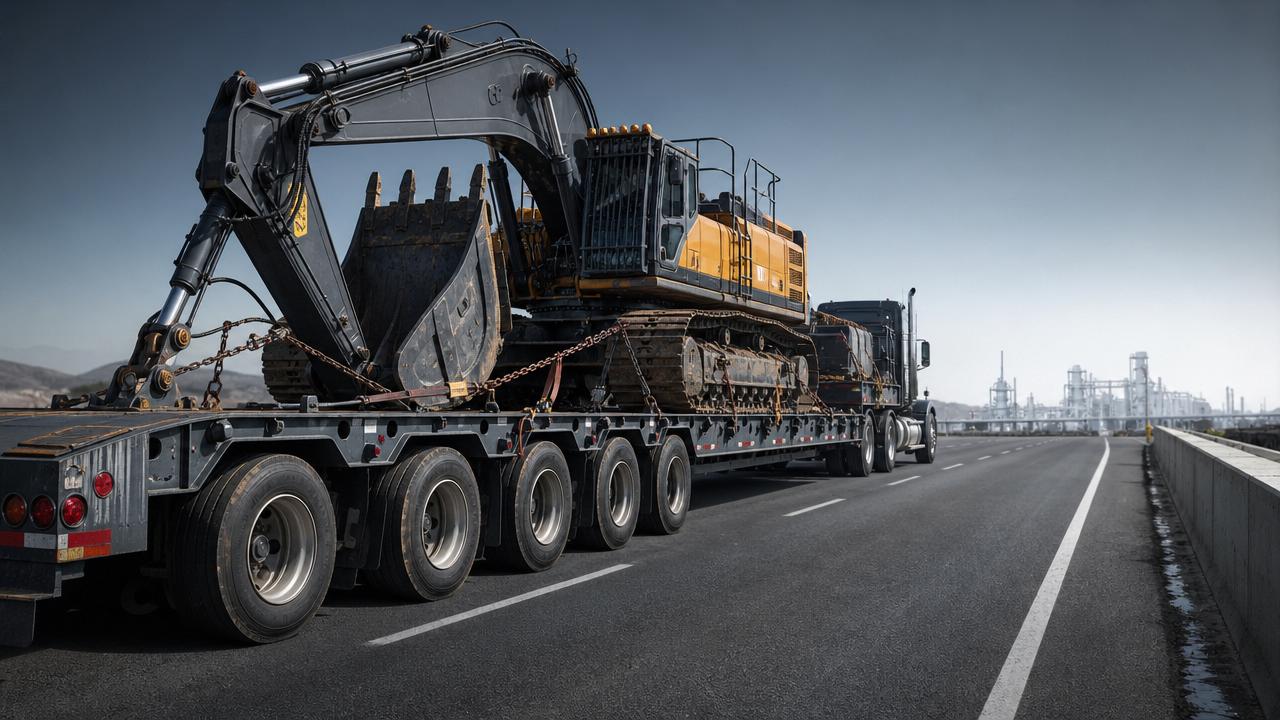
For quality control and safety managers, understanding Flatbed Semi-Trailer load limits is essential to reducing transport risks and ensuring legal compliance.
Axle ratings, deck strength, tire capacity, cargo distribution, and braking response all shape safe working limits on real roads.
In engineering vehicle transport, these details affect uptime, operating cost, cargo integrity, and accident prevention.
This article explains the key specifications behind Flatbed Semi-Trailer load capacity and shows how to evaluate trailer reliability more accurately.
Understanding Flatbed Semi-Trailer Load Limits
A Flatbed Semi-Trailer is designed for open-deck cargo that may be oversized, heavy, or irregularly shaped.
Load limit does not mean only the maximum legal payload printed on a plate.
It reflects the combined limit of structure, axles, suspension, tires, kingpin, landing gear, and braking system.
Actual safe capacity can be lower than nominal capacity when road conditions, loading patterns, or route restrictions are unfavorable.
For engineering vehicle operations, this distinction is critical because machinery, steel, precast parts, and equipment often create concentrated loads.
Core load-related terms
- GVWR: total allowable loaded weight of the trailer.
- Payload: cargo weight the trailer can carry safely.
- Axle rating: allowable load supported by each axle group.
- Deck rating: allowable load borne by the platform structure.
- Kingpin load: vertical load transferred to the tractor.
A trailer may have a strong frame but still face lower legal or functional limits because of axle spacing or tire specifications.
Key Industry Concerns Affecting Road Safety
The engineering transport sector now places greater attention on verifiable load data and real operating safety.
Overloading is no longer viewed as only a compliance issue.
It directly increases rollover risk, brake fade, tire failures, frame fatigue, and cargo shift incidents.
These concerns explain why Flatbed Semi-Trailer specification review must go beyond brochure payload figures.
Technical Specifications That Determine Real Capacity
Axle configuration and ratings
Axles carry most of the working load and strongly influence legal road acceptance.
Common engineering transport units use two-axle, three-axle, or multi-axle configurations, depending on cargo weight and route limits.
Higher axle count can improve load sharing, but only when suspension equalization and spacing are properly designed.
Main beam and deck structure
The main beam is the backbone of a Flatbed Semi-Trailer.
Its height, flange thickness, web thickness, and steel grade determine bending resistance and fatigue durability.
Cross-member density also matters, especially for concentrated loads from tracked equipment or heavy industrial components.
A larger deck area does not automatically mean higher usable load.
Suspension system
Mechanical suspension is often valued for strength and simple maintenance in harsh engineering environments.
Air suspension can improve ride stability and protect sensitive cargo, but specification matching is essential.
If suspension capacity is lower than axle or frame ratings, it becomes the limiting component.
Tires, wheels, and braking system
Tire load index and inflation pressure directly affect carrying ability and heat control.
Brake chamber size, lining condition, ABS compatibility, and air system integrity influence stopping reliability under load.
A Flatbed Semi-Trailer carrying heavy machinery needs braking performance matched to real operating mass, not empty weight.
Operational Value in Engineering Vehicle Transport
Correct load-limit evaluation improves more than safety.
It helps maintain delivery schedules, reduce maintenance interruptions, and protect high-value cargo during long-distance transport.
For engineering vehicle operations, route planning often includes bridges, ramps, uneven yards, and temporary site roads.
Under these conditions, the real working margin of a Flatbed Semi-Trailer becomes more important than its paper specification.
- Lower risk of enforcement penalties caused by axle overloading.
- Better protection for heavy equipment and steel cargo.
- Reduced frame fatigue and tire replacement frequency.
- More predictable braking and lane stability.
- Stronger support for standard operating procedures.
This is why careful specification selection matters when comparing transport solutions for engineering fleets and project logistics.
Typical Cargo Scenarios and Matching Considerations
Different cargo types place very different demands on the same Flatbed Semi-Trailer.
Matching the trailer to cargo geometry is as important as matching it to gross weight.
Practical Assessment and Risk Control Measures
A structured review process makes Flatbed Semi-Trailer selection safer and more consistent.
- Confirm legal route limits for gross weight, axle load, and dimensions.
- Check certified axle, suspension, tire, and kingpin ratings.
- Review beam dimensions, steel grade, and cross-member arrangement.
- Assess cargo center of gravity and expected load concentration points.
- Verify braking condition, air line response, and emergency performance.
- Inspect tie-down points, deck wear, weld quality, and landing gear condition.
- Use actual weighing data after loading, not estimates alone.
Regular inspection is especially important for trailers used in rough construction areas or mixed highway and off-road operations.
Small cracks, tire heat damage, and uneven suspension wear can quickly reduce the safe capacity margin.
Selecting Reliable Support for Flatbed Semi-Trailer Transport
Reliable export and supply support can improve specification accuracy and reduce project delays.
Shandong Livol Truck International Trade Co., Ltd., based in Shandong, China, offers strong commercial vehicle export capability and broad industry experience.
As an authorized dealer for FOTON, SHACMAN, and SINOTRUK, the company supports vehicle selection, customization, documentation, customs clearance, and logistics coordination.
With authorized 4S store resources, stable inventory, quality control, and professional after-sales support, it can help align transport equipment with practical operating needs.
When evaluating a Flatbed Semi-Trailer, focus on verified ratings, structural design, cargo characteristics, and real route conditions together.
That approach supports safer transport decisions, stronger compliance, and more dependable engineering logistics performance.
Search Starts Here