
News
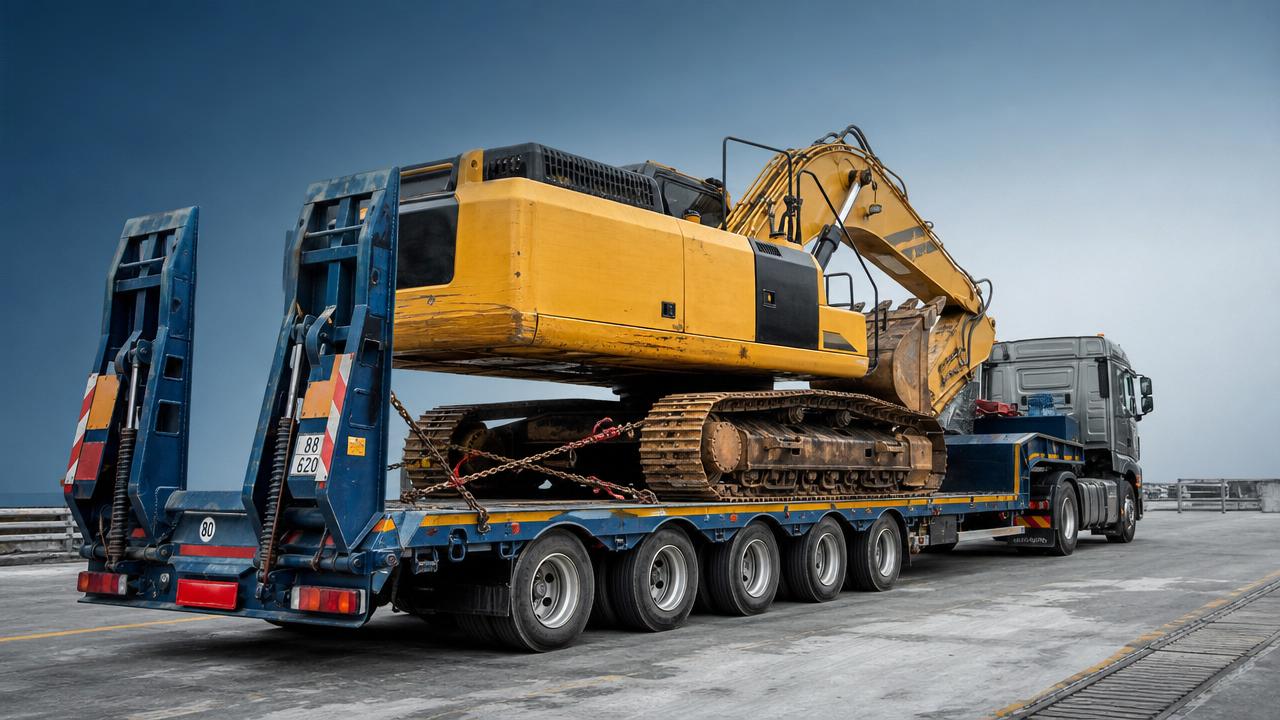
Before moving oversized machinery, understanding Flatbed Semi-Trailer load limits is essential for quality control and transport safety teams. From axle weight distribution to deck strength and securement points, every check directly affects compliance, cargo stability, and road safety. This guide outlines the key inspections and risk factors to review before heavy equipment transport, helping professionals reduce operational hazards and improve shipment reliability.
Why do Flatbed Semi-Trailer load limits matter so much in heavy equipment transport?
For quality control personnel and safety managers, load limits are not a paperwork detail. They are the baseline for whether a shipment can leave the yard, pass roadside inspection, and arrive without cargo shift, tire failure, or structural damage.
In engineering vehicle logistics, the transported unit may be an excavator, wheel loader, road roller, drilling rig attachment, or other high-mass equipment with concentrated loads. A Flatbed Semi-Trailer that appears acceptable by gross tonnage alone may still fail under uneven axle loading or insufficient deck reinforcement.
This is why experienced teams do not ask only, “What is the maximum payload?” They also ask where the weight sits, how it is secured, what road conditions apply, and whether the trailer configuration matches the machine’s footprint and center of gravity.
- Gross vehicle weight can exceed legal or design limits even when the cargo seems within nominal payload range.
- Concentrated track or wheel pressure may overstress the deck without exceeding total mass rating.
- Poor securement angles and weak lashing points can turn a compliant load into a braking or cornering hazard.
- Mismatched tractor-trailer combinations can create unstable handling, especially on grades, rough roads, or mixed urban-highway routes.
What should quality and safety teams check before assigning a Flatbed Semi-Trailer?
Before dispatch, a structured inspection is more useful than a single payload statement. The most reliable practice is to review the trailer as a system: frame, deck, axles, suspension, tires, kingpin area, braking system, and cargo securement interfaces.
Core pre-transport inspection checklist
- Confirm rated payload, curb weight, and intended cargo weight using current documents rather than old planning sheets.
- Measure equipment dimensions, track width, axle spacing, and ground contact points to verify deck compatibility.
- Check axle group load distribution after planned cargo placement, not before loading assumptions.
- Inspect deck plates, cross members, weld zones, and gooseneck transition areas for fatigue, cracks, or visible deformation.
- Review lashing points, chain ratings, binders, blocking materials, and anti-slip measures against cargo shape and transport route.
- Verify tire load index, inflation condition, brake response, and suspension status under expected operating load.
- Confirm route restrictions, local axle regulations, bridge limits, and permit requirements for oversized cargo.
For safety teams, this checklist reduces last-minute loading changes. For QC teams, it creates a traceable basis for approval and helps distinguish equipment suitability from operator habit or optimistic assumptions.
Flatbed Semi-Trailer load limit checks: which parameters deserve the closest attention?
The table below summarizes the most important technical checkpoints for a Flatbed Semi-Trailer used in engineering vehicle transport. It can serve as a practical review sheet before booking, inspection, or procurement approval.
These parameters should be evaluated together. A Flatbed Semi-Trailer with adequate nominal capacity may still become a risk if deck stress concentration, front overloading, or weak securement points are ignored during planning.
How does cargo type change Flatbed Semi-Trailer selection?
Different engineering machines create very different loading patterns. A compact loader and a crawler excavator may have similar total weight, but they stress the trailer in different ways. Selection should follow contact pressure, machine geometry, and securement accessibility rather than payload number alone.
Common heavy equipment scenarios
- Crawler equipment places concentrated pressure through tracks and may require deck reinforcement or timber blocking to spread force.
- Wheel-based machinery needs careful axle placement because high single-point tire loads can create local deck fatigue over time.
- Machines with long booms or attachments may shift the center of gravity away from the expected midpoint, affecting front-rear balance.
- Low-clearance equipment may require ramps, approach angle review, or a lower deck arrangement to prevent contact damage during loading.
For procurement teams supporting multiple job sites, choosing a more versatile Flatbed Semi-Trailer often lowers operational risk. However, flexibility should not come at the cost of structural mismatch or uncertain compliance margins.
Which Flatbed Semi-Trailer configuration fits which transport task?
When comparing transport solutions, safety managers usually need a clear view of the trade-off between standard flatbeds, reinforced layouts, and low-deck alternatives. The following table helps match transport conditions to trailer choice.
This comparison shows why selection cannot rely on price or delivery speed alone. The right Flatbed Semi-Trailer is the one that fits the machine, route, and compliance environment with enough safety margin for real operating conditions.
What compliance and safety points are often missed?
Many transport incidents happen not because teams ignore weight, but because they treat compliance as a single figure. In reality, legal transport safety combines mass, dimensions, securement, visibility, braking capability, and route-specific restrictions.
Common oversight areas
- Using machine brochure weight instead of actual operating weight with attachments, fluids, buckets, or counterweights installed.
- Failing to evaluate axle-by-axle load after final machine placement on the Flatbed Semi-Trailer.
- Assuming all lashing points are equally rated or suitable for angle-dependent restraint loads.
- Ignoring ramp loading effects, which can temporarily overstress deck transitions or create impact loading.
- Overlooking local permit rules for overhang, road width occupation, escort needs, or travel time windows.
General good practice may refer to recognized securement principles, vehicle mass rules, and inspection standards used in commercial transport markets. Exact compliance requirements differ by country, so procurement and dispatch teams should align trailer specification with destination regulations before shipment is scheduled.
How can procurement teams reduce risk when sourcing a Flatbed Semi-Trailer?
Safety managers often face three pressures at once: limited budget, short delivery time, and uncertain machine mix. A practical sourcing process should compare trailer suitability, support capability, and export coordination instead of only comparing basic quotations.
Procurement decision points
- Define the heaviest and most difficult cargo case first, including attachments and future expansion needs.
- Request detailed trailer specifications covering payload, axle arrangement, deck structure, suspension, tires, and securement points.
- Review whether the supplier can support documentation, inspection coordination, parts access, and post-delivery technical communication.
- Check realistic lead time based on inventory and production planning, not verbal estimates alone.
- Ask for configuration advice based on your route, machine category, and destination market requirements.
For international buyers, these points become even more important. Delays in customs documentation, specification mismatch, or unclear handover conditions can be more costly than a small difference in unit price.
Why do global buyers work with a supplier that understands both vehicles and export execution?
A Flatbed Semi-Trailer purchase is not just a product decision. It is also a supply chain decision. Buyers in engineering vehicle operations need a partner that can connect technical matching, inventory stability, document accuracy, and shipment coordination.
Shandong Livol Truck International Trade Co., Ltd., based in Shandong, China, supports customers with commercial vehicle export experience, coordinated service processes, and practical understanding of application requirements. As an official authorized domestic and overseas dealer for FOTON, SHACMAN, and SINOTRUK, the company works within a strong commercial vehicle ecosystem and maintains broad inventory support through authorized 4S store resources across China.
For procurement, QC, and safety teams, this means communication can extend beyond product availability. It can include vehicle selection, suitable configuration discussion, documentation handling, customs clearance support, logistics coordination, and after-sales follow-up based on actual export workflow.
This full-process support is especially valuable when buyers must confirm delivery timing, compare transport configurations, or align trailer selection with broader fleet plans involving tractors, dump trucks, or other engineering transport equipment.
FAQ: practical questions before buying or assigning a Flatbed Semi-Trailer
How do I know whether a Flatbed Semi-Trailer can carry my equipment safely?
Start with actual machine operating weight, then add installed attachments, fluids, and transport accessories. After that, check deck contact pattern, axle load distribution, machine dimensions, and securement method. If any one of these remains unclear, the trailer should not be approved based on payload alone.
What is the biggest mistake in heavy equipment trailer selection?
The most common mistake is treating total mass as the only criterion. In practice, local deck overload, poor center-of-gravity placement, and weak tie-down planning create many of the real-world failures seen during loading, braking, and uneven-road transport.
Should QC teams inspect a new Flatbed Semi-Trailer before dispatch even if it is unused?
Yes. A pre-dispatch inspection is still necessary. Teams should verify specification consistency, tire condition after storage, brake function, visible weld quality, fastener security, and securement hardware readiness. New status does not replace operational verification.
What should international buyers ask a supplier before placing an order?
Ask for detailed specifications, available configurations, estimated delivery time, export document scope, logistics arrangement options, and whether the supplier can advise on matching the trailer to your machine type and destination market constraints. These questions help prevent mismatch and avoidable delays.
Why choose us for Flatbed Semi-Trailer sourcing and export coordination?
If your team is evaluating Flatbed Semi-Trailer options for heavy equipment transport, we can support more than a basic quotation. We can discuss payload range, axle configuration, deck suitability, machine matching, and practical selection points based on your transport scenario.
Shandong Livol Truck International Trade Co., Ltd. can also assist with customization discussion, delivery schedule confirmation, export documentation, customs clearance coordination, and logistics planning for international orders. This helps QC personnel, safety managers, and purchasing teams reduce approval uncertainty before shipment begins.
You can contact us to confirm technical parameters, compare configuration options, review delivery timelines, discuss certification or destination compliance concerns, request tailored transport solutions, or start a formal quotation process for your engineering vehicle transport project.
Search Starts Here