
News
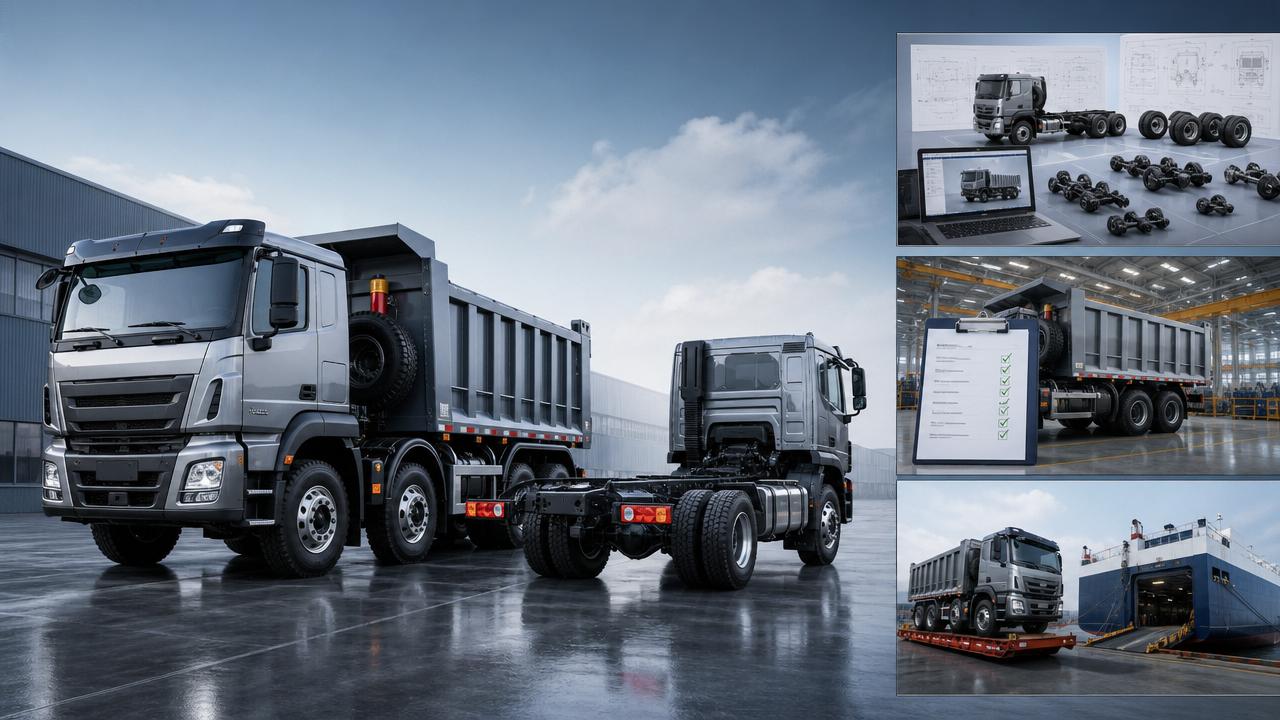
Before moving a commercial vehicle toward approval, decision-makers need more than a basic spec sheet. A clear Cangshan Vehicle Configuration List helps identify which technical features, compliance items, and operational requirements truly affect performance, cost, and market fit. For companies evaluating export-ready engineering vehicles, understanding these priorities early can reduce risk, improve purchasing efficiency, and support faster, more confident model approval decisions.
In engineering vehicle procurement, model approval is rarely delayed by a single factor. More often, approval slows down because the configuration list does not fully reflect payload targets, local road regulations, climate demands, body integration needs, or after-sales requirements. For fleet buyers, project contractors, distributors, and public-sector procurement teams, the right configuration list is both a technical filter and a commercial safeguard.
For exporters working with FOTON, SHACMAN, and SINOTRUK platforms, early configuration validation is especially important. Engine choices, axle ratios, tire specifications, cabin layouts, PTO compatibility, and documentation readiness can all change delivery lead time by 2–6 weeks and may significantly affect total operating cost over 3–5 years.
Why the Cangshan Vehicle Configuration List Matters Before Approval
A Cangshan Vehicle Configuration List is more than a parts summary. It is a decision framework that connects technical configuration with the intended engineering task, market entry requirement, and ownership economics. Before a model is approved, decision-makers need to verify whether the vehicle can legally operate, perform consistently, and support serviceability in the destination market.
In practice, approval teams often evaluate 4 core dimensions: application fit, regulatory compliance, lifecycle cost, and delivery feasibility. If one of these dimensions is weak, the model may still look attractive on paper, but approval risk rises sharply once the vehicle enters tender review, internal technical assessment, or cross-border shipping preparation.
The 4 approval questions most buyers should ask
- Does the configuration match the actual engineering duty cycle, such as urban construction, quarry hauling, road maintenance, or municipal support?
- Does the vehicle meet local requirements for emissions, axle load, lighting, dimensions, and safety equipment?
- Can the selected specification control maintenance intervals, fuel use, and spare parts complexity over 12–36 months?
- Can the exporter deliver the approved setup with stable documentation, customs support, and predictable lead time?
Where approval failures usually begin
Most approval issues do not come from the chassis alone. They come from mismatches between the base vehicle and the final mission profile. A tipper intended for 25–35 ton aggregate work may be approved with an unsuitable suspension setting. A mixer may pass basic review but fail later because drum drive integration, power take-off output, or rear overhang limits were not checked in advance.
This is why the Cangshan Vehicle Configuration List should be reviewed before quotation finalization, not after contract signature. Early review helps avoid specification revisions, bodywork redesign, and compliance corrections that can increase project cost or delay dispatch by 10–20 working days.
Typical configuration elements that influence approval
Key items usually include engine power band, transmission type, gross vehicle weight rating, axle capacity, wheelbase, tire pattern, braking system, cabin version, fuel tank size, PTO readiness, electrical interface, and body-mount dimensions. In export business, documentation elements such as VIN consistency, customs description alignment, and packing details also matter at the approval stage.
What to Include in a Practical Cangshan Vehicle Configuration List
A practical Cangshan Vehicle Configuration List should allow both technical and commercial teams to make decisions quickly. It should not be overloaded with unnecessary details, but it must cover enough depth to support approval, quotation, and export preparation. In most engineering vehicle projects, 6 categories form the backbone of an effective review sheet.
Six configuration categories decision-makers should review
- Vehicle application and load scenario
- Powertrain and driveline specification
- Chassis, suspension, and axle setup
- Body integration and hydraulic or PTO requirements
- Compliance, dimensions, and safety items
- Documentation, delivery, and after-sales support conditions
The table below shows how these categories typically translate into approval priorities for engineering vehicles. It can be used as a working reference when comparing models from different platforms or when customizing units for overseas delivery.
The key takeaway is that approval depends on interaction between systems, not isolated parts. A strong engine cannot compensate for an axle mismatch, and a compliant chassis may still fail operational review if the body interface is incomplete. The Cangshan Vehicle Configuration List works best when every line item is connected to a real-use scenario.
Recommended technical ranges for engineering applications
Although final specifications vary by market, many engineering vehicle buyers begin review with typical ranges. For medium-duty urban support vehicles, engine outputs around 180–260 hp may be sufficient. For heavier dump or infrastructure work, 280–430 hp is a more common planning range, especially where road gradients, overloaded terrain risk, or high ambient temperatures must be considered.
Wheelbase selection also matters. A shorter wheelbase can improve maneuverability in narrow construction zones, while a longer wheelbase may better support body stability and distributed load control. Tire selection often falls into on-road, mixed-use, or off-road patterns, with service life and traction performance changing significantly depending on route conditions and daily mileage.
How to Match Configuration to Engineering Vehicle Use Cases
A model should never be approved based on generic specifications alone. The intended work environment must shape the Cangshan Vehicle Configuration List from the beginning. Engineering vehicles used in mining support, municipal construction, highway maintenance, and mixed urban-rural transport face very different stress patterns, loading habits, and uptime expectations.
Scenario-based approval logic
For municipal engineering work, buyers often prioritize maneuverability, visibility, lower fuel consumption, and easier maintenance access. For quarry or site transport, reinforcement of suspension, frame, and axle capacity usually becomes more important than cabin comfort upgrades. For export projects in tropical or high-dust conditions, cooling performance and filtration capacity should be reviewed in greater detail.
The comparison below illustrates how configuration priorities can shift by application. This helps approval teams avoid applying one evaluation template to all engineering vehicle categories.
For decision-makers, the value of this comparison is practical. If the vehicle will operate 8–10 hours per day in stop-start urban duty, transmission choice and cooling performance may be more relevant than peak horsepower alone. If the vehicle will carry dense material on uneven surfaces, axle and tire choices usually deserve greater weight during approval review.
Common mismatch risks to avoid
1. Overspecification that increases cost without improving utilization
Some buyers approve high-output engines or premium cabin packages for projects that do not require them. This can raise procurement cost and fuel consumption without improving actual task completion. A sound Cangshan Vehicle Configuration List should balance operational need with budget discipline.
2. Underspecification that weakens service life
Choosing a lower axle rating or lighter frame to save upfront cost may shorten the maintenance cycle when the vehicle is exposed to rough roads or repeated overloading. In many engineering fleets, reducing one major repair event within the first 12 months can justify a stronger original configuration.
3. Body and chassis incompatibility
This is a frequent issue for dump trucks, tankers, crane trucks, and maintenance vehicles. Incorrect mounting dimensions, hydraulic mismatch, or PTO output gaps can stop installation or require redesign. Approval teams should request body-interface confirmation before final sign-off.
Compliance, Export Readiness, and Supply Considerations
For international buyers, a Cangshan Vehicle Configuration List must support not only operational approval but also export execution. This means the list should align technical specification, documentation package, inventory feasibility, and shipment preparation. A vehicle that is technically suitable but poorly prepared for export can still delay project launch.
What export-focused buyers should verify
- Whether the approved specification is available from authorized supply channels
- Whether key documents are consistent with the final vehicle description
- Whether customization affects production or dispatch by more than 2–4 weeks
- Whether spare parts and after-sales support can be planned for the first 6–12 months
This is where an experienced commercial vehicle exporter can add measurable value. Shandong Livol Truck International Trade Co., Ltd. supports customers with vehicle selection, customization coordination, documentation handling, customs clearance, and logistics planning. For buyers sourcing engineering vehicles from FOTON, SHACMAN, or SINOTRUK channels, this integrated process helps reduce approval friction and improve delivery predictability.
Five-step approval and delivery workflow
- Define application, payload, route, and operating environment
- Build and review the Cangshan Vehicle Configuration List with technical priorities
- Confirm compliance items, body interface, and documentation scope
- Lock supply plan, customization schedule, and logistics timeline
- Prepare delivery, spare parts support, and after-sales communication path
In many export projects, this structured workflow can help reduce revisions during the final purchase phase. It is particularly useful for buyers handling multi-unit orders, tender-driven procurement, or geographically dispersed project fleets where consistency across 5, 10, or 20 vehicles matters.
Questions Decision-Makers Should Ask Before Final Approval
Does the list reflect real operating conditions?
A configuration list is only useful if it reflects actual road quality, temperature range, average trip distance, load pattern, and operator behavior. A vehicle approved for light construction support may not withstand repetitive heavy-haul cycles. Decision-makers should test the list against daily reality, not only against tender language.
Are the maintenance implications clear?
Approval should include service planning. Buyers should ask about filter replacement frequency, tire wear expectations, brake inspection cycles, and parts availability. Even when exact figures vary by market, understanding whether a configuration tends toward higher or lower service intensity is essential for budgeting.
Can the supplier support full-process execution?
The strongest configuration still needs disciplined delivery. For engineering vehicle imports, supplier capability in inventory control, specification confirmation, export paperwork, customs coordination, and after-sales communication can be as important as the vehicle itself. This is especially true when lead time sensitivity is high or project mobilization dates are fixed.
A well-built Cangshan Vehicle Configuration List gives decision-makers a clearer path from technical review to commercial approval. It helps identify which features affect performance, compliance, service life, and project readiness, while reducing the risk of late-stage changes. For companies sourcing export-ready engineering vehicles, working with a professional exporter that understands vehicle selection, customization, documentation, and logistics can make approval more efficient and far more predictable. If you are evaluating FOTON, SHACMAN, or SINOTRUK engineering vehicle solutions, contact Shandong Livol Truck International Trade Co., Ltd. to get a tailored configuration review, discuss product details, and explore a practical export plan for your market.
Search Starts Here